






Executive Overview
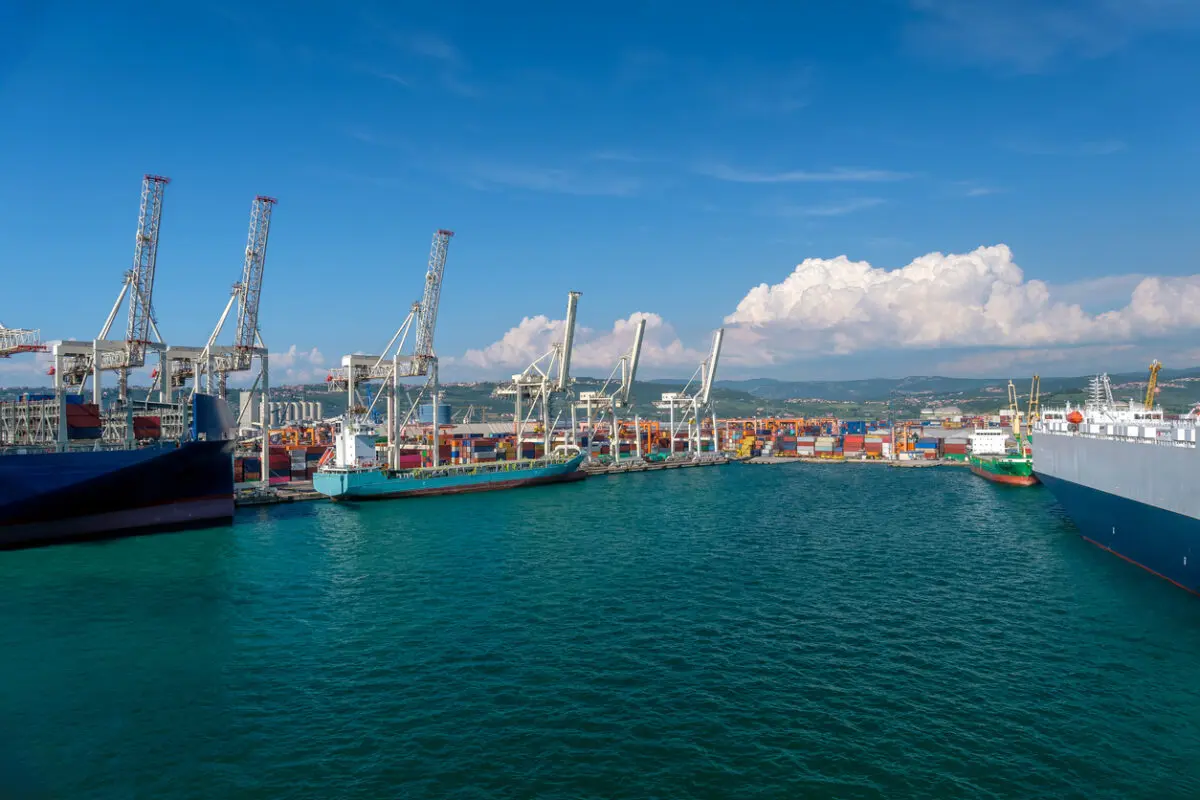
As European maritime trade continues to grapple with shifting global supply chains, geopolitical instability, and evolving trade routes, Slovenia’s premier maritime gateway has demonstrated notable resilience. Luka Koper, the operator of the Port of Koper, has released its financial and operational results for the first half of 2026, revealing a strong performance characterized by record container throughput, higher net revenues, and solid profitability gains. Despite persistent disruptions across key international trade arteries—including the Suez Canal, the Red Sea, and the Strait of Hormuz—the port managed to leverage its strategic geographic position and operational flexibility to capture new cargo flows from its hinterland.
During the first six months of 2026, Luka Koper handled 656,150 Twenty-Foot Equivalent Units (TEUs), marking a 5 per cent increase compared to the same period in the previous year. This growth was underpinned by expanded manufacturing output within the port’s Central and Eastern European hinterland and the introduction of a fourth regular container service linking Koper directly with the Far East.
However, the port’s broader operational landscape presented a mixed picture. While liquid bulk and dry cargo segments registered modest gains, the automotive sector faced considerable headwinds, resulting in a 9 per cent year-on-year decline in vehicle throughput. This contraction was largely attributed to sluggish export demand in Turkey, Israel, and the Middle East, compounded by rising regional protectionism, heightened competition from Chinese original equipment manufacturers (OEMs), and ongoing geopolitical friction.
Financially, the Luka Koper Group capitalized on its high-performing container and storage divisions to deliver impressive top- and bottom-line growth. Net sales revenue climbed 10 per cent year-on-year to reach €206.1 million ($240.5 million). Operating profit (EBIT) grew by 8 per cent to €57.1 million, while net profit advanced 11 per cent to €48.1 million ($56.1 million), representing an absolute increase of €4.6 million ($5.3 million) over the first half of 2025. Total maritime cargo throughput edged up 1 per cent to reach 11.5 million tonnes, aligning closely with corporate targets.
This comprehensive report examines the multifaceted performance of Luka Koper in H1 2026, analyzing the operational dynamics of its core cargo segments, the macroeconomic and geopolitical factors shaping Mediterranean port competition, the financial health of the group, and the strategic outlook set forth by port leadership as they prepare for capital-intensive capacity expansions.
Detailed Chronology & Operational Performance in H1 2026
The first half of 2026 unfolded against a backdrop of prolonged supply chain readjustments. European logistics networks, having spent the previous few years adapting to altered routing around the Cape of Good Hope rather than utilizing the Suez Canal, settled into a new normal characterized by longer transit times and higher freight rate volatility. Within this complex environment, Luka Koper’s operational chronology was defined by distinct sectoral trajectories.
The Container Surge and Hinterland Integration
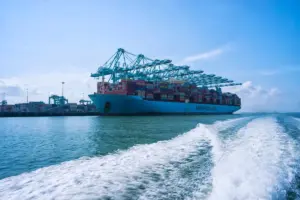
The standout success story of Luka Koper’s H1 2026 performance was its container division. Reaching 656,150 TEUs—a 5 per cent year-on-year improvement—the port reinforced its status as a vital Mediterranean hub for Asian imports and Central European exports.
The growth trajectory was established early in the first quarter, driven primarily by robust cargo generation from manufacturing facilities located within the port’s primary and secondary hinterlands, spanning Austria, Hungary, Slovakia, the Czech Republic, Southern Germany, and northern Italy. The automotive, machinery, and consumer goods sectors heavily utilized rail and intermodal connections out of Koper to bypass congested Northern European ranges.
A critical catalyst for this container growth was the successful integration of a fourth regular container service linking the Slovenian port directly with Far Eastern markets. This new loop enhanced frequency, transit reliability, and capacity options for shippers navigating the volatile Asia-Europe trade lanes. Consequently, storage revenues associated with container dwell times also contributed significantly to the port’s top-line expansion, as supply chain stakeholders utilized Koper’s terminal footprint to buffer inventory against external trade shocks.
The Automotive Sector Contraction
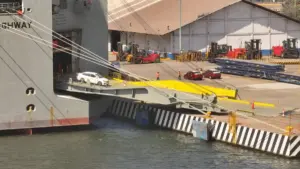
In stark contrast to the buoyant container segment, Luka Koper’s automotive terminal experienced a challenging first half of the year. Total vehicle throughput fell by 9 per cent year-on-year to 409,538 units.
Although port management noted that the steep rate of decline observed during the initial weeks of the first quarter had begun to ease by the end of June, export volumes to traditional markets such as Turkey, Israel, and the broader Middle East remained severely depressed compared to historical averages. Industry analysts point to a confluence of structural and cyclical factors:
- Geopolitical Tensions: Ongoing conflicts and diplomatic friction across the Middle East disrupted traditional maritime distribution networks and dampened consumer confidence in destination markets.
- Regulatory Hurdles and Duties: Importers and exporters faced shifting tariff structures and additional trade barriers in specific regional markets.
- The Rise of Chinese OEMs: Aggressive market penetration by Chinese vehicle manufacturers—particularly electric vehicle (EV) producers—fundamentally altered trade dynamics. While imports of Chinese-manufactured vehicles into Koper continued to rise as European consumers adopted alternative-fuel automobiles, European vehicle exports faced intense price and volume competition globally.
Bulk, Liquid, and General Cargo Dynamics
Beyond containers and vehicles, Luka Koper’s other cargo divisions displayed divergent fortunes during H1 2026:
- Liquid Bulk: Recording the strongest percentage growth outside of containers, liquid bulk throughput rose by 6 per cent. This growth was driven by regional energy demand and refined petroleum product movements, reflecting Koper’s vital role in supplying regional energy infrastructure.
- Dry and Bulk Cargo: Registering a steady 1 per cent year-on-year increase, dry bulk handling proved resilient, buoyed by steady industrial raw material imports for the Central European manufacturing base.
- General Cargo: This segment experienced a notable 9 per cent decline, dropping to 0.5 million tonnes. Port authorities attributed this contraction directly to diminished import and export volumes of traditional breakbulk commodities, specifically timber, iron, and steel, which mirrored broader stagnation in European construction and heavy manufacturing sectors.
In aggregate, total maritime cargo throughput for the group reached 11.5 million tonnes. While this represents a modest 1 per cent increase over the first half of 2025, it matched management’s budgeted expectations precisely, proving that stability can be maintained even amidst systemic trade volatility.
Supporting Context & Financial Metrics
The operational achievements of Luka Koper translated directly into a robust financial performance for the first half of 2026. The Luka Koper Group demonstrated sound fiscal discipline and top-line growth, validating its commercial strategy in an inflationary and geopolitically fractured operating environment.
Revenue Expansion
For the six-month period ending June 30, 2026, the Group reported net sales revenue of €206.1 million (approximately $240.5 million). This represents a robust 10 per cent increase compared to the same period in 2025.
This revenue growth was primarily propelled by two main factors:
- Volume-Driven Port Services: The 5 per cent expansion in high-yielding container handling directly boosted primary maritime revenue streams.
- Ancillary and Storage Services: Due to ongoing schedule unreliability across global container shipping lines—spurred by the continued avoidance of the Bab el-Mandeb Strait and the Suez Canal—dwell times for containers at the port remained elevated. This generated substantial ancillary revenue through terminal storage fees, compensating for static throughput volumes in other minor sectors.
Profitability and Cost Management
Cost of goods sold and operating expenses were managed effectively, allowing revenue growth to flow efficiently down to the operating line.
- Operating Profit (EBIT): Reached €57.1 million, marking an 8 per cent year-on-year increase. This demonstrates that revenue gains outpaced inflationary pressures affecting labor, maintenance, and energy costs.
- Net Profit: Rose to €48.1 million ($56.1 million), delivering an 11 per cent boost—an absolute increase of €4.6 million ($5.3 million) compared to the first half of 2025.
These healthy margins have strengthened the Group’s balance sheet, providing the internal liquidity necessary to self-fund upcoming capital expenditure programs without relying excessively on debt financing.
Macroeconomic and Geopolitical Headwinds
The financial and operational metrics achieved by Luka Koper must be contextualized within the broader macro-logistics landscape of 2026. European ports situated in the Adriatic, Tyrrhenian, and Western Mediterranean basins have had to navigate an unprecedented realignment of global trade routes.
With maritime carriers circumnavigating the African continent via the Cape of Good Hope to avoid security risks in the Red Sea, transit times from Asia to Europe have increased by 10 to 14 days on average. This shift has altered vessel rotation schedules, compressed port turnaround times, and intensified competition among Mediterranean gateway ports. Shippers are increasingly prioritizing ports with superior rail connectivity, fluid intermodal networks, and adequate yard capacity to absorb irregular vessel arrivals. Luka Koper’s strategic focus on hinterland rail corridors—particularly toward Austria, Hungary, and northern Italy—has insulated it from some of the landside congestion plaguing larger North European ranges, cementing its value proposition to beneficial cargo owners (BCOs).
Official Statements and Industry Insights
Addressing the media and financial markets following the release of the H1 2026 results, Nevenka Kržan, President of the Management Board of Luka Koper, emphasized the paramount importance of adaptability in modern port management.
"We are actively adapting to changing conditions in the logistics sector and seeking to make the most of every business opportunity," Kržan stated.
"Particularly in uncertain conditions such as those we are currently witnessing, our operational flexibility comes to the fore. In the coming years, we will further enhance this flexibility through investments in new storage and cargo-handling capacities."
Kržan’s remarks underscore a strategic shift across European port authorities. Rather than relying solely on organic volume growth driven by macroeconomic expansion, port operators are increasingly required to master operational agility. The ability to dynamically reallocate yard space, optimize rail loading schedules, and absorb erratic vessel bunching caused by global supply chain shocks has become the defining characteristic of successful terminal operators.
Industry analysts tracking the Mediterranean port sector have echoed these sentiments. Commentators note that Koper’s capacity to absorb a 5 per cent rise in container volumes while simultaneously managing the downward pressures in its automotive and general cargo divisions highlights the resilience of a diversified port business model. By balancing high-turnover container operations with stable bulk segments and high-value storage services, Luka Koper has insulated its revenue base from sector-specific downturns.
Future Outlook: Strategic Investments and Horizon 2030
Looking beyond the immediate horizon of 2026, Luka Koper is charting an ambitious course designed to secure its long-term competitive edge in the Adriatic maritime corridor. With terminal capacities increasingly tested by rising container volumes and the densification of intermodal logistics, port leadership is pivoting toward heavy capital expenditure focused on infrastructure modernization, technological automation, and environmental sustainability.
Expanding Storage and Cargo-Handling Capacities
As articulated by President Nevenka Kržan, the core pillar of Luka Koper’s future strategy involves significant enhancements to physical storage and cargo-handling infrastructure. Key development vectors over the coming years include:
- Container Terminal Extension: Plans are underway to extend the primary pier and deepen adjacent maritime berths to accommodate the next generation of Ultra-Large Container Vessels (ULCVs) safely and efficiently. This will ensure that Koper remains a preferred direct call for major container shipping alliances.
- Yard Optimization and Automation: Investments are being channeled into automated stacking cranes (ASCs), advanced Terminal Operating Systems (TOS), and gate automation to accelerate truck and rail turnaround times, thereby maximizing throughput capacity within the existing land footprint.
- Intermodal Rail Enhancements: Recognizing that over 60 per cent of containerized cargo leaves Koper via rail, the port continues to coordinate closely with national infrastructure agencies to support the ongoing upgrades of the second track between Koper and Divča, which will effectively remove historical landside bottlenecks.
Navigating Evolving Trade Realities
As the global maritime industry looks toward the latter half of the decade, Luka Koper remains alert to persistent geopolitical uncertainties. The potential normalization of traffic through the Suez Canal remains a wild card for European logistics; however, port management believes that the operational efficiencies and direct hinterland connections established during the recent disruption period have permanently strengthened customer loyalty.
In the automotive sector, the port is actively recalibrating its terminal strategies to accommodate the structural shift toward Chinese EV imports while working with manufacturing partners to mitigate regional export declines. By diversifying its service offerings and strengthening ties with emerging markets in Central Asia and the wider Mediterranean basin, Luka Koper is positioning itself to capture new trade corridors.
Conclusion
Luka Koper’s performance in the first half of 2026 serves as a compelling case study in modern port resilience. By delivering a record container throughput of 656,150 TEUs, boosting net sales revenue by 10 per cent to €206.1 million, and expanding net profit by 11 per cent to €48.1 million, the port has proven its ability to convert macroeconomic turbulence into operational opportunity. Backed by disciplined financial management, proactive leadership, and a clear roadmap for infrastructure investment, Luka Koper enters the second half of 2026 well-equipped to navigate the complexities of global trade and maintain its standing as a vital economic engine for Slovenia and Central Europe.