










Executive Overview
The Republic of the Philippines is embarking on a profound transformation of its environmental conservation and climate mitigation strategies. For decades, the nation’s reforestation ambitions were stifled by structural limitations: short-term political cycles, unpredictable public funding allocations, and a glaring lack of post-planting accountability. The consequences of these policy shortcomings have been stark, manifesting as severe, recurrent flooding in low-lying areas driven by uncontrolled water runoff from deforested, degraded hinterlands.
To break this cycle, the Philippine government—spearheaded by the Department of Environment and Natural Resources (DENR)—is fundamentally redesigning how the nation approaches forest restoration. Rather than relying solely on constrained public treasuries and tax-funded sapling drives, Manila is building the institutional, administrative, and technological machinery necessary to attract and secure multi-decade private capital.
The core of this strategy involves establishing a robust national carbon registry combined with advanced satellite tracking. This infrastructure aims to convert newly planted and rehabilitated hillsides into verified, high-integrity carbon credits capable of trading seamlessly across Southeast Asian and global markets. By aligning environmental governance with financial market realities, the DENR is signaling to corporate executives, institutional investors, and international carbon traders that the Philippines is open for long-term business.

Yet, this pivot toward market-driven conservation is not without its hurdles. Global carbon offset markets have faced intense scrutiny and reputational damage following scandals involving inflated emission reductions, "phantom credits," and the marginalization of indigenous communities. To succeed, Philippine regulators, corporate backers, and local implementers must navigate a complex web of legal requirements, including the strict protections mandated by the Indigenous Peoples Rights Act (IPRA).
This article explores the multi-faceted initiative unfolding in the Philippines, examining the structural flaws of past programs, the mechanics of the proposed national carbon registry, the strategic integration into regional carbon frameworks, and real-world pilot tests—such as the landmark 40-year restoration project in Cebu—that will determine whether the nation can successfully mobilize private finance to heal its vital watersheds.
Detailed Chronology: The Evolution of Philippine Reforestation
To understand the magnitude of the DENR’s current policy shift, it is essential to trace the historical trajectory of reforestation efforts in the Philippines. For generations, national forestry policy was characterized by fragmented initiatives launched with high ambitions but undermined by short operational horizons.
The Era of Short-Term Public Funding
Historically, government-led reforestation programs operated on rigid, short-term funding cycles tied directly to national budgets and political administrations. The most prominent modern iteration of this approach was the National Greening Program (NGP), which deployed substantial public funds to plant millions of saplings across degraded upland areas.

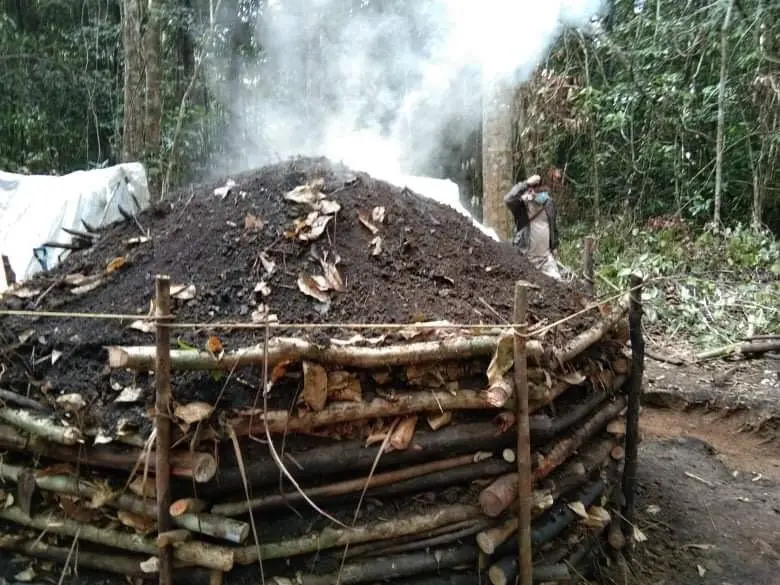
While these initiatives successfully mobilized communities to plant trees on a massive scale, they suffered from a fatal structural flaw: the maintenance cliff. Government-funded maintenance contracts typically expired after three years. Once these subsidies lapsed, oversight vanished. Left unmonitored and unprotected, a significant percentage of the newly planted saplings withered and died during dry seasons, while others were illegally harvested by impoverished rural residents to produce charcoal for daily survival. The result was a high volume of trees planted on paper, but a vastly lower rate of mature canopy survival on the ground.
The Shift Toward Private-Sector Engagement
Recognizing that public budgets alone could never match the scale of the climate and ecological crisis, DENR officials began charting a new course. The turning point arrived at a high-profile forum organized by the CarbonPH Coalition in Manila. Here, leadership from the DENR Forest Management Bureau articulated a pragmatic, business-oriented vision.
Instead of treating corporate entities merely as philanthropic donors, the government announced its readiness to engage with corporate balance sheets, debt structures, and long-term project finance. Regulators acknowledged that to attract risk-averse private capital, environmental rules must be co-designed with market realities rather than adhering rigidly to isolated, textbook forestry science.
The Rise of Corporate Coalitions and Pilot Testing
Following the policy signals from the DENR, private sector actors stepped forward to operationalize the new vision. Aboitiz Equity Ventures, through its philanthropic arm the Aboitiz Foundation, positioned itself at the forefront of this movement by backing the CarbonPH Coalition.
Rather than waiting for every regulatory detail of the national carbon registry to be finalized, stakeholders initiated real-world test cases. Most notably, the Aboitiz Foundation committed to a sprawling, 40-year watershed rehabilitation project in Cebu. Spanning 71,000 hectares of degraded land, this project serves as the operational crucible for the government’s emerging rules, integrating community nurseries, drone surveys, and satellite monitoring into a single unified framework.
Supporting Context & Metrics: The Architecture of Integrity
The success of the Philippines’ new carbon finance strategy hinges on transparency, technical rigor, and absolute avoidance of double-counting. In an era where international buyers are deeply skeptical of greenwashing, the DENR is constructing a multi-layered verification apparatus designed to withstand global scrutiny.
The National Carbon Registry and Monitoring Systems
The cornerstone of the government’s administrative machinery is the upcoming national carbon registry. This digital platform is engineered to perform several critical functions:
- Baseline Logging: Establishing definitive pre-project carbon stock baselines across public lands.
- Spatial Mapping: Clearly mapping available public lands and demarcating project boundaries.
- Credit Issuance and Tracking: Logging every carbon credit generated to ensure it corresponds to real, verified sequestration.
- Double-Counting Prevention: Utilizing unique serial numbers and centralized databases to prevent the same credit from being sold multiple times.
Complementing the registry is the newly activated National Forest Monitoring System (NFMS). By fusing high-resolution satellite imagery with rigorous ground-truth surveys, the DENR can independently verify whether protected canopies are actually surviving and growing over multi-year periods. This technological overlay provides the empirical backing required by international carbon standards.
Navigating Indigenous Rights and Land Tenure
In the Philippines, commercial forestry and carbon project development cannot proceed in a vacuum. Much of the nation’s remaining upland watersheds and forested hills overlap directly with ancestral domains legally claimed by indigenous communities.
Under the Indigenous Peoples Rights Act (IPRA), any commercial activity or carbon project operating on these lands requires the Free, Prior, and Informed Consent (FPIC) of the resident indigenous tribes before any contracts can be executed. This legal mandate ensures that local populations are not dispossessed of their traditional territories in the name of climate mitigation. Instead, it compels project developers to structure agreements that guarantee indigenous communities receive tangible, recurring financial benefits from the carbon trade.
Regional Integration: The ASEAN Common Carbon Framework
The Philippines is actively working to integrate its emerging carbon market infrastructure with broader regional initiatives. The country currently participates as an observer in the ASEAN Common Carbon Framework, a strategic alliance uniting carbon market associations and bourses across Singapore, Malaysia, Indonesia, and Thailand.
The primary objectives of the ASEAN framework include:
- Harmonizing trading rules across member states.
- Establishing mutual recognition mechanisms for verified carbon credits.
- Building shared digital clearinghouse infrastructure.
- Linking Southeast Asian carbon supplies directly to international buyers under Article 6 of the Paris Agreement.
Official Statements & Industry Perspectives
The transition toward market-based forest restoration has stimulated robust dialogue among government regulators, corporate leaders, and regional market experts. Their insights highlight both the immense potential and the formidable execution risks facing the Philippines.
Government Resolve and Realism
Ray Thomas Kabigting, Assistant Director of the DENR Forest Management Bureau, emphasized the government’s commitment to forging lasting partnerships with the business community. Addressing a room filled with corporate executives and carbon traders, Kabigting stated that the state is prepared to engage directly with corporate balance sheets and long-term project finance.
"Regulators need to write rules that work for investors rather than sticking strictly to textbook forestry science," Kabigting noted, underscoring a pragmatic regulatory mindset designed to accelerate capital deployment.
The Imperative of Project Integrity
Given the reputational challenges plaguing global voluntary carbon markets—marked by past scandals involving exaggerated offset claims and ignored local rights—corporate leaders in Manila stressed that integrity must remain paramount.
Ginggay Hontiveros-Malvar, Chief Reputation and Sustainability Officer at Aboitiz Equity Ventures, issued a stern warning against taking shortcuts.
"Projects will fail internationally if developers try to cut corners," Hontiveros-Malvar cautioned. She maintained that carbon markets must deliver undeniable, verifiable climate benefits while ensuring that local communities engaged in planting and stewardship see a direct, equitable share of the financial rewards.
Regional Perspectives on Quality and Scale
International stakeholders operating within Southeast Asia offered valuable comparative insights on how the Philippines can position its carbon credits globally.
Oi-Yee Choo, Chief Executive of Singapore-based exchange Climate Impact X, emphasized the strategic value of regional coordination. She noted that unified regional frameworks provide private operators with a stronger, cohesive voice when negotiating trade rules with global superpowers and compliance bodies.
Meanwhile, Anshari Rahman, Strategy Director at Singaporean investment platform GenZero, argued against a race to the bottom.
"Southeast Asia should not try to sell the cheapest credits on the market," Rahman argued. By deliberately pairing carbon removal with measurable social and biodiversity benefits for rural villages, regional projects can successfully command a premium price from corporate buyers seeking highly defensible ESG (Environmental, Social, and Governance) claims.
Masayuki Kurihara, a senior officer at Japanese satellite analytics firm Archeda Inc., pointed out structural strengths and weaknesses. According to Kurihara, the Philippines holds a distinct operational advantage due to its low field implementation costs and deep pool of homegrown forestry expertise. However, the nation still lags behind regional peers like Indonesia and Malaysia in deploying the sophisticated digital interfaces required to stream automated satellite verification data directly to international buyers.
Future Outlook: The Test Ahead for Philippine Forests
As the Philippines transitions from policy formulation to ground-level execution, the stakes could not be higher. The immediate testbed for this new paradigm is taking shape in the rugged terrain of Cebu province, where the Aboitiz Foundation’s 40-year watershed rehabilitation initiative is underway. Utilizing a combination of community-managed nurseries, drone surveys, and satellite tracking, this 71,000-hectare project will serve as the proving ground for the DENR’s incoming administrative rules.
The Fork in the Road
The trajectory of Philippine forestry over the coming decade will be determined by two divergent scenarios:
- The Success Scenario: If the DENR successfully operationalizes the national carbon registry, seamlessly integrates with regional ASEAN clearinghouses, and maintains strict integrity standards, the government will have forged a sustainable, self-funding mechanism for watershed protection. Corporate capital will flow steadily into upland reforestation, mitigating flood risks, restoring biodiversity, and uplifting rural economies.
- The Stagnation Scenario: If bureaucratic friction, regulatory delays, or administrative bottlenecks stall the rollout of the registry and monitoring systems, private capital will inevitably bypass the Philippines. Investors will direct their funds toward better-regulated, faster-moving forestry markets in neighboring Indonesia and Malaysia, leaving the Philippines vulnerable to continued ecological degradation and climate disasters.
Ultimately, the nation’s green ambitions depend on bridging the gap between high-level policy ambition and flawless field-level execution. If Manila can deliver on its promise of transparent, verifiable, and community-centered carbon finance, it stands to transform its degraded hillsides into enduring natural assets for generations to come.