







Executive Overview
For centuries, travelers, naturalists, and explorers have arrived at the precipice of Arizona’s most famous chasm only to find themselves stripped of speech. The Grand Canyon is one of those rare terrestrial phenomena that entirely resists translation. No photograph, ultra-high-definition video, or panoramic canvas has ever managed to successfully communicate its true magnitude.
Even the most revered pioneers of the American conservation movement—men who spent decades documenting the wilderness—insisted that the landscape was fundamentally "untellable."
Modern psychological and neurological research now suggests that there is a profound scientific reason behind this perceptual failure. The sheer scale of the canyon triggers a state of deep cognitive friction known as "awe." According to contemporary neuroscientists and psychologists, experiencing cognitive awe does more than simply take your breath away; it fundamentally alters neural pathways, reduces everyday stress hormones, and reconfigures how humans perceive their place in the universe.
This deep-dive investigation explores why human perception consistently fails when confronting the Grand Canyon, examines the historical accounts of those who first tried to put its scale into words, and evaluates the best ways modern travelers can experience the chasm—from high-thrill commercial overlooks to remote, solitary desert trails.
Detailed Chronology: Mapping the Impossible Chasm
To understand why the Grand Canyon defies belief, one must look at how humanity first mapped, measured, and struggled to describe it.
- Pre-1869 (Indigenous Stewardship & Spanish Exploration): For millennia, Indigenous nations—including the Hualapai, Havasupai, Navajo, Hopi, and Zuni—inhabited the canyon, viewing it not merely as a scenic backdrop, but as a sacred, living landscape rich in spiritual and ancestral history. Early Spanish conquistadors, led by García López de Cárdenas in 1540, were the first Europeans to gaze into the canyon, though they turned back, frustrated by its impassable walls and miscalculating its actual depth.
- 1869 (The Powell Expedition): U.S. Civil War veteran and geologist Major John Wesley Powell led the first recorded boat expedition down the Green and Colorado rivers through the heart of the canyon. Armed with rudimentary instruments and boundless grit, Powell’s team navigated treacherous rapids that tested the limits of human endurance. Upon emerging, Powell famously noted that the canyon’s wonders defied the symbols of human speech.
- Late 19th Century (John Muir and the Birth of Conservation): Famed naturalist John Muir visited the canyon and declared it "untellable." His evocative writings helped lay the ideological groundwork for the creation of the National Park System, as he recognized that places of such staggering scale required federal protection from industrial exploitation.
- 1919 (National Park Designation): President Woodrow Wilson signed the Grand Canyon National Park Act, officially protecting the 1.2 million acres of geologic wonder and inviting a steady stream of curious travelers to test the limits of their own perceptions against the rim.
- 2007 (The Grand Canyon Skywalk Opens): Seeking to monetize and modernize the tourist experience, the Hualapai Tribe opened the Grand Canyon Skywalk at Grand Canyon West—a horseshoe-shaped glass bridge extending 70 feet out over the abyss. This sparked decades of debate regarding commercialization versus pure, untouched wilderness immersion.
- Present Day (The Neuroscience of Awe): Contemporary researchers, such as UC Berkeley professor Dacher Keltner, have begun quantifying what Muir and Powell only felt intuitively: that natural vistas like the Grand Canyon physically transform the human brain, generating lasting emotional and physiological shifts.
Supporting Context & Metrics: The Scale of the Marvel
To comprehend why the human brain struggles to process the Grand Canyon, one must look closely at its physical dimensions. The numbers themselves feel almost abstract:
- Length: The canyon stretches approximately 277 miles (446 kilometers) long.
- Width: It varies from 4 to 18 miles (6 to 29 kilometers) wide across its rim-to-rim expanse.
- Depth: At its deepest point, the canyon plunges an astonishing 6,093 feet (1,857 meters) from the rim to the Colorado River below—roughly the height of six Empire State Buildings stacked end-to-end.
- Geologic Timeline: The exposed rock strata at the bottom of the canyon (the Vishnu Basement Rocks) date back nearly 2 billion years, representing nearly half of Earth’s entire geological history.
The Science of Awe
Why do photographs fail? Psychologists point to the concept of perceptual accommodation. When humans view a standard landscape, our brains reference past experiences to categorize what we see (e.g., a mountain, a river, a forest).
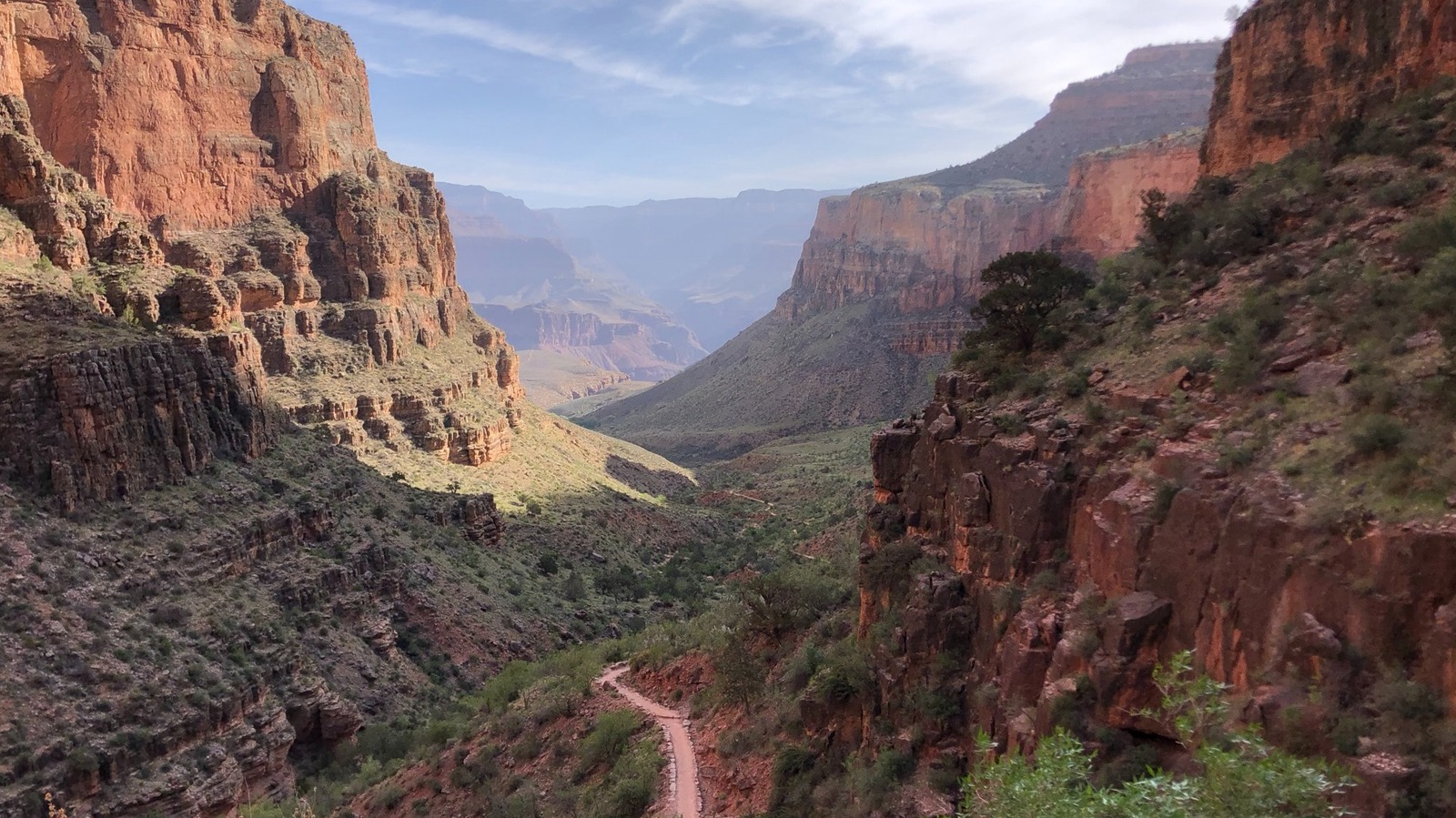
However, the Grand Canyon lacks immediate, recognizable points of scale. Without familiar objects like buildings or cars on the canyon floor to anchor perspective, the human visual cortex cannot calculate distance or depth. A boulder the size of a ten-story apartment building looks like a pebble. This sudden breakdown in cognitive processing triggers a state of "awe"—a neurological phenomenon characterized by slowed heart rates, expanded temporal perception, and an overwhelming sense of connection to something infinitely larger than the self.
Perspectives: Navigating the Canyon Today
Modern visitors face a distinct choice: How do you want to experience the unquantifiable? Travel options span a wide spectrum, each offering a drastically different psychological and physical encounter.
1. The High-Adrenaline Commercial Route: The Skywalk at Grand Canyon West
Located approximately two hours from Las Vegas on the sovereign land of the Hualapai Tribe, the Grand Canyon Skywalk offers a thoroughly managed, gravity-defying encounter. Visitors step onto a clear, 3-inch-thick glass walkway suspended nearly 4,000 feet above the canyon floor.
- The Pros: It provides an immediate, heart-pounding sensation of floating in mid-air, making it accessible to visitors who cannot or choose not to embark on grueling multi-hour hikes.
- The Cons: Critics frequently label the attraction a tourist trap due to high entry fees, strict bans on personal cameras on the bridge itself, and a heavily commercialized atmosphere that can detract from the profound, hushed solitude many seek in nature.
2. The Iconic Deep-Dive: The South Rim and Bright Angel Trail
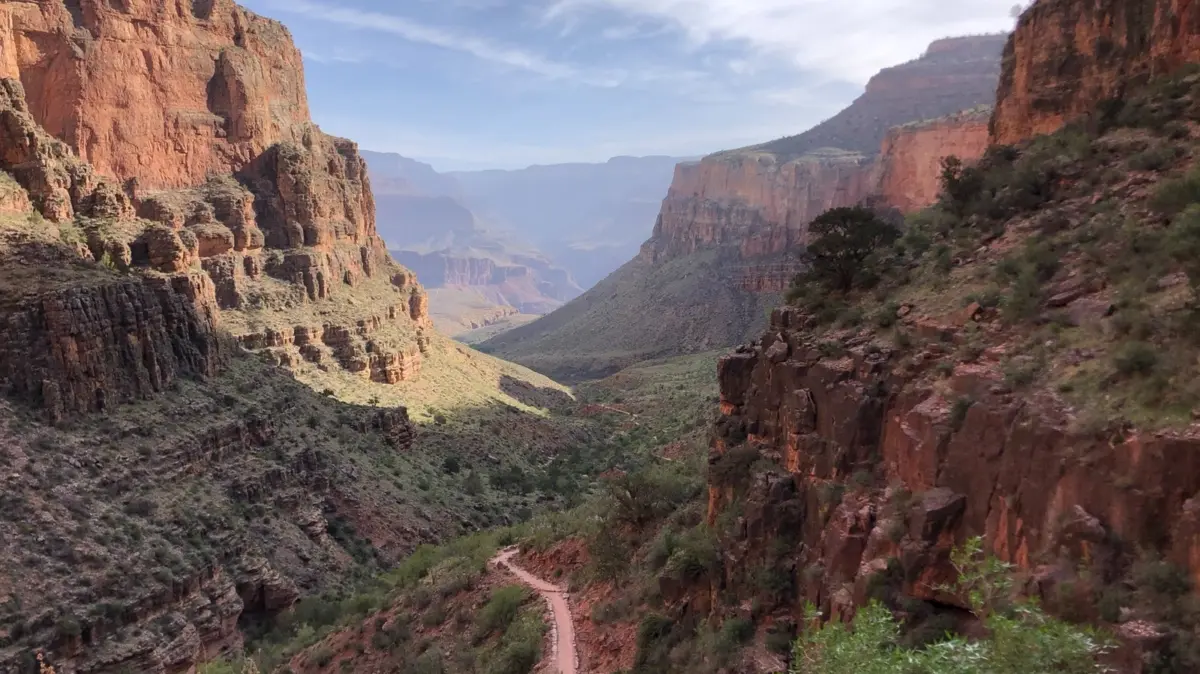
For those seeking physical immersion, the South Rim—situated roughly 4.5 hours from Las Vegas or 4 hours from Phoenix—serves as the historic gateway to the park. The legendary Bright Angel Trail, originating directly inside Grand Canyon Village, is the park’s premier hiking artery.
- The Reality: While it offers breathtaking switchbacks and dramatic vistas, the sheer volume of foot traffic can shatter the illusion of undisturbed wilderness. Navigating crowds of thousands can make it difficult to achieve the meditative, transformative state of awe that researchers associate with national park exploration.
3. The Cathedral Vistas: South Kaibab Trail
For travelers wanting world-class views without immediate gridlock, the South Kaibab Trail (accessible exclusively via park shuttle from the Grand Canyon Visitor Center) offers a stellar alternative.
- The Experience: Because trailhead parking is restricted, the number of hikers is effectively capped. At sunrise, the trail treats early risers to an ever-shifting light show where the reddish-orange limestone walls catch fire, illuminating the vast canyon in an almost surreal, celestial glow.
4. The Solitude Seeker’s Sanctuary: The Hermit Trail
For those looking to escape humanity entirely, the Hermit Trail offers a rugged, unpaved, and far less forgiving alternative to Bright Angel.
- The Experience: Steep, primitive, and demanding, this trail rewards the well-prepared hiker with moments of absolute isolation. Here, standing alone on the rim with no sounds save the wind sweeping across the prehistoric plateaus, visitors are most likely to experience the profound, life-altering psychological shift that John Muir wrote about more than a century ago.
Official Statements & Expert Insights
Naturalists, explorers, and modern scientists agree that standard descriptive language falls remarkably short when applied to the canyon:
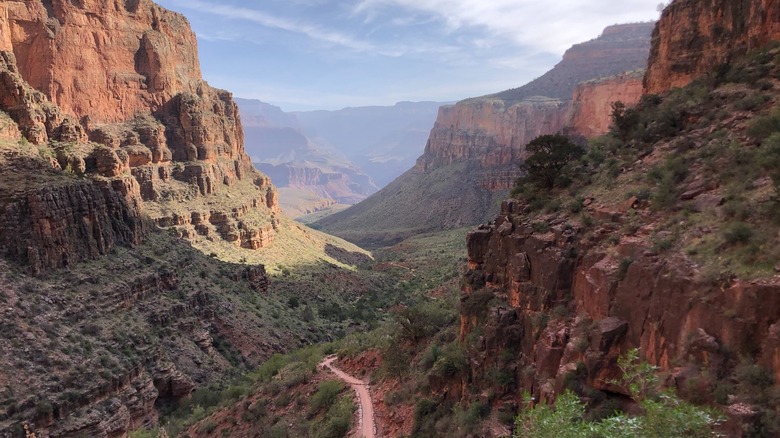
"It is impossible to conceive what the canyon is, or what impression it makes, from descriptions or pictures, however good."
— John Muir, Founder of the Sierra Club and Father of the National Park System"The wonders of the Grand Canyon cannot be adequately represented in symbols of speech."
— Major John Wesley Powell, 1869 River Expedition Leader and Geologist"Awe is the feeling of being in the presence of something vast that transcends your current understanding of the world. It is hard to imagine a single thing you can do that is better for your body and mind than finding awe outdoors."
— Dr. Dacher Keltner, UC Berkeley Professor of Psychology and Author of Awe: The New Science of Everyday Wonder and How It Can Transform Your Life
Future Outlook: Preserving the Undefinable
As annual visitation numbers to Grand Canyon National Park routinely hover near the six million mark, park management faces an ongoing balancing act. Protecting the ecological integrity of the rim and inner canyon while accommodating surging global tourism requires strict infrastructure management, including shuttle-only zones, reservation systems for backcountry permits, and careful oversight of tribal developments like Grand Canyon West.
Yet, despite modern crowds, asphalt parking lots, and digital screens attempting to capture its likeness, the Grand Canyon remains fundamentally untamable. As long as humans continue to walk its trails, peer over its rims, and surrender to its incomprehensible scale, the chasm will continue to humble humanity—proving that some experiences cannot be downloaded, streamed, or summarized, but must simply be witnessed with one’s own eyes.