






By Dan Berkson
Digital Advocacy Manager, Ocean Conservancy
Executive Overview
It is one of the great paradoxes of modern science: humanity possesses hyper-detailed topographical maps of the lunar surface, yet the vast majority of our own planet’s seafloor remains entirely unmapped, unseen, and uncataloged. While the Moon is airless, waterless, and directly observable through the vacuum of space using orbital satellites, the deep ocean is hidden beneath miles of dense, opaque, and crushing water.
Spanning more than two-thirds of the Earth’s surface, the deep-sea biome dwarfs the lunar landscape, occupying an area roughly ten times greater than that of the Moon. Yet, visibility and geographical scale tell only a fraction of the story. Sitting right in our own terrestrial backyard, the deep sea represents the least-understood realm on Earth.
Despite operating under extreme physical, technological, and financial obstacles, deep-sea exploration is more vital today than at any point in human history. As global policymakers wrestle with the accelerating pressures of climate change, biodiversity loss, and the looming industrial frontier of deep-sea mining, understanding the abyss is no longer just an academic pursuit—it is an existential necessity for safeguarding the health of the entire planet.
What is the Deep Sea, and Why is It So Hard to Explore?
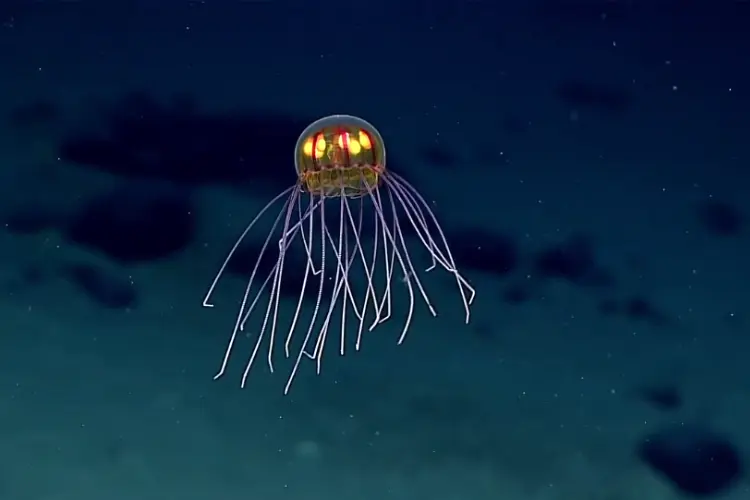
To understand the immense challenges of deep-sea exploration, one must first define the environment itself. Oceanographers generally classify the deep sea as beginning at a depth of 200 meters (656 feet) below the surface—a threshold known as the twilight zone or disphotic zone. Beyond this depth, sunlight fades rapidly until it is extinguished entirely, plunging the ecosystem into perpetual, near-total darkness.
Simultaneously, temperatures plummet to an average of just 4°C (39°F), creating a chilling environment that requires specialized engineering for any equipment or organism to survive.
Perhaps the most formidable obstacle, however, is hydrostatic pressure. Water is heavy—far heavier than air—and pressure increases exponentially with depth. For every 10 meters (32.8 feet) a submersible or diver descends, water pressure increases by one atmosphere (where one atmosphere is defined as the standard air pressure at sea level).
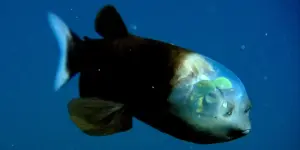
To put this into perspective: at a depth of just 200 meters, an object or organism experiences a crushing 21 atmospheres of pressure—one from the atmosphere above and 20 from the crushing weight of the water column surrounding it. In the abyssal plains and deep ocean trenches, where depths can plunge down to 11,000 meters (such as in the Mariana Trench), pressures reach over 1,000 atmospheres, capable of instantly imploding standard marine equipment.
This lethal combination of crushing pressure, freezing temperatures, absolute darkness, and immense geographic scale creates the most punishing biome on Earth. Consequently, despite decades of technological innovation, humanity has visually observed less than 0.001 percent of the deep seafloor.
Detailed Chronology: A Century of Unlocking the Deep
While humanity has only scratched the surface of the deep sea, the history of oceanography over the past century and a half is a testament to human ingenuity and relentless curiosity.
The Late 19th Century: The Dawn of Modern Oceanography
The foundational era of deep-sea exploration kicked off in December 1872 with the historic expedition of the HMS Challenger. Embarking on a four-year, globally encompassing journey, scientists aboard the British Royal Navy vessel conducted the first systematic, comprehensive survey of the world’s oceans. Utilizing primitive weighted lines, dredges, and biological trawls, the HMS Challenger crew dragged samples from the deep ocean floor, discovering thousands of previously unknown species and proving definitively that life could—and did—thrive in the deep, cold abyss. This monumental undertaking laid the conceptual and empirical groundwork for modern oceanography.
The Early to Mid-20th Century: The Rise of Remote Sensing
As the 20th century progressed, the limitations of physical dredging became apparent. Collecting random samples from the surface offered little insight into the actual topography of the seafloor. The paradigm shifted from direct physical collection to indirect study through technological innovation.
The introduction of sonar (Sound Navigation and Ranging) in the wake of world wars revolutionized marine science. Sonar allowed scientists to map underwater mountain ranges, deep trenches, and continental shelves by measuring the echo of sound waves, entirely eliminating the need to physically see the bottom to chart its contours.
The 1960s: The Advent of Robotics and Submersibles
The mid-20th century pushed human ambition to physical extremes, culminating in milestones like the descent of the bathyscaphe Trieste into the Challenger Deep in 1960. However, sending humans into the deep ocean proved exceptionally dangerous, expensive, and logistically limited.
This era gave rise to Remotely Operated Vehicles (ROVs). These maneuverable, tethered underwater robots allowed scientists to remain safely aboard a surface research vessel while sending a mechanical proxy down to endure the crushing pressures, stream high-definition video back to the surface, and collect precise biological and geological samples.
The 1980s to the Present: Autonomous Exploration and Precision Mapping
By the 1980s, engineering breakthroughs birthed Autonomous Underwater Vehicles (AUVs). Unlike ROVs, which require a physical umbilical cord tethering them to a ship, AUVs are untethered, robotic submersibles programmed with specific mission profiles. Operating independently beneath the waves, modern AUVs can map expansive swaths of the seafloor, monitor deep ocean currents, and conduct high-resolution ecological surveys with unprecedented autonomy and precision.
Today, researchers deploy an integrated suite of technologies—including advanced ROVs, AUVs, oceanographic moorings, and satellite-linked telemetry systems—allowing us to monitor the deep sea with a degree of accuracy our predecessors could only imagine.
Supporting Context & Metrics: Why Deep-Sea Data Matters
The deep ocean is not a stagnant, isolated vault locked away from human affairs; rather, it is the beating heart of the global climate system. The interconnected currents of the deep sea drive global weather patterns, regulate atmospheric carbon, and distribute heat across the globe.
Key Environmental Metrics
- Planetary Coverage: The oceans cover approximately 71% of the Earth’s surface, with the deep sea comprising the vast majority of that volume.
- Exploration Deficit: Fewer than 0.001 percent of the deep seafloor has been visually observed by humans or robotic instruments.
- Pressure Extremes: Pressure increases by 1 atmosphere for every 10 meters of depth, creating crushing forces up to 1,000 times greater than sea-level pressure in oceanic trenches.
- Thermal Baseline: The average temperature of the deep ocean hovers at a chilling 4°C (39°F), maintaining a thermal stability that influences global ocean circulation.
Advanced observation systems—such as the Ocean Observatories Initiative (OOI)—play a critical role in tracking these dynamics. By deploying networked sensors across coastal environments and deep-sea ecosystems, OOI and similar initiatives stream continuous data regarding ocean temperatures, chemical compositions, and current velocities.
This information is indispensable. It empowers scientists to track marine ecosystem health, predict seismic shifts that trigger underwater earthquakes and tsunamis, forecast extreme weather storms, and anticipate coastal flooding well before it impacts vulnerable human populations.
Official Statements and Emerging Threats: The Danger of Deep-Sea Mining
Even as oceanographers unlock new secrets of the abyss, the deep sea faces unprecedented anthropogenic threats. Chief among these is deep-sea mining—an industrial push to extract mineral-rich polymetallic nodules, cobalt crusts, and seafloor massive sulfides from the ocean floor to feed the global demand for battery metals and technology manufacturing.
Conservation scientists, policymakers, and environmental advocates have sounded the alarm regarding the potentially irreversible devastation this industry could unleash.
"Deep-sea mining threatens fragile ocean ecosystems and coastal communities by causing irreversible habitat destruction, disrupting fisheries and food security, harming biodiversity, and creating significant economic risks."
— Ocean Conservancy Policy Briefing
Extracting minerals from the deep ocean floor involves heavy machinery that would churn up sediment plumes, smothering delicate filter-feeding organisms, destroying ancient coral reefs that have taken millennia to grow, and releasing sequestered carbon back into the water column. Furthermore, because deep-sea ecosystems evolve at exceptionally slow rates due to the cold and nutrient-poor environment, any damage inflicted by mining operations would likely be permanent on a human timescale.
Future Outlook: A Call to Action
The push to industrialize the deep ocean represents a critical crossroads for humanity. As commercial interests eye the mineral wealth of the abyss, the scientific community is racing against time to document, understand, and protect an ecosystem we have barely begun to know.
Deep-sea exploration is no longer merely an exercise in satisfying human curiosity; it is a vital tool for planetary defense. By mapping the unknown, tracking climate drivers, and understanding the intricate web of life that sustains our oceans, we build the empirical foundation necessary to argue for robust conservation policies.
The fight to protect our ocean from the threats of tomorrow—particularly the expansion of unregulated deep-sea mining—requires collective resolve. Organizations like the Ocean Conservancy are actively leading the charge to keep protective frameworks in place before industrial interests permanently alter the last pristine wilderness on Earth.
The abyss holds the secrets to our climate’s past, present, and future. Take action today to help defend our ocean against the permanent scars of deep-sea mining, and ensure that the depths of our world remain protected for generations to come.