







Executive Overview
The global maritime sector, responsible for transporting over 80 percent of international trade, is facing an unprecedented regulatory and existential mandate: complete decarbonization. As the International Maritime Organization (IMO) tightens its greenhouse gas reduction targets and the European Union enforces stringent FuelEU Maritime regulations, the race to develop, validate, and scale zero-emission propulsion systems has intensified.
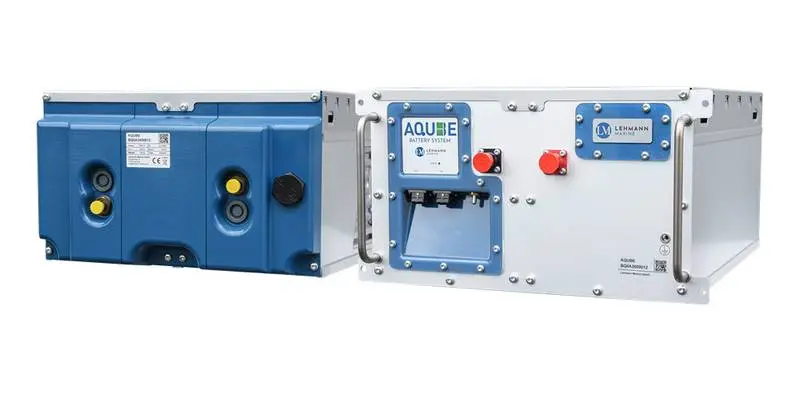
In a significant milestone for European maritime engineering, Lehmann Marine has secured its debut commercial order for its newly developed AQUBE® liquid-cooled battery system. The high-power energy storage platform has been selected by the renowned German shipbuilder Lloyd Werft Bremerhaven. The battery system will power a highly sophisticated, 48-meter-long research vessel commissioned by the German Aerospace Center (Deutsches Zentrum für Luft- und Raumfahrt; DLR), Germany’s national research center for aeronautics, space, energy, and transport.
Scheduled for delivery in 2027, this cutting-edge vessel will serve as a mobile, ocean-going technology platform. It is designed to bridge the gap between land-based laboratory testing and real-world sea trials, validating next-generation climate-neutral propulsion setups—including hydrogen fuel cells, hybrid configurations, and fully electric systems—under the unforgiving conditions of the North and Baltic Seas. By selecting the AQUBE system, Lloyd Werft and DLR have signaled a shift toward high-performance, liquid-cooled, Lithium Iron Phosphate (LFP) battery architectures as the safety and performance standard for the next generation of specialized vessels.
Detailed Chronology
The path to the commercial launch of the AQUBE system represents a strategic convergence of German specialized marine engineering and massive industrial scale.
[2020-2022] R&D Phase: Lehmann Marine designs high-performance marine battery concepts.
       │
[2023] Strategic Integration: Lehmann Marine becomes part of the Sunlight Group.
       │
[Q1 2024] System Finalization: AQUBE liquid-cooled LFP architecture is finalized.
       │
[Q3 2024] Contract Award: Lloyd Werft selects AQUBE for the DLR Research Vessel.
       │
[2025-2026] Manufacturing & Integration: Production in Greece; system integration in Bremerhaven.
       │
[2027] Vessel Delivery: DLR research platform begins sea trials in the North and Baltic Seas.
The Evolution of Lehmann Marine and Sunlight Group
To understand the development of the AQUBE system, one must trace the corporate evolution of Lehmann Marine. Long recognized for its bespoke maritime electrical engineering capabilities, the German firm underwent a transformative evolution upon its integration into the Sunlight Group. Sunlight Group, a global leader in industrial battery and energy storage solutions, operates one of the world’s largest and most advanced gigafactories and R&D hubs in Xanthi, Greece.
This integration allowed Lehmann Marine to combine its niche maritime domain expertise with Sunlight’s gigawatt-scale manufacturing capabilities, extensive raw material supply chains, and deep electrochemical R&D resources. The development of the AQUBE system was initiated to address a critical market gap: the lack of a highly resilient, high-C-rate, liquid-cooled battery system designed specifically for the rigorous safety and spatial constraints of modern ship hulls.
The DLR Procurement and Design Phase
In parallel, the German Aerospace Center (DLR) identified a critical bottleneck in the maritime energy transition. While alternative fuels like hydrogen, ammonia, and methanol, alongside high-capacity batteries, showed promise in laboratory settings, the maritime industry lacked a dedicated, state-of-the-art floating laboratory to test these systems in real-world, dynamic marine environments.

Lloyd Werft Bremerhaven, a shipyard globally acclaimed for its construction of complex mega-yachts and specialized vessels, was awarded the contract to design and construct the 48-meter-long, 11.5-meter-wide DLR seagoing technology platform. During the engineering design phase, Lloyd Werft’s technical team determined that the vessel’s hybrid-electric powertrain required an energy storage system capable of handling highly volatile load profiles. The battery system needed to absorb and discharge immense amounts of power rapidly during experimental testing cycles while maintaining an uncompromising safety profile. Following a rigorous evaluation of available marine battery technologies, Lloyd Werft selected Lehmann Marine’s AQUBE system in late 2024, marking the platform’s first commercial contract.
Supporting Context & Technical Metrics
The DLR research vessel is not a standard passenger ferry or offshore supply vessel; it is an active scientific instrument. Operating in the notoriously rough waters of the North and Baltic Seas, the ship will carry up to 20 researchers and industry partners. These teams will subject experimental propulsion systems to sudden load changes, simulated system failures, and extreme environmental stress.
To support these rigorous test profiles, the vessel’s battery storage must serve as both a primary propulsion source and a dynamic buffer. The AQUBE system achieves this through three distinct technical innovations:
1. High-Power 2C Performance
In battery electrochemistry, the C-rate defines the speed at which a battery can be charged or discharged relative to its maximum capacity. A 1C rate means the battery can fully discharge its energy in one hour.
- AQUBE Performance: The AQUBE system delivers a continuous discharge rate of 1.5C and a peak discharge capability of 2C.
- Operational Impact: A 2C rating means the system can discharge its entire energy capacity in just 30 minutes. This provides the instant, heavy surges of electricity required to maneuver the 48-meter ship through heavy swells, maintain position via dynamic positioning (DP) systems, or absorb sudden power spikes from onboard experimental hydrogen fuel cells or hybrid combustion engines.
| Metric | Specification | Operational Benefit |
|---|---|---|
| Peak Discharge Rate | 2.0C (30-minute full discharge) | High-surge capability for emergency maneuvering and experimental load spikes |
| Continuous Discharge Rate | 1.5C | Sustained high-power output for transit and heavy research operations |
| Cooling Medium | Direct Liquid-to-Module Circulation | Uniform temperature distribution; eliminates localized hot spots |
| Cell Chemistry | Lithium Iron Phosphate (LFP) | High thermal runaway threshold; zero cobalt; long cycle life |
| Target Vessel Length/Beam | 48m / 11.5m | Optimized footprint for specialized, compact vessel designs |
2. Advanced Liquid-Cooling Architecture
While many conventional marine battery installations rely on forced-air cooling systems, air is an inefficient medium for heat transfer, often leading to thermal gradients (uneven temperatures) within the battery pack. This accelerates cell degradation and increases the risk of localized thermal runaway.
The AQUBE system utilizes an advanced liquid-cooling architecture that circulates a specialized cooling fluid directly around the battery modules. This thermal management system is highly comparable to those found in high-performance electric vehicles (EVs) and grid-scale energy storage.
By maintaining a uniform temperature across all cells, the system prevents the formation of hot spots. This uniform thermal profile dramatically extends the operational lifespan of the battery cells, ensuring they can withstand continuous high-power discharge and charge cycles without suffering premature capacity fade.
[Cooling Fluid Inlet] ──> [Direct Module Contact] ──> [Heat Dissipation] ──> [Optimal Cell Temp (20-25°C)]
                                                                                  │
   [Extended Battery Lifespan] <── [Prevention of Thermal Hot Spots] <────────────┘
3. Cobalt-Free Lithium Iron Phosphate (LFP) Chemistry
Safety at sea is paramount; a battery fire on an ocean-going vessel can quickly become a catastrophic event. Lehmann Marine engineered the AQUBE system using Lithium Iron Phosphate (LFP) chemistry, deliberately avoiding the Nickel Manganese Cobalt (NMC) formulations common in consumer electronics and land-based automotive applications.
- Thermal Stability: LFP chemistry features a significantly higher thermal runaway threshold (approximately 270°C) compared to NMC (approximately 210°C). Furthermore, in the highly unlikely event of a cell puncture or internal short circuit, LFP cells do not release oxygen during thermal decomposition, dramatically reducing the risk of self-sustaining fires.
- Environmental Sustainability: LFP chemistry is entirely cobalt-free and nickel-free. Cobalt mining is plagued by severe ethical, environmental, and geopolitical supply chain risks. By utilizing LFP, Lehmann Marine aligns its product with the strict Environmental, Social, and Governance (ESG) mandates of modern European shipowners and public research institutions like the DLR.
Official Statements & Industry Perspectives
The collaboration between Lehmann Marine, Lloyd Werft, and the DLR represents a broader trend toward European technological sovereignty in the green transition.
A representative from Lloyd Werft’s engineering division emphasized the rigorous criteria used during the selection process:
"For a research vessel of this complexity, the energy storage system cannot be a passive component. It must be a dynamic partner in our propulsion experiments. The AQUBE system from Lehmann Marine offered the optimal balance of power density, thermal safety through liquid cooling, and mechanical robustness. Building this vessel in Bremerhaven using a battery system developed and manufactured within Europe strengthens our domestic shipbuilding ecosystem."
The integration of Lehmann Marine into the Sunlight Group has been highlighted by industry analysts as a model for European industrial cooperation. By pairing specialized German marine engineering with Sunlight’s massive manufacturing and R&D hub in Xanthi, Greece, the partnership offers European shipbuilders a resilient, localized supply chain. This reduces dependence on East Asian battery manufacturers, which currently dominate the consumer electronics and automotive sectors but often lack the specialization required for niche, high-safety maritime applications.
Speaking on the strategic importance of this debut order, a senior spokesperson from Lehmann Marine commented:
"Securing this contract with Lloyd Werft and the German Aerospace Center is a profound validation of our engineering philosophy. AQUBE was designed from the ground up to meet the most demanding marine safety standards. By combining our deep understanding of marine electrical integration with the industrial scale and R&D backing of the Sunlight Group, we are delivering a highly reliable, European-built energy storage platform that will help define the future of sustainable shipping."
Future Outlook
The delivery of the DLR seagoing technology platform in 2027 will occur at a critical juncture for the international maritime industry. As the sector strives to meet the IMO’s goal of net-zero greenhouse gas emissions by or around 2050, the data gathered by this vessel will play a vital role in shaping future commercial ship designs.
The Role of the DLR Vessel as an Industry Catalyst
The 48-meter vessel will act as a floating testbed, allowing engineers to trial hybrid configurations where the AQUBE battery pack works in tandem with hydrogen fuel cells or internal combustion engines burning synthetic fuels (e-methanol, e-ammonia). The real-world performance data collected from these trials will be invaluable for classification societies (such as DNV, Bureau Veritas, and Lloyd’s Register) as they develop safety and certification standards for alternative fuel propulsion.
               ┌────────────────────────────────────────┐
               │  DLR Floating Technology Platform      │
               └───────────────────┬────────────────────┘
                                   │
         ┌─────────────────────────┼─────────────────────────┐
         ▼                         ▼                         ▼
┌─────────────────┐       ┌─────────────────┐       ┌─────────────────┐
│ Hydrogen/Hybrid │       │ AQUBE Battery   │       │ Real-World Sea  │
│ Propulsion Tech │       │ Systems (LFP)   │       │ Trials & Data   │
└────────┬────────┘       └────────┬────────┘       └────────┬────────┘
         │                         │                         │
         └─────────────────────────┼─────────────────────────┘
                                   ▼
               ┌────────────────────────────────────────┐
               │ IMO Decarbonization & Standards 2030+  │
               └────────────────────────────────────────┘
Scalability of the AQUBE Platform
While this debut order is destined for a specialized research vessel, the modular architecture of the AQUBE system makes it highly scalable for larger commercial applications. Lehmann Marine intends to target several key maritime segments for future deployments of the AQUBE system:
- Short-Sea Shipping and Ro-Ro Ferries: These vessels operate on fixed routes with high-frequency port calls, making them ideal candidates for hybrid or fully electric propulsion systems that require rapid charging and high-power discharge cycles.
- Offshore Support Vessels (OSVs): Dynamic positioning systems on OSVs demand rapid, high-power responses to counteract wind, waves, and currents. The 2C peak performance of the AQUBE system is perfectly suited to handle these rapid load variations, reducing fuel consumption and engine wear.
- Port Infrastructure and Tugboats: Harbor tugs require immense bollard pull, translating to massive, sudden power demands. Liquid-cooled LFP systems provide the safety and power density required to transition harbor fleets to zero-emission operations.
Conclusion
The debut commercial order for the AQUBE liquid-cooled battery system is more than a commercial success for Lehmann Marine and the Sunlight Group; it is a critical step forward for the European maritime technology sector. By combining high-power 2C performance, advanced liquid-cooling thermal management, and ultra-safe, cobalt-free LFP chemistry, the AQUBE system is poised to play a central role in the decarbonization of global shipping. When the DLR’s new research vessel sets sail into the challenging waters of the North Sea in 2027, it will carry with it the future of clean maritime propulsion, powered by a resilient, European-designed, and European-manufactured energy storage solution.