









Executive Overview
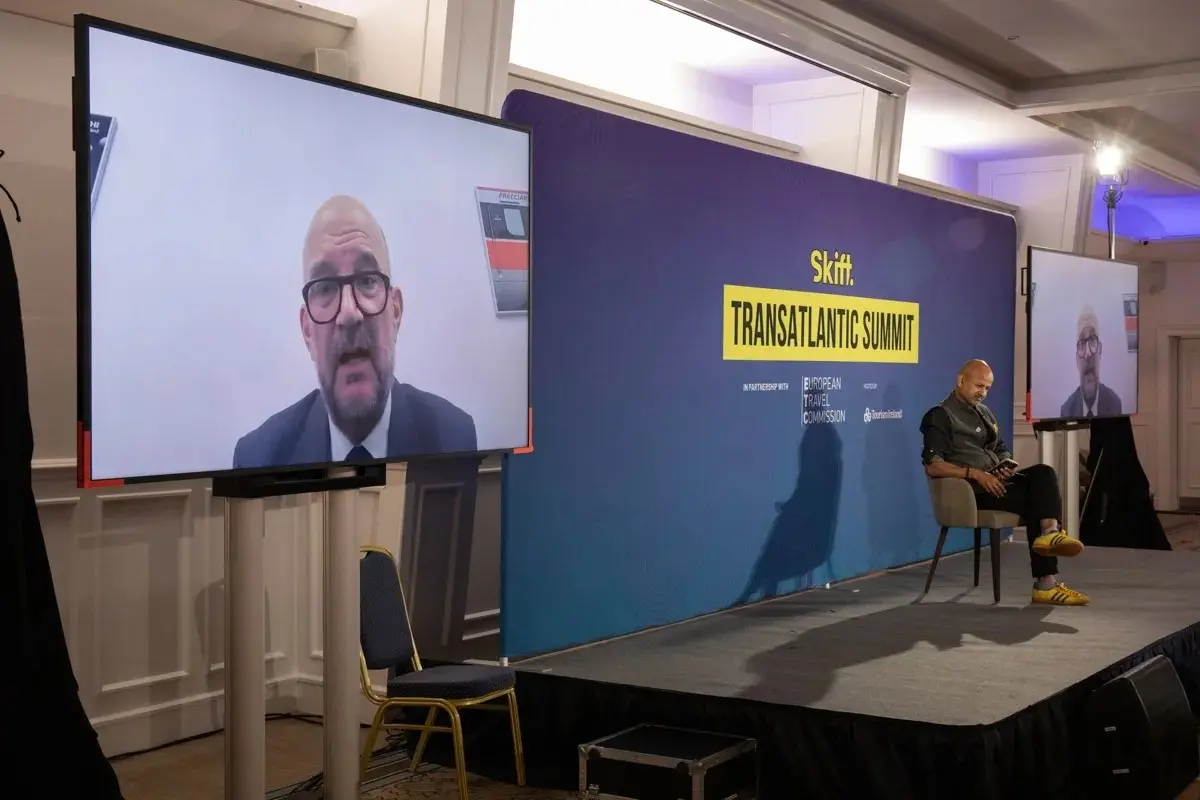
The landscape of European mobility is undergoing a tectonic shift, driven by a powerful convergence of stringent environmental legislation, shifting consumer preferences, and aggressive private equity investment. At the epicenter of this transformation is Certares, a prominent travel-focused private equity firm. Speaking via video link from the Italian offices of train manufacturer Hitachi during the Skift Transatlantic Summit in Dublin, Certares founder and senior managing director Greg O’Hara outlined a high-stakes thesis: European governments are poised to systematically phase out short-haul aviation in favor of rail networks.
This isn’t a speculative forecast; it is a regulatory reality already taking shape. France has established a groundbreaking precedent by banning domestic flights where a viable, direct train journey takes less than two and a half hours. As other European Union member states eye similar legislative maneuvers to meet ambitious net-zero carbon targets, private capital is moving in. Certares has already deployed approximately $2.3 billion into European and UK rail assets, positioning itself at the vanguard of a continental shift away from the skies and onto the tracks.
This deep dive examines the macro-economic forces propelling this modal shift, the strategic deployment of billions in private equity capital into railway challengers, the legislative domino effect across Europe, and what the future holds for transatlantic travelers, national carriers, and high-speed rail operators.
Detailed Chronology: The Evolution of European Modal Shift
To understand the current multi-billion-dollar wave of rail investment, one must trace the regulatory and market milestones that have brought European transportation to this critical juncture.
1. The Pre-Pandemic Awakening (2018–2019)
Long before carbon neutrality became a standard corporate mantra, European regulators began grappling with the heavy environmental footprint of intra-European aviation. Short-haul flights—traditionally defined as journeys under 500 kilometers—disproportionately emit greenhouse gases per passenger-kilometer compared to electrified rail. Environmental advocacy groups, most notably in France and Germany, applied sustained pressure on lawmakers to restrict flights on routes easily serviced by high-speed rail.
2. The French Climate and Resilience Law (2021–2022)
The pivotal moment arrived when France passed its landmark Loi Climat et Résilience (Climate and Resilience Law). The legislation introduced a controversial yet decisive measure: the outright ban of domestic commercial flights on routes where train journeys of under two and a half hours exist in both directions.
- The Exemptions: The law contained crucial caveats, specifically exempting connecting flights to ensure major hub airports like Paris Charles de Gaulle remained globally competitive.
- The Implementation: Despite legal challenges and pushback from legacy airline lobbies—chiefly Air France—the European Commission eventually greenlit the decree, setting a legal and psychological precedent for the rest of the continent.
3. Private Equity Enters the Station (2023–2025)
Recognizing that government mandates would structurally force millions of travelers out of the skies and onto the ground, institutional investors began identifying opportunities in rail infrastructure and rolling stock. While European rail has historically been dominated by state-owned monopolies (such as France’s SNCF, Germany’s Deutsche Bahn, and Italy’s Trenitalia), the European Union’s Fourth Railway Package officially opened domestic passenger markets to open-access competition.
Capitalizing on this deregulation, private equity funds began channeling billions into independent rail operators capable of challenging legacy state incumbents with modern fleets, competitive pricing, and enhanced digital booking experiences.
4. The Dublin Declaration (October 2026)
Speaking at the Skift Transatlantic Summit in Dublin on October 15, 2026, Certares founder Greg O’Hara crystallized the private equity sector’s bullish stance on European rail. In a session titled "Where Transatlantic Travel Capital Goes Next," O’Hara articulated what many macro-investors had quietly suspected: the regulatory writing is on the wall, and rail is no longer just a public service—it is a prime, high-yield growth asset class.
Supporting Context & Metrics: The Numbers Driving the Rail Revolution
The pivot from aviation to rail is underpinned by stark environmental metrics, regulatory frameworks, and substantial capital allocations.
The Environmental Imperative
According to data from the European Environment Agency (EEA), aviation accounts for roughly 13.9% of all transport-related greenhouse gas emissions in the EU, second only to road transport. Conversely, rail transport is remarkably clean, accounting for less than 0.5% of the bloc’s transport emissions.
- Carbon Disparity: A passenger flying from Paris to Marseille generates roughly 10 to 15 times more carbon dioxide than a passenger making the same journey aboard a high-speed TGV or a competitive rail alternative.
- The Capacity Crunch: Major European airports are increasingly capacity-constrained. By shifting short-haul point-to-point traffic to rail, hubs can free up precious slot capacity to accommodate high-yield long-haul and transatlantic flights, maximizing economic efficiency.
Certares’ Financial Footprint
Certares has backed its thesis with hard capital. O’Hara revealed that the firm has invested approximately $2.3 billion into European and United Kingdom rail infrastructure and operations.
- The French Challenger Strategy: Among Certares’ crown jewels in this sector is its investment in high-speed rail competition in France. By positioning itself as the primary challenger to the state-backed Société Nationale des Chemins de fer Français (SNCF), Certares aims to capture market share liberated by government flight bans.
- Strategic Partnerships: Certares has forged powerful alliances within the sector. A notable partner in these ventures is Ferrovie dello Stato Italiane (FS Italiane), the Italian state railway group renowned for its successful deployment of open-access high-speed rail competition (such as Itlo) in its home market—a model that private equity is eager to replicate across the English Channel and throughout mainland Europe.
Official Statements and Industry Insights
The intersection of travel, regulation, and private investment has sparked intense debate among industry leaders. At the Dublin summit, Greg O’Hara elaborated on the structural forces driving Certares’ investment strategy.
"So we like trains because France has passed a law, and other European countries are going to pass a law that if it’s within a certain distance, you can’t fly there anymore," O’Hara stated during his video address from Hitachi’s Italian manufacturing facilities.
Detailing the mechanics of their market entry, O’Hara emphasized the commercial opportunity presented by breaking state monopolies:
"The plan is we own the challenger railway to SNCF in high-speed rail in France."
Transport analysts and industry stakeholders have offered mixed reactions to the aggressive encroachment of private equity into rail. Proponents argue that private capital brings much-needed operational agility, customer-centric digital booking platforms, and faster fleet modernization than bureaucratic state monopolies can typically deliver. Furthermore, increased competition is widely expected to drive down ticket prices and improve service quality for consumers.
Conversely, critics and labor unions have expressed caution regarding the potential commodification of public infrastructure. Concerns remain over whether profit-driven private entities will adequately service remote, less-profitable regional lines or if their focus will remain strictly hyper-lucrative high-speed corridors between major metropolitan hubs.
Future Outlook: What Lies Ahead for European Mobility and Transatlantic Travel
As Europe barrels toward its 2050 net-zero targets, the trajectory of regional transportation is clear. The convergence of legal mandates, environmental urgency, and billions of dollars in private equity backing guarantees that the coming decade will redefine how humans move across the continent.
1. The Continental Domino Effect
With France’s short-haul flight ban serving as the regulatory blueprint, neighboring nations are actively reviewing similar frameworks. Spain and Germany are under intense pressure from environmental coalitions to enact parallel legislation. In Spain, proposals have surfaced to restrict domestic flights where high-speed AVE trains can complete the journey in under three hours. As these legal frameworks multiply, the addressable market for private rail operators will expand exponentially.
2. The Evolution of the Transatlantic Journey
For North American travelers flying into major European hubs like London Heathrow, Paris Charles de Gaulle, or Frankfurt, the travel experience will increasingly become intermodal. Airlines and high-speed rail operators are forging deeper codeshare and ticketing partnerships. A passenger booking a flight from New York to Paris may soon seamlessly integrate a high-speed train ticket to Lyon or Bordeaux into a single itinerary, complete with through-checked baggage and delay protections.
3. Rolling Stock and Infrastructure Bottlenecks
The ambition of private equity firms like Certares is not without logistical hurdles. Scaling high-speed rail requires specialized rolling stock, access to congested track networks, and complex cross-border regulatory approvals. O’Hara’s strategic positioning near train manufacturer Hitachi underscores the critical importance of securing modern, high-capacity trains amidst global supply chain constraints.
Conclusion
The era of unchallenged, low-cost short-haul aviation in Europe is drawing to a close. Propelled by climate legislation and fueled by multi-billion-dollar private equity investments from firms like Certares, high-speed rail is transforming from a legacy public utility into a dynamic, hyper-competitive asset class. As tracks replace flight paths, Europe is laying the iron foundations for a sustainable, electrified future of mobility—proving that when governments legislate change, private capital is more than ready to ride the rails.