





Executive Overview
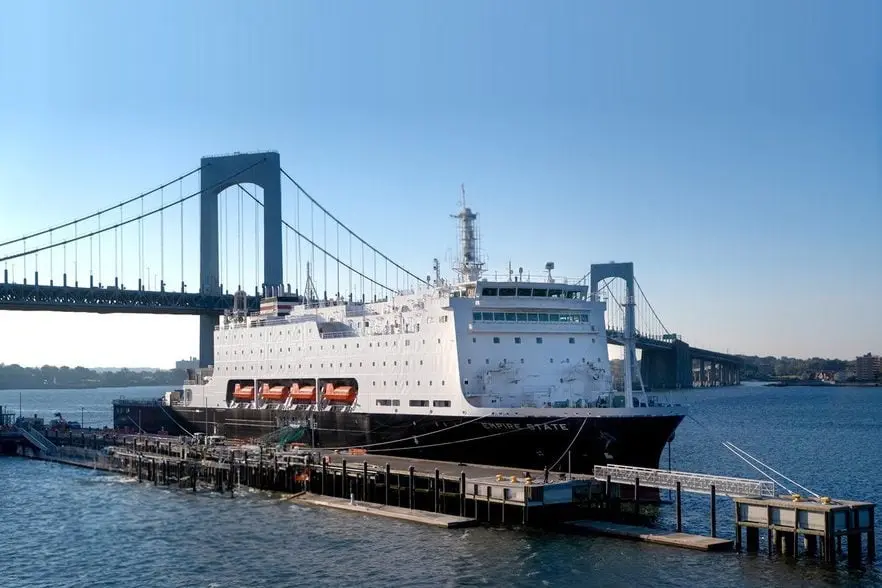
In an unprecedented move that underscores the tightening intersection between merchant marine education and national security logistics, the United States Maritime Administration (MARAD) is preparing to activate the Empire State VII—the flagship training vessel of the State University of New York (SUNY) Maritime College—for an extended federal mission. The deployment, projected to last approximately 170 days, is scheduled to commence on or about September 1, 2026, and will run through February 2027. This decision effectively deprives the nation’s oldest maritime academy of its primary floating classroom for the majority of the upcoming academic year.
The directive was formalized via a decision memorandum from Maritime Administrator Stephen M. Carmel to SUNY Maritime President Rear Admiral John A. Okon. While the exact operational theater and specific objectives of the mission remain classified under federal nondisclosure protocols, the activation occurs against a backdrop of escalating geopolitical volatility. Unconfirmed maritime intelligence reports suggest that the state-of-the-art vessel may be deployed to support critical military logistics hubs in the Indian Ocean, specifically the joint U.S.-British strategic military facility at Diego Garcia, amid heightened tensions in the Middle East and ongoing friction with Iranian-backed forces.
This deployment marks a historic milestone: it is the first-ever operational mobilization of a National Security Multi-Mission Vessel (NSMV). The NSMV program was specifically engineered to provide the federal government with a modern, dual-use fleet capable of seamlessly transitioning from training future merchant mariners to executing high-stakes national security, disaster relief, and humanitarian missions. The upcoming activation serves as the first real-world test of this dual-use doctrine, even as it presents significant logistical and academic hurdles for SUNY Maritime College.
Detailed Chronology
The pathway to the activation of the Empire State VII represents a multi-year effort to modernize the United States’ domestic sealift and maritime training capabilities, culminating in a sudden operational pivot.
[Sept 2023: Delivery of Empire State VII]
       │
       ▼
[Late Aug 2026: Decision Memo Issued]
       │
       ▼
[Sept 1, 2026: Scheduled Federal Activation] ──► [~170-Day Logistics & Support Mission]
       │                                                         │
       ▼                                                         ▼
[Academic Year disruptions at SUNY]              [Feb 2027: Projected Return to Academy]
1. Conception and Delivery (2019–2023)
For decades, the United States’ state maritime academies relied on aging, retrofitted legacy vessels to fulfill federal training requirements. Recognizing the vulnerability of this aging fleet, Congress funded the NSMV program. Philly Shipyard was selected to construct five purpose-built vessels under a novel Vessel Construction Manager (VCM) model overseen by TOTE Services.
On September 8, 2023, Philly Shipyard officially delivered the first-in-class Empire State VII to MARAD, which subsequently designated SUNY Maritime College in the Bronx, New York, as its custodian. The vessel replaced the rapidly deteriorating Empire State VI, which had served the academy for over three decades.
2. Operational Integration (2023–2026)
Upon its arrival at Fort Schuyler, the Empire State VII underwent integration into the college’s curriculum. It successfully completed several summer sea terms, providing hundreds of cadets with hands-on experience in modern diesel-electric propulsion, advanced navigation, and contemporary damage-control systems. During this period, the ship operated primarily within its educational mandate, though MARAD maintained ultimate ownership of the asset.
3. The Activation Order (August 2026)
In late August 2026, Rear Admiral John A. Okon received the decision memorandum from Maritime Administrator Stephen M. Carmel. The memorandum invoked the federal government’s right to reclaim the vessel for national emergency or logistics support operations.
Staff and crew were immediately tasked with transitioning the vessel from an academic configuration to full federal service readiness within a tight one-week window, preparing the ship for its scheduled September 1 departure.
4. Projected Deployment Window (September 2026–February 2027)
The scheduled 170-day mission is poised to run uninterrupted through autumn and winter, with an anticipated return date in mid-to-late February 2027. This timeline spans almost the entirety of SUNY Maritime’s fall semester and a portion of the spring semester, forcing an immediate restructuring of the academy’s hands-on training schedules.
Supporting Context & Metrics
To understand the implications of this activation, one must examine the technical capabilities of the NSMV design, which make it uniquely attractive to military planners facing logistical bottlenecks.
Technical Specifications and Capabilities of the NSMV Class
Unlike traditional merchant vessels or legacy training ships, the NSMVs were designed from the keel up to serve as Swiss Army knives for federal emergency response.
| Parameter | Specification / Capability |
|---|---|
| Length Overall | 524.5 feet (159.8 meters) |
| Beam (Width) | 88.6 feet (27.0 meters) |
| Draft | 24.6 feet (7.5 meters) |
| Propulsion | Diesel-Electric (Multi-Engine Configuration) |
| Speed | 18 knots (service speed) |
| Training Capacity | Up to 600 Cadets and Instructors |
| Emergency Surge Capacity | Up to 1,000 Personnel |
| Aviation Support | Helideck (capable of hosting medium-lift helicopters) |
| Cargo Handling | Roll-on/Roll-off (Ro-Ro) side ramp & container crane |
| Medical Facilities | Modern onboard hospital ward and triage center |
Strategic Dual-Use Features
The inclusion of Roll-on/Roll-off (Ro-Ro) ramps and a dedicated container gantry crane allows the Empire State VII to operate in "austere ports"—harbors that have been damaged by natural disasters or lack developed shoreside infrastructure.
With space for up to 1,000 personnel in emergency conditions, the vessel can act as a floating barracks, command-and-control center, or humanitarian aid station. Its hospital facilities provide critical medical care far from land-based infrastructure, making it an invaluable asset for the Department of Defense (DoD) and the Federal Emergency Management Agency (FEMA).
Comparison to Legacy Mobilizations
While maritime academy training ships have historically supported federal emergency operations, those deployments were almost exclusively short-term, domestic disaster-relief efforts.
- 2005 (Hurricane Katrina): Legacy training ships were deployed to the Gulf Coast to house emergency responders and utility workers.
- 2012 (Superstorm Sandy): SUNY Maritime’s former flagship, Empire State VI, was used to berth FEMA workers and utility crews in New York Harbor.
- 2017 (Hurricanes Harvey, Irma, and Maria): Training ships from multiple state academies were dispatched to Texas, Florida, and the Caribbean for localized relief efforts.
At approximately 170 days, the upcoming deployment of the Empire State VII represents a major departure from these domestic missions. It is a sustained, long-distance, international deployment that aligns more closely with active military sealift operations than with domestic humanitarian assistance.
Official Statements & Institutional Impact
The sudden announcement of the activation has sent shockwaves through the SUNY Maritime community, prompting administrative leaders to balance national duty with academic continuity.
Rear Admiral Okon’s Directive
In his address to the campus community, SUNY Maritime President Rear Admiral John A. Okon emphasized resilience while acknowledging the disruption.
"There is still much that we do not know, but over the next week our obligation is to prepare the vessel for federal use and remain focused on our efforts on what we do every day: educate and develop the next generation of maritime leaders. What we do know is that we will face whatever comes next together, with our students first and our mission always at the forefront."
Okon did not downplay the psychological impact on the student body, many of whom rely on the ship for sea-time hours required to secure their U.S. Coast Guard merchant mariner licenses.
"I know this message is likely to cause anxiety and stress," Okon noted, directing students toward the Office of Student Affairs and reminding faculty and staff of available employee assistance programs.
                 [MARAD Mobilization Order]
                             │
                             ▼
               [SUNY Maritime Administration]
              /
             ▼                                ▼
   [Academic Restructuring]         [Student Support Initiatives]
   • Alternative Sea-Time Paths     • Counseling & Stress Resources
   • Simulators & Classwork         • Financial Aid Adjustments
   • Consolidating Summer Terms     • Direct Communications
Academic Mitigation Strategies
The primary challenge facing the SUNY Maritime administration is ensuring that cadets do not fall behind on their STCW (Standards of Training, Certification, and Watchkeeping) requirements. To graduate and sit for their licensing exams, cadets must accumulate a specific number of days at sea.
With the Empire State VII unavailable for the fall and early spring semesters, the college is forced to explore alternative pathways. These may include:
- Commercial Ship berths: Placing cadets aboard active commercial merchant vessels.
- Bilateral agreements: Partnering with other state maritime academies (such as Massachusetts or Maine) to share training ship capacity.
- Simulator-based training: Utilizing high-fidelity bridge and engine room simulators on campus to satisfy approved portions of the curriculum.
Geopolitical Backdrop & Strategic Implications
While MARAD and the Department of Defense have declined to comment on the specific itinerary of the Empire State VII, maritime analysts point to a confluence of global events that explain the sudden activation of this high-capability vessel.
The Indian Ocean and Diego Garcia
The strategic military outpost of Diego Garcia, located in the central Indian Ocean, serves as a vital logistics hub for U.S. Navy and Air Force operations in the Middle East and Indo-Pacific regions. The base is critical for forward-projecting power, storing pre-positioned military supplies, and supporting submarine and long-range bomber operations.
                                  [Middle East Tensions]
                                             │
                                             ▼
[Diego Garcia Logistics Hub] ◄─── [U.S. Military Sealift Command]
            ▲                                │
            │                                ▼
            └─────────────────── [*Empire State VII* Activation]
With the Bab-el-Mandeb strait and the Red Sea remaining highly volatile due to drone and missile attacks on commercial shipping, securing alternative, robust supply lines through the Indian Ocean has become a top priority for the U.S. Military Sealift Command (MSC). The Empire State VII, with its heavy-lift capability, roll-on/roll-off ramps, and self-sustaining cargo cranes, is well-suited to shuttle military hardware, supplies, and personnel between regional hubs and Diego Garcia without relying on vulnerable commercial shipping networks.
Sealift Capacity Shortfalls
The activation also highlights a broader issue: the structural deficit in the United States’ domestic sealift capacity. The U.S. Ready Reserve Force (RRF)—a fleet of militarily useful merchant ships maintained by MARAD to transport troops and gear during conflicts—is rapidly aging. Many RRF vessels are over 40 years old, suffering from maintenance backlogs and crew shortages.
By tapping into the newly built NSMV fleet, federal planners are leveraging the most modern, reliable, and operationally ready assets under government control. This highlights a strategic reality: in a prolonged logistical effort, the line between training assets and front-line logistics support becomes increasingly thin.
Future Outlook
The activation of the Empire State VII is a test case that will likely shape the future of the entire NSMV program and the state maritime academies that host them.
Implications for the Five-Ship Fleet
The NSMV program was designed to deliver five identical vessels to the nation’s state maritime academies:
- Empire State VII (SUNY Maritime College) – Delivered 2023
- Patriot State (Massachusetts Maritime Academy) – Delivered/In-delivery phase
- State of Maine (Maine Maritime Academy) – Under construction
- Lone Star State (Texas A&M Maritime Academy) – Under construction
- Golden State (California State University Maritime Academy) – Planned
[NSMV Program Delivery Timeline & Status]

1. Empire State VII (SUNY)  : █ Delivered (Active Federal Service)
2. Patriot State (Mass)     : █ Delivered / In-Delivery
3. State of Maine (Maine)   : ▓ Under Construction
4. Lone Star State (Texas)  : ▓ Under Construction
5. Golden State (Cal Maritime): ░ Planned
If the Empire State VII successfully executes its 170-day mission, it will prove the viability of the NSMV design as a national security asset. However, it also establishes a precedent where any of these five vessels can be pulled from their academic duties at short notice to support federal operations. This potential reality may force the academies to develop permanent contingency plans for academic delivery, recognizing that their flagship training ships are fundamentally federal assets on loan, rather than dedicated schoolships.
The Recruitment and Retention Balance
A key tension of this policy is its potential impact on the merchant mariner pipeline. The United States is currently facing a critical shortage of licensed merchant mariners needed to crew both commercial ships and reserve military sealift vessels during a conflict. The state maritime academies are the primary engine for generating these officers.
If frequent federal activations of NSMVs disrupt training schedules, delay graduations, or increase student stress, it could inadvertently hinder recruitment and retention at the academies. Federal policymakers must balance the short-term benefit of using an NSMV for an active mission against the long-term strategic cost of disrupting the pipeline of the very mariners who will be needed to crew the nation’s sealift fleet in the decades to come.
As the Empire State VII prepares to depart its berth at Fort Schuyler on September 1, the eyes of the maritime industry, military planners, and educators will be fixed on its journey. The voyage will test the limits of a brand-new vessel class, the adaptability of a historic educational institution, and the wisdom of a dual-use maritime strategy designed for an increasingly volatile world.