








Executive Overview
The landscape of North American public transit, aviation, and infrastructure engineering is undergoing a profound structural evolution. Across agencies, advocacy groups, and premier engineering consultancies, top-tier leadership changes are signaling a pivot toward strategic modernization, digital transformation, and resilient system design.
Recent personnel milestones underscore this national trend. From Phillip A. Washington stepping into a key executive role at HNTB after leading some of the world’s largest mobility hubs, to John Drake taking the helm at the Eno Center for Transportation, the industry is calling upon seasoned veterans to steer complex organizations through a period of immense technological and financial transition. Concurrently, regional institutions—including the Denver Regional Transportation District (RTD), San Joaquin RTD in California, and national engineering giant STV—are actively restructuring their leadership teams to tackle systemic operational, technological, and logistical challenges.
This report delivers an in-depth examination of these pivotal personnel shifts, analyzing the strategic trajectories of the leaders involved, the institutional drivers behind these appointments, and what these changes portend for the future of multi-modal transit networks across the United States.
Detailed Chronology of Leadership Appointments
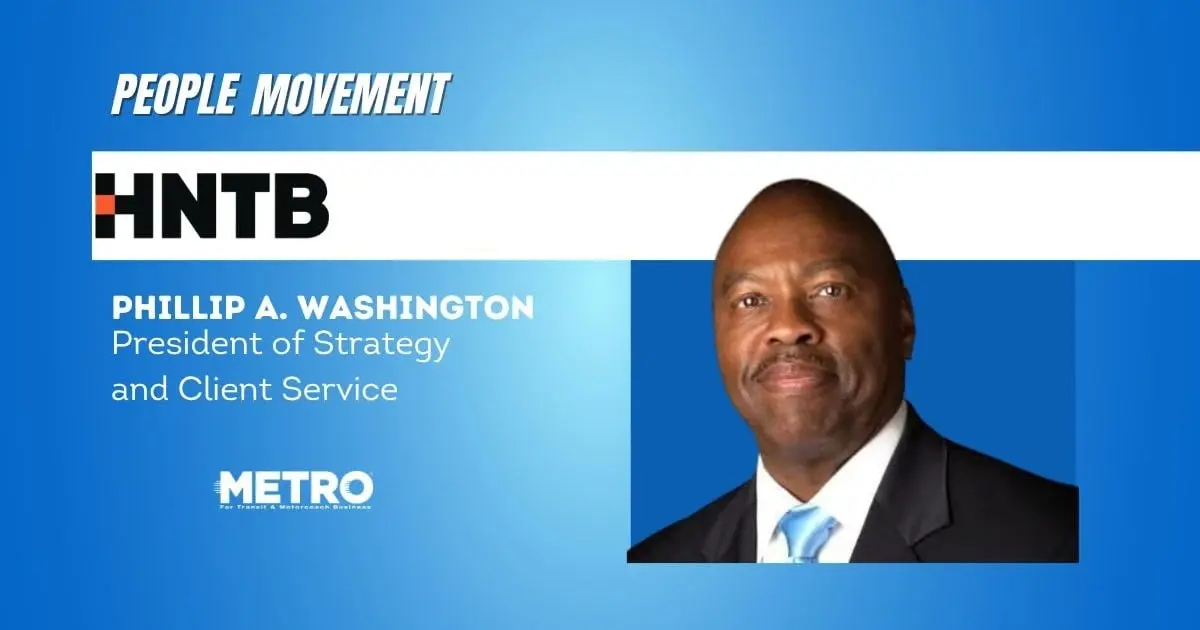
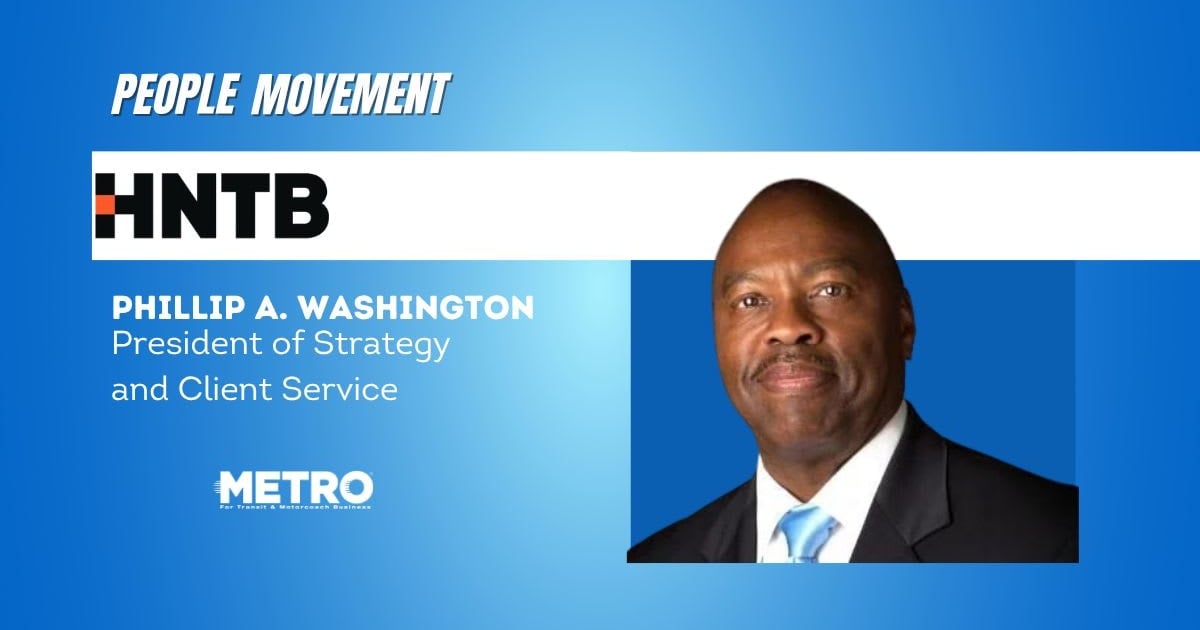
1. Phillip A. Washington Joins HNTB as President of Strategy and Client Service
In a move that significantly strengthens its national market footprint, HNTB Corporation announced the appointment of Phillip A. Washington as president of strategy and client service, markets and services, and senior vice president.
Washington brings decades of high-profile public sector leadership to the private consultancy space. Most recently, he served as the chief executive officer of Denver International Airport (DEN), where he managed one of the busiest aviation facilities in the world. During his tenure at DEN, Washington directed a multibillion-dollar capital improvement portfolio explicitly designed to expand capacity, elevate the passenger experience, fortify security protocols, and accommodate long-term regional growth.
Before his time in aviation, Washington spent years anchoring the public mass-transit sector. As CEO of the Los Angeles County Metropolitan Transportation Authority (LA Metro), he helmed an 11,000-employee enterprise responsible for overseeing North America’s largest modern public works program. His strategic direction accelerated major transit, highway, and active transportation investments throughout Los Angeles County. Earlier still, Washington served as CEO of Denver’s Regional Transportation District (RTD), where he successfully directed the delivery of the monumental FasTracks transit expansion program and the complex public-private partnership behind the redevelopment of Denver Union Station.
At HNTB, Washington will leverage this extensive background to collaborate directly with professionals across the firm’s national transportation markets, services, and regional offices. His core mandate will involve identifying emerging business opportunities, reinforcing strategic client relationships, and helping infrastructure owners navigate an increasingly interconnected and rapidly transforming technological landscape.
2. John Drake Named President and CEO of the Eno Center for Transportation
The Board of Directors of the Eno Center for Transportation announced the appointment of John Drake as its new president and chief executive officer, succeeding interim leader Paul Wiedefeld.
Drake steps into the role with more than two decades of comprehensive transportation, infrastructure, and supply chain experience. His career spans nearly a decade working on Capitol Hill, a five-year tenure as a senior political appointee at the U.S. Department of Transportation (USDOT), and executive-level leadership positions within the private sector, most recently serving as vice president of transportation, infrastructure, and supply chain policy for the U.S. Chamber of Commerce.
In accepting the post, Drake highlighted the critical timing of his appointment, noting that Eno’s ecosystem of researchers and stakeholders stands at the forefront of training the next generation of industry leaders. The organization aims to guide pressing national debates connecting transportation networks to economic security, safety, and technological innovation. Under Drake’s leadership, the Eno Center will maintain its focus on shaping evidence-based public policy and cultivating a nationwide network of multidisciplinary transportation professionals.
3. Denver RTD Launches National Search for a Successor CEO
In tandem with executive movements across the country, the Regional Transportation District (RTD) in Denver has formally initiated a nationwide search for its next general manager and CEO, partnering with specialized executive search firm Krauthamer & Associates.
The search process comes as current GM and CEO Debra A. Johnson prepares for the conclusion of her contract, which runs through May 8, 2027. To ensure a rigorous, transparent selection process, the RTD Board of Directors appointed a dedicated Search Committee comprising its existing Executive Committee: Board Chair Patrick O’Keefe, First Vice Chair Ian Harwick, Second Vice Chair Chris Gutschenritter, Secretary Chris Nicholson, and Treasurer Karen Benker.
The board has instructed the search firm and committee to curate a pool of candidates that will yield at least three distinct finalists for formal board consideration. Applications are slated to close in late November, with public finalist announcements scheduled for mid-December, ensuring a methodical transition plan well ahead of contract expiration.
4. Eric Williams Appointed Permanent CEO of San Joaquin RTD
In California, the San Joaquin Regional Transit District (RTD), headquartered in Stockton, officially named Eric Williams as its permanent chief executive officer. Williams had previously been serving as acting CEO following his tenure as chief operating officer (COO).
During his time in interim and operational leadership, Williams prioritized the stabilization of internal operations, the restoration of fractured relationships with regional and municipal partners, and the remediation of organizational and financial liabilities. Furthermore, he spearheaded initiatives to enhance passenger security and foster a workplace culture grounded in institutional accountability.
As CEO, Williams is tasked with formulating a long-term strategic vision that looks past immediate operational fixes. His administration is explicitly modeling what mobility networks must resemble over the next three to four decades as San Joaquin County experiences rapid population growth and land-use shifts.
5. STV Bolsters National Systems Practice with Senior Additions
Engineering and architectural services firm STV announced major expansions to its national rail systems practice with the appointments of Richard Mascara and Paul Salvatore as vice presidents. These strategic hires are designed to meet surging demand from public agencies modernizing legacy signaling, train control, and communications infrastructure.
- Richard Mascara (Pittsburgh, PA): Mascara brings over 30 years of experience leading complex, technology-driven transportation programs. Operating out of Pittsburgh, he will spearhead STV’s national strategy for Communications-Based Train Control (CBTC), signal modernization, and systems integration. His career includes leadership on major metropolitan transit authority NextGen CBTC deployments, automated people mover systems, and platform screen door integrations.
- Paul Salvatore (Boston, MA): Salvatore joins STV with nearly three decades of expertise in rail and transit systems engineering. Operating from Boston, his portfolio emphasizes signaling, communications, Positive Train Control (PTC), and overarching systems integration. Having held senior roles at prominent rail consultancies and technology providers, Salvatore has successfully steered complex rail initiatives from conceptual planning through final capital delivery for some of North America’s largest transit agencies.
Supporting Context and Industry Metrics
To fully appreciate the weight of these personnel shifts, one must examine the macroeconomic and regulatory environment governing the North American transportation sector.
+---------------------------------------------------------------------------------+
                    TRANSPORTATION LEADERSHIP MATRIX 2024-2027
+-----------------------+-----------------------------+---------------------------+
| Organization          | Key Appointee               | Strategic Focus Area      |
+-----------------------+-----------------------------+---------------------------+
| HNTB Corporation      | Phillip A. Washington       | Strategy, Client Service, |
|                       |                             | & Major Capital Delivery  |
+-----------------------+-----------------------------+---------------------------+
| Eno Center            | John Drake                  | Federal Policy, Safety,   |
|                       |                             | & Professional Training   |
+-----------------------+-----------------------------+---------------------------+
| Denver RTD            | *National Search Active*    | Regional Governance &     |
|                       | (Successor for D. Johnson)  | Long-Term Mobility Shift  |
+-----------------------+-----------------------------+---------------------------+
| San Joaquin RTD       | Eric Williams               | Regional Collaboration &  |
|                       |                             | Financial Stabilization   |
+-----------------------+-----------------------------+---------------------------+
| STV (Rail Systems)    | Richard Mascara             | CBTC & Signal             |
|                       | & Paul Salvatore            | Modernization             |
+-----------------------+-----------------------------+---------------------------+
The transit sector is currently absorbing historic infusions of federal capital courtesy of legislative frameworks such as the Infrastructure Investment and Jobs Act (IIJA). Agencies are challenged not merely with spending funds, but with executing complex, multi-year capital programs against persistent headwinds:
- Supply Chain Volatility: Lead times for specialized rail vehicles, bus procurements, and electrical subcomponents remain extended, forcing transit agencies to extend asset lifecycles and rethink procurement strategies.
- Workforce Transitions: A generational wave of retirements among legacy engineers, operators, and agency executives has created a leadership vacuum, making lateral executive recruitment and talent development paramount.
- Technological Convergence: Legacy mechanical systems are rapidly giving way to digital ecosystems. The integration of CBTC, PTC, automated fare collection, and data-driven predictive maintenance requires executive leadership with both traditional engineering fluency and modern digital aptitude.
Official Statements and Industry Insights
The appointments detailed above elicited notable commentary from governance boards and the newly appointed executives alike, shedding light on institutional priorities:
- On Strategic Client Service (Phillip A. Washington, HNTB): Commenting on his transition to private consultancy, Washington emphasized the necessity of addressing the evolving needs of infrastructure owners. “As our transportation landscape becomes increasingly connected and rapidly changing, collaborating across markets and offices is essential to identifying emerging opportunities and advancing robust, future-proof solutions for transit agencies nationwide.”
- On Public Policy and Innovation (John Drake, Eno Center): Upon accepting the presidency of the Eno Center, Drake underscored the organization’s role in guiding national dialogues. “Eno’s world-class team of experts and stakeholders are training our next generation of transportation leaders while also helping guide important debates connecting transportation to advancing our nation’s safety, innovation, economic prosperity, and security.”
- On Rebuilding Regional Trust (Eric Williams, San Joaquin RTD): Highlighting the human element of public administration, Williams pointed to community engagement as a primary pillar of his tenure. “Rebuilding relationships between RTD and cities, transit providers, regional agencies, and community partners throughout San Joaquin County requires listening to concerns, addressing strained relationships, and recommitting to collaboration, communication, fairness, and mutual respect.”
Future Outlook: Navigating the Next Era of Mobility
The clustering of these executive moves points toward several systemic trends that will define the transportation sector over the remainder of the decade:
- Cross-Sector Talent Mobility: The traditional barrier separating public agency leadership from private-sector consulting continues to be porous. Executives like Phillip A. Washington, who have managed multi-billion-dollar public works portfolios at major airports and transit agencies, are increasingly sought after by engineering firms to advise owners on megaproject risk mitigation and strategic delivery.
- Emphasis on Regional Collaboration: Regional transit districts—exemplified by San Joaquin RTD under Eric Williams and Denver RTD’s upcoming leadership transition—are placing renewed emphasis on inter-agency alignment. In an era where suburban sprawl and metropolitan job centers require seamless multi-jurisdictional travel, breaking down municipal silos is no longer optional; it is a financial and operational imperative.
- Digital-First Infrastructure Engineering: The additions of Richard Mascara and Paul Salvatore at STV demonstrate that firms specializing in rail and transit engineering must possess deep, specialized fluency in signaling architectures and software-driven train control systems. As transit agencies face pressure to increase headways, improve reliability, and guarantee passenger safety, the demand for advanced systems integration expertise will accelerate.
Ultimately, the leaders stepping into these roles will dictate how successfully North America transitions its aging transportation infrastructure into efficient, digitally integrated, and financially sustainable networks for the mid-21st century.