










Executive Overview
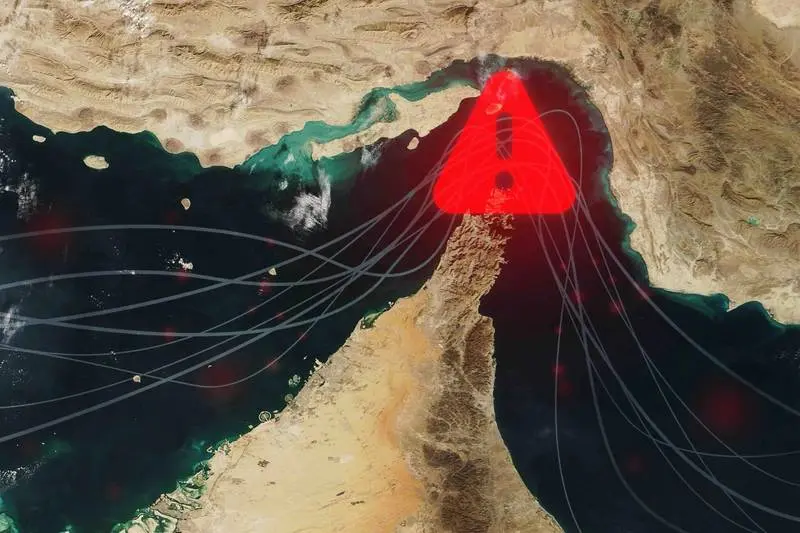
Six months after hostilities erupted in the Middle East, the conflict between Iran, the United States, and Israel has crystallized into a high-stakes war of economic attrition and maritime brinkmanship. The primary battleground is no longer just military; it has shifted to the global financial system and the world’s most critical maritime choke point: the Strait of Hormuz.
On Friday, the Iranian government launched a fierce diplomatic counteroffensive, formally condemning a new wave of United States economic sanctions as "state terrorism" and a "crime against humanity." Tehran’s denunciation came in response to the Trump administration’s implementation of what it termed an "economic D-Day"—a sweeping campaign designed to completely isolate the Iranian economy by threatening secondary sanctions against any nation or foreign entity maintaining commercial ties with Tehran.
Simultaneously, the US Treasury Department has escalated targeted financial measures, aiming to sever Iran’s remaining backchannels. Most notably, Washington has moved to penalize Egypt’s state-owned Banque Misr by targeting its operations in the United Arab Emirates (UAE), alongside blacklisting entities in Hong Kong and individuals linked to Iran’s state-backed Bank Melli.
As Washington intensifies its financial squeeze, international mediators—led by Qatar and Pakistan—are working frantically to salvage a collapsed June peace framework. The crux of the diplomatic deadlock remains the status of the Strait of Hormuz. Once responsible for transit of 20% of the world’s petroleum supply, the strait has been reduced to a highly militarized, largely dormant waterway. While the US military asserts that its forces have successfully cleared Iranian sea mines to reopen international shipping lanes, commercial vessels remain highly reluctant to transit the passage, leaving global energy markets in a state of uneasy suspense.
Detailed Chronology
The current diplomatic and economic crisis is the direct result of a rapid escalation cycle that began half a year ago. Below is the chronological progression of the conflict, from the outbreak of physical hostilities to the current financial standoff.
[Feb 28] War begins; Iran threatens Strait of Hormuz
       │
       ▼
[June] Qatar & Pakistan broker MoU; ceasefire collapses over Strait disputes
       │
       ▼
[Monday] US announces "Economic D-Day" warning of secondary sanctions
       │
       ▼
[Thursday] Qatari PM holds emergency talks in Tehran; Trump rules out bilateral talks
       │
       ▼
[Friday] Iran condemns sanctions; US targets Banque Misr UAE & Bank Melli networks
February 28: The Outbreak of War
Hostilities commenced following coordinated military actions by the United States and Israel. In immediate retaliation, Tehran deployed its primary asymmetric asset: the threat of a total blockade of the Strait of Hormuz. The Islamic Revolutionary Guard Corps (IRGC) began mining the shipping lanes and warned that any vessel transiting the strait without explicit authorization from Tehran would be subject to military interdiction. This action instantly paralyzed commercial shipping, causing maritime insurance premiums to skyrocket and forcing global energy markets to brace for severe supply disruptions.
June: The Short-Lived Ceasefire
Recognizing the devastating potential of a prolonged maritime blockade, Qatar and Pakistan leveraged their diplomatic channels to broker a bilateral Memorandum of Understanding (MoU). The agreement successfully established a temporary ceasefire. However, the truce proved fragile. It quickly unraveled as Washington and Tehran hit an impasse over the long-term status of the Strait of Hormuz. The US demanded unconditional, open international transit, while Iran insisted on retaining regulatory and security oversight of the waterway as a core sovereign right.
Monday: The Announcement of "Economic D-Day"
Following the collapse of the June ceasefire, the Trump administration signaled a transition to an all-out economic offensive. On Monday, the White House warned the international community that any sovereign nation or private corporation continuing to conduct business with Iran would face severe secondary sanctions. Described by administration officials as an "economic D-Day," the policy aims to force global firms to make a binary choice between trading with Iran or maintaining access to the US financial system.
Thursday: High-Level Backchannels and Rhetorical Hardening
With the threat of secondary sanctions looming, Qatari Prime Minister Sheikh Mohammed bin Abdulrahman Al Thani conducted an unannounced emergency visit to Tehran. Al Thani held intensive talks with Iranian leadership, emphasizing the critical necessity of restoring pre-war shipping volumes through the Strait of Hormuz to prevent regional economic collapse.
Almost simultaneously, President Donald Trump reiterated to reporters in Washington that the US was not engaged in direct talks with Iran. The White House reinforced this stance, stating that the economic pressure campaign would continue unabated until Tehran agreed to "come to the table in a meaningful way."
Friday: Sanctions Escalation and Legal Recrimination
The crisis reached a new peak on Friday with actions on multiple fronts:
- Tehran’s Legal Broadside: The Iranian Foreign Ministry issued a comprehensive statement framing US sanctions as a violation of international law, asserting that compliance with Washington’s unilateral measures constitutes complicity in an illegal act.
- Targeting Banque Misr: A senior US official revealed to Reuters that the administration plans to restrict the operations of Egypt’s Banque Misr by revoking US dollar clearing and correspondent banking access for its branches operating in the UAE.
- Network Dismantling: The US Treasury Department formally blacklisted a Hong Kong-based front company and an individual associated with Iran’s Bank Melli, targeting the financial networks used by Tehran to bypass existing trade restrictions.
Supporting Context & Metrics
The Weaponization of Correspondent Banking
The US Treasury’s proposed action against Banque Misr’s UAE branches represents a highly aggressive application of secondary sanctions. By targeting a prominent state-owned Egyptian bank operating within the UAE—both traditional US allies—Washington is signaling that no foreign institution is immune from penalty if it facilitates transactions for Tehran.
[Banque Misr UAE] ──(Suspected Iranian Transactions)──> [Tehran Entities]
       │
       ▼ (US Treasury Action)
[Loss of Correspondent Banking Access] ──> [No Access to US Dollar Clearing (CHIPS)]
       │
       ▼
[Inability to Conduct International Trade Finance]
In international finance, correspondent banking access is the vital link that allows foreign banks to clear transactions in US dollars through the US financial system. Revoking this access effectively isolates a bank from the global financial network, rendering it unable to conduct international trade finance or service multinational clients. This move serves as a stark warning to other financial hubs in the Gulf and East Asia.
The Strait of Hormuz Shipping Deficit
The Strait of Hormuz is the world’s most vital energy transit corridor. Prior to the outbreak of the war six months ago, the waterway handled approximately 20% of global petroleum consumption, translating to roughly 20 to 21 million barrels of oil per day.
Currently, despite the US military’s active mine-clearing operations, shipping activity remains severely depressed.
| Metric | Pre-War Average | Recent Ten-Day Average | Wednesday Transits | Thursday Transits |
|---|---|---|---|---|
| Daily Vessel Transits | ~80–100 | 15 | 17 | 7 |
| Est. Capacity Utilization | 100% | ~15% | ~17% | ~7% |
Industry analysts estimate that overall commercial shipping activity through the strait is operating at a mere 5% to 15% of normal capacity. The sharp decline from 17 transits on Wednesday to just 7 on Thursday highlights the continued volatility and the reluctance of commercial shipowners to risk their assets, regardless of US military assurances.
Energy Market Anomalies
Intriguingly, despite the dramatic reduction in physical transit through the Strait of Hormuz, global crude oil prices fell on Friday and were on track for a weekly decline.
[Strait of Hormuz Bottleneck] ──> (Expected: Oil Price Surge)
                                         │
                                         ▼ (Actual Market Realities)
┌────────────────────────────────────────┴────────────────────────────────────────┐
│  1. Supply Chain Adaptation (Alternative pipelines, rail, and trucking)          │
│  2. Covert Maritime Flows (Unflagged tankers operating outside standard tracking)│
│  3. Increased Production (Non-Gulf producers offsetting regional shortfalls)    │
└─────────────────────────────────────────────────────────────────────────────────┘
                                         │
                                         ▼
                             [Depressed Crude Prices]
Energy economists attribute this apparent paradox to several factors:
- Supply Chain Adaptation: Global oil producers and consumers have spent the last six months adjusting to the disruption, utilizing alternative pipelines, overland transport, and non-Gulf shipping routes.
- Covert Maritime Flows: Ship-tracking analysts suggest that a significant volume of oil is still leaking through the strait via unflagged or dark-fleet tankers that do not appear in official shipping registries.
- Anticipation of Diplomatic Breakthroughs: The persistent mediation efforts by Qatar and other neutral parties have kept a speculative premium from permanently locking into oil futures, as traders anticipate an eventual resolution.
Official Statements
The Iranian Government
Iranian Foreign Minister Abbas Araqchi took to the social media platform X on Friday to deliver a direct message to Washington, balancing firm resistance with an opening for diplomatic engagement:
"Putting diplomacy back on track isn’t impossible. It hinges on U.S. understanding of one simple fact: pressure doesn’t work. Creative discussions were held with Qatari Prime Minister Al Thani, but the United States must abandon its failed doctrine of economic coercion."
Meanwhile, the Iranian Foreign Ministry released a formal diplomatic note, escalating the legal rhetoric against the US measures:
"The unilateral economic sanctions imposed by the United States constitute a flagrant violation of international law and amount to state terrorism. These measures are a crime against humanity, directly targeting the health, economic security, and livelihoods of millions of innocent civilians. All member states of the United Nations are legally obligated under international law to resist these dictates. Participation in or enforcement of these unlawful sanctions constitutes direct complicity in violating the sovereignty of independent nations."
Offering insight into Tehran’s bargaining position, Mohsen Rezaei, Secretary of Iran’s Supreme National Security Council, indicated that any reopening of the waterway is contingent on major US concessions:
"Iran is currently finalizing a comprehensive list of security and economic conditions under which the Strait of Hormuz may be safely reopened to international commerce. These conditions will inevitably require an immediate cessation of the unlawful American blockade of Iranian ports, full financial compensation for economic damages incurred during this conflict, and the complete revocation of all unilateral economic sanctions."
The United States Government
In Washington, the administration maintained its hardline stance, emphasizing that economic isolation remains the primary tool to force Iranian compliance. A White House press official summarized the administration’s strategic objective:
"Our economic pressure campaign is designed to deny the Iranian regime the resources it uses to destabilize the Middle East. This campaign will continue to expand and intensify until Tehran makes the strategic decision to abandon its aggressive posturing, halt its maritime threats, and come to the negotiating table in a meaningful, constructive manner."
Addressing the tactical security situation in the Persian Gulf, Admiral Brad Cooper, Commander of the US military’s Central Command, sought to reassure the commercial shipping sector of the safety of the passage:
"Our naval forces have conducted extensive, highly successful mine-sweeping operations throughout the key transit lanes of the Strait of Hormuz. The bottom line is clear: today, international shipping lanes are physically open, safe, and clear of hazards. We are seeing momentum build, and we stand ready to secure the free flow of commerce in these vital waters."
Future Outlook
The conflict has reached a critical juncture where both sides are deeply entrenched in their respective strategies. The United States is betting that its "economic D-Day" and secondary sanctions will eventually trigger an economic collapse within Iran, forcing the leadership to capitulate. Conversely, Iran is banking on its asymmetric control over the Strait of Hormuz to inflict long-term economic pain on the West, betting that international pressure over energy security will eventually force Washington to ease its sanctions regime.
Several key indicators will determine the trajectory of the crisis in the coming weeks:
- The Resilience of Secondary Sanctions: The proposed action against Banque Misr UAE serves as a litmus test. If the US successfully forces Gulf financial institutions to completely sever ties with Iran, Tehran’s ability to fund its state apparatus will be severely compromised. However, if countries like China, India, and regional intermediaries find alternative, non-dollar-denominated clearing mechanisms, the efficacy of the US sanctions regime may diminish.
- The Commercial Viability of the Strait: Despite Admiral Cooper’s declarations that the shipping lanes are open, the commercial maritime industry remains highly risk-averse. Until marine insurers lower their war-risk premiums and Iran officially rescinds its threat of interdiction, shipping traffic is unlikely to return to pre-war levels.
- The Qatari-Pakistani Diplomatic Track: Doha’s shuttle diplomacy remains the most viable exit ramp. If Qatari mediators can convince Iran to moderate its demands—perhaps by trading a partial reopening of the strait for targeted sanctions relief—a diplomatic breakthrough remains possible. If these efforts fail, the region risks sliding into a deeper, more direct military confrontation.