









Executive Overview
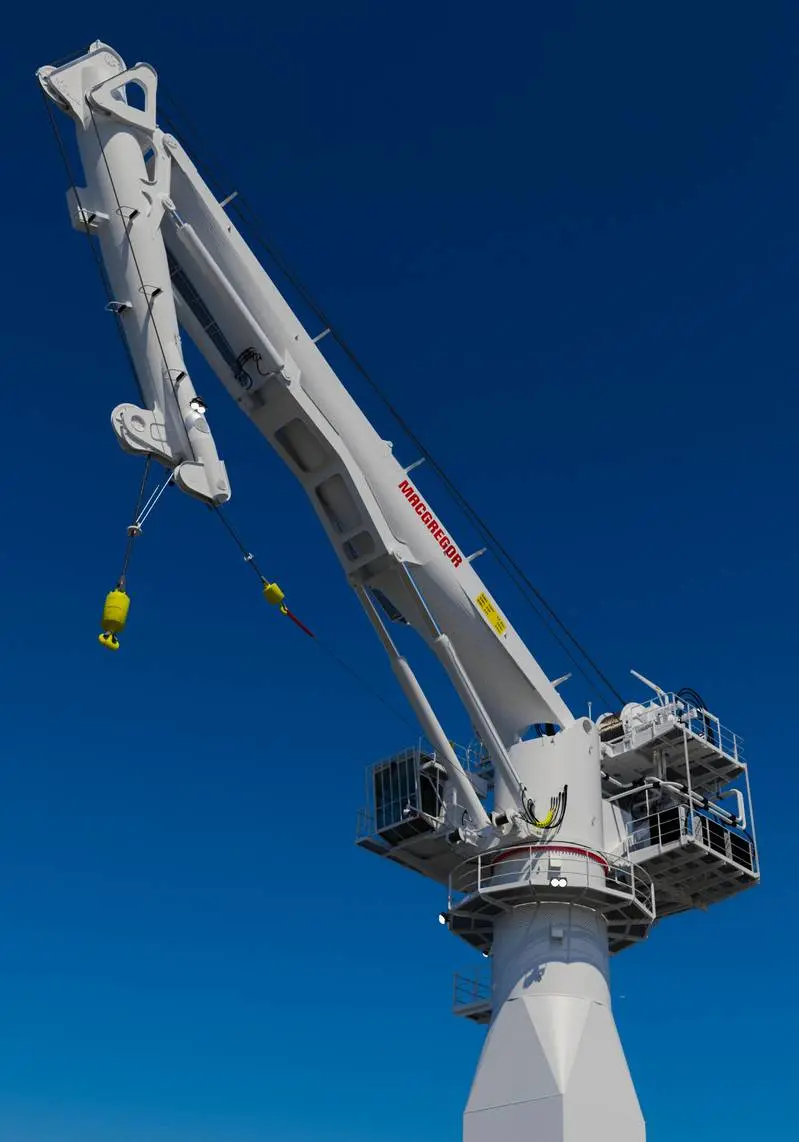
In a development that underscores the accelerating demand for high-specification subsea construction assets, MacGregor, a leader in sustainable maritime cargo and load handling solutions, has secured a major contract to supply a 165-ton Active Heave Compensated (AHC) crane. The state-of-the-art crane will be integrated into a newbuild Ulstein SX121 subsea construction vessel. Ordered by the prominent Belgian maritime infrastructure giant Jan De Nul Group, the vessel is currently under construction at the China Merchants Heavy Industry (CMHI) shipyard in Haimen, China.
This contract represents a crucial milestone in the global offshore energy supply chain. It highlights the deeply integrated, multinational partnerships required to deliver modern, highly complex offshore vessels. The transaction, officially booked into MacGregor’s second-quarter 2026 order intake, is part of a "1+1" vessel program. Under this agreement, Jan De Nul retains an option for a second sister vessel, which would trigger a duplicate equipment order. With the first vessel scheduled for delivery in February 2028, this project showcases how European maritime engineering, Chinese shipbuilding capacity, and advanced localized technical support converge to meet the rigorous demands of the energy transition.
+-----------------------------------------------------------------------------------------+
|                                  PROJECT AT A GLANCE                                    |
+-----------------------------------+-----------------------------------------------------+
| Vessel Design                     | Ulstein SX121 (Subsea Construction & Support)       |
+-----------------------------------+-----------------------------------------------------+
| Shipowner / Operator              | Jan De Nul Group (Belgium)                          |
+-----------------------------------+-----------------------------------------------------+
| Shipyard                          | China Merchants Heavy Industry (CMHI), China        |
+-----------------------------------+-----------------------------------------------------+
| Equipment Provider                | MacGregor                                           |
+-----------------------------------+-----------------------------------------------------+
| Primary Payload Technology        | 165-Ton Active Heave Compensated (AHC) Crane        |
+-----------------------------------+-----------------------------------------------------+
| Contract Booking Date             | Q2 2026                                             |
+-----------------------------------+-----------------------------------------------------+
| Scheduled First Vessel Delivery   | February 2028                                       |
+-----------------------------------+-----------------------------------------------------+
| Contract Framework                | 1+1 Vessel Program (Firm order + optional sister)   |
+-----------------------------------+-----------------------------------------------------+
Detailed Chronology and Contractual Mechanics
The realization of this contract is the result of extensive technical consultations and commercial negotiations spanning several quarters, culminating in the formal agreement recorded in the second quarter of 2026.
The timeline for the project is structured to mitigate the engineering bottlenecks that frequently challenge complex offshore newbuild programs:
- Q2 2026: MacGregor formally books the order for the 165-ton AHC crane into its quarterly order intake, initiating the detailed engineering and design customization phase.
- Late 2026 – 2027: Steel cutting, block assembly, and structural fabrication of the Ulstein SX121 hull proceed at CMHI’s Haimen shipyard. Concurrently, MacGregor manufactures the AHC crane, utilizing its localized Chinese supply chain and assembly facilities to ensure quality control and component availability.
- Mid-to-Late 2027: The crane is transported to the CMHI shipyard for mechanical integration, electrical hookup, and initial dry-dock testing.
- Late 2027 – Early 2028: Extensive sea trials, dynamic positioning (DP) system tuning, and load testing of the MacGregor AHC crane are conducted in offshore conditions.
- February 2028: Scheduled delivery of the fully commissioned Ulstein SX121 vessel to Jan De Nul Group, ready for immediate deployment on global subsea installation and offshore wind projects.
The "1+1" contract structure is a strategic mechanism employed by Jan De Nul to manage capital expenditure while securing critical yard capacity and equipment pricing in a highly competitive market. By securing the option for a second vessel, Jan De Nul establishes a hedge against rising shipbuilding costs and equipment lead times. For MacGregor, this framework positions the company as the presumptive supplier for the second vessel’s lifting suite, offering potential manufacturing synergies and scale economies.
Technological Deep Dive: The 165-Ton AHC Crane and the SX121 Platform
The Engineering of Active Heave Compensation (AHC)
Operating in deep-water environments requires lifting technology that can counteract the relentless motion of the sea. The 165-ton MacGregor crane specified for the Ulstein SX121 relies on advanced Active Heave Compensation (AHC) technology.
Unlike passive systems, which act like shock absorbers, MacGregor’s AHC system utilizes real-time data from highly sensitive Motion Reference Units (MRUs) installed on the vessel. These MRUs measure the ship’s roll, pitch, and heave motions caused by wave action.

The crane’s control system processes this data instantaneously, adjusting the winch speed and drum rotation to pay out or haul in the wire rope in direct opposition to the vessel’s vertical movement.
  [ Wave Action / Sea State ]
              │
              ▼
    [ Vessel Heave/Pitch/Roll ]
              │
              ▼
  [ Motion Reference Units (MRUs) ] ──(Real-time Data)──► [ Crane Control System ]
                                                                   │
                                                           (Dynamic Adjustment)
                                                                   │
                                                                   ▼
                                                       [ High-Speed Winch Motor ]
                                                                   │
                                                                   ▼
                                                      [ Stable Payload Elevation ]
This dynamic compensation ensures that the payload remains virtually stationary relative to the seabed, allowing for highly precise subsea installations, template deployments, and cable connections in challenging sea states. By minimizing dynamic load spikes on the crane structure and the wire rope, AHC technology significantly enhances operational safety margins and extends the vessel’s operational window in adverse weather.
The Ulstein SX121 Design Philosophy
The Ulstein SX121 is a highly regarded design in the subsea construction vessel (CSV) sector. Developed by Norway’s Ulstein Design & Solutions AS, the SX121 is engineered to balance versatility, fuel efficiency, and sea-keeping capabilities.
A defining feature of modern Ulstein designs is the integration of the proprietary X-BOW hull configuration. The X-BOW design eliminates the traditional bulbous bow, curving the stem backward to distribute buoyancy more evenly. This shape allows the vessel to slice through waves rather than riding over them, significantly reducing slamming, vertical accelerations, and pitch motions.
      Traditional Bow (Slamming & Pitching)            Ulstein X-BOW (Smooth Wave Transition)
               _______                                            _______
              /                                                 /
             /                                                 /
   ~~~~~~~~~/~~~~(O)~~~~~~~~~~~~~                    ~~~~~~~~~/~~~~(O)~~~~~~~~~~~~~
           /                                                 /
          /   [Bulbous]                                     /   [Inverted]
         /_________________                                /_________________
For the offshore crew, this translates to improved comfort and reduced fatigue. For the operator, it means lower fuel consumption and emissions during transit, alongside superior station-keeping performance when operating on Dynamic Positioning (DP2/DP3) during critical subsea lifts.

Supporting Context & Strategic Metrics
The Resurgence of the Subsea and Offshore Wind Markets
The timing of Jan De Nul’s order reflects a broader structural shift in the maritime energy sector. Following nearly a decade of underinvestment in offshore support vessels (OSVs) and subsea construction vessels (CSVs) after the 2014 oil market downturn, the industry is facing a severe shortage of high-specification tonnage. This deficit is exacerbated by the rapid growth of the offshore wind sector, which demands heavy-lift capabilities, precise positioning, and specialized subsea construction support.
According to market intelligence reports, global investment in offshore wind and deepwater oil and gas projects is projected to grow substantially through 2030. This surge has driven utilization rates for modern CSVs close to technical capacity, sending daily charter rates to multi-year highs. By investing in the SX121 platform equipped with a premium 165-ton MacGregor crane, Jan De Nul is positioning itself to capture high-yield contracts in cable laying, trenching, wind turbine foundation preparation, and subsea decommissioning.
Global CSV Market Metrics (Estimated 2024–2028 Trends):
- Average Global CSV Utilization: ~88% to 94%
- High-Specification CSV Day Rates: Up 35% year-over-year
- Active Subsea Fleet Average Age: ~12.5 years (highlighting the critical need for newbuild programs)
The Geopolitical and Logistical Importance of MacGregor’s Chinese Footprint
A critical factor in the selection of MacGregor for this project is its established localized infrastructure in China. Building high-specification vessels in Chinese shipyards like CMHI has historically presented logistical and communication challenges for European shipowners and equipment manufacturers. Misalignments in design integration, engineering standards, and commissioning schedules can lead to costly delays.
To mitigate these risks, MacGregor has strategically built up its local engineering, production, and service capabilities in China. This localized footprint offers several distinct advantages for the Jan De Nul project at CMHI:
- Co-Located Engineering Support: MacGregor’s local teams can work directly with CMHI’s naval architects and engineers in their native language and time zone, accelerating the approval of interface drawings and structural foundations.
- Streamlined Quality Control: Manufacturing components locally under strict European quality standards reduces transportation lead times, import duties, and supply chain disruptions.
- On-Site Commissioning and Testing: Having qualified MacGregor commissioning engineers permanently stationed in China ensures that the crane’s complex hydraulic, electrical, and software systems are integrated smoothly during the critical final phases of the build. This direct support helps the yard maintain schedule discipline through to the planned delivery.
Official Perspectives and Industry Alignment
While formal press commentary often highlights transactional values, industry analysts emphasize the deeper operational alignment represented by this deal.
A project manager from China Merchants Heavy Industry, speaking on the condition of anonymity, noted:
"Integrating a 165-ton AHC crane into a sophisticated Norwegian-designed hull requires seamless technical coordination. Having MacGregor’s engineering team physically present in China to collaborate with our shipyard technicians removes a layer of execution risk that has historically plagued international shipbuilding projects. This proximity is vital for meeting the demanding February 2028 delivery target."
From Jan De Nul’s perspective, the acquisition of this vessel is an investment in versatility. The company has steadily diversified its fleet to handle both traditional maritime infrastructure projects and complex offshore renewable energy installations. By equipping the Ulstein SX121 with a MacGregor AHC crane, Jan De Nul ensures that the vessel can perform delicate subsea operations in deep water, such as installing subsea manifolds, templates, and umbilical connections, while also supporting shallower offshore wind substation and cabling works.
Future Outlook: Navigating towards 2030 and Beyond
The delivery of the first Ulstein SX121 in February 2028 will occur at a critical moment for the global energy transition. As nations strive to meet their 2030 decarbonization targets, the demand for offshore infrastructure will reach unprecedented levels. High-specification, versatile vessels that can transition seamlessly between wind farm construction and deepwater subsea engineering will be the workhorses of this transformation.
Should Jan De Nul exercise the option for the second vessel under the "1+1" program, it will signal continued confidence in both the market’s expansion and the performance of the MacGregor-Ulstein-CMHI partnership. This potential sister vessel would likely follow a compressed construction schedule, benefiting from the engineering templates and collaborative workflows established during the first build.
Furthermore, the integration of advanced lifting systems like MacGregor’s AHC crane is a stepping stone toward greater autonomy and digital optimization in offshore operations. Future iterations of these crane systems are expected to incorporate predictive maintenance algorithms, remote diagnostic capabilities, and semi-autonomous path planning, further reducing operational risks and improving safety in the challenging offshore environment. By investing in this technology today, Jan De Nul and its partners are securing a competitive edge for the decade to come.


