




Executive Overview
The global maritime industry is standing at a critical decarbonization crossroads. While shipowners experiment with liquefied natural gas (LNG), green methanol, ammonia, and hydrogen, a far more potent and historically elusive energy source is returning to the forefront: civil nuclear propulsion.
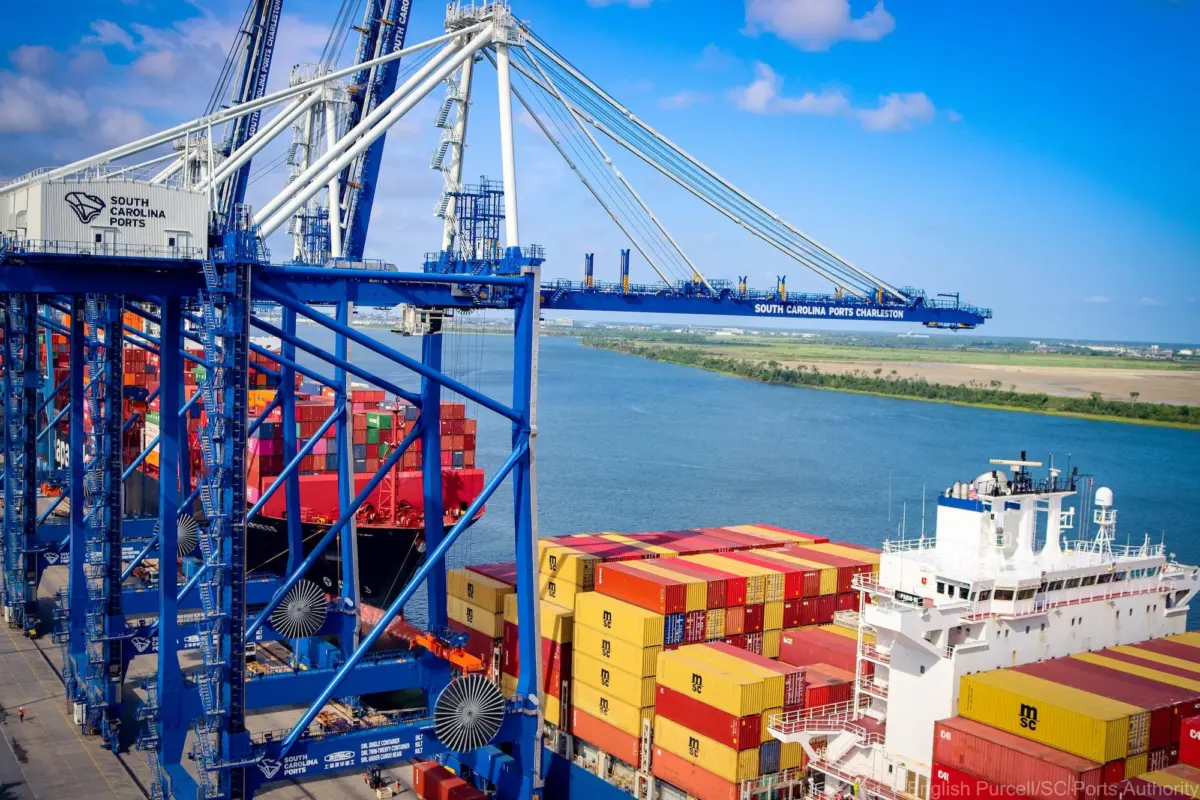
In a landmark development, Lloyd’s Register, the Danish shipping giant A.P. Moller-Maersk, and two of the world’s most vital container ports have joined forces to explore the feasibility of operating a nuclear-powered containership. Dubbed the “Pink Corridor,” this collaborative initiative focuses on a theoretical, zero-emission shipping route between the Port of Charleston in South Carolina, United States, and the Port of Felixstowe in Suffolk, United Kingdom.
Unlike previous maritime decarbonization studies that focus purely on vessel design, the Pink Corridor project is a pragmatic, systems-level investigation. It does not aim to launch a nuclear-powered vessel in the immediate future. Instead, the consortium is laying the regulatory, operational, and safety groundwork required to make commercial nuclear shipping legally and logistically viable. By examining port access, emergency response, cyber resilience, and the alignment of national nuclear and maritime regulatory bodies, the project aims to solve the complex institutional puzzles that have kept civil nuclear shipping docked for more than half a century.
Detailed Chronology
The journey toward commercial maritime nuclear power has been long, marked by mid-20th-century experimentation, decades of stagnation, and a rapid acceleration over the last five years driven by climate mandates and geopolitical shifts.
[1950s–1970s]            [2023]                       [2024]                      [2024–Present]
First-Gen Civil Nuclear  -> LR Publishes First Commercial -> LR, Core Power & Maersk  -> "Pink Corridor" & MARAD-
Vessels (NS Savannah)    Nuclear Safety Framework     Formalize Joint Studies     CORE POWER Agreements Launched
The Historical Precedents (1959–1980s)
To understand the significance of the Pink Corridor, one must look to the past. In the mid-20th century, the United States, West Germany, and Japan launched experimental nuclear merchant ships:
- NS Savannah (US, 1959): A showcase of President Dwight D. Eisenhower’s "Atoms for Peace" initiative. Though technologically successful, she was commercially unviable due to high crew costs, limited cargo space, and intense port-entry bureaucracy.
- NS Otto Hahn (West Germany, 1968): A nuclear-powered ore carrier that safely traveled over 650,000 nautical miles but was eventually converted to diesel power due to high operating costs.
- NS Mutsu (Japan, 1970): Plagued by technical setbacks, political opposition, and a minor radiation leak that triggered public outcry, the vessel was eventually decommissioned.
For decades, nuclear propulsion remained almost exclusively the domain of naval aircraft carriers, submarines, and state-owned Russian icebreakers navigating the Northern Sea Route.
The Decarbonization Catalyst (2020–2023)
The revival of commercial interest began in earnest as the International Maritime Organization (IMO) tightened its greenhouse gas reduction targets, aiming for net-zero emissions by or around 2050. Recognizing that alternative green fuels suffer from severe energy-density and supply-chain limitations, industry leaders began revisiting nuclear power.
In 2023, Lloyd’s Register released the maritime industry’s first comprehensive roadmap for integrating nuclear technology into commercial shipping and offshore operations. This framework provided a structured approach to licensing, safety, and risk assessment, giving commercial entities a baseline from which to design actual projects.
The Pathway to the Pink Corridor (2024)
Building on the 2023 roadmap, Lloyd’s Register and nuclear technology developer CORE POWER conducted a joint regulatory assessment. This work was later formalized through a joint development project with A.P. Moller-Maersk to examine the safety, operational, and regulatory requirements of advanced nuclear-powered container shipping.
Concurrently, the political landscape shifted. Under the Trump administration, Washington intensified its efforts to rebuild U.S. maritime capabilities and secure energy dominance. This culminated in the U.S. Maritime Administration (MARAD) signing a historic agreement with CORE POWER to explore a regulatory and operational pathway toward U.S.-flagged nuclear-powered commercial ships. This agreement laid the groundwork for the bilateral collaboration that ultimately birthed the Pink Corridor.
Supporting Context & Metrics
To appreciate why industry heavyweights like Maersk and Lloyd’s Register are committing resources to nuclear power, it is necessary to examine the stark realities of maritime fuel physics, environmental targets, and regulatory overlaps.
The Energy Density Disconnect
The shipping industry consumes approximately 300 million metric tons of heavy fuel oil annually, contributing nearly 3% of global greenhouse gas emissions. While green methanol and ammonia are frequently cited as the future of shipping, their energy densities pale in comparison to fossil fuels—and are utterly dwarfed by nuclear fuel.
| Fuel Type | Energy Density (MJ/kg) | Space Required Relative to Diesel | Estimated Greenhouse Gas Emissions (Onboard) |
|---|---|---|---|
| Heavy Fuel Oil (HFO) | ~40 | 1x | High ($CO_2$, $SO_x$, $NO_x$) |
| Green Methanol | ~20 | ~2x to 2.5x | Net-Zero (Lifecycle dependent) |
| Green Ammonia | ~18.6 | ~3x | Zero ($CO_2$), potential $N_2O$ risk |
| Liquid Hydrogen | ~120 | ~4x to 5x (due to cryogenic tanks) | Zero |
| Uranium-235 (Nuclear) | ~80,000,000 | Negligible | Zero |
Because of this unparalleled energy density, a nuclear-powered containership could operate for 20 to 25 years—the entire operational lifespan of the vessel—without ever needing to bunker (refuel). This eliminates the massive fuel tanks that reduce cargo-carrying capacity on conventional and alternative-fueled vessels, potentially making nuclear-powered ships far more productive and profitable over their lifecycles.
The Regulatory Congruence Challenge
The primary barrier to nuclear shipping is not technology, but governance. Currently, nuclear vessels operate under a fragmented regulatory regime:
                  +-----------------------------------------+
                  |  International Maritime Organization    |
                  |     (SOLAS Chapter VIII - Nuclear)      |
                  +--------------------+--------------------+
                                       |
                                       v
         +-----------------------------+-----------------------------+
         |                                                           |
         v                                                           v
+--------+-----------------------+                         +---------+-----------------------+
|    United States Authorities   |                         |     United Kingdom Authorities  |
|  - Nuclear Regulatory Comm.   |                         |  - Office for Nuclear Reg.      |
|  - Maritime Administration     |                         |  - Maritime & Coastguard Agency |
+--------------------------------+                         +---------------------------------+
Historically, the IMO’s Code of Safety for Nuclear Merchant Ships (Resolution A.491(XII)) has not been updated to reflect modern, advanced reactor designs, such as Molten Salt Reactors (MSRs) or Small Modular Reactors (SMRs). SMRs are designed to be walk-away safe, utilizing low-pressure systems that prevent the catastrophic meltdowns associated with traditional high-pressure land-based reactors.
The Pink Corridor study is specifically designed to bridge these regulatory gaps, creating a unified framework that satisfies both maritime safety authorities and national nuclear regulators on both sides of the Atlantic.
Official Statements
The launch of the Pink Corridor and its parallel initiatives has drawn high-profile commentary from shipping, port, and government leaders, signaling a shared belief that commercial nuclear shipping is no longer a fringe concept.
Nick Gross, Global Containerships Segment Director at Lloyd’s Register, emphasized the collaborative and practical nature of the project:
"The Pink Corridor joint development programme is an important step for the application of nuclear technology in merchant shipping. By taking a practical, collaborative approach, the project will examine the security and safeguards that would need to be addressed for safe operations. The partnership brings together industry-leading players across shipping, ports and classification, reflecting the growing interest in nuclear technology as a route to more sustainable maritime operations."
Representing the port operations side of the corridor, Tom Boyle, South Carolina Ports’ Director of Vessel Operations and Carrier Sales, framed the project around long-term sustainability and supply chain efficiency:
"As a major U.S. East Coast port, Charleston is always looking for innovative, cost-effective and sustainable ways to move freight. The conceptual Pink Corridor project allows for the study of the possibility of a nuclear-powered maritime corridor."
At the federal level, the geopolitical and strategic dimensions of maritime nuclear power were underscored by Maritime Administrator Stephen Carmel during the announcement of the parallel MARAD-CORE POWER agreement:
"President Trump has made it clear that American energy dominance and maritime strength go hand in hand. Nuclear propulsion is a serious commercial opportunity, but it must be approached as a complete system — safe, secure, licensable, and investable."
Future Outlook
The Pink Corridor is a multi-phase endeavor that will serve as a bellwether for the future of the global shipping fleet.
Phase 1: Foundations and Requirements (Current Phase)
The immediate focus of the consortium is to map out the baseline requirements for a Charleston-to-Felixstowe trade lane. This involves:
- Port Access & Infrastructure: Assessing what physical and safety infrastructure the ports of Charleston and Felixstowe would require to receive, secure, and service a nuclear vessel.
- Security & Safeguards: Developing protocols to protect the reactor and its fuel from physical threats, piracy, and proliferation risks.
- Cyber Resilience: Designing robust cyber-security frameworks for automated, reactor-integrated vessel management systems.
- Insurance and Liability: Establishing a commercial insurance framework capable of underwriting maritime nuclear risks, likely requiring adaptations of existing international nuclear liability treaties.
Phase 2: Engineering and Legislative Alignment
If Phase 1 successfully demonstrates feasibility, the project is expected to transition into a more detailed engineering and legislative phase. This will involve drafting concrete proposals for regulatory changes to be submitted to the IMO, the U.S. Congress, and the UK Parliament, alongside conceptual engineering designs for the vessel and its reactor interface.
Geopolitical and Industrial Implications
The Pink Corridor aligns closely with the U.S.-UK Technology Prosperity Deal, a bilateral agreement aimed at deepening cooperation in critical technologies, including civil maritime nuclear applications. By establishing a dedicated trade corridor between two highly aligned, technologically advanced nations, the U.S. and UK hope to set the global standard for maritime nuclear operations before other nations establish their own frameworks.
While a commercial, nuclear-powered containership is unlikely to enter regular service before the mid-2030s, the establishment of the Pink Corridor proves that the maritime industry is no longer treating nuclear power as a sci-fi fantasy. Faced with the daunting task of eliminating billions of tons of carbon emissions, the shipping industry is realizing that the ultimate solution to its future fuel crisis may have been discovered over half a century ago.