



Executive Overview
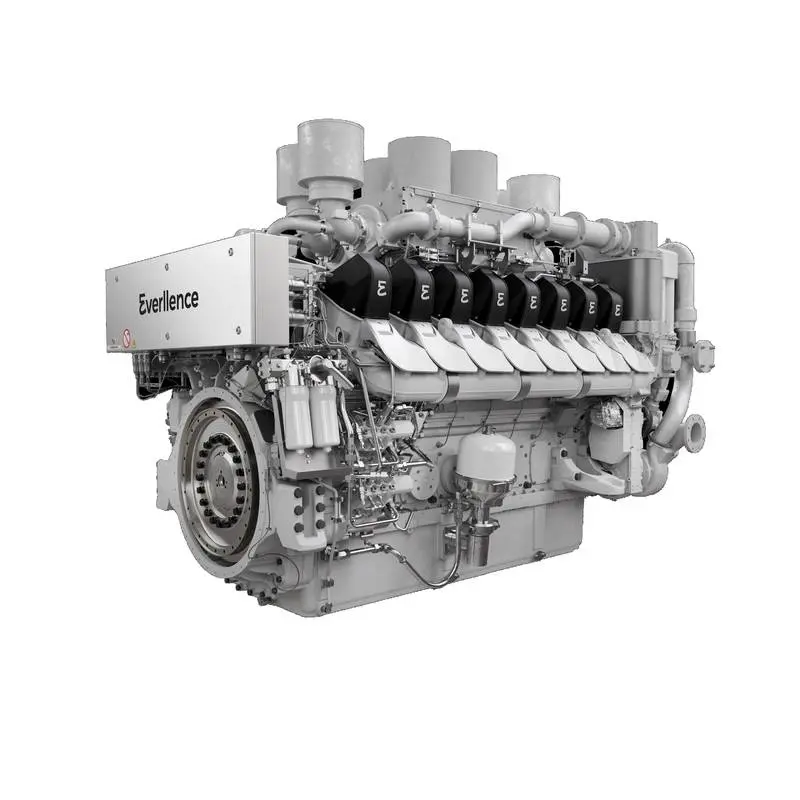
In a major development for the offshore marine and energy logistics sectors, MAN Energy Solutions (historically and internationally recognized for its high-speed propulsion innovations) has finalized a milestone contract with a prominent Turkish shipyard. The agreement entails the supply of 16 high-speed MAN 175D generator sets (gensets) destined for four newly designed RAmpage 6000-DE offshore terminal tugs. Designed by the world-renowned Canadian naval architecture firm Robert Allan Ltd., these vessels represent the cutting edge of diesel-electric towing and offshore support technology.
Once completed, the state-of-the-art tugs will be delivered to Smit Lamnalco, a leading international marine services provider associated with maritime giant Boskalis. The fleet is earmarked for long-term deployment in the ultra-active Stabroek Block offshore Guyana, South America. There, they will perform critical support services for a rapidly expanding fleet of Floating Production, Storage, and Offloading (FPSO) units operated on behalf of a consortium led by ExxonMobil.
This contract underscores a growing industry shift toward high-speed, diesel-electric propulsion systems in heavy-duty offshore applications. Traditionally dominated by medium-speed engines, the offshore terminal support market is increasingly embracing the power density, operational flexibility, and fuel efficiency offered by modern high-speed power units like the MAN 175D. The integration of these systems into a highly specialized Robert Allan Ltd. design highlights the rigorous technical and environmental standards demanded by major oil companies operating in deepwater frontiers.
+-----------------------------------------------------------------------------+
|                               PROJECT SNAPSHOT                              |
+-----------------------------------------------------------------------------+
| Engine Manufacturer   | MAN Energy Solutions (175D High-Speed Division)     |
| Vessel Designer       | Robert Allan Ltd. (RAmpage 6000-DE Design)          |
| Operator              | Smit Lamnalco (A Boskalis Group Company)            |
| Shipyard Location     | Turkey (Specialist Offshore Vessel Builder)         |
| Deployment Area       | Stabroek Block, Offshore Guyana, South America      |
| Total Gensets Ordered | 16 Units (4 x Shipsets of 4 Gensets)                |
| Delivery Schedule     | Q4 2026 (First Shipset) through Q4 2027             |
+-----------------------------------------------------------------------------+
Detailed Chronology & Project Timeline
The realization of this contract is the culmination of extensive engineering consultations and commercial negotiations spanning several years. It reflects the complex alignment required between engine manufacturers, ship designers, operators, shipyards, and oil majors before steel is cut for high-value offshore assets.
2024 (H1-H2)                  Late 2024                    End-2026                    Throughout 2027
     |                            |                            |                              |
     +----------------------------+----------------------------+------------------------------+
     |                            |                            |                              |
Technical Alignment          Contract Signing             First Shipset Delivery        Remaining Shipsets Delivered
Engineering design           16-genset deal secured      First 4 MAN 175D gensets       Progessive delivery of 12 units;
between Robert Allan Ltd.,   with Turkish shipyard       delivered to Turkish yard;     sea trials, mobilization, and
Smit Lamnalco, & MAN.        for RAmpage 6000-DE.        vessel assembly begins.        active deployment in Guyana.
Phase 1: Engineering and Design Integration (2024)
The project initiated with a rigorous technical evaluation phase. Smit Lamnalco, in collaboration with Robert Allan Ltd., sought a propulsion and auxiliary power package capable of meeting the stringent requirements of deepwater operations in Guyana. The choice of a diesel-electric configuration (denoted by the "DE" in RAmpage 6000-DE) necessitated close cooperation with MAN Energy Solutions to ensure the 175D gensets could seamlessly interface with the vessels’ advanced power management and dynamic positioning (DP) systems.
Phase 2: Contractual Agreement (Late 2024)
Following the selection of the propulsion package, the formal contract was signed between MAN Energy Solutions and the selected Turkish shipyard, a nation globally recognized for its expertise in constructing highly complex, custom offshore and tug vessels. The contract covers the manufacture, testing, and delivery of 16 individual gensets, divided into four identical "shipsets" of four engines each.
Phase 3: Manufacturing and Delivery Schedule (2026–2027)
The production of the engines will take place at MAN’s specialized high-speed engine facility.
- End-2026: The first complete shipset (consisting of two 12V175D and two 16V175D gensets) is scheduled for delivery to the Turkish shipyard. This will allow the yard to begin installation, alignment, and outfitting on the lead vessel of the class.
- Course of 2027: The remaining three shipsets will be delivered progressively. This staggered schedule aligns with the shipyard’s launch and sea trial milestones, ensuring a steady pipeline of vessels transitioning from construction to commissioning, mobilization, and active service in South America.
Supporting Context & Technical Metrics
To appreciate the scale and significance of this contract, it is necessary to examine the technical specifications of the machinery, the design of the vessels, and the demanding environment of the Stabroek Block.
The Powerhouses: MAN 175D Gensets
The MAN 175D engine range has established a strong reputation in the maritime industry for its compact footprint, excellent power-to-weight ratio, and compliance with the latest environmental regulations. For the RAmpage 6000-DE terminal tugs, a mixed engine configuration was selected to optimize performance across a highly variable operational profile.
Each of the four vessels will be equipped with:
- 2 × MAN 12V175D-MEL Gensets (2,280 kW each): These 12-cylinder units are optimized for marine electric propulsion and auxiliary power generation. They provide a highly reliable baseline of electrical energy for transit and low-load operations.
- 2 × MAN 16V175D-MEM Gensets (2,560 kW each): These 16-cylinder units deliver maximum power output, designed to be online during high-demand operations such as heavy towing, terminal escort duties, and active dynamic positioning in severe weather.
+---------------------------------------------------------------------------------+
|                         VESSEL POWER GENERATION PROFILE                         |
+---------------------------------------------------------------------------------+
| Engine Model       | Quantity | Unit Power Output | Combined Power Output       |
+--------------------+----------+-------------------+-----------------------------+
| MAN 12V175D-MEL    | 2        | 2,280 kW          | 4,560 kW                    |
| MAN 16V175D-MEM    | 2        | 2,560 kW          | 5,120 kW                    |
| Total per Vessel   | 4        | —                 | 9,680 kW (Approx. 13,000 hp)|
+---------------------------------------------------------------------------------+
By utilizing a total of four gensets per vessel, the onboard Power Management System (PMS) can dynamically start or stop engines based on real-time power demand. During standby or low-speed monitoring duties, the vessel can run on a single 12V genset, significantly reducing fuel consumption and emissions. Conversely, during full-power bollard pull operations or emergency towing, all four units can be brought online to deliver a combined electrical output of nearly 10 Megawatts (MW).
Vessel Design: The Robert Allan RAmpage 6000-DE
The RAmpage series of tugs was developed by Robert Allan Ltd. to address the offshore industry’s need for high-performance, multi-functional terminal tugs. The 60-meter, diesel-electric (DE) variant is specifically engineered for deepwater terminal support.
These vessels are designed to perform a demanding array of roles:
- Towing and Escort Duties: Assisting massive Very Large Crude Carriers (VLCCs) and Suezmax tankers as they approach and depart offloading terminals.
- Dynamic Positioning (DP2): Maintaining precise positioning relative to FPSOs during cargo transfers and maintenance operations, even in challenging open-ocean swells.
- Safety and Standby: Acting as emergency response vessels, equipped with external firefighting (FiFi 1 or FiFi 2) capabilities and oil spill recovery systems.
- Logistics and Maintenance Support: Transporting essential supplies, equipment, and personnel to and from the offshore production platforms.
The Operational Arena: The Stabroek Block, Guyana
The deployment of these vessels to the Stabroek Block places them at the center of one of the most significant oil and gas booms of the 21st century. Located approximately 120 miles offshore Guyana, the Stabroek Block covers over 6.6 million acres and contains estimated recoverable resources exceeding 11 billion barrels of oil equivalent.
                     STABROEK BLOCK (OFFSHORE GUYANA)
                             [ ~120 Miles ]

     [ FPSO Fleet ] <=================================> [ Export Tankers ]
  (Liza Destiny, Liza Unity,                              (VLCCs / Suezmax)
   Prosperity, One Guyana)                                        ^
                                                                  |
                                                       [ RAmpage 6000-DE Tugs ]
                                                       - Towing & Escort
                                                       - DP2 Positioning
                                                       - Safety & Standby
                                                       - Supply & Logistics
The block’s development relies entirely on FPSO technology. Vessels like the Liza Destiny, Liza Unity, Prosperity, and the upcoming One Guyana operate in deep, open waters, far from onshore infrastructure. This environment demands a robust logistics and support network.
Because FPSOs are permanently moored, offloading crude oil to export tankers requires highly specialized support vessels to manage the hawser lines, assist with tandem mooring, and ensure the safety of the entire operation. The RAmpage 6000-DE tugs, powered by the MAN 175D gensets, will provide the continuous, high-performance support required to maintain the uninterrupted flow of oil from this world-class basin.
Official Statements & Strategic Alignment
The selection of MAN Energy Solutions for this high-profile project underscores the critical role that reliability, efficiency, and life-cycle costs play in modern offshore procurement decisions.
Jamie Stewart, Group Tender Manager at Smit Lamnalco, elaborated on the strategic and operational rationale behind the selection:
"Everllence [MAN Energy Solutions’ high-speed division] was chosen by us for this project in consideration of its reputation for reliability, strong technical support, and efficient fuel and lube oil consumption, whilst remaining commercially cost-competitive. These factors, combined with increased overhaul intervals, will result in maximum in-service time for our charterer, as well as reducing our operational expenditure over the vessel lifetimes."
Stewart further highlighted the operational flexibility provided by the mixed 12-cylinder and 16-cylinder configuration:
"With Everllence providing a combination of 12- and 16-cylinder high-speed 175D engines, this will give our diesel-electric vessels the flexibility to operate fuel-efficiently across various operating modes, as well as providing commonality of equipment and spares, reducing inventory costs. We look forward to many years of reliable operation with this equipment being integral to our operational success."
Analysis of the Selection Criteria
From an operator’s perspective, the decision-making process for offshore support vessels is heavily weighted toward minimizing total cost of ownership (TCO) and maximizing vessel availability.
+-----------------------------------------------------------------------------------+
|                         OPERATIONAL BENEFITS & MITIGATIONS                        |
+-----------------------------------------------------------------------------------+
| Benefit Metric           | Technical Implementation & Impact                      |
+--------------------------+--------------------------------------------------------+
| Fuel & Lube Efficiency   | Low Specific Fuel Oil Consumption (SFOC) and optimized |
|                          | lube oil consumption reduce daily running costs and    |
|                          | lower greenhouse gas emissions.                        |
+--------------------------+--------------------------------------------------------+
| Extended Overhaul (TBO)  | Long Time-Between-Overhaul (TBO) intervals mean less   |
|                          | time in drydock and more active days on charter.       |
+--------------------------+--------------------------------------------------------+
| Commonality of Spares    | Using 12V and 16V variants of the same 175D platform    |
|                          | allows crews to utilize identical cylinder heads,      |
|                          | valves, and injectors, minimizing inventory costs.     |
+--------------------------+--------------------------------------------------------+
| Operational Flexibility  | Diesel-electric configuration allows engines to be     |
|                          | turned off during low-load periods, preventing cylinder |
|                          | glazing and reducing carbon buildup.                   |
+-----------------------------------------------------------------------------------+
Future Outlook & Industry Implications
The signing of this contract is indicative of several broader trends sweeping the marine engineering and offshore oil and gas industries.
+--------------------------------------------------------------------------------+
|                           BROADER MARITIME TRENDS                              |
+--------------------------------------------------------------------------------+
|                                                                                |
|  [ DECARBONIZATION ] ======> Shift to diesel-electric and hybrid systems to     |
|                              optimize fuel consumption and lower emissions.    |
|                                                                                |
|  [ REGIONAL EXPANSION ] ===> Rising deepwater activity in South America         |
|                              drives demand for high-spec support fleets.       |
|                                                                                |
|  [ PROPULSION SHIFT ] =====> High-speed gensets increasingly challenge         |
|                              traditional medium-speed engines in OSV sectors.  |
|                                                                                |
+--------------------------------------------------------------------------------+
1. The Ascent of High-Speed Engines in Offshore Support
For decades, medium-speed engines were the default choice for offshore tugs and supply vessels, valued for their ruggedness and ability to burn lower-quality fuels. However, modern high-speed engines, such as the MAN 175D, have closed the gap in terms of durability while offering significant advantages in weight, volume, and transient response.
By selecting high-speed gensets for a diesel-electric configuration, Smit Lamnalco and Robert Allan Ltd. have freed up valuable space within the hull. This allows for larger tank capacities for fuel, fresh water, and recovered oil, or alternatively, a more spacious and ergonomic layout for the crew—a critical factor for vessels operating on extended offshore rotations.
2. Decarbonization and the Hybridization Pathway
While these vessels will operate on conventional marine diesel oil, the diesel-electric configuration represents a vital step toward future-proofing maritime assets. A vessel powered by a diesel-electric grid can be retrofitted with battery energy storage systems (BESS) far more easily than a direct-drive diesel vessel.
As environmental regulations tighten and oil majors demand lower-carbon logistics chains, these tugs can be upgraded to hybrid operations. This would allow for peak-shaving, zero-emission harbor operations, and even more efficient dynamic positioning by using batteries to handle rapid load fluctuations rather than starting an additional engine.
3. The Geopolitical and Economic Center of Gravity Shifts to South America
The deployment of these vessels to Guyana emphasizes the country’s status as the world’s premier offshore investment destination. As production in the Stabroek Block rises toward a projected 1.2 million barrels of oil per day by 2027/2028, the demand for highly specialized marine services will only increase.
This contract positions Smit Lamnalco and MAN Energy Solutions as key players in this critical supply chain. The successful operation of these RAmpage 6000-DE tugs will likely serve as a reference point for future vessel designs and propulsion selections in the region, influencing subsequent tenders in neighboring Suriname and Brazil.
In conclusion, this 16-engine contract represents a highly integrated alignment of technical excellence, operational efficiency, and strategic foresight. By combining MAN’s advanced 175D high-speed engine technology with Robert Allan Ltd.’s proven naval architecture and Smit Lamnalco’s operational expertise, the offshore industry is welcoming a new benchmark for deepwater terminal support—one that is fully equipped to meet the rigorous demands of the Guyanese energy boom.