








Executive Overview
In the fast-evolving landscape of modern energy policy, few rhetorical about-faces match the recent pivot executed by United States Interior Secretary Doug Burgum. Almost exactly one year after dismissing energy storage as a nonexistent illusion—famously decrying the "catastrophic failure called sunset" while questioning the viability of renewables—Burgum publicly embraced the foundational importance of advanced battery manufacturing.
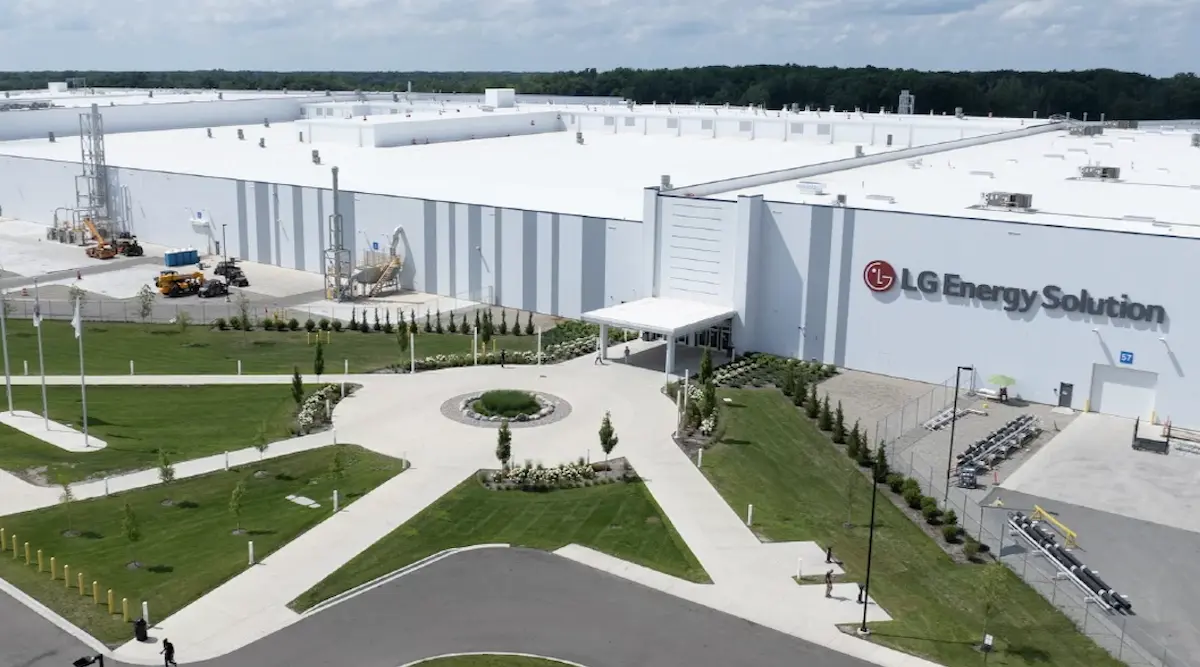
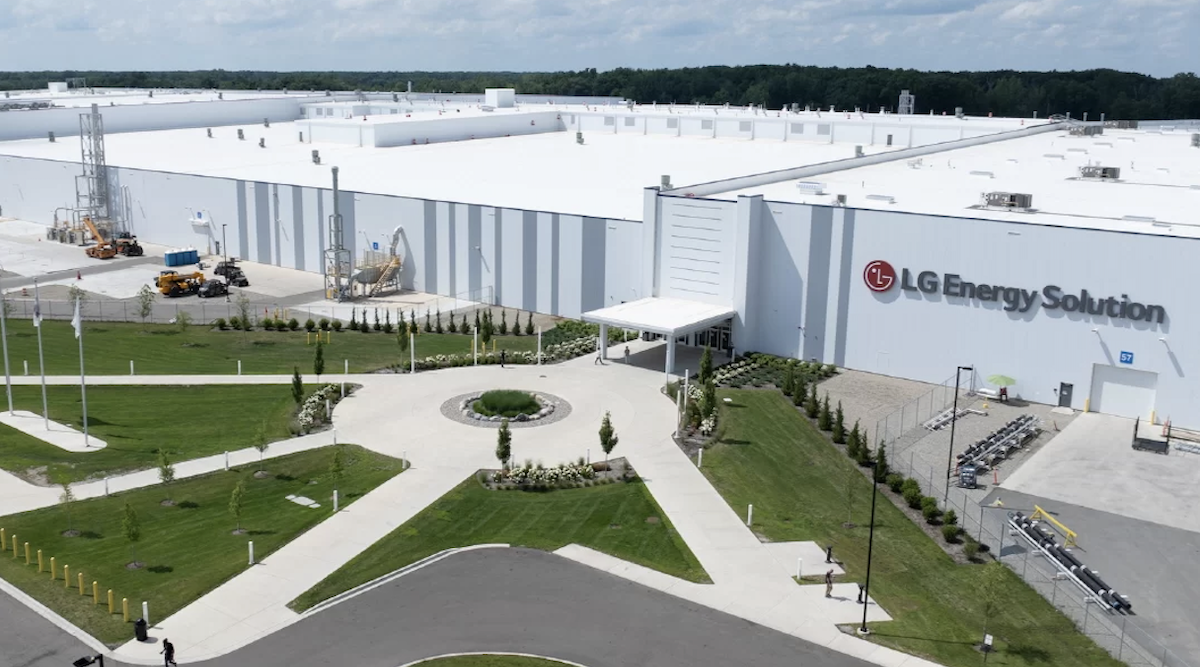
This dramatic policy and rhetorical reversal took center stage at the official opening of a massive new battery manufacturing facility in Lansing, Michigan, operated by South Korean battery giant LG Energy Solution. The plant represents more than just an economic boon for a vital swing state; it highlights a stark convergence between geopolitical pragmatism and domestic economic reality. Despite previous federal skepticism toward clean energy subsidies and intermittent power sources, the sheer gravitational pull of industrial policy, job creation, and supply chain security has forced high-ranking administration officials to acknowledge what engineers and grid operators have known for decades: modern energy storage systems (BESS) are essential to the nation’s energy future.
However, this domestic manufacturing milestone unfolds against a backdrop of complex international relations. While the administration celebrates foreign direct investment from key allies like South Korea—exemplified by ventures involving LG Energy Solution and Samsung SDI—broader diplomatic and military frictions threaten to undermine these very partnerships. As the United States races to secure its position in the global energy storage and electric vehicle (EV) supply chains, navigating the tension between domestic political messaging and international alliance management will remain one of the defining challenges of the decade.
Detailed Chronology: A One-Year Rhetorical Evolution
To fully appreciate the magnitude of Secretary Burgum’s recent declarations, one must examine the timeline of his public statements regarding renewable energy, grid intermittency, and storage technology.
August 2025: The "Catastrophic Sunset"
During an appearance on Fox Business in August 2025, Secretary Burgum delivered a scathing critique of federal investments in renewable energy infrastructure. Focusing heavily on the inherent variability of solar and wind generation, Burgum deployed vivid rhetoric to dismiss green technology subsidies:
"And of course, when the sun goes down, you have a catastrophic failure called sunset and there’s no solar energy produced, and yet we’re subsidizing these things that are intermittent, unreliable, and expensive," Burgum stated.
In the same interview, he minimized the contributions of wind energy, claiming that recent generation figures had plummeted to meager single-digit percentages despite hundreds of billions of dollars in cumulative investments. These remarks conveniently overlooked both the fundamental mechanics of grid management—specifically, the integration of utility-scale battery energy storage systems (BESS) capable of banking daytime solar generation for evening peak demand—and the robust performance of wind energy in key domestic markets.

August 2026: The Michigan Revelation
Fast forward twelve months to August 18, 2026. Standing at the podium for the grand opening of LG Energy Solution’s state-of-the-art facility in Lansing, Michigan, Secretary Burgum’s tone underwent a miraculous transformation. Gone was the skepticism regarding grid reliability; in its place was an enthusiastic endorsement of domestic manufacturing and battery technology:
"Domestic battery production is foundational to America’s energy future — reducing dependence on foreign adversaries, driving good-paying American jobs and advancing the American Energy Dominance Agenda."
This sudden acknowledgment that batteries not only exist but occupy a "foundational" role in national infrastructure represents a striking departure from his previous rhetoric. Political analysts note that the shift is driven heavily by realpolitik: with crucial midterm and post-election cycles looming, securing 1,700 high-paying manufacturing jobs in the critical swing state of Michigan takes precedence over ideological opposition to clean energy technologies.
Supporting Context & Metrics: Reality Checks on Wind, Solar, and Storage
Secretary Burgum’s 2025 assertions stood in stark contrast to empirical data provided by federal agencies and independent energy analysts. Examining the actual performance metrics of the United States energy grid reveals a vastly different picture of renewable integration and technological maturity.
The Myth of the Failing Wind Grid
Burgum’s critique of wind energy in late 2025 relied on anecdotal snapshots rather than systemic reality. While wind resources naturally fluctuate, the industry’s long-term contribution to the American power mix has expanded exponentially.
Consider Burgum’s home state of North Dakota, a region deeply intertwined with traditional fossil fuel extraction but also uniquely positioned for wind generation. According to data compiled by the U.S. Energy Information Administration (EIA) for 2025, wind energy accounted for an impressive 35% of North Dakota’s total in-state electricity generation.
On a national scale, the growth trajectory is equally pronounced. Over the past two decades, combined electricity generation from wind power and utility-scale solar installations has climbed from less than 1% in 2005 to 17% of total U.S. generation, according to EIA reporting. This structural shift underscores how deeply integrated renewables have become in powering American homes and industries.
The Maturation of Battery Energy Storage Systems (BESS)
The missing link in Burgum’s 2025 critique was the rapid deployment of utility-scale battery storage. Modern BESS installations decouple energy generation from immediate consumption. By capturing surplus solar power during peak production hours and discharging it smoothly after sunset, storage technologies neutralize the "intermittency" argument that critics have leveraged for years.
As utility operators across the country face surging electricity demand—driven by artificial intelligence data centers, industrial electrification, and residential EV adoption—energy storage has transitioned from an experimental niche into an indispensable grid asset.
Official Statements and Industry Impact: Inside the LG Energy and Samsung Ventures
The newly inaugurated Lansing facility and concurrent clean tech projects highlight how global industrial players are embedding themselves within the American manufacturing ecosystem, regardless of shifting political winds.
LG Energy Solution: Dual-Track Production in Michigan
The LG Energy Solution Michigan-Lansing project is designed to cater to both stationary storage and automotive markets through two distinct battery chemistries:
- Lithium-Iron-Phosphosphate (LFP) Cells: Targeted primarily at stationary energy storage, these cells are integrated by LG Energy Solution Vertech—the company’s U.S. storage division—into comprehensive systems for utility-scale grid stabilization, commercial facilities, and industrial applications. This explains Secretary Burgum’s sudden enthusiasm; source-agnostic battery systems can seamlessly support traditional power grids, natural gas peaking plants, and renewable installations alike.
- Nickel-Manganese-Cobalt (NMC) Cells: Offering higher energy density, these cells are earmarked for automotive partners like Toyota. Specifically, they will power next-generation battery electric vehicles (BEVs) such as the 2027 Toyota Highlander EV, which will roll off assembly lines at Toyota Motor Manufacturing Kentucky (TMMK) in Georgetown, Kentucky.
Samsung Nano and Federal Grant Resiliency
South Korean investment in the U.S. energy transition extends far beyond Michigan. In North Carolina, startup Forge Nano is advancing a major expansion of its lithium-ion battery manufacturing operations, heavily backed by South Korean battery giant Samsung SDI. Focused on heavy-duty commercial trucks, military applications, and aerospace needs, this facility received a vital $100 million grant initially awarded by the Department of Energy during the Biden administration in 2024.
Despite facing potential cuts under aggressive federal budget reviews last year, the grant survived following judicial intervention. In a striking illustration of political pragmatism, the Trump administration dispatched Audrey Robertson—Assistant Secretary overseeing the Office of Critical Minerals and Energy Innovation—to officiate the groundbreaking ceremony, cementing federal buy-in for a project that roots critical supply chains on American soil.

Geopolitical Undercurrents: The South Korea Paradox
While economic officials celebrate South Korean capital and manufacturing expertise driving domestic energy dominance, broader foreign policy maneuvers risk straining the bilateral alliance.
Shortened Military Exercises and Diplomatic Blindspots
Just as industrial partnerships were being toasted in Michigan and North Carolina, geopolitical turbulence surfaced in the Pacific. President Trump abruptly decided to truncate the 11-day "Ulchi Freedom Shield" joint military exercise with South Korea, cutting the final six days short.
This unexpected move sent shockwaves through diplomatic and defense circles, raising urgent questions regarding Washington’s long-term commitment to its East Asian allies. Dokyoung Koo, a nonresident fellow at the Atlantic Council and a 22-year Korean military veteran, offered a sharp critique of the administration’s methodology:
"From a South Korean perspective, the most troubling aspect of Trump’s decision is not simply the reduction of combined military exercises, but the way the decision was made. Announcing such a major change on the very day the exercise began, without adequate prior consultation with Seoul, falls short of the respect allies should expect from one another."
Navigating Strategic Contradictions
The disconnect between Washington welcoming billions of dollars in high-tech investment from South Korean industrial titans while simultaneously sidelining Seoul in defense matters highlights a persistent strategic friction. South Korea is no longer merely a regional security partner; it is a foundational pillar of America’s industrial and energy future. Antagonizing such a critical ally through abrupt, unilateral defense decisions risks introducing unnecessary volatility into economic supply chains that rely on deep, trusted cross-border cooperation.
Future Outlook
Doug Burgum’s evolution from energy storage denier to enthusiastic advocate for domestic battery manufacturing illustrates a broader truth about the modern energy transition: economic gravity eventually overrides political rhetoric. As data centers expand, industrial electrification accelerates, and grid operators demand maximum reliability, the deployment of advanced energy storage systems is no longer a partisan debate—it is an economic necessity.
Looking ahead to the remainder of the decade, the trajectory of U.S. energy storage and electric vehicle supply chains will depend on several critical factors:
- Continued Capital Expenditure: Private sector commitments from firms like LG Energy Solution and Samsung SDI indicate that multi-billion-dollar investments in domestic manufacturing will persist, anchored by regional economic incentives and corporate decarbonization goals.
- Supply Chain Localization: As federal policies continue to emphasize supply chain independence from foreign adversaries, expanding domestic refining, cell manufacturing, and recycling capabilities will remain a bipartisan priority.
- Diplomatic Consistency: To safeguard these intricate industrial ecosystems, future federal administrations must harmonize their economic incentives with respectful, stable foreign policy engagements with key allies like South Korea.
Ultimately, the batteries rolling off the line in Lansing and North Carolina will continue to charge, store, and discharge energy regardless of political theater. Secretary Burgum may have taken a meandering path to reach reality, but the foundational reality of energy storage is here to stay.