







Executive Overview
Marine engine maintenance is a constant exercise in vigilance, yet few discoveries strike panic into the heart of a boat owner quite like the sight of water mixed with engine oil. When moisture breaches the closed lubrication system of an inboard, sterndrive, or outboard powerhead, it initiates a silent, rapid catastrophe. Within minutes of operation, contaminated oil loses its viscosity and film strength, transforming a vital protective shield into a destructive abrasive slurry.
The presence of water in a marine engine’s oil is never a benign anomaly; it is an immediate mechanical emergency that demands decisive action. Whether caused by a blown head gasket, a cracked engine block resulting from a hard freeze, compromised exhaust components, or a past submersed incident, water intrusion compromises the integrity of internal bearings, camshafts, and cylinder walls.
This comprehensive report explores the mechanics of water intrusion, outlines the protocols for immediate on-water triage, details the severe structural risks of attempting to "limp home," and highlights the indispensable role of professional marine assistance services—such as Sea Tow—in preventing a manageable mechanical repair from escalating into a catastrophic total engine loss.
Detailed Chronology: The Anatomy of a Water Intrusion Event
To fully appreciate why finding milky oil requires an immediate and unyielding shutdown, one must understand the precise sequence of events that unfolds when water breaches a marine lubrication system. The chronology of a water-in-oil event generally follows a distinct, highly destructive trajectory.
Phase 1: The Breach
Water enters the engine crankcase through one of several structural failure points. This can occur abruptly—such as through a sudden head gasket blowout under heavy load—or insidiously over time via micro-cracks in an exhaust manifold corroded by relentless saltwater exposure. Alternatively, water may enter due to external flooding, heavy stern-seas washing into the exhaust ports while backing down, or residual moisture remaining trapped after a vessel has run aground and taken on water.
Phase 2: Emulsification
Once water reaches the oil pan (oil sump), the mechanical agitation of the spinning crankshaft and connecting rods whips the oil and water together into an emulsion. Normal engine oil is amber or dark brown. However, when water droplets become suspended in the oil base, light refracts differently through the mixture, turning the fluid an opaque, creamy, milky-white or light brown color. This is the unmistakable visual marker that every mariner dreads seeing on the dipstick.

Phase 3: The Breakdown of Lubrication
Clean motor oil creates a microscopic barrier between fast-moving metal parts, preventing friction, heat generation, and metal-on-metal wear. Water possesses virtually no lubricating properties. When an emulsified mixture of oil and water is circulated by the oil pump through the engine’s galleries, it fails to maintain this critical hydrodynamic wedge.
Phase 4: Rapid Component Destruction
As metal components rub against one another without adequate lubrication, friction spikes instantaneously. Bearings (main bearings, rod bearings, and cam bearings) begin to score, pit, and wipe out. Piston rings scuff against cylinder walls, leading to a permanent loss of compression. If the engine is allowed to continue running, the friction generates enough localized heat to weld moving parts together, resulting in catastrophic engine seizure, thrown rods, or a cracked engine block.
Supporting Context & Metrics: Recognizing the Warning Signs
Boaters rarely catch a water intrusion event in the act of happening; instead, they discover the evidence during routine pre-departure checks or after noticing performance anomalies. Recognizing the subtle and overt indicators of water-contaminated oil can save a powerhead from total destruction.
Visual and Mechanical Indicators
- The Dipstick Test: The definitive visual cue is oil that appears milky, frothy, or light-tan. Any deviation from standard amber or dark oil demands an immediate investigation.
- Exhaust Anomalies: Excessive white smoke or steam billowing from the exhaust (that persists long after the engine has reached operating temperature) can indicate that coolant or raw water is leaking into the combustion chambers and subsequently working past the rings into the crankcase.
- Pressure Drops: A sudden, unexplained drop in oil pressure on the helm gauges is a severe warning sign. Water contamination alters fluid viscosity, making it difficult for the oil pump to maintain proper pressure throughout the engine gallery.
- Unusual Mechanical Noise: Lifter tick, valve train clatter, or a deep, rhythmic knocking from the lower end of the block indicates that bearings are already starving for proper lubrication.
Primary Root Causes of Water Intrusion
Understanding how water gets into the oil helps technicians diagnose the underlying failure once the vessel is safely back at the dock:
- Blown Head Gaskets: The most frequent culprit in both freshwater- and saltwater-cooled engines. A deteriorated head gasket seal allows pressurized cooling passages to communicate directly with oil return channels.
- Exhaust Manifold and Riser Failures: Particularly prevalent in saltwater environments, internal corrosion can eat through the thin cast-iron or aluminum barrier separating the raw cooling water running through the exhaust manifold and the exhaust passages leading out of the engine. Once breached, water flows backward down the exhaust runners, past open exhaust valves, and straight into the cylinders and crankcase.
- Thermal Shock and Freezing Cracks: If an engine is improperly winterized and residual water inside the block freezes, it expands with immense force, fracturing the cast-iron block or exhaust components. Similarly, severe overheating followed by the sudden introduction of cold raw water can crack metal components due to rapid thermal contraction.
- Submersion and Immersion Events: Vessels that have suffered swamping, severe hull breaches, or swamping at the dock often retain water in the intake or exhaust tracts, which eventually finds its way into the oil pan.
Official Statements & Marine Safety Protocols
Marine safety experts, commercial salvors, and engine manufacturers are universally aligned on one primary directive: Do not run an engine known to have water in its oil.
According to leading marine incident investigators, attempting to "limp back" to port under contaminated power is the single most common catalyst for turning a minor, repairable gasket failure into a total engine write-off. When a vessel operator observes milky oil while out on the water, standard operating procedure dictates a strict hierarchy of safety responses:
- Immediate Shutdown: Kill the engine instantly. Do not idle it to "see how it runs," and do not attempt to restart it.
- Situation Assessment: With the primary propulsion offline, the captain must immediately evaluate external variables: wind speed, current, proximity to navigational hazards, shipping lanes, and lee shores. Check the anchor’s holding potential or monitor the vessel’s drift rate.
- Establish Communication: Determine whether the vessel can safely anchor or if external towing assistance is required. If the boat cannot maintain a safe position, it ceases to be a mechanical troubleshooting exercise and instantly becomes an on-water safety emergency.
The Danger of "Limping Back"
A common temptation among recreational boaters is to rationalize a minor mechanical issue. Thoughts such as, "We’re only two miles from the marina; the engine sounds fine; we can just idle back slowly," routinely result in catastrophic financial and safety consequences.
When water-contaminated oil is churned through an engine operating even at low RPMs:
- Bearing Wipe: Babbitt material on engine bearings rapidly delaminates.
- Corrosion Formation: Water left in contact with hot internal steel components begins flash-rusting delicate surfaces within hours.
- Thermal Runaway: Without oil cooling properties, localized hot spots develop on pistons and cylinder walls, causing warping and seizing.
Attempting to navigate back under your own power with compromised oil risks stranding the vessel in a high-traffic or hazardous channel, endangering both the crew and assisting vessels. This is precisely why professional on-water towing networks exist.
Professional On-Water Assistance: The Role of Sea Tow
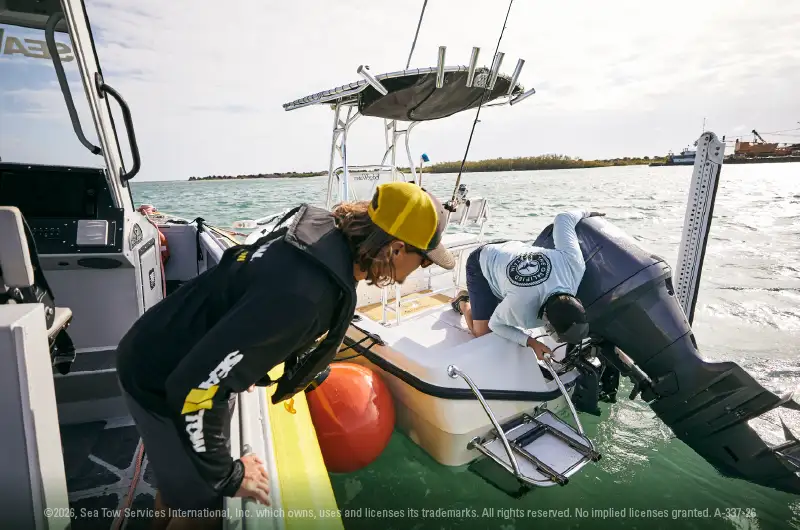
When mechanical failure strips a vessel of its propulsion, relying on professional assistance is the safest and most efficient path forward. Sea Tow, a pioneer and industry leader in on-water marine assistance since 1983, provides 24/7 nationwide support for boaters facing unexpected mechanical breakdowns, including severe engine failures and water intrusion events.
Why Professional Towing Outweighs DIY Risks
Attempting makeshift solutions while drifting in open water—such as trying to change engine oil on a rolling deck without specialized tools, fluid extraction equipment, or proper containment supplies—violates basic marine safety principles. It introduces environmental spill hazards, personal injury risks due to vessel motion, and rarely solves the root mechanical failure (such as a cracked block or blown head gasket) anyway.
Professional Sea Tow Captains provide critical intervention:
- Safe Transport: Utilizing commercial-grade towing vessels, Sea Tow captains securely rig your boat and tow it safely back to your home slip, launch ramp, or a designated repair facility.
- Hazard Mitigation: Keeping crews out of harm’s way when weather conditions deteriorate or when drifting toward shoals and rocks.
- Seamless Communication: Providing multiple avenues for dispatch—including VHF Channel 16, direct phone lines (800-4-SEATOW), and the dedicated Sea Tow app—ensures assistance is never more than a call away.
Furthermore, active Sea Tow members benefit from comprehensive coverage that eliminates out-of-pocket expenses for standard on-water tows, transforming a stressful maritime emergency into a managed, routine service call. Boaters are strongly encouraged to review their membership status annually to ensure uninterrupted peace of mind on the water.
Future Outlook: Preventing Water Intrusion in Modern Marine Engines
As marine propulsion technology evolves—incorporating advanced closed-cooling systems, sophisticated electronic monitoring, and composite materials—preventative maintenance remains the ultimate defense against internal water contamination.
Best Practices for Long-Term Engine Health
- Rigorous Winterization: Never cut corners on winterizing raw-water and freshwater cooling systems. Complete drainage, antifreeze flushing, and proper block-drain management prevent freeze-cracking.
- Anode Maintenance: Regularly inspect and replace sacrificial zinc anodes within the cooling and exhaust systems to prevent galvanic corrosion from eating through manifolds, risers, and heat exchangers.
- Routine Fluid Analysis: Incorporating professional oil analysis into your seasonal maintenance routine can detect microscopic traces of coolant additives or water long before the oil turns visibly milky on the dipstick.
- Post-Grounding Inspections: Following any hull impact or grounding event, have a certified marine mechanic check the alignment, exhaust bellows, and engine mounts, as severe jolts can crack manifolds or strain gasket seals.
Frequently Asked Questions
What does milky oil mean in a boat engine?
Milky, frothy, or light-brown oil indicates that water has breached the engine’s internal lubrication system and mixed with the motor oil. This is a severe mechanical warning sign, typically caused by a blown head gasket, cracked engine block, or failing exhaust manifold, and it requires immediate shutdown.
Can water in engine oil ruin my boat engine?
Yes. Water destroys the lubricating film required to protect fast-moving internal parts. Operating an engine with water-contaminated oil causes rapid friction, bearing failure, scoring, and ultimately complete engine seizure within minutes.
Is it safe to try and "limp back" to port with water in the oil?
No. Even brief operation at low RPMs under contaminated oil causes irreversible internal damage and dramatically increases the risk of complete engine failure, leaving you stranded in potentially dangerous waters.
Can Sea Tow tow my boat if my engine is mechanically disabled?
Yes. Sea Tow provides 24/7 professional on-water towing and assistance for vessels suffering from mechanical failures, engine seizures, or severe system compromises, ensuring you and your passengers return to port safely.
How do I request assistance from Sea Tow during an engine emergency?
Boaters can contact Sea Tow immediately via VHF Channel 16, by calling 800-4-SEATOW, or by using the official Sea Tow mobile application to dispatch a captain directly to their GPS coordinates.
Conclusion
Discovering water in your boat engine oil is an undeniable marine emergency, but it does not have to result in a ruined season or a tragic accident. By prioritizing crew safety, immediately shutting down the powerplant, resisting the urge to limp home, and relying on professional marine assistance providers like Sea Tow, boaters can navigate mechanical crises with confidence. Preparation, rapid recognition of symptoms, and adherence to established marine safety protocols remain the cornerstones of responsible, stress-free boating.