








Executive Overview
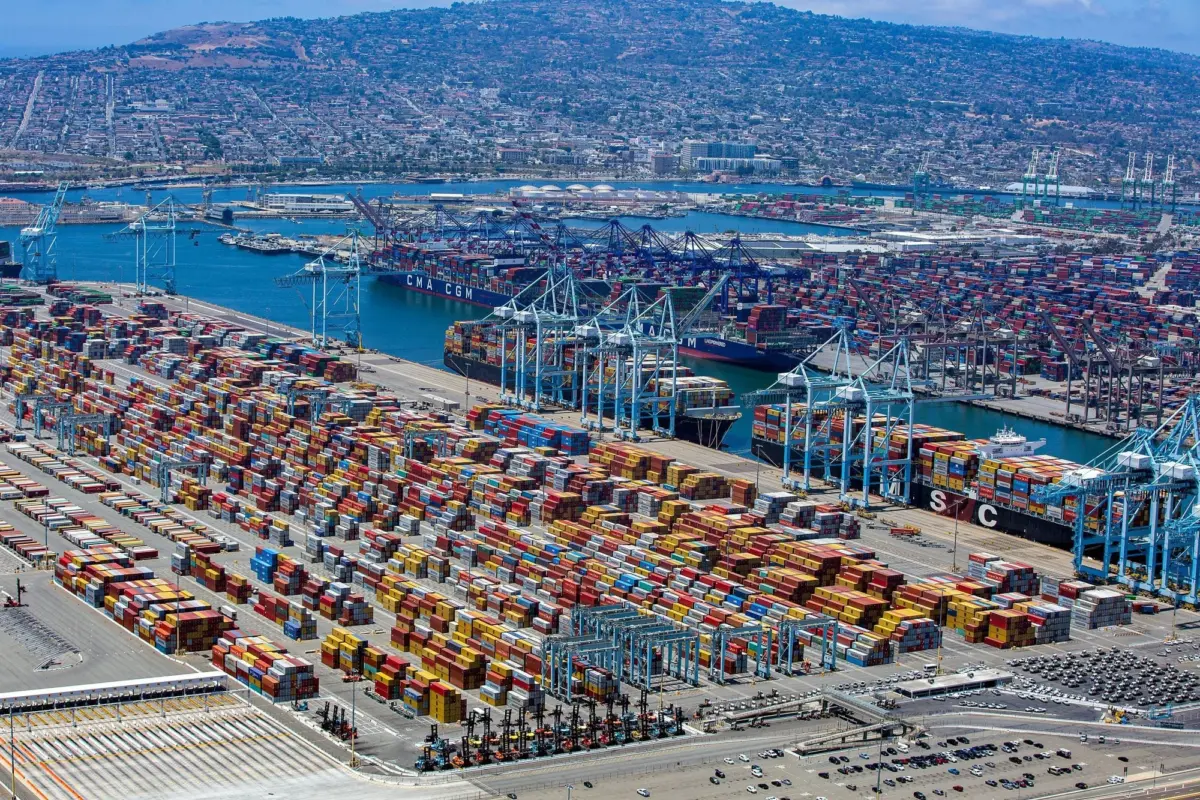
The Port of Los Angeles (POLA) has solidified its position as the premier gateway for U.S. maritime trade by registering its most prolific three-month volume stretch in its history. Capping off an extraordinary summer, the port processed more than 2.9 million Twenty-Foot Equivalent Units (TEUs) across June, July, and August. This unprecedented volume underscores a significant, unexpected momentum carrying into the autumn months, defying earlier projections of a late-summer slowdown.
In August alone, the Port of Los Angeles handled 955,907 TEUs. When combined with the neighboring Port of Long Beach, which reported its busiest August on record, the twin gateways of the San Pedro Bay port complex processed a staggering 1.88 million TEUs during the month. This surge reflects a broader realignment of global supply chains, driven by resilient U.S. consumer spending, early holiday inventory front-loading, and strategic diversions away from East and Gulf Coast ports due to looming labor uncertainties.
Historically, the traditional "peak season" for shipping begins in late August and runs through October. However, the data from this summer reveals a structural shift. Importers, scarred by pandemic-era logjams and wary of impending tariff adjustments and labor disputes, initiated their shipping campaigns months ahead of schedule. The Port of Los Angeles has not only absorbed this early deluge but has done so with operational efficiency that stands in stark contrast to the severe congestion experienced in previous years.

Detailed Chronology: The Evolution of the Summer Surge
To understand the magnitude of the summer peak, it is essential to trace the operational timeline of the trans-Pacific shipping lane from the spring through the end of August.
[Spring: Threat of Disruptions] ──> [Early Summer: Front-loading Peak] ──> [August: Historic Milestone]
- Red Sea / Suez crises             - Shippers pull orders forward         - Port of LA handles 955,907 TEUs
- East Coast labor tensions         - West Coast route favored             - 3-month total hits 2.9M+ TEUs
Spring: Anticipation and Mitigation Strategies
Early in the year, supply chain managers faced a trifecta of global logistics hurdles: ongoing geopolitical tensions in the Red Sea forcing vessel diversions around the Cape of Good Hope, draft restrictions in the drought-stricken Panama Canal, and escalating contract tensions between the International Longshoremen’s Association (ILA) and the United States Maritime Alliance (USMX) on the East and Gulf Coasts.
Anticipating potential bottlenecks, major retailers and industrial importers began restructuring their logistics playbooks. Rather than waiting for the traditional mid-to-late summer window to import holiday merchandise and autumn consumer goods, procurement teams began pulling orders forward as early as April and May.
June and July: The Momentum Builds
By June, the "pull-forward" effect was fully underway. The Port of Los Angeles saw immediate dividends from its stable labor environment, following the ratification of the long-term contract between the International Longshore and Warehouse Union (ILWU) and the Pacific Maritime Association (PMA) the previous year. Importers seeking reliability diverted discretionary cargo away from East Coast ports to Southern California.
June and July volumes surged, rapidly filling warehousing capacity throughout the Inland Empire—Southern California’s massive logistics hub. This early momentum did not taper off as some analysts had predicted; instead, it built a continuous bridge of high-volume cargo movements directly into late summer.
August: The Historic Peak
The culmination of this strategic front-loading arrived in August. The Port of Los Angeles processed 955,907 TEUs. While this figure was relatively flat compared to the extraordinarily high volumes of August of the previous year, it stood a remarkable 6% higher than the port’s five-year average for the month. More importantly, it completed a record-breaking three-month run, totaling 2.9 million TEUs—the busiest June-to-August period in the port’s 117-year history.
This sustained throughput indicates that the West Coast has recaptured significant market share lost during the pandemic and subsequent labor negotiations.
Supporting Context & Metrics: A Data-Driven Analysis
The operational health of a port is best understood by dissecting its loaded imports, loaded exports, and empty container movements. Each metric tells a distinct story about domestic consumption, manufacturing health, and global equipment balances.
| Metric (Port of Los Angeles – August) | Volume (TEUs) | Year-over-Year Change | Comparison to 5-Year Average |
|---|---|---|---|
| Loaded Imports | 500,302 | Flat (~0%) | +7.0% |
| Loaded Exports | 115,561 | -9.0% | Below Average |
| Empty Containers | 340,044 | +4.0% | Elevated |
| Total Monthly Volume | 955,907 | Flat (~0%) | +6.0% |
| YTD Volume (Jan – Aug) | 7,000,000+ | +1.5% | +5.0% |
Imports and the Consumer Engine
Loaded imports at the Port of Los Angeles reached 500,302 TEUs in August. This performance represents a 7% increase over the five-year average for August, signaling that the American consumer’s appetite for retail goods remains the primary engine of global trade. Despite persistent inflation and elevated interest rates, consumer spending on electronics, apparel, home goods, and automotive parts has sustained import volumes at levels typically seen only during economic booms.
The Export Deficit
In contrast to the robust import numbers, loaded exports fell by 9% year-over-year to 115,561 TEUs. This decline highlights ongoing challenges for U.S. exporters, particularly in agricultural and industrial sectors. A strong U.S. dollar has made domestic goods more expensive abroad, while global ocean carriers often prioritize returning empty containers to Asian manufacturing hubs quickly over waiting for them to be loaded with lower-tariff, lower-margin U.S. export goods.
The Dynamics of Empty Containers
Empty container movements rose by 4% to 340,044 TEUs. In the economics of maritime transport, a high volume of outgoing empty containers is a leading indicator of intense import demand. Ocean carriers are eager to reposition these empty boxes back to major manufacturing centers in China, Vietnam, and elsewhere in Southeast Asia to prepare for the next wave of outbound consumer shipments.
Year-to-Date Performance
Through the first eight months of the year, the Port of Los Angeles processed just over 7 million TEUs. This represents a 1.5% increase over the same period last year and sits 5% ahead of the port’s five-year average pace. This steady growth points to a highly stable, highly productive logistical corridor that has adapted well to post-pandemic supply chain realities.
Official Statements: Operational Insights and Industry Perspectives
Port Administration: Gene Seroka
During the port’s monthly media briefing, Gene Seroka, Executive Director of the Port of Los Angeles, expressed confidence in the gateway’s operational posture and its competitive advantages.
"We’ve put together an exceptionally strong summer in Los Angeles," Seroka stated. "Resilient consumer demand, early holiday shipments, and a broad mix of cargo have all contributed to that strength. September is also shaping up to be another strong month, and Los Angeles is well-positioned to respond as global trade patterns continue to evolve."
Seroka emphasized that current trans-Pacific ocean freight rates strongly favor West Coast routings over East and Gulf Coast alternatives. Furthermore, the operational velocity of moving cargo off vessels, through the terminals, and onto the rail network significantly enhances the financial and logistical calculations for importers serving crucial inland markets like Chicago, Memphis, and Dallas.
[Vessel Arrival] ──> [Terminal Processing] ──> [On-Dock Rail] ──> [Inland Hubs (Chicago/Dallas)]
                    (Reduced Dwell Times)      (Direct Transit)     (Enhanced Economics)
Retail Sector: Brian Dodge
Representing the demand side of the supply chain, Brian Dodge, President and CEO of the Retail Industry Leaders Association (RILA), joined the briefing to offer perspective on the retail sector’s preparedness for the critical fourth-quarter shopping season.
"We’ve had an incredibly resilient consumer over the course of the last several years through a variety of different disruptions, and the same seems to be the case right now as we head into the holiday shopping season," Dodge remarked.
Dodge noted that while much of the holiday merchandise has already arrived in the United States due to early front-loading strategies, ongoing shipments will continue as retailers monitor real-time sales data and seek to replenish inventories. He indicated that retailers remain optimistic despite macroeconomic headwinds, including higher fuel costs, fluctuating tariffs, and broader inflationary pressures.
Future Outlook: Navigating Headwinds and Opportunities
As the maritime industry looks toward the final months of the year, several factors will dictate whether the San Pedro Bay ports can sustain this record-breaking momentum.
The Broader Import Picture
The latest Global Port Tracker report, published by the National Retail Federation (NRF) and Hackett Associates, suggests that the U.S. import peak may have a longer tail than previously anticipated. The report forecasts September as the busiest import month of the year for major U.S. container ports, with volumes projected to reach 2.31 million TEUs nationwide—a 9.6% increase year-over-year.
This forecast represents a significant shift from earlier market assumptions. Analysts had previously hypothesized that the spring and early summer pull-forward would lead to a sharp decline in autumn import volumes. Instead, consumer demand has remained sufficiently robust to sustain elevated import levels, creating a flatter, more prolonged peak season.
Expected Trend (Traditional Peak):   [Spring: Low] ───> [Summer: Rise] ───> [Autumn: Sharp Fall]
Actual Trend (2024 Extended Peak):   [Spring: High] ──> [Summer: Peak] ───> [Autumn: Elevated Plateau]
Anticipated Autumn Moderation
While September remains strong, the Global Port Tracker expects import volumes to ease gradually as winter approaches. October imports are forecast at 2.11 million TEUs, with November projected at 2.0 million TEUs. This expected moderation is viewed by terminal operators as a healthy development, allowing ports to clear remaining yard inventory, return empty containers, and maintain fluid gate operations ahead of the post-Lunar New Year lull.
Structural Advantages of the West Coast
The Port of Los Angeles’s ability to handle near-record volumes without the debilitating congestion seen in 2021 and 2022 is a testament to structural and technological improvements implemented over the last two years. Key initiatives include:
- Enhanced On-Dock Rail Capacity: Reducing the time containers spend waiting on terminal yards (dwell time) by transferring them directly to railcars.
- The Port Optimizer Platform: A shared digital data portal that allows terminal operators, trucking companies, and railroads to coordinate cargo moves well ahead of vessel arrivals.
- Labor Stability: The long-term ILWU contract has restored confidence among major shippers, ensuring that labor disruptions are highly unlikely for the foreseeable future.
Strategic and Geopolitical Risks
Despite the optimistic outlook, the shipping industry remains vulnerable to external shocks. The potential for labor strikes at East and Gulf Coast ports remains a critical variable; any prolonged stoppage there would inevitably redirect even more cargo to the West Coast, testing the ultimate capacity limits of the San Pedro Bay complex. Additionally, the threat of new tariffs and shifting trade policies under different political administrations keeps supply chain managers on high alert, encouraging them to maintain higher safety-stock inventory levels than in the pre-pandemic era.
Ultimately, the record-shattering summer at the Port of Los Angeles proves that Southern California remains the indispensable heart of North American logistics. By successfully managing this early and sustained peak season, the port has demonstrated its resilience, efficiency, and readiness to support the U.S. economy through the holiday season and beyond.