








Executive Overview
Just a short drive from the urban hum of downtown Seattle lies a sprawling, 326-acre sanctuary where natural Pacific Northwest wilderness converges with striking architectural history. Nestled in Kenmore, Washington, Saint Edward State Park offers an intriguing paradox: it is simultaneously a rugged lakeside retreat and the site of a grand, historic stone seminary built during the roaring 1920s. Fronting the crystal-clear, fresh waters of Lake Washington, the property anchors a regional identity defined by serene green spaces, aquatic recreation, and deep-rooted heritage.
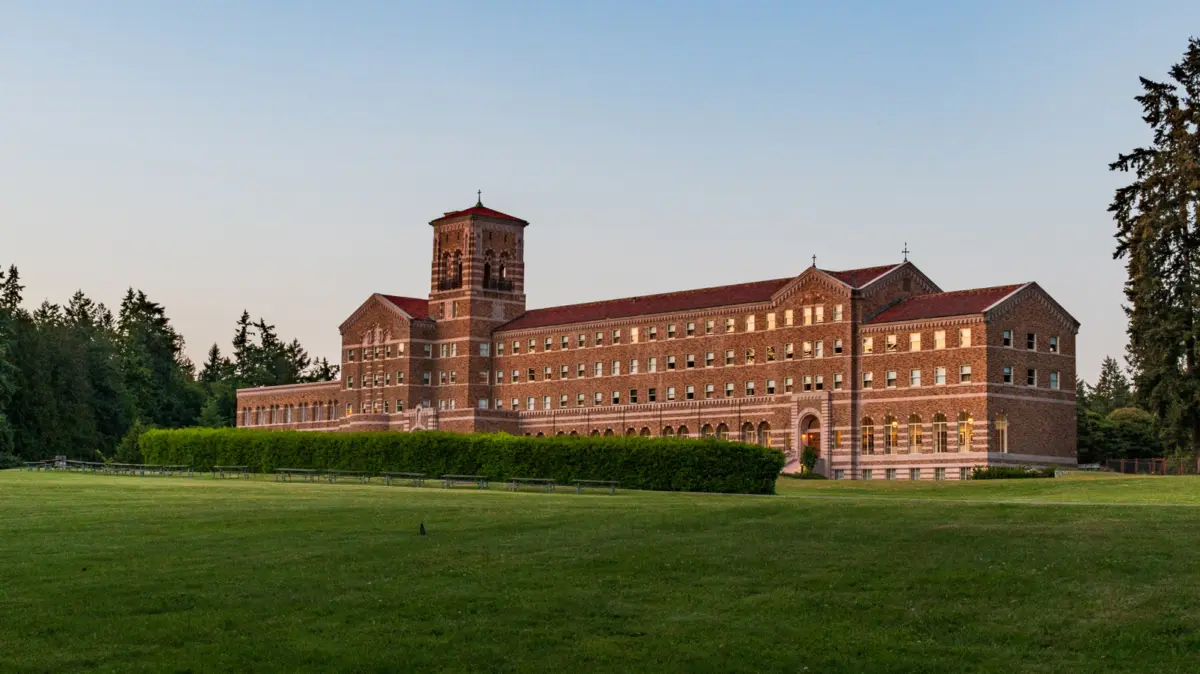
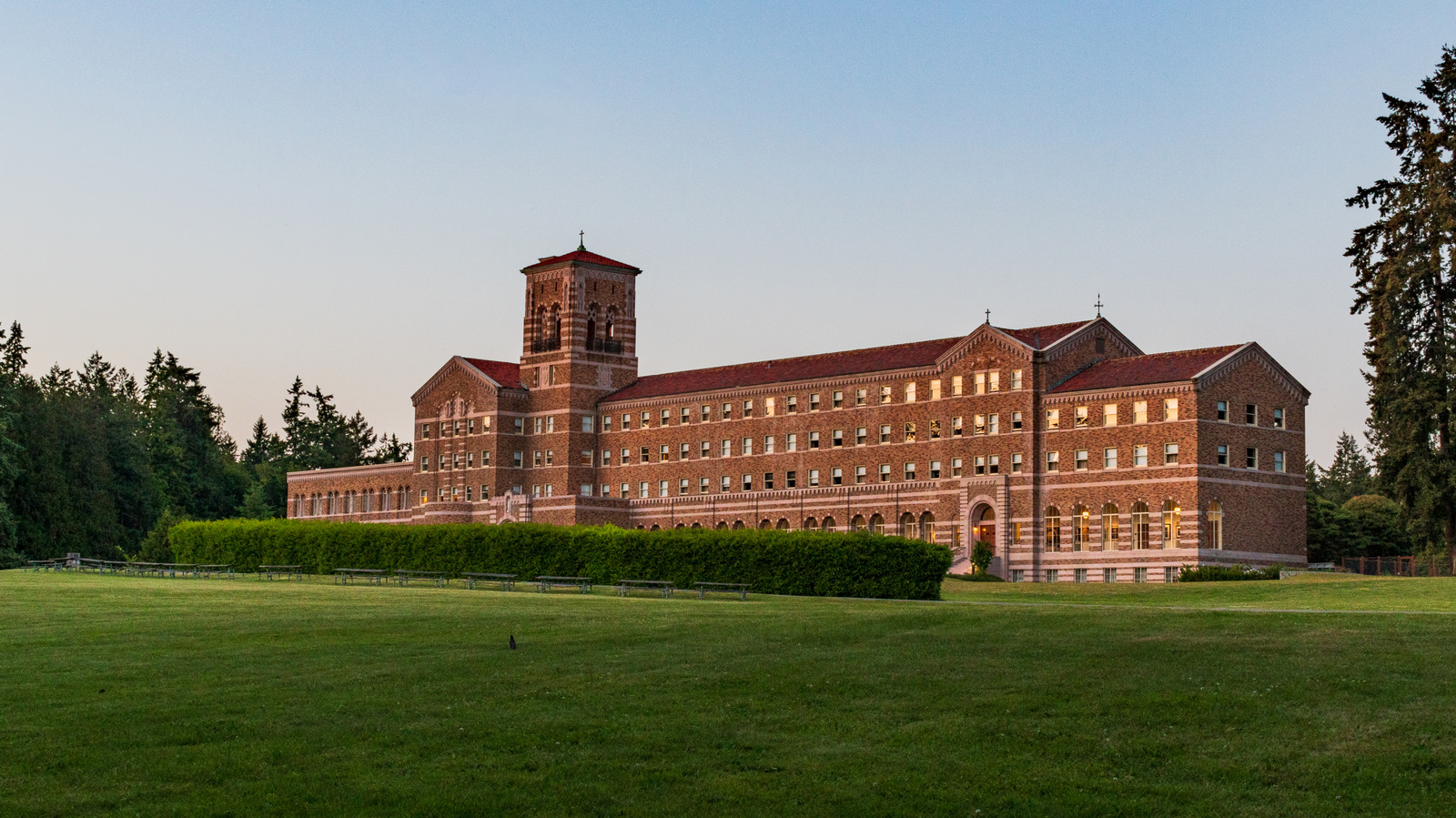
At the heart of this landscape stands an imposing, Romanesque Revival stone castle that once served as a training ground for future Catholic priests under the Archdiocese of Seattle. Today, following an extensive, multi-million-dollar preservation effort, the historic edifice has been transformed into The Lodge at Saint Edward Park—a boutique hotel that serves as the park’s exclusive overnight accommodation. Flanked by miles of dense, moss-draped forest trails, an undeveloped freshwater shoreline, and Washington State’s largest playground, the park bridges the gap between historical preservation and modern ecotourism.
This deep dive explores the fascinating trajectory of Saint Edward State Park, tracking its evolution from a secluded religious institution to a multi-faceted public recreation hub and luxury hospitality destination. Through a detailed chronology, architectural context, logistical metrics, and a look toward its future, this report unpacks how a century-old seminary found a second life as one of the Pacific Northwest’s premier natural and cultural escapes.
Detailed Chronology: From Forested Acreage to Modern State Park
The narrative of Saint Edward State Park unfolds across nearly a century, marked by distinct phases of religious ambition, institutional decline, public acquisition, and modern revitalization.
The Late 1920s: Vision and Acquisition
The history of the property began to take shape in the late 1920s when leadership within the Catholic Archdiocese of Seattle recognized the urgent need for a dedicated, secluded institution to train young men for the priesthood. Guided by this vision, the diocese purchased expansive, densely forested acreage along the northern shores of Lake Washington in what is now Kenmore. The location was chosen deliberately; its profound isolation, natural beauty, and proximity to nature were viewed as ideal conditions for spiritual contemplation, rigorous academic study, and ascetic discipline.
1931: Architectural Triumph and Opening
Construction on the massive, four-story stone edifice commenced under the direction of prominent architectural minds of the era. Notably, the design was shaped by an architectural lineage that would later yield iconic regional landmarks, including Seattle’s Space Needle.
Upon its completion and formal opening in 1931, the seminary welcomed its inaugural class of students. The grand building housed expansive dormitories, solemn chapels, lecture halls, and refectories. For decades, the daily rhythm of the property was dictated by prayer, liturgical services, and academic instruction, operating as a self-contained community isolated from the rapid modernization occurring just miles to the south in Seattle.
The Mid-1970s: Societal Shifts and Closure
By the mid-1970s, broader societal shifts, changing cultural demographics, and a marked decline in religious vocations led to falling enrollment across seminaries nationwide. The Archdiocese of Seattle found the sprawling Kenmore facility increasingly difficult to maintain and utilize to capacity. In 1976, decision-makers made the difficult choice to shutter the seminary doors, leaving the massive stone building vacant and casting uncertainty over the future of the pristine lakeside acreage.
1977–Present: Public Acquisition and Transformation
Recognizing the ecological and recreational value of the property, regional leaders and preservationists pushed to keep the land out of private, commercial hands. The archbishop at the time supported transitioning the property into public hands, leading to its sale to the state of Washington. Designated officially as Saint Edward State Park, the land was opened to the public for hiking, swimming, and conservation.
For decades, while the surrounding park thrived, the historic seminary building itself faced periods of neglect, weather damage, and deferred maintenance. That trajectory shifted dramatically in the late 2010s through a partnership between Washington State Parks and private real estate developers. Backed by a $57-million restoration investment, the abandoned seminary was meticulously rehabilitated, culminating in the 2021 opening of The Lodge at Saint Edward Park. Today, the property operates as a dual-purpose asset: a protected state park managed for conservation and public recreation, and a high-end hospitality destination seamlessly integrated into the natural environment.
Supporting Context & Metrics
Understanding the scale, impact, and operational framework of Saint Edward State Park requires examining the quantitative and qualitative data that define the destination.
Geographical and Ecological Metrics
- Total Acreage: 326 acres of protected Pacific Northwest forest, wetlands, and lakefront shoreline.
- Lake Washington Frontage: Features miles of accessible, undeveloped shoreline, offering rare, natural access points to the lake’s fresh water.
- Elevation Profile: Trails range from gentle, gravel-paved paths suitable for strollers to steep, rugged descents featuring rocky points and uneven terrain.
Recreational Infrastructure
- The Playground: Spanning a massive footprint, it is officially recognized as the largest playground in the state of Washington. Built primarily from wood, it features a castle-themed design complete with multi-level pathways, alcoves, interactive climbing structures, and slides. It includes a dedicated, fenced toddler area, perimeter seating for parents, and adjacent restroom facilities.
- Trail Networks:
- The Grotto Trail: A picturesque, heavily canopied path winding through fir and maple trees down to the lake. Known for steep sections and rocky outcroppings, it is favored by hikers and birders looking for barred owls, red-tailed hawks, and woodpeckers.
- The Seminary Trail: A moderate-grade, gravel-surfaced path offering an accessible ascent and descent, ideal for families utilizing strollers.
Hospitality and Economic Impact
- Restoration Investment: Approximately $57 million was poured into the adaptive reuse of the historic seminary building.
- Hotel Amenities: The Lodge features 84 guest rooms, Art Deco-inspired interior design elements (such as black-and-white tiled bathrooms), a library stocked with classic games and complimentary snacks, outdoor lawn games, and multiple culinary concepts.
- Dining Options: The property houses two distinct restaurants and Tonsorium, a boutique bar paying homage to the building’s historical roots as the students’ on-site barbershop.
- Guest Services: The hotel provides a complimentary shuttle service operating within a 10-mile radius, connecting overnight visitors to regional attractions such as the Woodinville wine-tasting corridor and downtown Kirkland shopping districts.
- Day-Use Access: Public visitors access the park via a standard state park day-use fee (currently $10), which directly supports ongoing trail maintenance, ecological conservation, and infrastructure upkeep.
Official Statements and Stakeholder Perspectives
The successful transformation of Saint Edward State Park from a dormant religious school into a thriving recreational and hospitality anchor required sustained collaboration between state agencies, preservationists, and community leaders.
State parks officials have consistently emphasized the delicate balance required to manage high volumes of recreational visitors while preserving the delicate forest canopy and wildlife habitats. In public statements regarding the park’s master planning, representatives from the Washington State Parks and Recreation Commission noted:
"Our primary mandate at Saint Edward is the preservation of a rare, large-scale urban forest ecosystem alongside the provision of accessible, high-quality public recreation. The integration of The Lodge has allowed us to secure private capital for the historic preservation of a priceless architectural asset without compromising the public’s right to enjoy the surrounding natural landscape."
Hospitality partners involved in the $57-million restoration project have similarly underscored their commitment to honoring the building’s historical integrity. Designers and project managers pointed out that every effort was made to retain original architectural elements—such as the heavy masonry exterior, soaring arched entryways, and interior masonry details—while outfitting the interior spaces with modern luxuries that reflect the building’s 1930s origins.
Local community members and frequent park visitors have also voiced strong support for the park’s amenities, particularly the massive castle-themed playground. Parenting forums and travel reviews frequently highlight the site as a regional crown jewel. As one verified visitor observed in public feedback:
"It is a spectacular place for fantasy games, hide and seek, and tag. The integration of a natural woodland setting with a fairy-tale play structure creates an environment that engages children for hours while offering parents clean, well-maintained facilities."
Future Outlook
As the Pacific Northwest continues to experience rapid population growth and urban densification, the strategic value of protected green spaces like Saint Edward State Park becomes increasingly critical. Looking ahead, park management, conservationists, and local tourism boards are focusing on several key initiatives to ensure the long-term sustainability and vibrancy of the destination.
Conservation and Ecological Management
With visitor numbers rising annually, mitigating the environmental impact on the park’s 326 acres remains a top priority. Future outlooks point toward enhanced trail-hardening projects to prevent erosion along steep paths like the Grotto Trail, as well as active management of invasive plant species to protect native fir, maple, and understory vegetation. Wildlife monitoring programs will continue to track local bird and mammal populations—including bald eagles, otters, and migratory birds—ensuring that human recreation does not disrupt fragile nesting and feeding grounds along the Lake Washington shoreline.
Tourism Integration and Regional Synergy
The symbiotic relationship between Saint Edward State Park, The Lodge, and surrounding municipalities like Kenmore, Woodinville, and Kirkland is expected to deepen. Plans for regional tourism collaboration aim to position Kenmore as a primary gateway for eco-tourism and cultural travel in the northern Seattle metropolitan area. By leveraging the complimentary shuttle services and promoting multi-day itineraries that combine state park trail excursions with Woodinville wine tasting and boutique shopping, regional stakeholders hope to distribute economic benefits throughout the local business community while encouraging longer, lower-impact visitor stays.
Ultimately, Saint Edward State Park stands as a testament to successful adaptive reuse and visionary land management. By honoring its complex history—from a secluded sanctuary of prayer to a bustling public playground and elegant lakeside lodge—the property secures its place as an enduring cornerstone of Pacific Northwest heritage and outdoor recreation for generations to come.