



Executive Overview
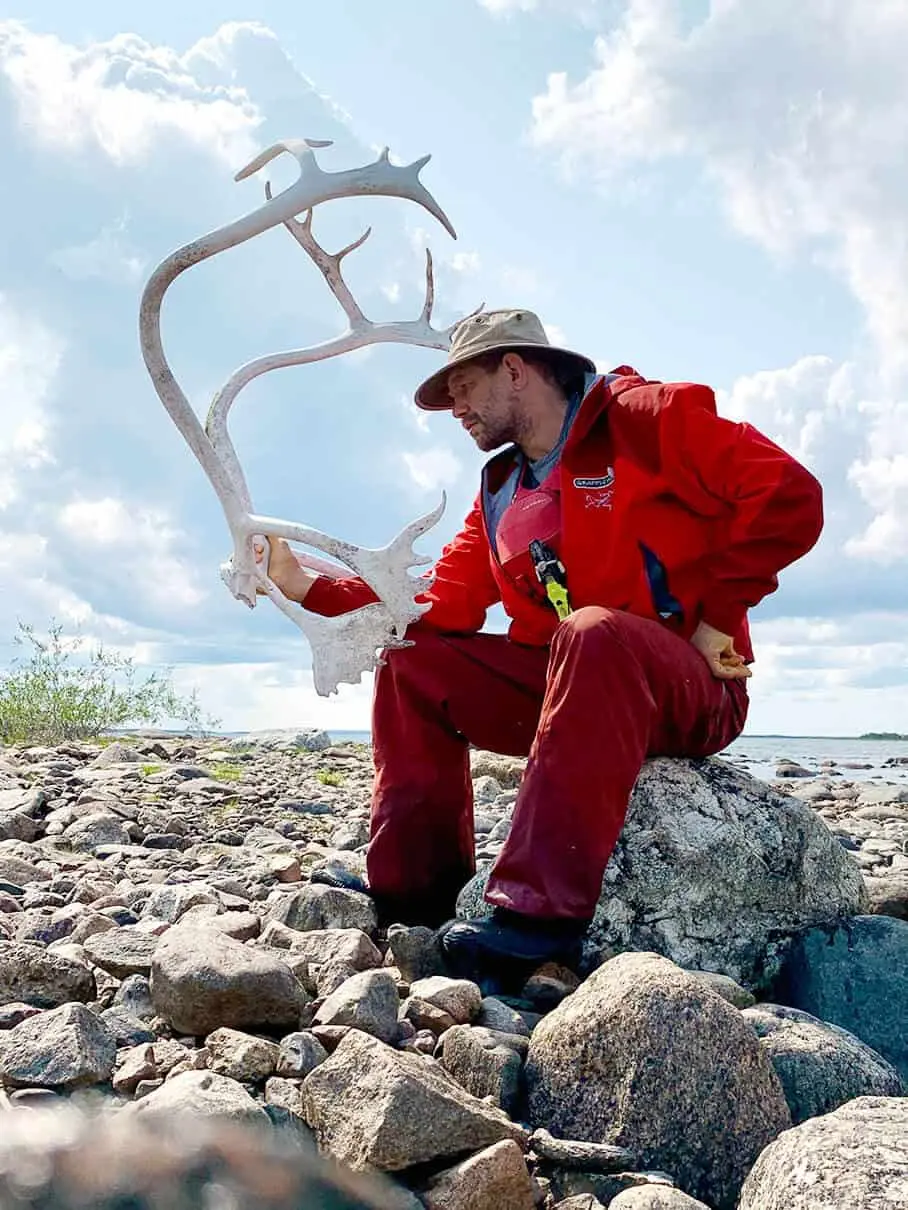
On the very first day of a grueling six-week solo expedition through the unforgiving Canadian subarctic, Stephan Kesting capsized. The sudden, freezing spill soaked his gear, setting the stage for what felt like an immediate disaster. It was not until the following morning that the true scale of the mishap revealed itself: his maps, vital lifelines for navigating the remote wilderness, had been heavily water-damaged.
It was an inauspicious start to an epic 42-day odyssey that would eventually carry him from the dense boreal forests of northern Saskatchewan deep into the stark, open tundra of Nunavut. Ahead lay 1,000 miles of treacherous rapids, exhausting portages, and grueling upstream travel—all of it to be faced with a set of maps reduced to tatters. "No more mistakes" instantly became his operational mantra.
For Kesting—a veteran firefighter with over 25 years of service, an author of multiple Brazilian jiu-jitsu instructional manuals, and an experienced hand in northern expeditions—this trip was never merely another checkmark on a wilderness bucket list. It was a visceral, triumphant return to a way of life he had long feared was lost to him forever.
A decade-long battle with polycystic kidney disease (PKD) had systematically stripped away his vitality, leaving him desperately winded after even short walks, wracked by relentless fatigue, and trapped behind a dense wall of mental fog. At his lowest ebb, his kidney function plummeted to a mere 12 percent. Confronting his own mortality on the operating table in 2019, where he received a life-saving organ donation from his brother, catalyzed a vision. That vision materialized into an extraordinary 1,000-mile journey across the Barren Lands—a testament to human resilience, the complexities of survival, and the profound web of interconnectedness that sustains us even when we are entirely alone.
Detailed Chronology: From the Operating Table to the Tundra
The Slow Descent of Illness
To understand the magnitude of Kesting’s subarctic expedition, one must first understand the depths from which he climbed. For ten years, polycystic kidney disease silently dismantled his physical independence. An avid outdoorsman and high-level martial artist accustomed to peak physical conditioning, Kesting found himself reduced to a spectator in his own body.
"It was like a musician losing his hearing, or a painter losing the use of his hands," Kesting reflects, describing the agonizing erosion of his capabilities. The disease reduced his body’s filtering capacity to critical levels. "There was a ton of fear, because I didn’t know if I would survive and what I would recover. It was terrifying."
The medical prognosis was stark. Had his kidney function dropped by just another five percentage points, Kesting acknowledges, he would have crossed the threshold of no return.

The Transfusion of Hope
In 2019, salvation arrived in the operating room. His brother stepped forward as a living donor, offering a kidney that would alter the trajectory of Kesting’s life. Yet, in the chilling moments immediately preceding the surgery, as the anesthesiologist approached his face with the cold, rubberized oxygen mask, Kesting’s thoughts did not dwell on the sterile hospital environment. They drifted north.
"I had some of my most formative experiences in that landscape, but it had retreated beyond my grasp these last few years as my life had become a blur of doctor’s appointments and medical interventions," Kesting wrote in Perseverance, his memoir documenting the expedition. "At the edge of a procedure that I might not resurface from, the North had emerged as a mirage I was reaching toward."
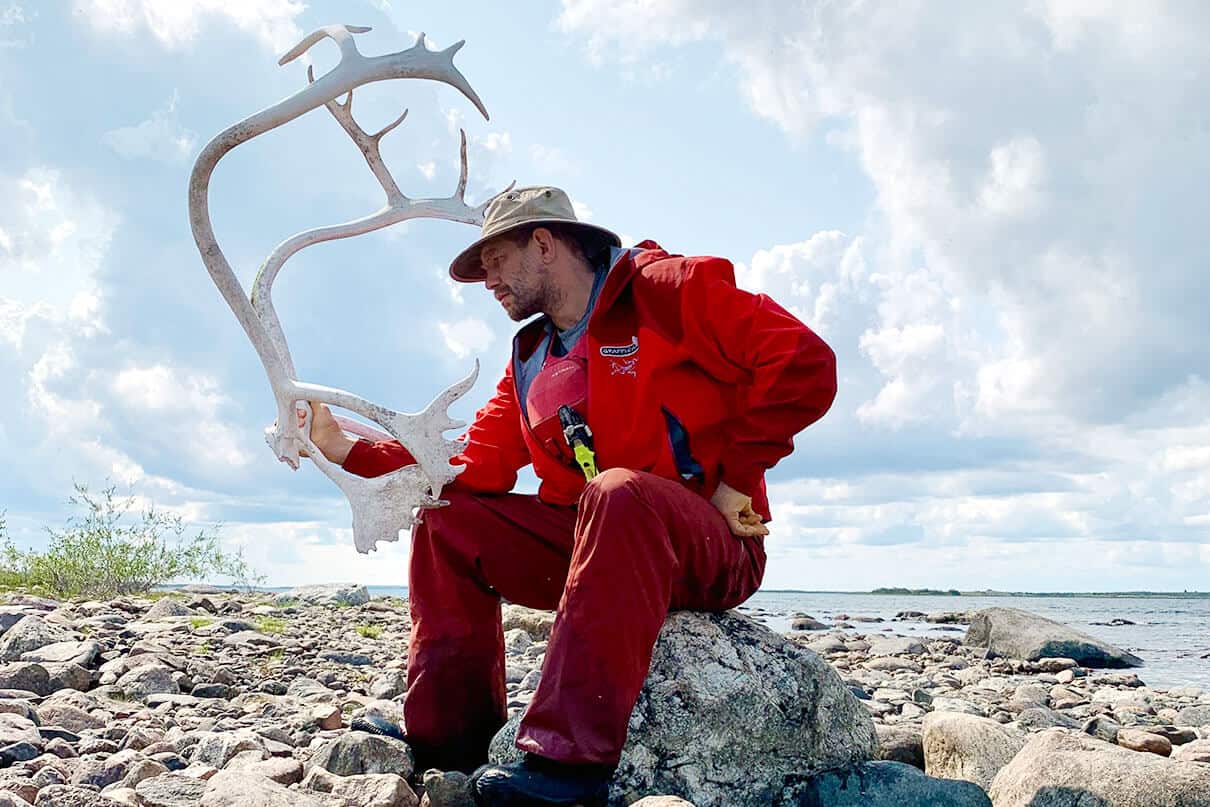
Surviving the transplant opened a psychological window. Confronting the absolute finality of death clarified his priorities with laser-like precision. The long-dormant dream of a grand northern crossing crystallized into an actionable obsession. "One of those things was to finally make good on that trip I’d been thinking about for decades," he notes, describing the venture as "kind of like a big middle finger to death—assuming I survived."
During the arduous multi-year recovery process, the expedition served as his North Star. Every physical therapy session, every mile logged on foot, and every dietary adjustment was funneled into a singular, driving question: "How would I need to train? How am I going to get better? How am I going to regain what I lost during those years of illness?"
The 1,000-Mile Odyssey
Four years post-transplant, Kesting finally pushed his canoe into the water. The expedition spanned 42 days, taking him through a landscape defined by brutal weather, staggering isolation, and immense natural beauty. For a continuous 26-day stretch of the journey, he encountered zero human beings.
The trip began with disaster when his canoe flipped on day one. Reflecting on the ruined maps, Kesting notes, "It was a really useful experience to be knocked down a peg or three right at the beginning of the trip, because it made me super cautious. I was mortified. It really forced me to refocus."
That heightened caution kept him alive through a litany of high-stakes hazards. Over the course of the 1,000 miles, Kesting raced against advancing wildfires, narrowly avoided being trampled in his tent by a panicked caribou herd, and survived a heart-stopping, close-quarters encounter with a bear.
Yet, paradoxically, the immense isolation of the subarctic did not breed existential dread; it grounded him. "It’s not like you’re sitting there thinking lofty thoughts about the meaning of life 24 hours a day," Kesting explains. "You’re thinking: Are the waves getting a bit more choppy? Should I go left or right here? What’s happening with those clouds over there? I’m hungry. I need sunscreen."
By anchoring his mind to the hyper-immediate details of survival—weather fronts, caloric intake, navigation, and physical maintenance—his subconscious mind was finally given the space to process the profound trauma of his near-death experience with kidney failure.
Supporting Context & Metrics: Anatomy of a Subarctic Expedition
| Parameter | Metric / Detail |
|---|---|
| Total Duration | 42 days |
| Total Distance | Approximately 1,000 miles |
| Route Scope | From boreal forests of northern Saskatchewan to Nunavut tundra |
| Unbroken Solitude | 26 consecutive days without seeing another human |
| Physical Toll | Returned nearly 20 pounds lighter |
| Underlying Condition | Polycystic Kidney Disease (PKD); kidney function dropped to 12% |
| Life-Saving Intervention | Kidney transplant from brother (2019) |
| Primary Hazards | Rapids, upstream travel, portages, wildfires, caribou stampede, bear encounter, ruined navigation maps |
Official Statements & Reflections
Kesting’s reflections on his journey challenge romanticized notions of the "lone wolf" adventurer. While the expedition was performed entirely solo, the physical and psychological reality of the feat revealed a vast, invisible support network.
"There was me out in the bush, but who’s enabling that?" Kesting asks, deconstructing the myth of pure independence. "My brother, who gave me a kidney, first of all. My current wife and ex-wife are making sure my kids aren’t running feral. I’m relying on search-and-rescue infrastructure if I hit the emergency button. And I’m indebted to the explorers and the Native people who developed these routes."
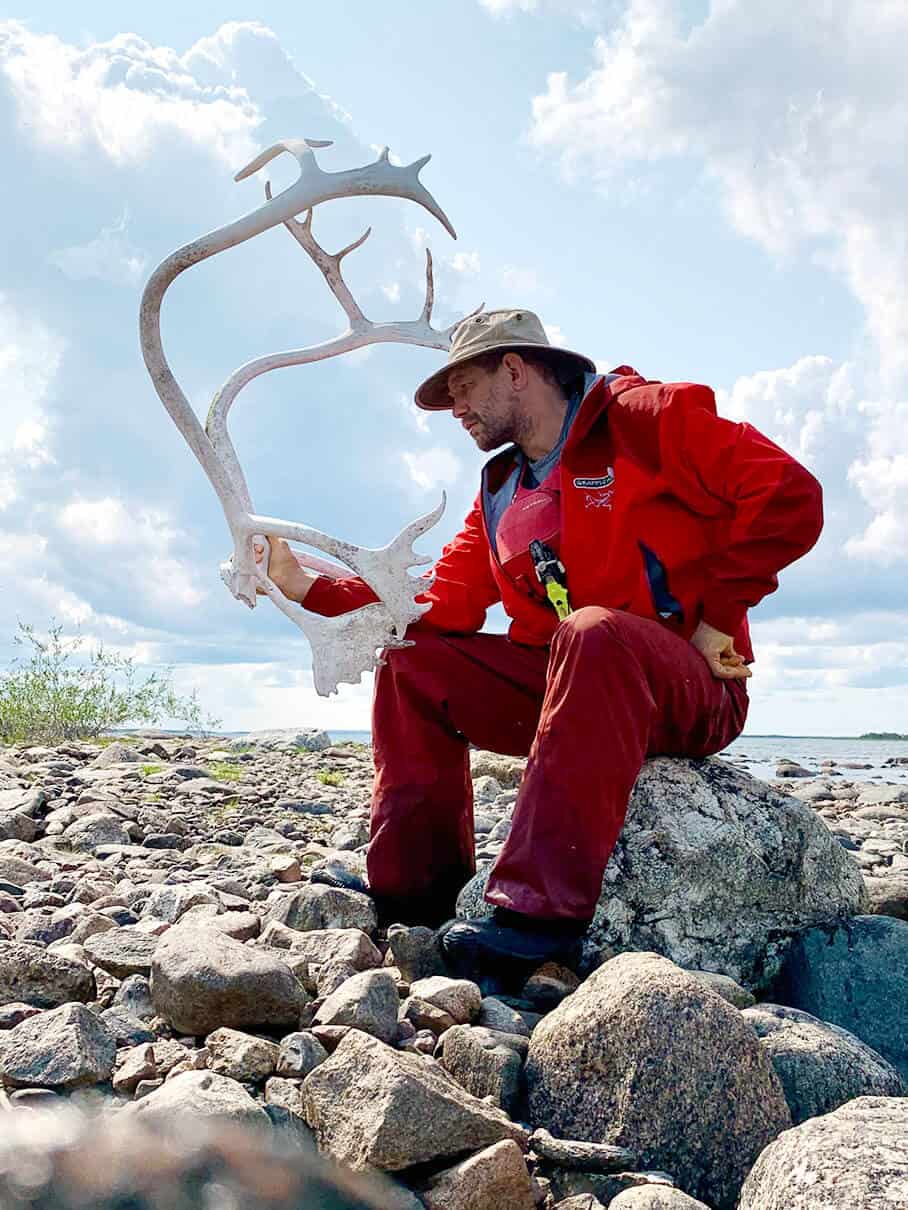
This realization fundamentally reframed his perspective on solitude in the wilderness:
"You can do a solo trip, but you’re not really solo. It connects you to the wider world."
When confronted by observers who claim they could never accomplish such a feat, Kesting pushes back against self-limiting beliefs. "They’re right in the moment, but they’re wrong at the scale of years," he asserts.
Mastering complex wilderness disciplines—such as advanced campcraft, reading treacherous river currents, emergency first aid, precise land navigation, and natural history—does not happen overnight.
"It’s a long checklist. You just gradually work at checking it off," Kesting advises. "It’s totally possible for people to do this. It just needs to be accumulated a little bit at a time."
Future Outlook: Legacy and Continuing Horizons
Stephan Kesting returned from the Canadian subarctic nearly 20 pounds lighter, his body hardened by the elements, but his spirit fundamentally renewed. The expedition chronicled in Perseverance stands as more than just an adventure memoir; it serves as a masterclass in human adaptation, medical recovery, and psychological endurance.
As chronicled in recent issues of Paddling Magazine, stories like Kesting’s resonate deeply within the outdoor community because they bridge the gap between ordinary human vulnerability and extraordinary physical achievement. By treating chronic illness not as a permanent imprisonment, but as a severe navigational hazard to be studied, trained for, and ultimately conquered, Kesting has established a blueprint for those facing their own insurmountable odds.
Looking forward, Kesting’s journey underscores an essential truth of modern adventuring: our greatest limits are rarely physical alone, but are instead negotiated at the intersection of community support, mental discipline, and relentless preparation. Whether facing the silent, degenerative creep of organ failure or the roaring rapids of an unmapped northern river, the formula for survival remains identical to the mantra forged on day one of his epic crossing—no more mistakes, one careful step at a time.