








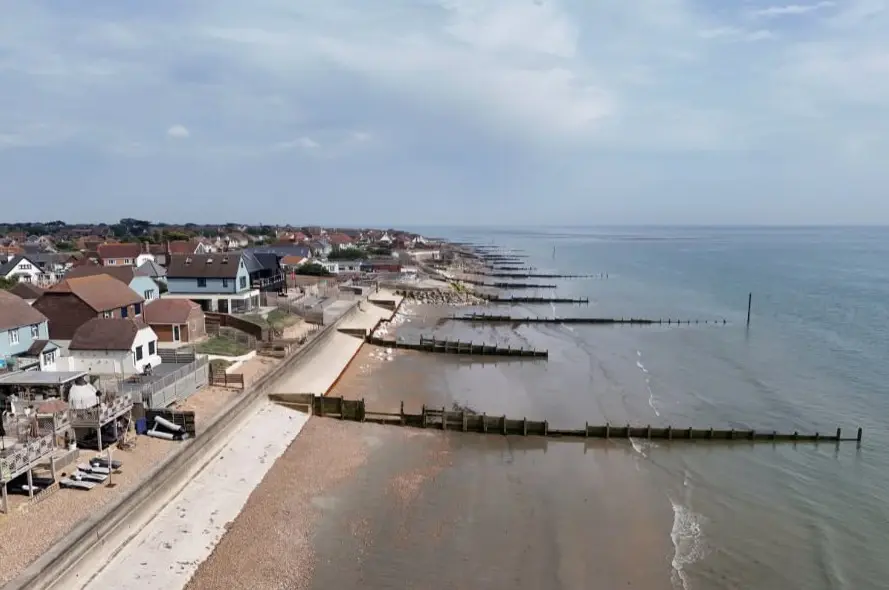
SELSEY, UNITED KINGDOM — In the face of intensifying climate volatility and rising sea levels along the south coast of England, local authorities are moving swiftly to safeguard vulnerable coastal communities. Chichester District Council has officially announced that vital repair and reinforcement works on a deteriorating section of the West Beach seawall in Selsey are scheduled to commence at the end of August 2026.
The upcoming infrastructure intervention, spearheaded by the Council’s specialist coastal engineering unit, Coastal Partners, aims to arrest structural degradation before the onset of the punishing winter storm season. Spanning approximately three months, the project represents a critical tactical measure designed to buy time and secure local assets while long-term, strategic regional initiatives—specifically the multi-phase Selsey Coastal Scheme—continue to navigate the complex pathways of planning, funding, and development.
Executive Overview: A Race Against the Winter Tides
The fragile geopolitical and environmental balance of low-lying coastal towns like Selsey requires constant vigilance. Nestled on a projecting headland in the county of West Sussex, Selsey has historically been vulnerable to the unrelenting power of the English Channel. Severe wave action, longshore drift, and increasingly frequent winter storms have placed immense strain on the area’s aging coastal defense assets.
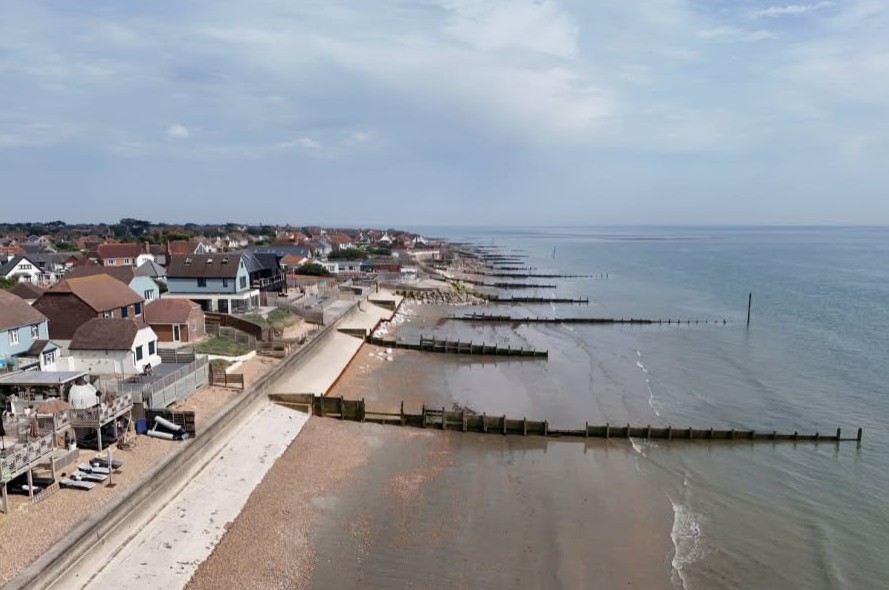
The latest project focuses specifically on a high-risk stretch of the West Beach seawall, which has experienced accelerated weathering and structural fatigue over recent years. According to project engineers, the upcoming 12-week construction blitz will utilize robust engineering techniques—including steel sheet-piling, void grouting, and structural concrete encasement—to dramatically improve the residual life of the defenses.
Crucially, the timing of the project is a calculated race against nature. Project officials have emphasized that all heavy construction and structural stabilization must be completed prior to the arrival of the harsh winter storm window, during which gale-force winds and high-energy wave regimes frequently batter the Sussex coastline. By executing these works during the late summer and early autumn weather windows, Coastal Partners aims to minimize operational delays while maximizing protection for local residents, properties, and infrastructure ahead of the seasonal onslaught.
Detailed Chronology: From Degradation to Deployment
Understanding the trajectory of the Selsey West Beach project requires examining the timeline of structural assessment, engineering design, and operational mobilization that has brought the initiative to its current deployment phase.
Phase I: Identification and Structural Assessment (Late 2024 – 2025)
The genesis of the project lies in routine structural monitoring conducted by Coastal Partners. During standard biannual asset condition surveys, engineers identified signs of advanced fatigue along the westernmost portion of the Selsey seawall. Subsequent technical investigations—including non-destructive testing, ground-penetrating radar, and tidal zone inspections—revealed hidden sub-surface voids behind the aging concrete panels, alongside significant scouring at the toe of the structure.
Phase II: Engineering Design and Statutory Approvals (Early 2026)
Following the identification of critical vulnerabilities, the technical team at Coastal Partners developed a comprehensive remediation strategy. Rather than opting for a costly and disruptive total reconstruction—which was deemed unfeasible given the concurrent development of the wider Selsey Coastal Scheme—engineers devised a hybrid reinforcement scheme. This design focuses on retrofitting the existing asset to maximize structural integrity with minimal environmental disruption. Throughout the spring and early summer of 2026, the project cleared necessary environmental reviews, heritage assessments, and local logistical clearances.
Phase III: Procurement and Contractor Mobilization (Mid-Summer 2026)
By July 2026, logistical frameworks were put in place, and supply chains for heavy civil engineering materials—most notably marine-grade steel sheet piles and specialized marine concretes—were secured. With site logistics finalized, Chichester District Council greenlit the mobilization phase, setting a hard start date for the end of August 2026.
Phase IV: Construction and Execution (Late August – November 2026)
Spanning an estimated 12 weeks, the active construction phase will transform the Western Beach frontage. The engineering methodology has been broken down into four distinct tactical stages:
- Steel Sheet-Piling: Driving a robust new steel sheet-piled wall directly in front of the existing deteriorated seawall to act as the primary wave-break barrier and retain structural fill.
- Sub-surface Void Grouting: Drilling precise injection ports directly into the legacy concrete structure to locate and pressure-fill any internal cavities or washout zones caused by decades of tidal action.
- Structural Concrete Bonding: Pouring high-strength marine concrete into the void space created between the newly driven steel sheet-piles and the legacy wall, creating a monolithic, composite defense structure.
- Revetment Encasement: Applying targeted concrete encasement to vulnerable sections of the existing concrete revetment to prevent surface spalling, block wave-induced uplift pressures, and enhance overall structural resilience.
Supporting Context & Metrics: The Engineering and Environmental Reality
To appreciate the gravity of the Selsey West Beach intervention, one must examine the broader environmental and infrastructural context governing coastal management in West Sussex.
The Vulnerability of Selsey Peninsula
Selsey is uniquely exposed to marine dynamics. Bounded by the open waters of the English Channel to the south and extensive intertidal mudflats and saltmarshes to the north and east, the town relies heavily on engineered defenses. Historical maps and geological surveys indicate that the Selsey peninsula has experienced significant coastal erosion over centuries. Without proactive intervention, high-energy storm events can breach natural shingle ridges, threatening vital access roads, residential areas, and local ecosystems.
The Mechanics of Hybrid Seawall Reinforcement
The decision to implement a steel sheet-pile and concrete composite system rather than a soft engineering approach reflects the heavily constrained footprint of West Beach.
- Steel Sheet-Piling: Modern marine-grade steel (often treated with specialized anti-corrosive coatings to withstand saline environments) provides immediate structural tensile strength and creates a hard barrier that absorbs the kinetic energy of breaking waves.
- Void Grouting: Over decades, hydraulic pressures force water behind seawalls, scouring out fine sediments and creating unseen air pockets or voids. Left unchecked, these voids lead to catastrophic structural collapse through subsidence. Pressure grouting stabilizes the internal core of the wall, restoring its weight-bearing capacity.
- Composite Encasement: By tying the old concrete structure to the new steel fronting via high-performance poured concrete, engineers effectively double the effective thickness and mass of the defense line, ensuring it can withstand severe hydrodynamic impact.
Integration with the Wider Selsey Coastal Scheme
Local stakeholders are quick to emphasize that the West Beach refurbishment is not an isolated project, but rather a vital holding measure. It operates in tandem with the overarching Selsey Coastal Scheme—a long-term strategic master plan being formulated to manage coastal erosion and flood risk across the entire frontage for the next 50 to 100 years.
While major strategic schemes require extensive public consultation, complex environmental impact assessments, and multi-million-pound capital funding allocations from central government bodies (such as the Environment Agency), localized asset maintenance projects like the West Beach refurbishment ensure that critical current defenses do not fail while long-term strategies are finalized.
Official Statements and Stakeholder Perspectives
Local governance bodies and engineering authorities have maintained a transparent dialogue with the community regarding the upcoming construction works, emphasizing both the necessity of the project and the proactive nature of the council’s coastal management strategy.
A spokesperson for Chichester District Council underscored the priority placed on community safety and infrastructure longevity:
"The upcoming works at West Beach are a crucial component of our ongoing commitment to protecting Selsey’s coastline. Coastal erosion and severe weather represent persistent challenges for our district, and we cannot afford to wait for structural failures to occur. By partnering with Coastal Partners, we are deploying targeted, high-specification engineering solutions that will significantly bolster our defenses before the winter storms arrive."
Engineers from Coastal Partners provided further technical reassurance regarding the methodology and construction timeline:
"Our primary objective for the West Beach frontage is to arrest the structural fatigue currently impacting the western end of the seawall. By installing a robust steel sheet-piled fronting, pressure-grouting internal voids, and tying the system together with structural concrete, we are effectively giving this asset a new lease on life. The 12-week schedule has been meticulously planned to ensure we beat the adverse winter weather window, minimizing disruption while maximizing protection for the local community."
Community leaders and local residents have largely welcomed the initiative, recognizing that proactive maintenance is far more cost-effective—and far less disruptive—than emergency post-storm disaster recovery. Local businesses along the seafront have also expressed relief that the project is scheduled to conclude before the end of the autumn, preserving the quieter winter period for construction without severely impacting the core summer tourism economy.
Future Outlook: Resilience, Adaptation, and Long-Term Planning
As the civil engineering teams prepare to break ground at the end of August 2026, the project serves as a microcosm of the broader challenges facing coastal municipalities across the United Kingdom and Northern Europe. Climate change projections indicate that sea-level rise and increased storm frequency will continue to place unprecedented stress on legacy coastal defenses built decades ago under entirely different environmental parameters.
The Shift Toward Adaptive Management
For Selsey, the successful execution of the West Beach seawall reinforcement is a testament to the evolving philosophy of coastal engineering. Modern coastal management has moved away from the rigid mindset of trying to permanently halt natural marine processes through sheer force. Instead, contemporary frameworks embrace adaptive management—a dynamic approach that combines robust hard engineering defenses in high-risk urbanized zones with managed realignment, beach nourishment, and ecological habitat restoration where appropriate.
Looking Beyond 2026
Once the 12-week West Beach project reaches completion in late November 2026, Chichester District Council and Coastal Partners will immediately shift their focus back to the broader horizons of the Selsey Coastal Scheme. As funding applications are refined and long-term regional flood and erosion management strategies mature, the reinforced West Beach seawall will stand as a vital, hardened anchor point in the town’s defense network.
Ultimately, the Selsey West Beach refurbishment underscores a fundamental reality of modern municipal infrastructure management: proactive, timely intervention is the ultimate safeguard against environmental uncertainty. By reinforcing their coastal assets today, the community of Selsey is actively engineering its resilience for the decades to come, ensuring that the town remains safe, vibrant, and secure against the tides of a changing climate.