










Executive Overview
For nearly eight decades, a monumental piece of Canadian woodworking heritage sat locked behind a wall of obsolescence, industrial secrecy, and sheer intimidation. In 1948, the legendary Peterborough Canoe Company completed its final cedar rib canoe—an exquisite, highly complex masterpiece commissioned as an official wedding present for Queen Elizabeth II. Upon its completion, the company’s aging craftsmen deliberately destroyed the specialized forms and jigs required to build it, ensuring that the grueling trade secrets of cedar-rib construction would die with them.
For nearly 80 years, the craft was effectively lost to history. The cedar rib canoe—originally invented and patented by John Stephenson in 1879—was widely regarded as the finest, most luxurious, and painfully expensive watercraft the company ever offered. It was also notoriously difficult to construct. Local folklore maintains that whenever a rare order for a cedar rib canoe landed on the shop floor, a mysterious "flu" would sweep through the workforce, driving seasoned boatbuilders to call in sick to avoid the punishing labor.
Enter Reid McLachlan, a dedicated artisan, paddler, and master restorer from Chelsea, Quebec. Driven by a 35-year obsession, McLachlan embarked on an improbable, high-stakes quest to reverse-engineer the lost manufacturing techniques of the 19th century. Relying on surviving museum artifacts, sparse oral histories, fragmented patent records, and sheer grit, McLachlan spent over a year meticulously hand-crafting a brand-new cedar rib canoe from scratch.

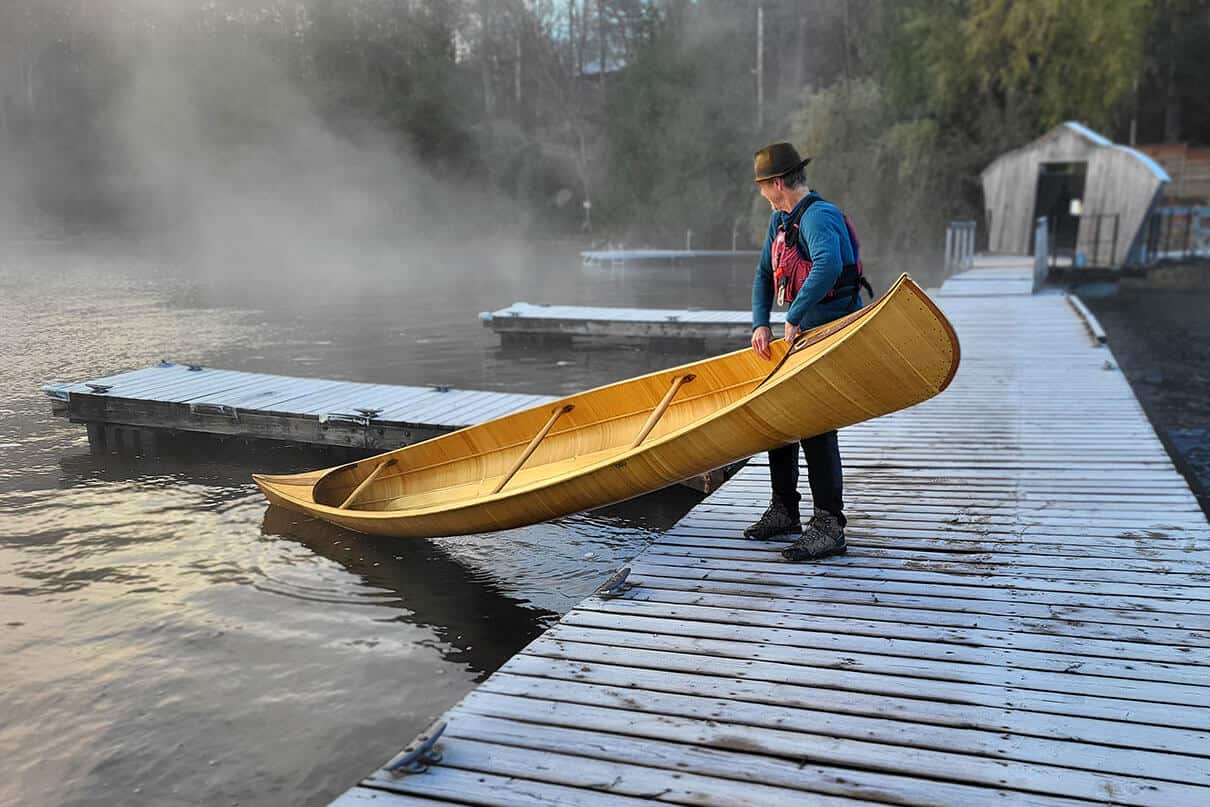
On a frosty late-November morning, McLachlan walked 300 meters from his workshop to the shores of the Gatineau River and launched his creation. Not a single drop of water leaked through the hull. With the turn of a paddle, a 77-year-old manufacturing mystery was solved, bridging a generational gap in North America’s rich wooden boatbuilding legacy.
Detailed Chronology: A 35-Year Obsession
To understand the magnitude of McLachlan’s achievement, one must trace the timeline of his journey—one that began serendipitously in the summer of 1985.
The Spark: 1985
In 1985, Reid McLachlan was a young man dating Becky Mason, daughter of the legendary Canadian conservationist, filmmaker, and canoeist Bill Mason. It was during this time that McLachlan first laid eyes on a decrepit, weather-beaten cedar rib canoe that Bill Mason had rescued and attempted to salvage.
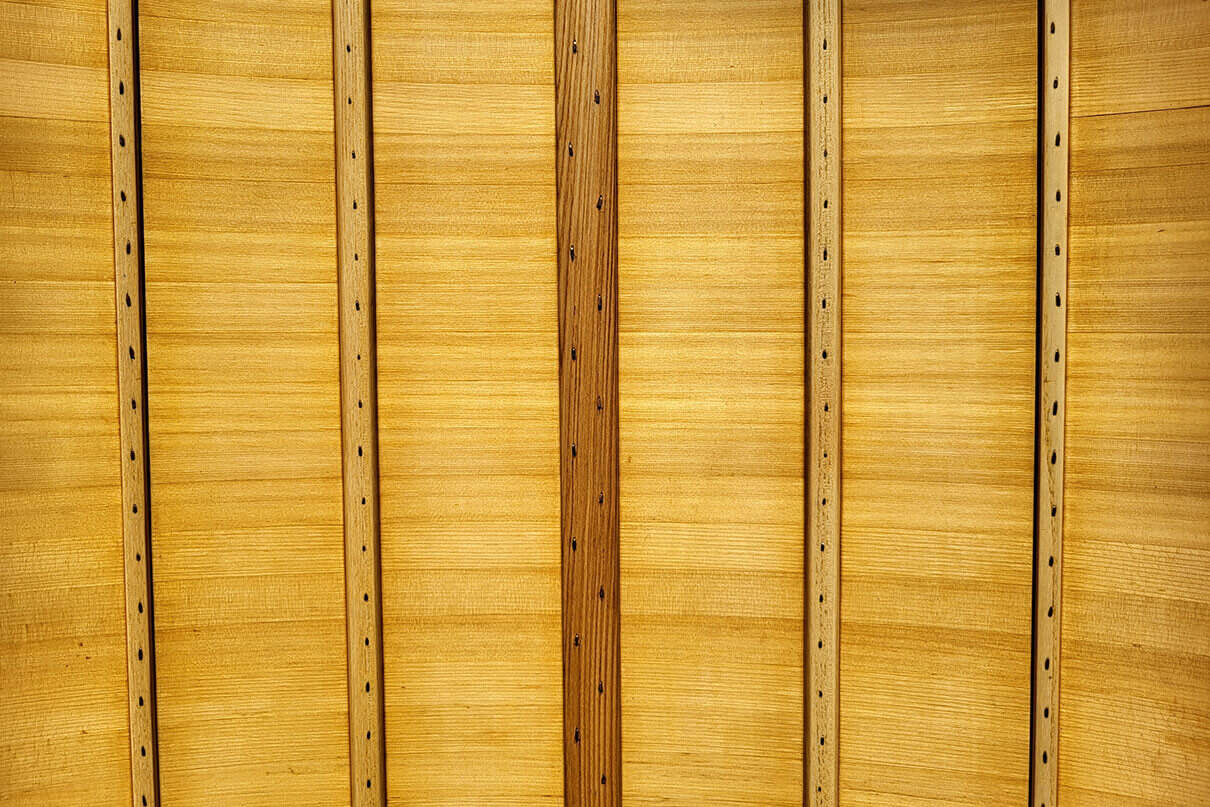
While Becky harbored initial concerns that her boyfriend was becoming more infatuated with the dilapidated watercraft than with her, McLachlan was entirely transfixed. The boat’s defining feature—intricate, interlocking tongue-and-groove cedar ribs—beguiled him. Standing over the battered hull, McLachlan made a casual declaration to his friends: "One day, I’ll build one."

At the time, everyone thought he was joking. Building a cedar-canvas canoe was already an elite woodworking discipline; building a true cedar-rib canoe—where the structural ribs themselves form the water-tight hull without a canvas skin—was widely considered an impossible hurdle for a modern hobbyist.
Decades of Detective Work: 1985–2020
For the next 35 years, the idea fermented into a relentless obsession. With no existing blueprints, manuals, or active masters to teach him, McLachlan became an archival detective. He hunted down surviving cedar-rib canoes tucked away in private collections and museums across North America, the United Kingdom, and Europe.
He sought out veterans of the trade, including venerable canoe builder and former Peterborough Canoe Company foreman Walter Walker. When McLachlan asked Walker for insight into the construction process, the veteran builder’s eyes widened in disbelief.
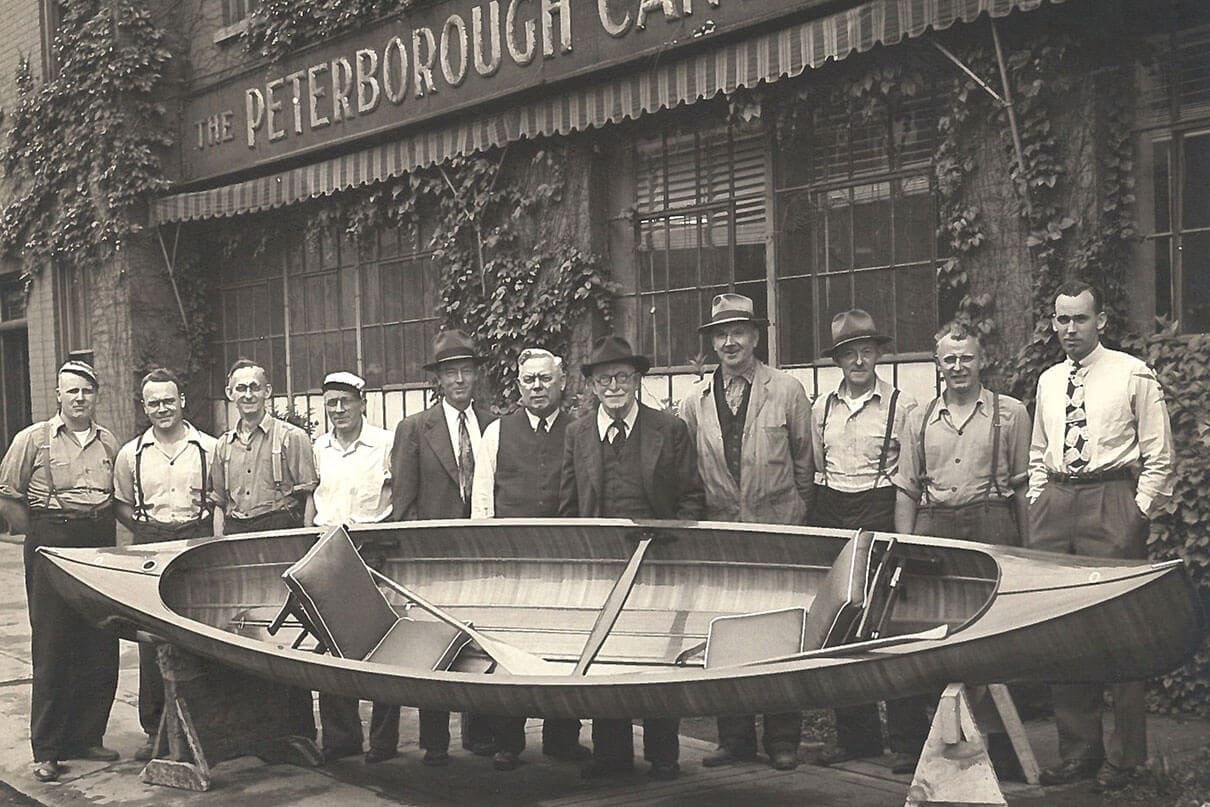
"Well, that is a tricky business," Walker warned, offering words of both wisdom and profound caution accumulated over 75 years of wooden boat lore.
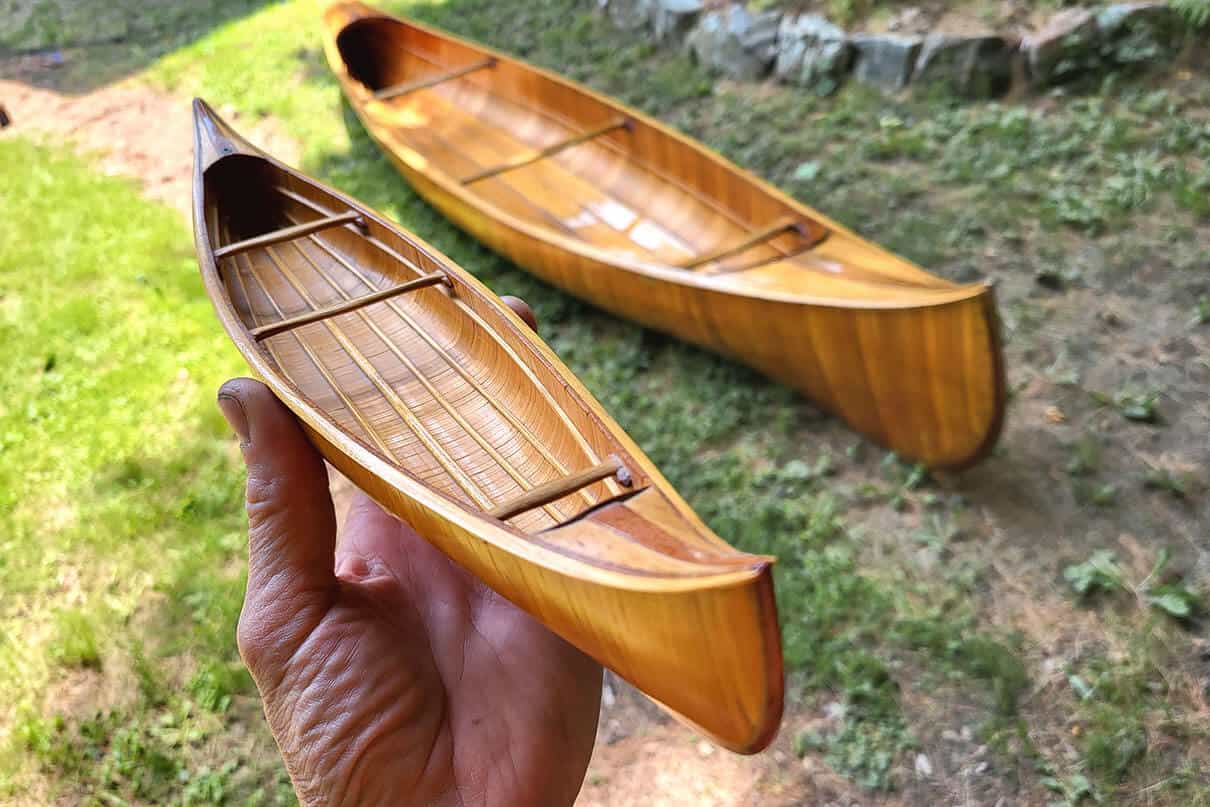
McLachlan’s practical apprenticeship began by taking apart Bill Mason’s original salvaged canoe. Because the hull was too far gone for an authentic restoration, he reluctantly encased it in fiberglass—a humbling exercise that taught him the anatomy of the boat. Following this, he built a meticulous scale model as a proof of concept. He also scoured the antique market until he acquired a superb, 120-year-old cedar-rib hull, providing him with an accurate blueprint to study, measure, and replicate.
The Build: The Crucible of the Workshop
After three and a half decades of research, McLachlan decided he was finally ready. He had never previously taken lines off a canoe, built a master form, or constructed a watercraft from scratch. Yet, within three months of dedicated effort, he successfully engineered and built his own master form.
Backed by funding from the Wooden Canoe Heritage Association (WCHA), McLachlan sourced custom-made tongue-and-groove router bits to precisely mill the delicate cedar ribs. He then fitted the ash keelson, stringers, and interior stems onto the newly built form.
Having professionally restored close to 200 traditional cedar-canvas canoes over his career, McLachlan was no stranger to steam-bending wood. Even so, he recalls that hammering the very first rib onto the form was an emotionally charged moment vibrating between profound thrill and absolute terror.
The construction process was agonizingly slow and precise:
- Total Ribs: 180 custom-milled cedar ribs.
- Fasteners: 1,500 copper nails and 360 brass screws.
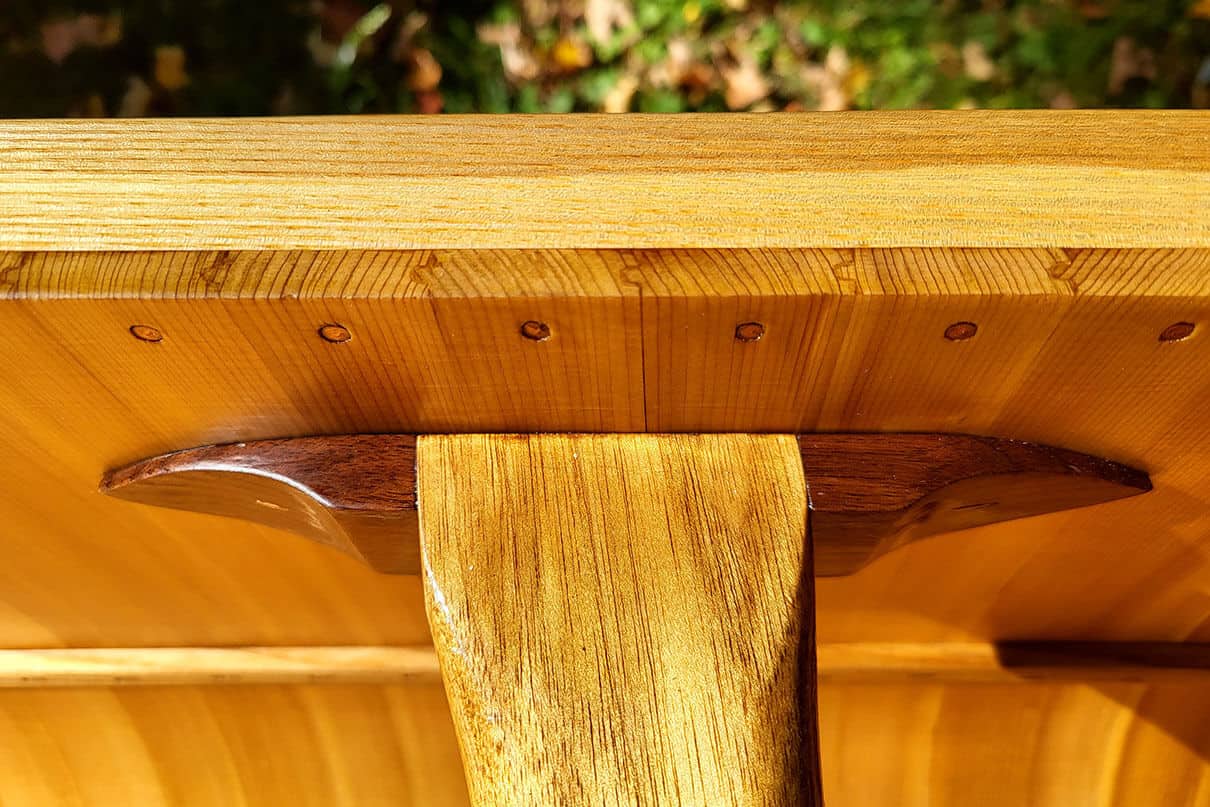
- Adhesives: Zero. True to historical methods, the entire hull relies on mechanical tension and tight wood-on-wood joints rather than modern glues.
McLachlan developed a grueling routine: he would steam-bend ten ribs at a time, let them dry in place for a week, ratchet them down with extreme tension, and manually nail them through the keelson and stringers into the master form. Day after day, working entirely by hand, he battled self-doubt, continually questioning whether his craftsmanship was up to the Herculean task.
Supporting Context & Metrics: Anatomy of an Improbable Masterpiece
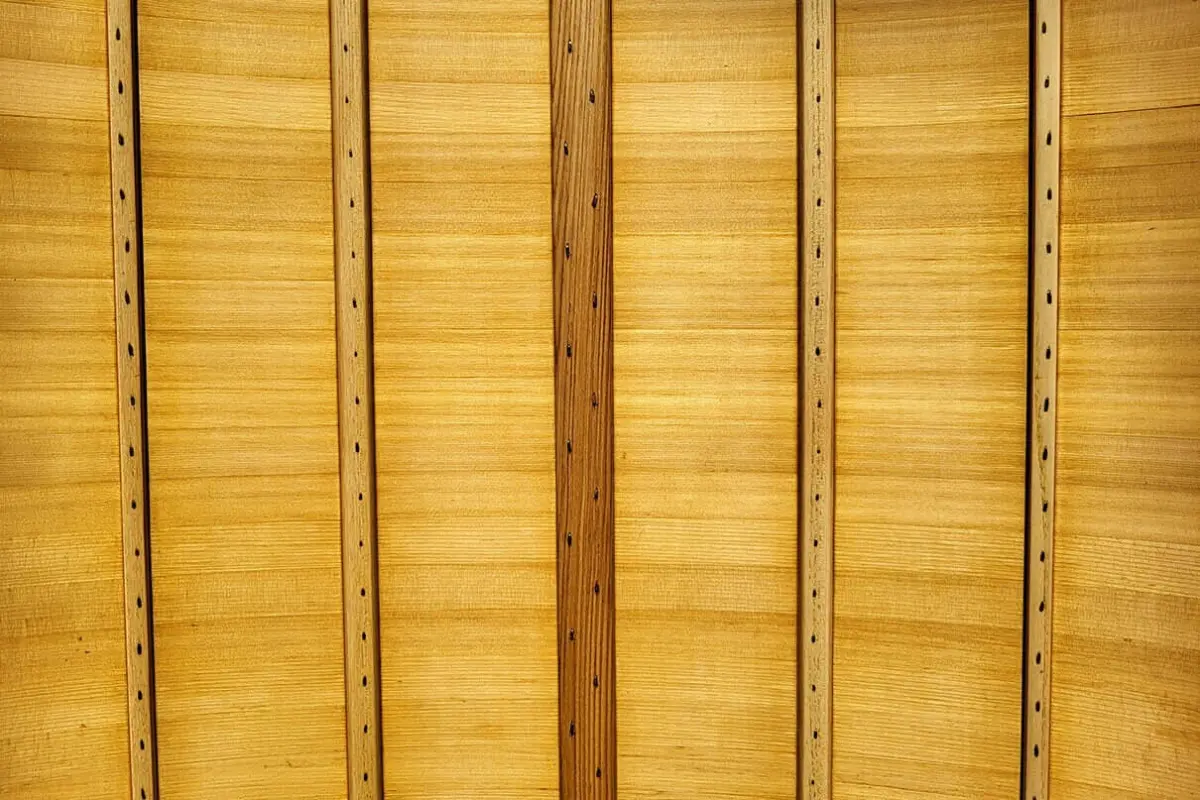
The engineering behind the Peterborough Canoe Company’s cedar-rib design is a testament to late 19th-century industrial ingenuity. Invented and patented by John Stephenson in 1879, the technique eliminated the need for heavy planking or outer canvas skins by relying on edge-glued or tightly fitted tongue-and-groove ribs that interlocked seamlessly.
| Metric / Component | Specification | Description & Role in Construction |
|---|---|---|
| Rib Thickness | 1/4 inch | Ultra-thin, precision-milled cedar elements providing both flexibility and structural integrity. |
| Rib Count | 180 individual pieces | Steam-bent in small batches, dried, ratcheted, and hand-fastened. |
| Copper Nails | 1,500 units | Used for securing the delicate rib assembly to internal stringers. |
| Brass Screws | 360 units | Providing heavy-duty reinforcement along key stress points and stems. |
| Adhesive Volume | 0.0 gallons | Built entirely via traditional dry-fit mechanics; no modern epoxy or glues were utilized. |
| Launch Timeline | Over 1 year of labor | Culminating in a historic launch after a 77-year industrial hiatus. |
When McLachlan finally popped the finished hull off the master form and peered inside for the first time, he was overcome with emotion and moved to tears.
However, the psychological victory of releasing the hull from the form was met with an immense mountain of remaining labor. He still had to drub and clinch thousands of internal nail points; hand-carve and install the wooden decks, gunwales, and exterior stems; forge or source custom brass hardware; and execute rounds of painstaking sanding and marine spar varnishing. The exterior protection of the entire vessel—the sole barrier keeping the paddler dry—relied entirely on those 1/4-inch-thick tongue-and-groove ribs sealed beneath multiple coats of high-grade spar varnish.
Official Statements & Reflections
The resurrection of this historic manufacturing technique has sent ripples through the North American wooden boat community, drawing admiration from historians, preservationists, and outdoor educators alike.
"When those two men finished the canoe for Queen Elizabeth II in 1948, they destroyed the forms and jigs so nobody would ever have to build another one," notes Becky Mason, renowned canoe instructor and proprietor of Classic Canoeing. "For decades, no one did. Reid proved that history doesn’t have to stay buried in museum archives if you possess the patience to listen to the wood."
Reflecting on the final moments of his project, Reid McLachlan shares a grounded perspective on the vulnerability of traditional craftsmanship. Working without safety nets, digital CAD software, or synthetic bonding agents meant accepting the very real possibility of catastrophic failure right up until launch day.
"When you work traditionally, using no glue, you constantly question whether your skills are up to the task," McLachlan explains. Standing on the frozen banks of the Gatineau River on that late-November morning, watching his handmade hull sit proudly in the water without a single bead of leakage, validated three and a half decades of obsessive research.
Future Outlook: Will There Be Another?
With the mystery solved, the master form successfully tested, and a pristine cedar-rib canoe resting comfortably in the waters of Chelsea, Quebec, the natural question facing the woodworking community is: What comes next?
Building a watercraft that hasn’t been authentically produced since the late 1940s was initially viewed as a once-in-a-lifetime mountain to climb. Yet, having successfully demystified the process, McLachlan’s perspective has subtly shifted.
When asked if he plans to repeat the grueling, year-long ordeal, McLachlan offers a characteristically optimistic, adventurous grin, giving current odds of 5-to-1 that he will step back into the workshop to build a second cedar-rib canoe.
For now, however, the historic watercraft stands as a living bridge to the past—a triumphant revival of Canadian industrial art, proving that with enough dedication, even the most deeply buried secrets of the craft can be coaxed back to life from the shavings up.