





Executive Overview
The Walt Disney Company is quietly orchestrating a profound structural evolution beneath the surface of its storied Experiences division. For decades, the media giant’s financial barometer was straightforward, tethered primarily to the gate turnstiles of its iconic theme parks in Anaheim, Orlando, Tokyo, Paris, and Hong Kong. However, a subtle yet seismic shift in corporate reporting reveals a company increasingly anchored to a different kind of vessel: the cruise ship.
In a recent communication to shareholders, Disney introduced a novel reporting metric known as "global guests"—a composite data point that blends traditional theme park attendance with passenger cruise days. According to the company’s financial disclosures for the first nine months of fiscal 2026, this metric rose by 4%, signaling healthy consumer engagement across these high-yield entertainment sectors.
More importantly, the introduction of this metric is not merely a statistical realignment; it is a masterclass in corporate signaling. It underscores Disney’s aggressive tilt toward maritime expansion as the centerpiece of its multi-billion-dollar capital expenditure strategy. Underpinning this pivot is a monumental 10-year, $60 billion investment program earmarked for the Experiences segment. Crucially, approximately 20% of this staggering capital deployment—roughly $12 billion—is dedicated to more than doubling the Disney Cruise Line (DCL) fleet. By the end of 2030, the fleet is projected to expand from its historical footprint to an unprecedented 13 vessels, transforming a niche brand extension into a core pillar of the multinational conglomerate’s global business model.
This comprehensive report examines the genesis of the "global guests" metric, analyzes the strategic imperatives driving Disney’s maritime renaissance, explores the financial mechanics fueling the $60 billion investment cycle, and evaluates what this paradigm shift means for the future of leisure travel and the broader entertainment industry.
Detailed Chronology: The Evolution of Disney’s Cruise Ambitions
To understand the weight of Disney’s current maritime strategy, one must trace the deliberate, step-by-step evolution of the Disney Cruise Line from a speculative corporate experiment into an industry juggernaut.
The Inception: Entering Uncharted Waters (1995–1998)
When Disney announced its intention to launch its own cruise line in the mid-1990s, industry analysts were deeply skeptical. Traditional cruise operators like Carnival and Royal Caribbean dominated the seas with established economies of scale, while Disney was primarily a media and theme park operator entering an entirely different operational domain.
In 1998, the Disney Magic set sail on its maiden voyage, followed quickly by its sister ship, the Disney Wonder, in 1999. Rather than competing purely on price or traditional luxury amenities, Disney leveraged its unmatched intellectual property (IP), immersive storytelling, and legendary guest service to carve out a unique market niche. These initial vessels were custom-built to marry ocean liner tradition with family-centric entertainment, instantly capturing high-yield family demographics that traditional cruise lines struggled to attract consistently.

The Expansion Phase: Scaling the Fleet (2010–2012)
After more than a decade operating solely with its original two ships, Disney proved the long-term viability and high profitability of its cruise model. In 2011 and 2012, the company expanded its fleet with the introduction of the Disney Dream and the Disney Fantasy. These larger ships introduced groundbreaking onboard innovations—most notably the "AquaDuck," the first water coaster at sea—and demonstrated that consumer demand for the "Disney magic" extended far beyond the physical boundaries of Orlando and Anaheim. During this era, DCL cultivated intensely loyal repeat cruisers, establishing one of the highest customer retention rates in the entire travel industry.
The Modern Renaissance and Global Reach (2021–Present)
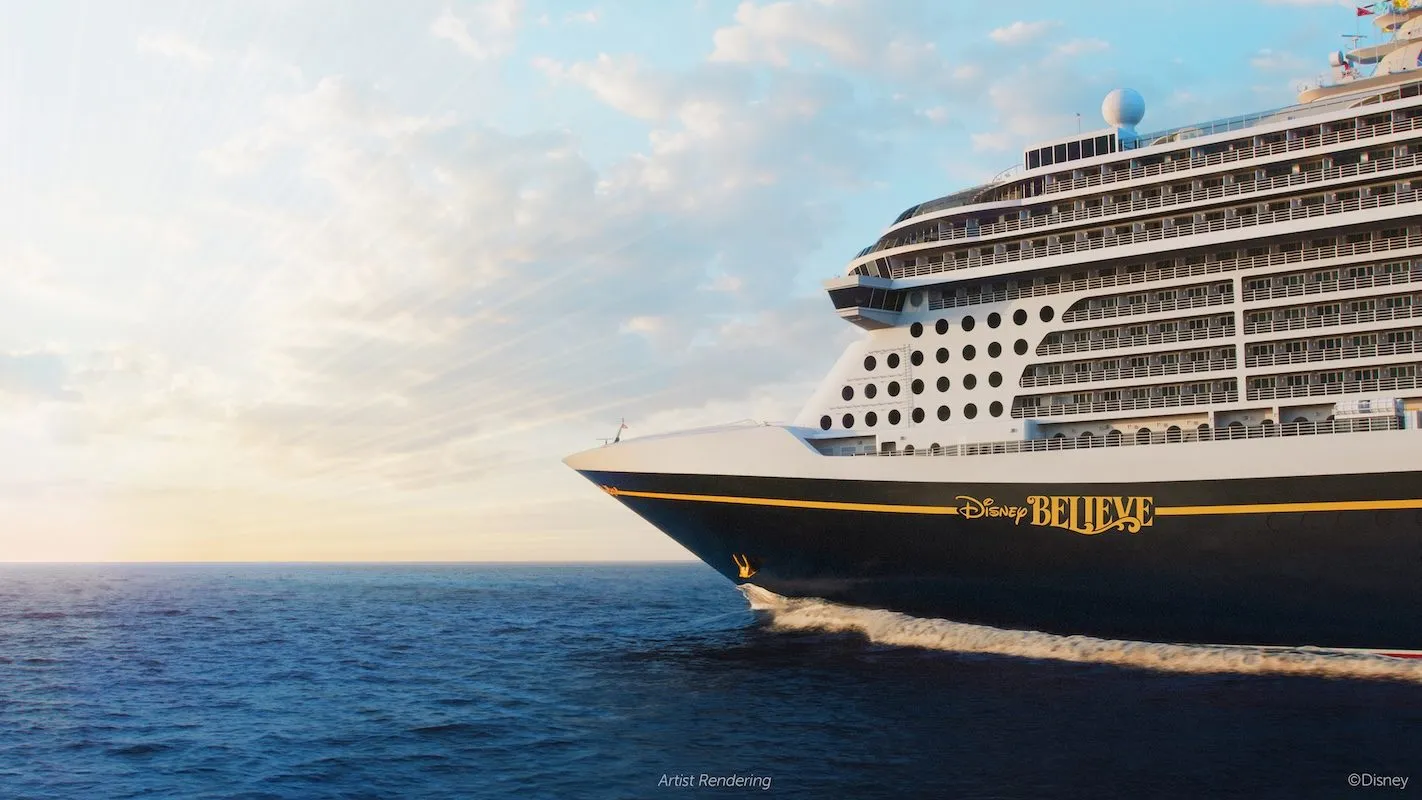
The post-pandemic travel landscape accelerated Disney’s appetite for experiential expansion. With the debut of the Disney Wish in 2022—the first ship in the ambitious Triton class—Disney initiated a rapid acceleration cadence. The Disney Treasure followed, and the company began strategically positioning vessels outside of North America for extended deployments, including homeporting in Europe, Australia, New Zealand, and the Asia-Pacific region through a landmark partnership with Oriental Land Co. for operations originating in Japan.
This international scaling created a reporting challenge for corporate leadership. Traditional metrics, which segregated domestic park attendance, international park performance, and maritime guest counts, failed to capture the seamless, cross-platform ecosystem Disney was building. Enter the "global guests" metric—first introduced in an August quarterly report and heavily reinforced in CEO Josh D’Amaro’s second-quarter letter to shareholders in fiscal 2026. By blending park attendance and passenger cruise days into a single unified key performance indicator (KPI), Disney officially signaled that the cruise line is no longer an ancillary division, but an equal partner to the theme parks in the company’s global growth narrative.
Supporting Context & Financial Metrics
The elevation of the cruise line within Disney’s corporate hierarchy is rooted in hard economics. While theme parks remain monumental profit centers, they are also highly capital-intensive, subject to localized economic headwinds, labor cost pressures, and land-use constraints. Conversely, cruise ships offer unique financial and operational advantages that make them exceptionally attractive to modern investors.
The Economics of the Floating Theme Park
From a financial perspective, a Disney cruise ship operates as a high-density, captive-audience resort. Unlike traditional theme park visitors—who may drive in for a single day, pack their own snacks, and leave the property at park close—cruise passengers are locked into a multi-day financial ecosystem. Every stateroom booking includes accommodations, foundational dining, and world-class entertainment, while onboard spending drives astronomical ancillary revenues through premium dining, spa treatments, shore excursions, merchandise, and beverage sales.
Furthermore, Disney Cruise Line commands significant pricing power. Because the supply of Disney staterooms is strictly limited compared to the vast capacity of its theme parks, the company can routinely price its sailings at a substantial premium over competitors. This pricing elasticity protects margins against inflationary pressures, making DCL one of the most reliable yield-generators in the entire corporate portfolio.
Decoding the "Global Guests" Metric
The newly minted "global guests" metric provides financial analysts with a clearer, consolidated lens into Disney’s consumer reach. By merging park attendance figures (measured by turnstile entries) with cruise data (measured by passenger cruise days—the total number of days spent onboard by all guests), Disney smooths out seasonal anomalies inherent to individual properties.
[Theme Park Attendance (Turnstile Entries)]
                     +                     ==> [GLOBAL GUESTS METRIC] (Up 4% in Q1-Q3 FY2026)
[Passenger Cruise Days (Total Days Onboard)]
As CEO Josh D’Amaro articulated, this metric was specifically designed to mirror the company’s strategic capital allocation:
"We feel this [metric] provides a lens into our increasingly global and diversified Experiences businesses, and aligns more closely with our investment initiatives around the world."
A 4% year-over-year growth in this composite metric during the first nine months of fiscal 2026 demonstrates that consumer appetite for Disney’s physical experiences remains robust, even amidst broader macroeconomic uncertainty and shifting consumer discretionary spending patterns.
The $60 Billion Capital Expenditure Blueprint
The structural shift toward cruising is heavily backed by capital. Disney’s broader corporate strategy relies on a massive 10-year, $60 billion capital expenditure (CapEx) commitment to its Experiences segment. Within this war chest, roughly 20%—translating to approximately $12 billion—is directly allocated toward the expansion of the Disney Cruise Line fleet.
This funding is transforming DCL from a niche operator of four ships into a formidable global fleet of 13 vessels by the end of calendar year 2030. This unprecedented shipbuilding program requires sophisticated financial engineering, long-term shipyard partnerships (primarily with Meyer Werft in Germany), and meticulous supply chain management. Yet, leadership views this capital deployment as low-risk relative to its high return on invested capital (ROIC), given the proven historical demand and unmatched brand loyalty of Disney’s consumer base.
Official Statements & Corporate Vision
The strategic pivot toward maritime expansion is championed by Disney’s top executive leadership, who view the Experiences division as the primary engine for long-term corporate growth and shareholder value creation.
In his communications to investors, CEO Josh D’Amaro has consistently emphasized the transformative nature of the company’s physical assets. D’Amaro, who oversees the vast empire of theme parks, resorts, cruise lines, and consumer products, has positioned the Experiences segment as an immersive canvas where Disney intellectual property comes to life in three dimensions.
"Our guests are demanding more immersive, more personalized, and more global Disney experiences than ever before," D’Amaro noted in recent briefings. "By expanding our cruise fleet to 13 ships by 2030 and integrating our physical touchpoints through metrics that reflect true consumer engagement, we are unlocking unprecedented growth avenues that transcend traditional geographic boundaries."
Financial analysts tracking the company have noted that this messaging represents a deliberate effort to pivot investor focus away from the volatility of the linear television and traditional media sectors toward the high-margin, predictable cash flows of the Experiences segment. While Disney’s streaming services (Disney+, Hulu, ESPN+) capture media headlines, the physical experiences division—bolstered by the aggressive scaling of the cruise line—serves as the sturdy financial anchor of the corporation.
Future Outlook: Navigating the Horizon to 2030
As Disney charts its course toward the close of the decade, the convergence of theme park operations and maritime cruising points toward a highly integrated, boundary-pushing future. The realization of a 13-ship fleet by the end of 2030 will fundamentally alter the competitive landscape of the global cruise industry.
Geographic Diversification and International Homeports
Historically, Disney Cruise Line relied heavily on Caribbean and Bahamian itineraries originating from Florida ports. However, the sheer scale of the incoming fleet demands geographic diversification. Recent and upcoming vessel deployments reflect a deliberate strategy to capture international travelers in their home regions.
By expanding European summer deployments, introducing year-round or seasonal sailings in the Asia-Pacific region, and exploring new homeports in strategic global markets, Disney is insulating its cruise business from localized economic downturns. This global footprint aligns perfectly with the "global guests" metric, capturing travelers who may never visit Walt Disney World in Florida or Disneyland in California, but who will readily board a Disney ship departing from Sydney, Singapore, or Southampton.
Private Destinations and Ecosystem Lock-In
A cornerstone of Disney’s maritime strategy is the creation of exclusive, highly curated private island and destination experiences. Beyond its pioneering private island, Castaway Cay, Disney has added Lookout Cay at Lighthouse Point in Eleuthera, Bahamas, and is developing additional proprietary destinations. These private ports ensure that the Disney "ecosystem bubble" remains unbroken even when guests step off the ship, maximizing both guest satisfaction and secondary spending capture.
Furthermore, Disney is increasingly leveraging its cruise ships as floating testing grounds for next-generation technology, immersive entertainment formats, and cross-promotional media tie-ins. A guest onboard a newly launched Triton-class vessel experiences advanced animatronics, interactive dining experiences, and exclusive theatrical productions that rival—and sometimes exceed—anything found on land.
Final Assessment
The introduction of the "global guests" metric is far more than a minor administrative adjustment in an earnings report. It is a profound declaration of intent. By formally weaving cruise passenger days together with theme park attendance, Disney has codified a new corporate identity: one where the high seas are just as vital to the company’s financial health as the magic kingdoms on land.
With $12 billion actively fueling the expansion to a 13-ship fleet by 2030, Disney is boldly navigating into a future where its brand of storytelling knows no geographic bounds—proving that for the modern Walt Disney Company, the most lucrative horizon is the open ocean.