






Executive Overview
The historic canals, rivers, and waterways of England, Scotland, and Wales are experiencing a quiet revolution. For centuries, the rhythmic thrum of diesel engines has been the soundtrack of canal boating. Today, however, that soundtrack is shifting to the gentle gurgle of water, birdsong, and the rustle of leaves as an increasingly eco-conscious community embraces electric propulsion.
At the center of this maritime transformation is Electrika, the United Kingdom’s premier and sole exhibition dedicated entirely to electric narrowboats and sustainable inland waterways infrastructure. Returning for its highly anticipated third consecutive year, Electrika 2026 reflects an exponential surge in consumer interest, technological innovation, and grassroots adoption.

Organized by Aquavista—the UK’s largest marina operator—in partnership with Ortomarine, a pioneering builder of electric narrowboats, the upcoming event serves as a vital nexus. Boatbuilders, marine engineers, battery specialists, motor manufacturers, and seasoned liveaboard cruisers converge here to share real-world experiences, debut cutting-edge hardware, and demystify the transition to zero-emission cruising.

Set to take place on Friday, July 10, and Saturday, July 11, 2026, at the Brinklow Waterside & Marina in Rugby, the free-to-attend event is slated to showcase seven floating electric narrowboats, alongside an extensive directory of leading green marine technology suppliers. As regulatory pressures mount and environmental stewardship becomes paramount, Electrika is no longer just a niche gathering; it is the definitive roadmap for the future of British inland navigation.

Detailed Chronology: The Evolution and Expansion of Electrika
The rapid acceleration of electric boating in the UK did not happen overnight. Its trajectory mirrors a broader cultural pivot toward decarbonization, pushed forward by innovators who refused to accept that traditional diesel was the only viable option for life on the cut.

- The Foundation Years: Long before dedicated shows existed, forward-thinking builders like Ortomarine and Hybrid Marine began experimenting with alternative drivetrains, recognizing that narrowboats—with their displacement hulls, low operating speeds, and predictable daily ranges—were ideal candidates for electric and hybrid conversion.
- The Launch of Electrika: Recognizing an acute need for centralized education and peer-to-peer networking, industry leaders established Electrika. The inaugural event proved that consumer demand for sustainable cruising was far past the fringe stage.
- Maturation and Mainstreaming: By its second year, the show cemented its reputation as a critical industry meeting place. Major players outside the traditional narrowboat sphere—such as global motor giant VETUS and electrical infrastructure firms like Energy Solutions—began bringing heavy-duty, production-ready solutions tailored specifically for narrowbeams.
- Electrika 2026 (The Current Milestone): Marking its third year, the 2026 installment represents a massive leap forward in scale and technological sophistication. With hydrogen fuel cell domestic systems entering the market, multi-mode hybrids breaking generation efficiency records, and plug-and-play lithium battery architectures simplifying retrofits, the show highlights an industry that has transitioned from experimental prototypes to robust, commercially mature products.
Supporting Context & Metrics: The Technology Transforming the Cut
Transitioning a 60-foot narrowboat from fossil fuels to electricity requires balancing severe spatial constraints, energy storage limitations, and variable British weather conditions. The exhibitors at Electrika 2026 address these challenges through targeted engineering breakthroughs across four major categories: hulls, motors, energy storage, and auxiliary power.

1. Show Boats & Hull Optimization
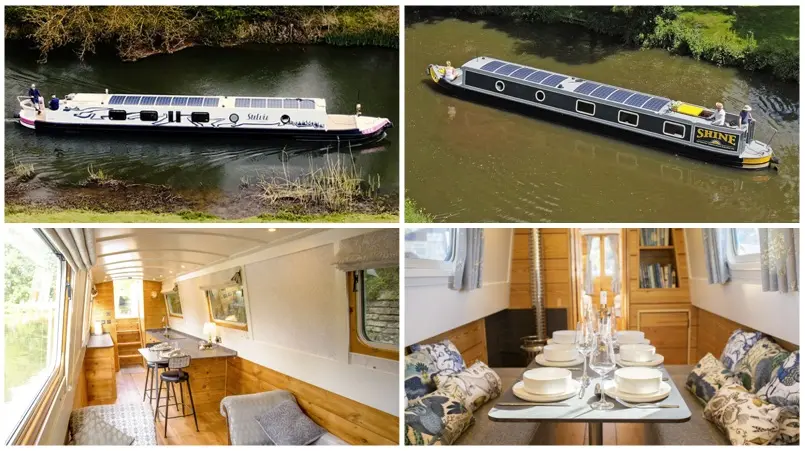
The vessels on display at Brinklow Waterside & Marina demonstrate that sustainability does not require sacrificing luxury or liveaboard comfort.

- Aqua Narrowboats (Infinity): A 60-foot serial electric hybrid featuring an Engiro 22 kW electric drive, a substantial 38.4 kWh LiFePO4 battery pack, a Fischer Panda 15 KVA generator backup, and 1.6 kW of roof-mounted solar generation.
- Bluewater Boats (Paws & Relax): A custom 63-footer boasting shot-blasted steel protection, a 15 kW motor, 1,800 watts of solar arrays, dual compost toilets, and advanced diesel heating.
- Elton Moss Boatbuilders (Dexter’s Star): Built on a heritage of shared-ownership durability, this 58-foot serial hybrid utilizes a 15 kW motor, a 44.16 kWh battery bank, and a 9kW generator.
- Finesse Boats (Longinqua): A 70-foot bespoke widebeam/narrowboat hybrid showcasing the pinnacle of Sheffield-based craftsmanship and advanced on-board power management.
- Ortomarine (Amastra & Electric Dreams): Ortomarine brings two distinct philosophies to the water. Amastra demonstrates long-term durability two years post-launch, while Electric Dreams serves as a masterclass in conversion—transforming an eight-year-old diesel boat (formerly Eau Rouge) into a parallel hybrid utilizing a Beta Marine engine.
- Smithwood Narrowboats (Twitchy Feet): A 59-foot serial hybrid highlighting master-class artisanal carpentry paired with cutting-edge electrical architecture.
2. Advanced Motors and Drivetrains
Low-rpm torque is the holy grail of displacement boat propulsion. Unlike high-revving planing hulls, narrowboats require gentle, consistent thrust delivered efficiently.

- Torkmar & Mothership Marine: Spearheaded by Tim Knox, Torkmar specializes in Permanent Magnet Alternating Current (PMAC) motors designed to spin large propellers below 1,000 RPM, mirroring the efficiency of deep-sea cargo ships.
- Hybrid Marine International: Celebrating decades of hybrid development, they are unveiling their newest multi-mode hybrid, which delivers 15 kW of electric drive while doubling as a potent 10 kW generator.
- Lynch Motors: Displaying their award-winning axial-flux "Red Snapper" hybrid system alongside the brushless "Divemaster" radial-flux motor, continuing a 30-year legacy of electric marine innovation.
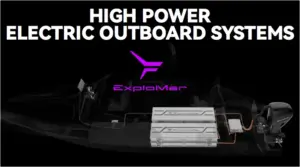
- VETUS: Debuting their expanded E-LINE range, anchored by the newly minted 22 kW inboard motor. Designed with "Swap & Go" mounting brackets adjustable from 0° to 8°, it simplifies the repowering of existing propeller shafts.
- Clearwater Boats: Showcasing Golden Motors’ established EZInboard and EZOutboard lines, providing reliable, field-tested electric options for custom builders and retrofirters alike.
3. Energy Storage and Management
Storing enough energy to navigate the winter months when solar yield plummets has historically been the primary hurdle for electric boaters. Exhibitors like Leoch Battery (representing RELiON lithium-ion systems) and Mastervolt are solving this with integrated digital switching and high-cycle LFP chemistries. Furthermore, Pro Electrical is introducing specialized hardware like the Solar Tilt System—which boosts winter solar yields by up to five times via telescoping mounts—and "The Boat Battery," an enclosed plug-and-play lithium unit backed by an innovative 5-year on-board repair warranty.

4. The Hydrogen Breakthrough
Perhaps the most intriguing development on display is the entry of hydrogen fuel cell technology to the inland waterways. Hydrogen Afloat, founded by Nick Swift, is introducing systems designed to completely replace noisy, polluting diesel generators. Their HyArk system provides 200W of DC power for domestic hotel loads using portable G20 cylinders, while the HERO system supports both propulsion and domestic needs, offering an estimated 50 miles of cruising range from clean hydrogen storage.

Official Statements & Expert Perspectives
Education forms the cornerstone of Electrika 2026. A comprehensive seminar schedule features leading authorities unpacking the complexities of electric life on the water:

- Paul Sumpner (Old Nick): Speaking on installation nuances, safety protocols, and real-world management of LiFePO4 (Lithium Iron Phosphate) battery banks, drawing from extensive firsthand experience cruising the UK canal network on his Ortomarine-built electric narrowboat.
- Tim Knox (Torkmar / Mothership Marine): Delivering technical insights on motor efficiency, propeller hydrodynamics, and why low-RPM high-torque systems are vital for inland vessel performance.
- Phil Smith (Energy Solutions): Exploring total energy management systems, drawing on the company’s nearly three decades of experience engineering hybrid power grids for commercial and leisure vessels.
- Alastair Hunter (Floating Ohm): A Fellow of the Royal Institution of Naval Architects who brings decades of large-vessel design expertise to the niche of hull optimization specifically tailored for electric narrowboats.
- Sarah Mules (Narrowboat Jenny Wren): Offering an entertaining, ground-level perspective on the realities of day-to-day living, cruising, mooring, and socializing aboard a serial hybrid narrowboat.
Future Outlook: The Road to Net-Zero Canals
As municipal authorities and waterway managers across Europe and the UK introduce stricter environmental regulations—including the establishment of zero-emission "green zones"—the inland boating community faces an inevitable transition.

Events like Electrika demonstrate that this transition is not a compromise, but an upgrade. By eliminating engine vibration, banishing noxious diesel fumes, and slashing carbon footprints, electric propulsion restores the fundamental serenity that draws people to the canals in the first place. With marina operators like Aquavista actively fostering infrastructure and builders like Ortomarine, Elton Moss, and Finesse refining modular, scalable green powertrains, the future of British narrowboating is undeniably electric, silent, and sustainable.