





Executive Overview
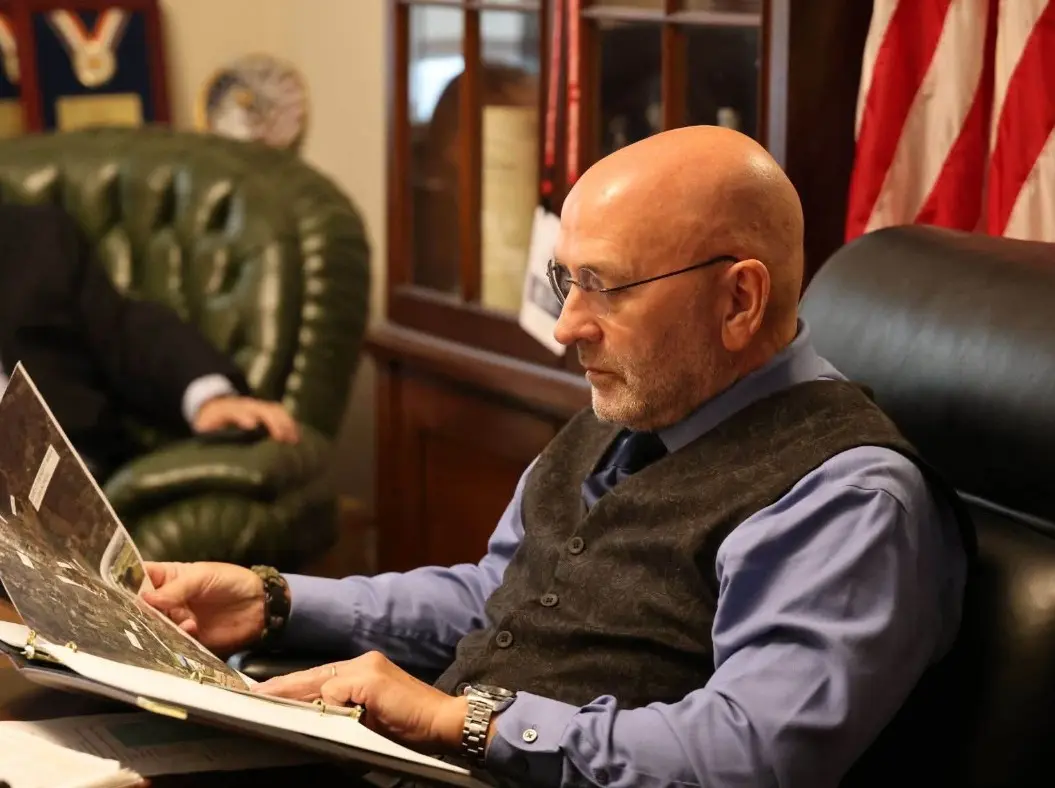
In a high-stakes push to resolve decades of bureaucratic inertia, Louisiana Congressman Clay Higgins has formally petitioned President Donald J. Trump to direct the U.S. Army Corps of Engineers (USACE) to execute immediate spot dredging on the Vermilion River. Authorized by federal statute as far back as 1956, the vital Louisiana waterway has languished through successive generations of administrative delays, leaving surrounding communities vulnerable to chronic flooding, ecological strain, and compromised commercial navigation.
The appeal to the White House marks an escalation in Congressman Higgins’ broader campaign to overhaul federal civil works infrastructure delivery. By leveraging executive authority, the Louisiana lawmaker aims to bypass traditional, sluggish procedural pathways that have stalled the project for nearly seventy years. The push has garnered powerful regional backing, notably from Dr. Ramesh Kolluru, President of the University of Louisiana at Lafayette, who emphasizes the profound economic, environmental, and public safety stakes tied to the health of the Vermilion River watershed.
At the core of Congressman Higgins’ argument is a critical intersection of executive reform and localized infrastructure needs. The congressman contends that the stagnant state of the Vermilion River serves as a textbook example of systemic inefficiencies within the Corps’ civil works mission—inefficiencies that his office recently targeted via comprehensive policy recommendations submitted to the Office of Management and Budget (OMB). As South Louisiana braces for intensifying severe weather patterns and rising sea levels, the demand for immediate spot dredging transcends local politics, evolving into a test case for federal infrastructure modernization and accountability.
Detailed Chronology: A 70-Year Stagnation
To fully grasp the urgency of Congressman Higgins’ recent appeal, one must trace the prolonged and frustrating history of the Vermilion River navigation and flood control project.
1956: Congressional Authorization
The roots of the current federal mandate trace back to an era of massive post-war American infrastructure development. In 1956, the U.S. Congress formally authorized the Vermilion River project under overarching federal water resource legislation. The authorization was designed to improve navigation, enhance commercial viability, and mitigate seasonal flooding across the Acadiana region, specifically targeting Lafayette and surrounding parishes.
Despite this official legislative sanction, the project was swiftly relegated to the back burner of the federal budgetary process. While initial studies and sporadic channel improvements occurred over the subsequent decades, a comprehensive, sustained maintenance and capital dredging schedule was never fully realized.
October 2025: The Higgins White Paper
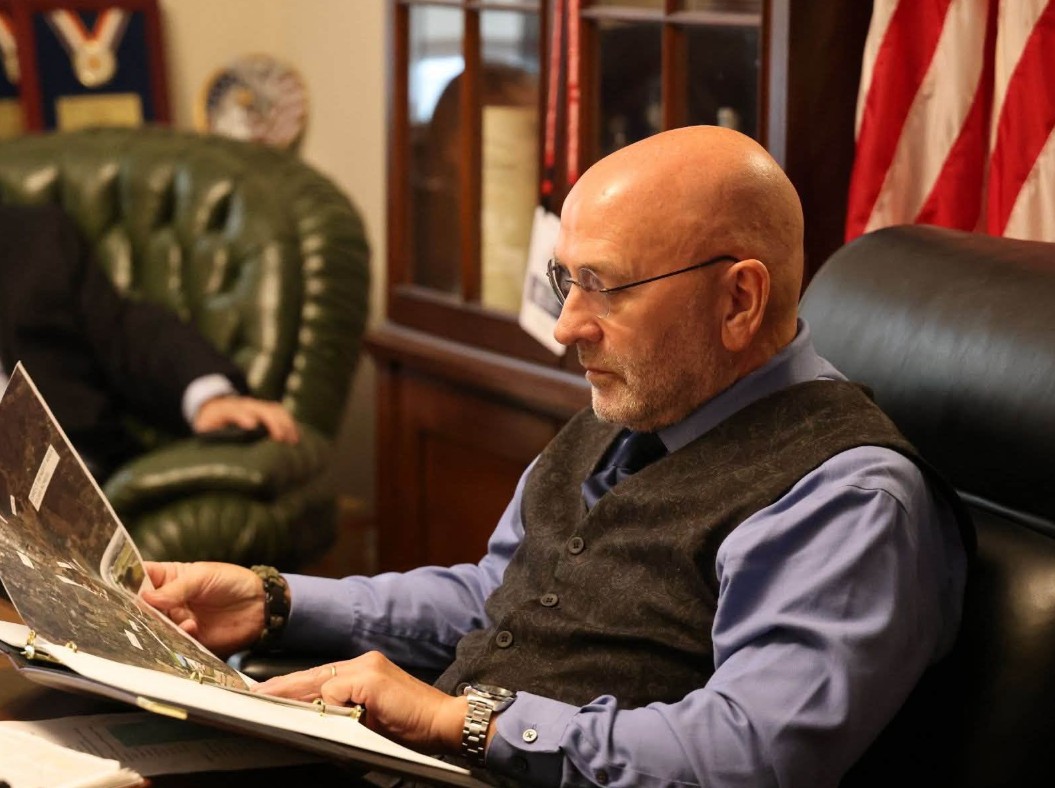
Frustrated by decades of red tape, environmental bottlenecks, and shifting federal priorities, Congressman Higgins escalated his legislative oversight in October 2025. Operating from his position representing Louisiana’s 3rd Congressional District, Higgins’ office delivered a sweeping white paper directly to OMB Director Russ Vought.
The policy document laid out a series of aggressive, structural reforms targeting the USACE Civil Works mission. The core thesis of the white paper argued that federal civil engineering projects are chronically weighed down by redundant environmental reviews, bureaucratic overlap, and outdated cost-benefit frameworks that prioritize paperwork over tangible dirt-moving execution. Higgins positioned the historical failure of the Vermilion River project as the primary case study illustrating why these foundational reforms were urgently required.
Late 2025 – Early 2026: The "Building Infrastructure, Not Paperwork Initiative"
The impact of the October 2025 white paper was immediate within federal administrative circles. Prompted by the data and arguments presented by Congressman Higgins’ team, leadership within the U.S. Army Corps of Engineers approached the congressman’s office to introduce a new internal reform directive: the "Building Infrastructure, Not Paperwork Initiative."
Seizing on this opening, Congressman Higgins engaged in direct, high-level discussions with Assistant Secretary of the Army for Civil Works (or designated leadership equivalent, referenced in records as Assistant Secretary Telle). During these strategic meetings, both parties aligned on a shared vision: the absolute necessity of breaking through institutional gridlock to execute delayed construction projects. At the center of these discussions was the targeted spot dredging of the Vermilion River—a project viewed by both local stakeholders and federal officials as a low-hanging fruit test case for the new initiative.
August 20, 2026: The Direct Appeal to President Trump
Despite alignment with civil works leadership, the bureaucratic machinery continued to move at a pace inconsistent with the acute flood risks facing South Louisiana. Consequently, on August 20, 2026, Congressman Higgins bypassed intermediate agency channels, taking his appeal straight to the Oval Office.
In a formal letter to President Donald J. Trump, Higgins requested direct executive intervention, asking the commander-in-chief to issue a directive ordering the USACE to immediately commence spot dredging operations on the Vermilion River. This bold move transformed a localized infrastructure debate into a high-profile test of executive power over entrenched agency timelines.
Supporting Context & Metrics: The Anatomy of the Vermilion River Watershed
The Vermilion River is far more than a scenic backdrop for the city of Lafayette; it is the central hydrological artery of a complex, highly developed basin in South Louisiana. Understanding the necessity of the proposed dredging requires examining the physical metrics, ecological pressures, and socio-economic stakes defining the region.
+-----------------------------------------------------------------------+
|                    VERMILION RIVER SYSTEM AT A GLANCE                 |
+---------------------------+-------------------------------------------+
| Metric / Feature          | Description / Status                      |
+---------------------------+-------------------------------------------+
| Initial Authorization     | 1956 (U.S. Congress)                      |
| Primary Geographic Focus  | Louisiana’s 3rd Congressional District,   |
|                           | Lafayette Parish, and Acadiana Region     |
| Key Economic Anchor       | University of Louisiana at Lafayette      |
| Associated Local Bodies   | Lafayette Consolidated Government (LCG)   |
| Primary Challenge         | Siltation, restricted flow, chronic       |
|                           | flood vulnerability                       |
| Proposed Federal Remedy   | USACE Spot Dredging under Executive       |
|                           | Directive                                 |
+---------------------------+-------------------------------------------+
Hydrological Challenges and Siltation
Over the decades, natural sedimentation, agricultural runoff, urban expansion, and industrial development have deposited massive volumes of silt, debris, and organic matter into the Vermilion River channel. Unlike fast-flowing mountain streams, the Vermilion is a slow-moving, tidally influenced coastal plain river. Its hydraulic gradient is remarkably flat, meaning water moves sluggishly toward the Gulf of Mexico.
When heavy rainfall events strike Acadiana—often driven by Gulf storms, tropical depressions, and severe convective systems—the narrowed, silt-choked cross-section of the river acts as a bottleneck. Water spills out of the banks rather than draining efficiently, overwhelming urban stormwater infrastructure managed by the Lafayette Consolidated Government (LCG) and flooding residential and commercial districts.
Economic and Infrastructure Vulnerability
The economic footprint of the Vermilion River basin is immense. It underpins real estate values, commercial navigation routes for local marine industries, and the operational integrity of major institutional anchors. Chief among these is the University of Louisiana at Lafayette (ULL), whose campus and surrounding student communities sit directly within the watershed’s sphere of influence.
When the Vermilion River floods, the economic fallout is swift and severe:
- Property Damage: Repeated inundation destroys residential housing stock, driving up flood insurance premiums and devaluing real estate across Lafayette Parish.
- Commercial Disruption: Navigation blockages halt marine transport operators, shipyards, and oilfield service vessels that utilize the waterway for regional commerce.
- Institutional Strain: Flooding threatens municipal infrastructure, wastewater treatment plants, and educational facilities, forcing emergency expenditures that strain local tax bases.
By implementing targeted spot dredging, the USACE can strategically remove severe silt shoals and hydraulic bottlenecks at key chokepoints along the river channel. This precision approach restores natural flow velocities, lowers baseline water surface elevations during flood events, and provides immediate relief to the surrounding basin without requiring massive, multi-year canalization projects.
Official Statements and Stakeholder Perspectives
The push for executive intervention on the Vermilion River has unified a broad coalition of federal lawmakers, local government officials, and academic leaders. The alignment of these diverse entities highlights the cross-sectoral consensus regarding the crisis.
Congressman Clay Higgins: A Call for Execution over Red Tape
In his public statements accompanying the release of his letter to President Trump, Congressman Higgins did not mince words regarding the cultural and structural roadblocks plaguing federal infrastructure agencies:
"In October 2025, my office delivered a white paper to Office of Management and Budget Director Russ Vought outlining reforms to the U.S. Army Corps of Engineers Civil Works mission to improve the efficiency and execution of federal construction efforts. The history of the Vermilion River in Louisiana’s 3rd District demonstrates why these reforms are necessary."
Higgins further detailed how his policy insights birthed the agency’s internal reform movement, yet stressed that institutional momentum remains too slow to protect Louisiana citizens adequately:
"After I delivered my white paper, the Corps approached my office with its ‘Building Infrastructure, Not Paperwork Initiative.’ This initiative was largely informed from my white paper. I personally met with Assistant Secretary Telle where a shared vision of execution on delayed projects and the necessity of spot dredging the Vermilion River was discussed."
By turning to the presidency, Higgins is effectively demanding that the executive branch bridge the gap between internal agency reforms and actual boots-on-the-ground execution.
Dr. Ramesh Kolluru: Academic and Regional Backing
The urgency of Congressman Higgins’ request is powerfully reinforced by academic and civic leadership. Dr. Ramesh Kolluru, President of the University of Louisiana at Lafayette, formally added his voice to the presidential appeal, emphasizing the holistic nature of the watershed’s needs.
In his official statement to the President, Dr. Kolluru noted:
"Given the importance of the Vermilion River and its watershed to our region, I support Congressman Clay Higgins and the Lafayette Consolidated Government in their request that the U.S. Army Corps of Engineers address the dredging needs of the Vermilion River."
Dr. Kolluru also underscored that spot dredging, while crucial, must be viewed as part of an integrated, multi-layered strategy for regional resilience:
"I also encourage continued federal, state, local, and regional collaboration to evaluate and advance other flood-mitigation opportunities as part of a comprehensive strategy to support a healthy, functional, and resilient Vermilion River and watershed."
The endorsement from ULL adds significant academic and scientific weight to the political petition, validating that the hydraulic models and flood risks cited by congressional leaders are backed by institutional research within the region.
Future Outlook: What Lies Ahead for the Vermilion River Project
As the petition sits on the desk of President Donald J. Trump, all eyes turn to Washington, D.C., and the headquarters of the U.S. Army Corps of Engineers. The outcome of Congressman Higgins’ appeal will carry profound implications not only for the residents of Acadiana but for the broader future of federal infrastructure project delivery across the United States.
Potential Scenarios and Pathways
- Direct Executive Order: President Trump could issue a direct directive to the Secretary of the Army and the Chief of Engineers instructing them to reprioritize internal Operations and Maintenance (O&M) funds to execute immediate spot dredging on the Vermilion River under the existing 1956 authorization. Such an order would effectively bypass traditional, multi-year budgetary sequencing.
- Administrative Fast-Tracking: The White House could direct the OMB and USACE leadership to accelerate the review of the Vermilion River project under the banner of the "Building Infrastructure, Not Paperwork Initiative," utilizing streamlined environmental categorical exclusions to mobilize dredging contractors within months rather than years.
- Collaborative Federal-Local Funding Partnership: Alternatively, the administration could couple executive action with a cost-share agreement involving the state of Louisiana and the Lafayette Consolidated Government, leveraging local matching funds to expedite heavy equipment deployment.
A Watershed Moment for Civil Works Reform
Beyond local flood mitigation, the Vermilion River dispute serves as a litmus test for the viability of federal bureaucratic reform. For decades, critics have argued that federal civil engineering has become ensnared in a web of procedural paralysis—where environmental assessments, inter-agency consultations, and endless reviews consume funds that should be spent moving earth.
If Congressman Higgins succeeds in securing a presidential directive for the Vermilion River, it could establish a powerful precedent. It would demonstrate that legislative pressure combined with targeted executive oversight can successfully break through agency gridlock, offering a repeatable blueprint for stalled infrastructure projects nationwide.
For the citizens, business owners, and students living along the banks of the Vermilion River, however, the stakes are far more immediate than national policy precedents. For them, every tropical storm season brings renewed anxiety, making the realization of the 1956 federal promise not merely a matter of bureaucratic efficiency, but an urgent question of community survival and economic preservation. As Washington evaluates the petition, Acadiana waits, hopeful that seventy years of administrative delay are finally drawing to a close.