





Executive Overview
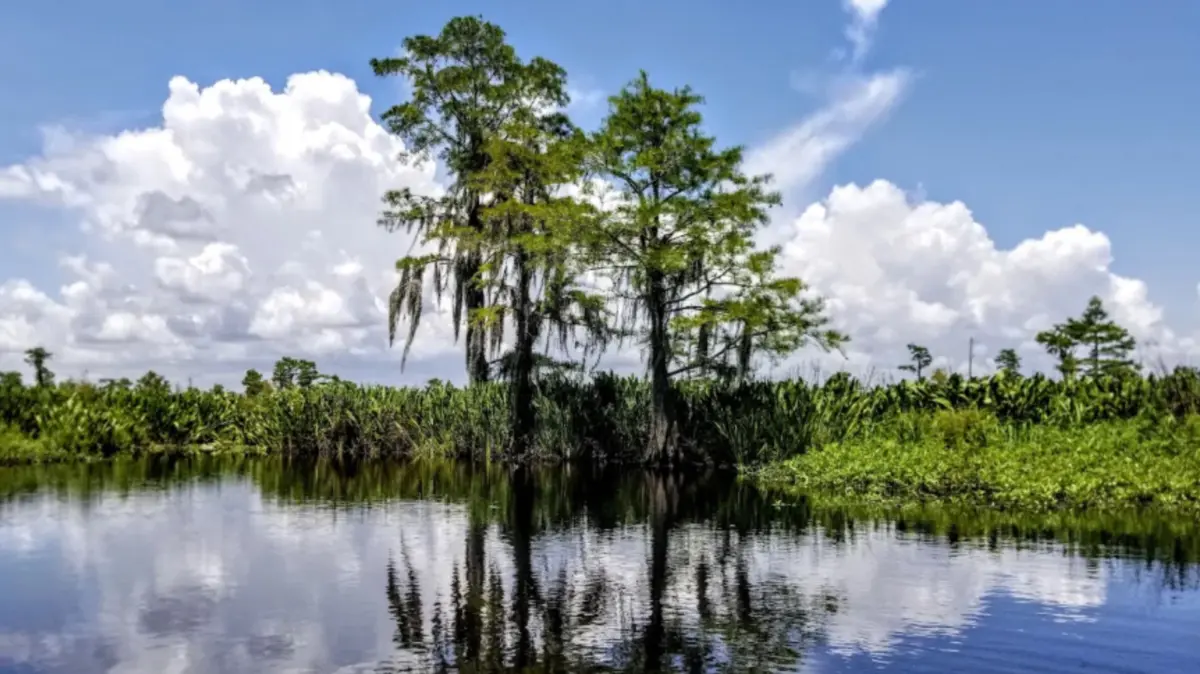
Tucked away in the southeastern pocket of Louisiana, where modern asphalt highways carve through ancient, untamed wilderness, lies an ecological sanctuary that encapsulates the raw, primordial beauty of the American South. Situated strategically between the bustling hubs of Baton Rouge and Slidell, just five miles south of Hammond, the Joyce Wildlife Management Area (WMA) spans more than 42,000 acres of prime Pontchartrain Basin terrain. Here, dense upland forests gradually surrender to a mesmerizing aquatic labyrinth of bayous, marshes, and majestic cypress-tupelo swamps.
Bordered by the vast, open expanses of Lake Maurepas and Lake Pontchartrain, this protected wetland serves as a critical buffer zone, a haven for biodiversity, and a premier destination for eco-tourists, anglers, and ornithologists alike. Unlike many of Louisiana’s sprawling coastal wetlands—which traditionally demand specialized watercraft, guided airboat tours, or arduous backcountry navigation to truly experience—Joyce offers an exceptionally rare luxury: effortless accessibility.
At the heart of this wildlife management area is its celebrated, elevated Swamp Walk. Constructed in 1990 by the Louisiana Department of Wildlife and Fisheries (LDWF), this wooden boardwalk extends directly into the heart of the swamp. It invites travelers off the nearby interstate and onto a pedestrian journey through a landscape dominated by towering cypress trees draped in Spanish moss, still waters blanketed by emerald algae, and an astonishing density of native fauna. Whether viewed from the stability of the boardwalk or explored deeper via narrow, historic logging canals, Joyce represents a masterclass in wetland preservation, offering an immersive portal into the fragile, breathtaking ecosystems that define the Louisiana bayou country.
Detailed Chronology and Historical Development
To truly understand the ecological significance of the Joyce Wildlife Management Area, one must examine the timeline of human interaction, industrial exploitation, and eventual conservation efforts that shaped the Pontchartrain Basin.
Pre-Settlement and Indigenous Stewardship
Long before European settlers traversed the southeastern Louisiana corridor, the wetlands surrounding Lake Maurepas and Lake Pontchartrain were inhabited by indigenous peoples, notably the Acolapissa and Tangipahoa tribes. These communities relied heavily on the rich biological bounty of the cypress-tupelo swamps. The waterways provided abundant fish, waterfowl, and pelts, while the towering cypress trees offered durable, rot-resistant timber for canoes and rudimentary structures. The indigenous relationship with the swamp was characterized by symbiotic harvesting, leaving the overarching ecosystem largely intact and flourishing.
The Era of Industrial Logging (Late 19th to Mid-20th Century)
The landscape underwent a dramatic and destructive transformation following the Civil War, and particularly at the turn of the 20th century. Driven by a nationwide housing boom and the invention of specialized steam-powered logging equipment—such as pull-boats and overhead skidder systems—industrial timber companies descended upon Louisiana’s pristine bottomland hardwood and cypress forests.
The cypress-tupelo swamps, once considered impenetrable, were systematically opened up via a network of man-made canals dredged directly into the wetlands. These canals allowed logging companies to float massive, centuries-old "bald cypress" logs out of the interior swamps to sawmills along major waterways. During this era, millions of board feet of old-growth cypress—trees that had stood for a thousand years or more—were clear-cut. The ecological scars of this era, characterized by altered hydrological flows and linear canal scars, are still visible across the Joyce landscape today.
Acquisition and the Birth of the Wildlife Management Area
As industrial logging slowed due to the depletion of merchantable old-growth timber, the cutover swamplands faced an uncertain future. Recognizing the critical ecological value of these buffering wetlands, conservationists and state agencies began working to acquire the land to prevent private commercial development and wetland degradation.
The establishment of the Joyce Wildlife Management Area marked a pivotal turning point in regional conservation. Named in honor of the Joyce family, who historically held land interests in the area and supported its conservation, the property was progressively acquired by the State of Louisiana. 管理 (Management) responsibilities were formally vested in the Louisiana Department of Wildlife and Fisheries.
Modern Conservation and Infrastructure Milestones
- 1990: A landmark year for public access. The LDWF engineered and constructed the iconic elevated Swamp Walk. This engineering feat solved a major conservation dilemma: how to allow the public to experience a fragile wetland ecosystem without trampling delicate root systems, compacting soils, or disturbing sensitive wildlife habitats.
- Late 20th to Early 21st Century: The area was formally integrated into the American Wetlands Birding Trail network, cementing its status as a premier avian observation site. Continuous habitat restoration projects, hydrological monitoring, and invasive species controls were implemented by the state to protect the swamp from saltwater intrusion and erosion.
- Present Day: Joyce stands as a resilient outdoor recreation and conservation model, seamlessly balancing public access, ecological research, and wildlife protection.
Supporting Context & Metrics
Evaluating the ecological and recreational footprint of the Joyce Wildlife Management Area requires looking closely at the hard data, geographical parameters, and biological metrics that define the refuge.
Geographical and Physical Metrics
- Total Acreage: Encompasses approximately 42,000 to 43,000 acres of contiguous wetland, marsh, and swamp habitat.
- Core Ecosystem Composition: Dominated by a mature cypress-tupelo swamp canopy, dense understory shrubs, and a distinct 500-acre freshwater marsh located near the interior.
- Boardwalk Specifications: The signature Swamp Walk is an out-and-back pedestrian structure measuring just under one mile in total length. It features a wide, treated wooden platform complete with reinforced railings and an expansive viewing/observation deck at its terminus.
- Strategic Location: Situated immediately adjacent to Interstate 55 (Exit 22), utilizing Old U.S. Highway 51 as the primary access point, placing it roughly 5 miles south of Hammond, Louisiana.
Biodiversity and Wildlife Metrics
- Avian Diversity: Recognized as a premier site along the American Wetlands Birding Trail, with nearly 200 distinct bird species documented within its boundaries over the course of the year.
- Resident vs. Migratory Populations: Supports year-round populations of wading birds, raptors, and waterfowl (including wood ducks, hooded mergansers, mottled ducks, and black-bellied whistling ducks), while serving as a crucial pitstop for millions of neo-tropical migratory birds navigating the Mississippi Flyway during the spring and fall.
- Herpetofauna and Mammalian Presence: Home to robust populations of the American alligator (Alligator mississippiensis), various non-venomous and venomous water snakes, white-tailed deer, swamp rabbits, raccoons, bobcats, and gray squirrels.
- Aquatic Species: The interior canals and surrounding water bodies sustain vibrant freshwater fisheries, prominently featuring largemouth bass (Micropterus salmoides), black crappie, bluegill sunfish, and channel catfish.
Official Statements and Expert Perspectives
Wildlife biologists, state conservation officials, and environmental advocates have long lauded the Joyce Wildlife Management Area as a shining example of successful wetland management and public-private cooperation in the face of intense environmental pressures.
Dr. Arlene Henderson, a wetland ecologist specializing in Gulf Coast hydrology, emphasizes the irreplaceable value of the Pontchartrain Basin’s remaining forested wetlands. In a recent ecological symposium briefing, she noted:
"The cypress-tupelo swamps of the lower Mississippi River basin are not merely scenic backdrops for postcards; they are the literal shock absorbers of coastal Louisiana. When tropical systems push storm surges inland from Lake Pontchartrain and Lake Maurepas, tracts like the Joyce Wildlife Management Area act as massive, friction-heavy hydraulic speed bumps. They absorb wind energy, mitigate storm surge heights, and filter nutrient runoff before it chokes our major lake systems. Preserving these 42,000 acres is an absolute non-negotiable component of regional climate resilience."
Representing the management side of the equation, wildlife specialists from the Louisiana Department of Wildlife and Fisheries (LDWF) frequently highlight the delicate balance required to maintain public access while safeguarding sensitive habitats. A spokesperson for the LDWF’s Wildlife Division released a statement detailing the operational philosophy behind the park’s infrastructure:
"Our mandate at Joyce is twofold: conservation and education. When the Swamp Walk was constructed back in 1990, our engineers understood that human foot traffic directly on the swamp floor would rapidly destroy the pneumatic roots—the knees—of the bald cypress trees and erode the organic peat soils. By elevating the visitor experience a few feet above the water, we achieve a profound win-win. Visitors get an intimate, uncompromised front-row seat to one of the most dynamic ecosystems in North America, while the wildlife and flora underneath continue undisturbed in their natural rhythms."
Local tourism and conservation groups in Tangipahoa Parish also point to Joyce as an economic and educational anchor for eco-tourism. Unlike heavily commercialized swamp tours that rely on motorized airboats, Joyce champions a quiet, contemplative form of nature engagement.
Local outdoor educator Marcus Thibodeaux elaborates on this ethos:
"When people walk out onto that boardwalk, the chaotic noise of Interstate 55 literally vanishes within a hundred yards. You replace highway hum with the calls of pileated woodpeckers, the heavy splash of an alligator submerging, and the rustle of wind through the Spanish moss. It teaches a deep, visceral respect for the swamp that you simply cannot replicate through a digital screen."
Future Outlook: Challenges and Preservation Strategies
Looking ahead, the long-term viability of the Joyce Wildlife Management Area depends on its ability to navigate a complex matrix of environmental threats, climate change indicators, and anthropogenic pressures. While the management area currently thrives as a vibrant ecosystem, conservationists and state planners are actively tracking several critical variables.
1. Saltwater Intrusion and Sea-Level Rise
One of the most persistent threats to southeastern Louisiana’s freshwater wetlands is the gradual landward migration of saltwater from the Gulf of Mexico. As sea levels rise and human-made navigational channels alter historic freshwater delivery routes, higher salinity levels can infiltrate the Pontchartrain Basin. Mature bald cypress trees possess a moderate tolerance to salinity, but prolonged exposure to high-salinity water inhibits seedling regeneration and can ultimately trigger massive canopy die-offs, converting vital forested swamps into open, erosion-prone mudflats.
2. Hydrological Starvation and Sediment Deprivation
Historically, the Mississippi River and its distributaries periodically flooded the surrounding basin, laying down rich layers of mineral sediment and flushing out stagnant organic matter. With the installation of extensive flood control levees along the Mississippi River, much of this natural land-building sediment is now piped straight out into the deep waters of the Gulf of Mexico, starving interior wetlands like Joyce of the sediment they need to keep pace with subsidence (the natural sinking of coastal land).
3. Invasive Species Management
Like much of the American South, the Joyce Wildlife Management Area faces continuous pressure from non-native invasive species. Nutria—large, prolific semi-aquatic rodents introduced from South America—pose a severe threat to wetland vegetation. By aggressively grazing on the root systems of marsh grasses and young cypress saplings, nutria can rapidly transform stable wetlands into barren mud flats. Additionally, invasive aquatic plants such as giant salvinia and water hyacinth threaten to choke out native aquatic vegetation and deplete oxygen levels in the interior canals.
4. Adaptive Management and Future Initiatives
To combat these multifaceted threats, the LDWF, in collaboration with federal agencies and academic researchers, is deploying advanced adaptive management strategies. These include:
- Continuous Hydrological Monitoring: Utilizing remote sensors to track salinity, water temperature, and dissolved oxygen levels in real-time across the basin.
- Targeted Invasive Species Control: Implementing structured trapping programs for nutria and deploying biological or mechanical controls for invasive aquatic weeds.
- Restoration and Siltation Projects: Exploring opportunities to channel nutrient-rich freshwater from the Mississippi River or local tributaries back into the basin in a controlled manner, fostering sediment deposition and bolstering forest health.
Conclusion
As long-term preservation efforts evolve, the Joyce Wildlife Management Area remains an indispensable ecological jewel of the American South. Straddling the line between human infrastructure and untamed wilderness, it offers a poignant reminder of the resilience of nature. For the traveler willing to pull off the highway just south of Hammond, step onto the wooden slats of the Swamp Walk, and look into the shadowy, mirror-like waters of the Pontchartrain Basin, Joyce does not merely offer a scenic detour—it offers a timeless encounter with the beating heart of Louisiana.