






Executive Overview
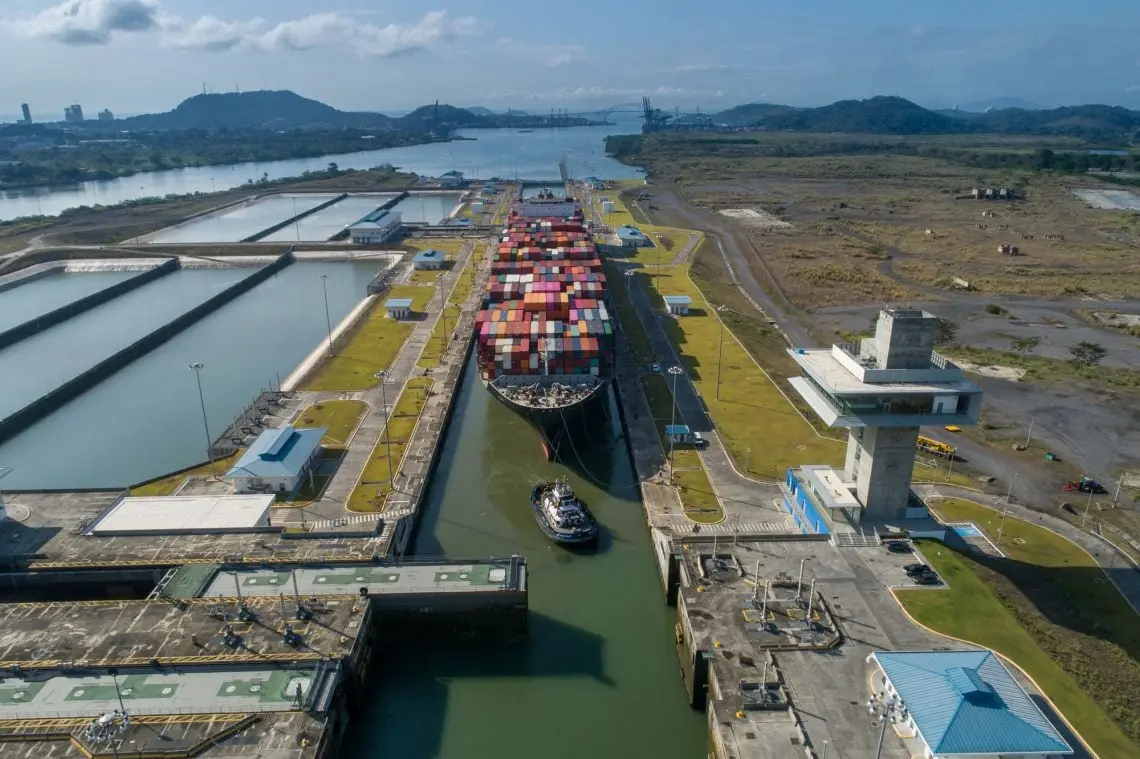
In a move that offers crucial, near-term relief to a global maritime logistics network already strained by geopolitical conflict and climatic uncertainty, the Panama Canal Authority (ACP) has officially postponed its planned reduction in the maximum authorized draft for vessels utilizing its Neopanamax locks. The decision preserves the current maximum draft of 48 feet (14.63 meters) Tropical Fresh Water (TFW), averting a scheduled drop to 47.5 feet (14.48 meters) that was set to take effect on October 1.
This operational reprieve comes after the ACP conducted an exhaustive review of Gatun Lake’s water levels and updated meteorological forecasts. While the decision provides immediate commercial breathing room for ocean carriers—allowing them to avoid further reducing cargo payloads on critical transpacific and transmarginal routes—it highlights the delicate balancing act facing canal administrators. The ACP must constantly weigh the immediate economic demands of global commerce against the existential, long-term threat of freshwater depletion, exacerbated by a strengthening El Niño weather pattern.
Despite this localized victory for vessel draft levels, the canal remains far from a return to normal operations. Daily transit capacity restrictions remain firmly in place, reflecting the ACP’s strategic priority to conserve the freshwater watershed that serves both the interoceanic waterway and more than half of Panama’s population. As global shipping lanes face unprecedented disruptions elsewhere, the Panama Canal continues to serve as a critical, albeit highly volatile, barometer for the resilience of global trade.
Detailed Chronology: The Summer of Restrictions
The decision to freeze the Neopanamax draft at 48 feet is the latest in a series of rapid operational adjustments made by the ACP over a turbulent summer. As the rainy season fell historically short of expectations, the canal’s primary freshwater source, Gatun Lake, began depleting at an alarming rate.
[Early Summer] 49.5 Feet (Standard Maximum)
       │
       ▼
[Mid Summer]  49.0 Feet
       │
       ▼
[Late Summer] 48.5 Feet
       │
       ▼
[Sept 2]      48.0 Feet (Delayed from Aug 26)
       │
       ▼
[Oct 1]       47.5 Feet (POSTPONED INDEFINITELY; Draft maintained at 48.0 Feet)
To understand the significance of the October 1 postponement, it is necessary to trace the incremental reductions that preceded it:
- Early Summer: The standard maximum draft of 49.5 feet was progressively lowered to 49.0 feet, and subsequently to 48.5 feet, as Gatun Lake levels steadily declined.
- August 26: The ACP initially slated a reduction to 48.0 feet to take effect. However, minor improvements in localized rainfall allowed administrators to delay this restriction until September 2.
- September 3: A further draft reduction to 47.5 feet was originally scheduled to take effect immediately following the September 2 adjustment. Recognizing the severe economic impact this would have on shipping alliances, the ACP pushed this deadline to October 1.
- Late September: Following a comprehensive hydrological assessment of the canal’s watershed, the ACP announced that the October 1 reduction to 47.5 feet would be postponed indefinitely.
This shifting timeline reflects a highly reactive, data-driven management strategy. By continuously adjusting these thresholds, the ACP aims to maximize transit efficiency
without risking groundings in the canal’s channels. For ocean carriers, however, this fluctuating operational landscape presents a significant planning challenge. The difference of half a foot of draft can translate to thousands of tons of cargo—equivalent to hundreds of loaded containers (TEUs)—that a vessel must leave behind to safely cross the Isthmus of Panama.

Supporting Context & Metrics: The Hydrology and Geopolitics of the Canal
The operational health of the Panama Canal relies on a complex interplay of hydrology, climate science, and global geopolitics.
The Hydrological Challenge: Gatun Lake under Siege
Unlike the sea-level Suez Canal, the Panama Canal is a freshwater gravity-driven system. Each vessel transit requires the gravity-fed discharge of approximately 50 million gallons of fresh water from Gatun Lake out into the Atlantic and Pacific Oceans.
During normal meteorological cycles, tropical rainfall replenishes Gatun Lake and the smaller Alajuela Lake, maintaining an equilibrium. However, the onset of a powerful El Niño cycle has severely suppressed precipitation across the Panamanian Isthmus.
To combat this, the ACP has deployed several advanced water-saving measures:
- Water-Saving Basins: Utilizing the Neopanamax locks’ specialized basins to recycle up to 60% of the water used during each transit.
- Simultaneous Lockages: Transit of two smaller vessels in a single chamber simultaneously.
- Interior Lock Gates: Utilizing shorter chamber configurations for smaller vessels to minimize water displacement.
- Hydropower Curtailment: Suspending electricity generation at the Gatun Dam to preserve every drop of water for transit operations.
Capacity Constraints: Draft vs. Transit Slots
While the draft restriction has been temporarily stabilized at 48 feet, the ACP has been forced to aggressively curtail daily transit slots to preserve water volume. This creates a two-pronged operational constraint for global shipping:
| Metric | Historical Normal | Current Operational Level |
|---|---|---|
| Neopanamax Daily Transit Slots | ~10 to 12 transits | 9 transits |
| Panamax Daily Transit Slots | ~24 to 26 transits | 23 transits (reduced from 25 on Sept 15) |
| Maximum Neopanamax Draft | 49.5 feet | 48.0 feet (stabilized) |
| Average Unbooked Vessel Wait Time | < 2 days | ~8.5 days (down from peak of 21 days) |
Geopolitical Pressures and Trade Lane Diversion
The strain on the Panama Canal has been significantly magnified by external geopolitical events. Prior to the escalation of conflict in the Middle East and the Red Sea—which severely disrupted transit through the Suez Canal—the Panama Canal was handling approximately 34 vessel transits per day, including about seven liquid bulk tankers.
As regional conflicts escalated, shipping lines sought to bypass the volatile Bab el-Mandeb strait and Suez Canal, routing cargo instead through Panama. This sudden influx of diverted traffic pushed demand to historic highs, with daily transits peaking at 40 to 41 vessels. This surge clashed directly with the canal’s worsening drought-induced capacity limits.
The resulting bottleneck triggered intense competition for transit slots. Shipping lines, particularly those operating LNG and LPG carriers, were forced into high-stakes auctions, sometimes paying millions of dollars on top of standard transit fees to secure a last-minute slot.
For unbooked vessels, backlogs reached a peak of 154 ships during the height of the 2023-2024 drought, with wait times extending to 21 days. While the current average wait time for non-booked vessels has stabilized at approximately 8.5 days, the backlog remains highly sensitive to any sudden changes in global shipping patterns.
Official Statements: Balancing Commercial Viability with Environmental Reality
The ACP’s decision-making process is guided by a dual mandate: maintaining Panama’s status as the premier global maritime hub while ensuring the domestic water supply of the nation is not compromised.
In its official announcement regarding the draft postponement, the ACP emphasized commercial predictability:
"Keeping the current draft in place gives customers greater continuity for voyage planning and vessel deployment. The canal will continue evaluating water conditions and provide advance notice of any future changes."
This statement underscores the pressure exerted by major international shipping lobbies, such as the World Shipping Council and various national shipowners’ associations. For these organizations, sudden changes in draft limits require immediate cargo offloading at transshipment hubs, disrupting regional supply chains and spiking operational costs.
However, the long-term outlook remains guarded. Canal Administrator Ricaurte Vásquez has consistently maintained a realistic tone regarding the climate challenges ahead. Speaking on the impact of the current El Niño cycle, Vásquez noted:
"What we see in the future is a very, very low level of precipitation. We have to look at how long this event is going to last. We anticipate that it’s going to last about eight months."
Vásquez’s warning highlights that the current stabilization of the Neopanamax draft is a tactical pause, not a structural cure. The water outlook is markedly worse than projections from earlier this year, when canal officials expressed confidence that normal operations could be maintained through the end of the calendar year.
Future Outlook: Infrastructure Projects and Climate Resilience
To secure its long-term viability, the Panama Canal Authority is looking beyond seasonal operational adjustments toward major infrastructural modifications.
The $1.6 Billion Río Indio Reservoir Project
The cornerstone of the ACP’s long-term climate adaptation strategy is the proposed $1.6 billion Río Indio Reservoir Project. This ambitious engineering initiative involves:
- Damming the Río Indio: Constructing a reservoir on the neighboring Río Indio, located west of the canal watershed.
- Water-Diversion Tunnel: Drilling an 8.4-kilometer (5.2-mile) subterranean tunnel through the mountains to divert freshwater from the new reservoir directly into Gatun Lake.
- Capacity Boost: The project is estimated to provide enough additional freshwater to support an estimated 11 to 15 additional daily transits, effectively restoring the canal’s capacity to pre-drought levels.
Despite its technical feasibility, the project faces significant hurdles. It requires legislative approval, constitutional adjustments regarding the canal’s defined watershed boundaries, and the relocation of thousands of local residents in the Río Indio basin. This process is expected to take at least five to six years to complete once construction begins.
Structural Shifts in Global Logistics
As the Panama Canal navigates these hydrological constraints, the global shipping industry is actively adapting. Some shipping alliances have begun permanently restructuring their service networks:
- Intermodal Shift: Increased utilization of US West Coast ports (such as Los Angeles and Long Beach) combined with land-bridge rail networks to transport cargo to the US East Coast and Midwest, bypassing the canal entirely.
- The Cape Route: For certain trade lanes, particularly from Asia to the US East Coast, ocean carriers are opting for the longer, but highly predictable, route around the Cape of Good Hope.
- Transshipment Hubs: Increased reliance on regional transshipment hubs on either side of the canal (such as Balboa on the Pacific and Manzanillo on the Atlantic) to crossload cargo onto smaller, draft-compliant vessels.
While the decision to maintain the Neopanamax draft at 48 feet offers a welcome reprieve for the peak shipping season, the underlying environmental and geopolitical realities suggest that the Panama Canal will remain a highly volatile link in the global supply chain for years to come. Shippers must remain agile, utilizing advanced booking strategies and diversified routing to mitigate the risks of an increasingly unpredictable tropical waterway.