









Executive Overview
The global transportation sector is undergoing a profound structural transformation, driven by an imperative to modernize aging infrastructure, embrace stringent environmental regulations, and integrate advanced digital technologies. Across North America, public transit authorities, motorcoach operators, and private mobility enterprises are implementing capital-intensive strategies that redefine passenger experience and operational efficiency.
Recent developments highlighted in this edition of industry updates underscore a multi-pronged approach to mobility evolution. Agencies are accelerating fleet decarbonization through hydrogen fuel cell adoption and advanced clean-diesel technology, while simultaneously expanding accessibility via low-floor paratransit vans and microtransit deployment. Concurrently, cutting-edge software optimizations and next-generation railcar procurement are establishing new benchmarks for reliability, compliance, and workforce management.
This comprehensive report examines the critical business moves, strategic partnerships, regulatory milestones, and technological investments shaping the future of mass transit and commercial transport.
Detailed Chronology of Industry Developments
1. RIPTA Unveils New Frontrunner Paratransit Fleet
The Rhode Island Public Transit Authority (RIPTA), working in close coordination with local, federal, and American Public Transportation Association (APTA) officials, officially introduced 50 new Model 1 Frontrunner vans. This rollout marks a significant milestone in replacing aging vehicles within the RIde paratransit fleet while simultaneously expanding capacity for growing RIde and Flex On Demand services.
Engineered with accessibility as a primary pillar, the Frontrunner vans feature a sophisticated low-floor design, a flat entryway, kneeling capabilities, and a low-slope manual ramp. These engineering choices drastically simplify the boarding and exiting processes for passengers who utilize wheelchairs and other mobility devices, while also reducing physical strain on van operators deploying ramps.
Beyond accessibility enhancements, the new vehicles support RIPTA’s overarching strategic objective to modernize its fleet and decrease operational reliance on outsourced taxi services. By scaling up its internal fleet capacity and workforce, RIPTA aims to execute more trips directly, granting RIde reservationists superior control over scheduling while maximizing public resource allocation.
2. Prevost Confirms EPA and CARB Compliance for Volvo D13 Engines
In the motorcoach sector, Prevost announced a major compliance milestone during the International Motorcoach Group’s Strategic Alliance Meeting in Wichita, Kansas. Company representatives confirmed that the EPA 2027 Volvo D13 engine fully complies with rigorous upcoming emissions standards established by the U.S. Environmental Protection Agency (EPA) and the California Air Resources Board (CARB).
The forthcoming emissions mandates mandate a reduction in permitted nitrogen oxide (NOx) emissions by more than 80% compared to current statutory limits. Backed by extensive testing—including more than 2.5 million test miles logged across the Volvo Group in both laboratory and real-world road environments—the engine is certified for deployment. This certification ensures that model year 2028 coaches will be fully eligible for registration across the United States and Canada, including California and all CARB opt-in states.
The powertrain update incorporates a streamlined "one-box" aftertreatment system that replaces multi-component legacy units. This consolidation brings vital service points within ground-level reach, substantially reducing vehicle maintenance downtime. Additional architectural upgrades include a redesigned air intake, air dryer, charge air cooler, a translucent coolant surge tank, and a high-capacity 48-volt alternator.
3. Cleveland’s RTA Marks Arrival of First Siemens Railcar
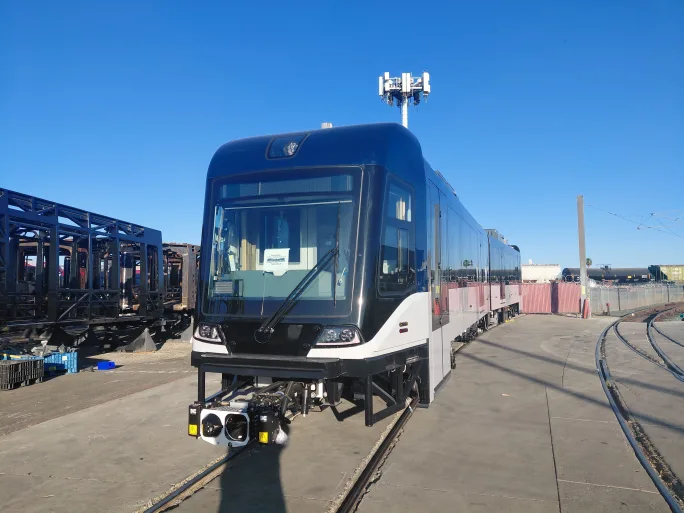
The Greater Cleveland Regional Transit Authority (GCRTA) reached a historic milestone in regional transit with the delivery of its very first next-generation Siemens railcar. Designated as the Siemens Model S200 Light Rail Vehicle (LRV), this arrival represents a cornerstone of a comprehensive $435 million capital investment program aimed at entirely replacing GCRTA’s aging rail fleet.
Engineered specifically to elevate passenger comfort and safety, the S200 LRVs feature 52 easy-to-clean sanitary seats, expanded standing room, four designated wheelchair areas, two bicycle racks, and an advanced onboard infotainment system. To combat severe Midwestern winters, the vehicles incorporate advanced ice-cutting technology. Furthermore, the operator cab has been redesigned with a dedicated HVAC unit, a heated windshield, and optimized sightlines.

Before entering revenue service—slated for the Red Line in Summer 2027 and the Blue and Green Lines in Summer 2028—each railcar will undergo exhaustive safety and commissioning trials at GCRTA’s Brookpark rail yard and across the active transit network.
4. Optibus Deploys Intelligent Driver and Vehicle Allocation Component
To combat persistent workforce shortages and operational inefficiencies, Optibus announced the launch of Allocation Optimization. This new module within the Optibus Operations suite automates the traditionally manual process of matching drivers and work shifts with available vehicles.
Rather than handling assignments sequentially or relying on manual dispatcher lists, the optimization engine runs continuous evaluation cycles. It processes driver availability, personal preferences, established work patterns, and complex regulatory frameworks simultaneously to generate optimal pairings.
The software natively enforces a comprehensive compliance framework, automatically integrating European Union and domestic hours-of-service regulations, United States union rules, collective bargaining agreements, mandatory rest periods, and maximum allowable daily work-time thresholds.
5. Riverside Transit and Clean Energy Unveil Hydrogen-Fueling Station
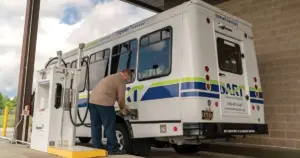
California’s Riverside Transit Agency (RTA), in strategic partnership with Clean Energy, officially inaugurated a state-of-the-art hydrogen fueling station at its Riverside headquarters. Concurrently, the agency showcased its new zero-emission hydrogen-fueled buses, signaling the formal commencement of RTA’s transition away from Compressed Natural Gas (CNG) toward a fully zero-emission fleet.
The infrastructure project and initial bus procurement were made possible by a layered funding strategy encompassing federal, state, and local capital. Notably, RTA secured $4.89 million in competitive Section 5339 Low or No Emission grant funds to finance its initial acquisition of five hydrogen fuel cell buses.
6. MARTA Expands Microtransit with Dodge ProMasters
The Metropolitan Atlanta Rapid Transit Authority (MARTA) introduced a specialized fleet of blue Dodge ProMaster vehicles to service 12 designated MARTA Reach microtransit zones. These high-capacity, low-floor vans are designed to optimize first-mile/last-mile transit connections across the metropolitan Atlanta area.
Outfitted with spacious interiors and advanced accessibility configurations for mobility devices, the new vans feature fully integrated Breeze payment hardware. Set for deployment, the system allows passengers to complete contactless payments using a physical MARTA Breeze Card or mobile payment application directly at the vehicle door, streamlining the boarding process for on-demand, shared-ride microtransit trips.
7. TRC and Transit Orange Partner for New York Transit Modernization
The Routing Company (TRC) entered a strategic partnership with Transit Orange to overhaul demand-response and fixed-route transit infrastructure throughout Orange County, New York.
Under this agreement, Transit Orange will deploy TRC’s Pingo platform to manage scheduling, real-time vehicle dispatching, fleet tracking, and passenger communications across its fixed-route network, Dial-A-Ride operations, and ADA complementary paratransit services. The deployment replaces legacy operating software with a unified, web-based platform featuring intelligent automated routing, predictive scheduling algorithms, real-time fleet analytics, and automated rider notifications.
Supporting Context & Quantitative Metrics
The breadth of these initiatives reflects broader macroeconomic and regulatory pressures influencing the transportation sector. Capital expenditures are increasingly targeted toward long-term asset modernization and environmental compliance:
- Emissions Reduction Targets: The transition of Prevost vehicles to the EPA 2027 standard mandates an 80%+ reduction in nitrogen oxide emissions, supported by validation protocols exceeding 2.5 million test miles.
- Capital Fleet Investments: GCRTA’s comprehensive overhaul relies on a $435 million capital outlay to procure modern Siemens S200 LRVs, ensuring structural resilience against extreme weather through ice-cutting capabilities.
- Microtransit and Paratransit Scaling: RIPTA’s deployment of 50 Frontrunner vans addresses a high-volume service demand that recorded over 256,975 paratransit trips in the preceding year, concurrently reducing dependence on costly outsourced taxi operations.
- Grant-Funded Decarbonization: RTA’s hydrogen transition leverages targeted federal capital, including a $4.89 million Section 5339 grant specifically allocated for zero-emission fuel cell bus acquisition.
Official Statements and Industry Perspectives
Public transit executives and manufacturing leaders have emphasized the strategic necessity of these investments in navigating regulatory hurdles and shifting consumer expectations.
Commenting on the operational restructuring enabled by the new paratransit fleet, regional transportation officials noted:
"By expanding our fleet and workforce internally, agencies can provide more direct trips, granting schedulers greater control over daily allocations and maximizing public resources to serve passengers with disabilities with dignity and reliability."
Addressing the technical readiness of heavy-duty commercial motorcoaches for upcoming environmental mandates, Prevost representatives emphasized during the International Motorcoach Group meeting:
"The integration of the Volvo D13 engine with a simplified one-box aftertreatment system represents a generational leap in powertrain engineering—bringing critical service points to ground level and drastically reducing emissions-related maintenance overhead."
On the digital transformation front, technology providers highlighted the impact of automation on workforce retention. Optibus spokespersons noted that intelligent allocation software removes administrative bottlenecks:
"By evaluating driver preferences, collective bargaining agreements, and strict regulatory hours simultaneously through automated optimization runs, transit agencies can protect workforce stability while maximizing daily asset utilization."
Future Outlook and Strategic Implications
As the transportation sector looks toward the latter half of the decade, the initiatives enacted by RIPTA, Prevost, GCRTA, Optibus, RTA, MARTA, and Transit Orange establish a clear precedent for the industry at large.
The convergence of strict federal and state emissions mandates with aggressive federal grant funding is accelerating the retirement of fossil-fuel-dependent fleets. Concurrently, the deployment of intelligent software solutions—ranging from demand-response algorithms like TRC’s Pingo platform to automated workforce allocation tools—demonstrates that operational resilience relies as heavily on digital infrastructure as it does on physical rolling stock.
Over the next three to five years, transit agencies that successfully integrate zero-emission propulsion technologies, digital fare collection, and automated scheduling will be best positioned to meet growing public demand for accessible, reliable, and sustainable mobility networks.