







Executive Overview
When travelers and outdoor enthusiasts conjure images of the Commonwealth of Pennsylvania, their minds are typically drawn to its historic urban landscapes and iconic monuments. Philadelphia, the state’s bustling epicenter of American history and commerce, and Gettysburg, the solemn battlefield that bore witness to President Abraham Lincoln’s paradigm-shifting address, dominate the tourism narrative. Yet, far beyond the well-trodden paths of these monumental destinations lies a quieter, ecologically rich side of the Keystone State.
Tucked away in southern Lancaster County—nestled geographically between the historical weight of Gettysburg to the west and the commercial hub of Wilmington, Delaware, to the east—lies a fragmented, verdant tapestry of small towns, rolling agrarian fields, and rugged river corridors. Among these natural assets, the 170-acre Fishing Creek Nature Preserve, situated in the heart of Drumore Township, stands as a prime example of Pennsylvania’s commitment to passive landscape preservation.
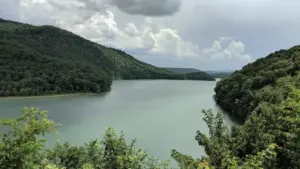
Administered by the Lancaster Conservancy, this pristine forested retreat is a vital component of the broader Susquehanna Riverlands Conservation Landscape (SRCL)—a sprawling, 49,400-acre corridor tracing the majestic Susquehanna River. Far removed from the manicured amenities, paved walkways, and playground installations characteristic of state parks, Fishing Creek Nature Preserve offers a deliberately unadorned experience. It is managed strictly for passive recreation, inviting hikers, anglers, and wildlife enthusiasts to interact with a largely undisturbed riparian and forest ecosystem.
However, beneath the canopy of oaks, hickories, and pines lies a complex operational reality. Visitors navigating this remote corner of Lancaster County face unique logistical challenges, from limited parking infrastructure to unbridled waterways that require deliberate route-planning. Furthermore, its designation as a high-quality cold-water fishery brings it under the regulatory microscope of the Pennsylvania Fish and Boat Commission (PFBC), balancing conservation imperatives with public access.
This investigative report examines the ecological significance, logistical landscape, regulatory frameworks, and future trajectory of the Fishing Creek Nature Preserve, providing an authoritative guide for travelers seeking to understand one of southern Pennsylvania’s most underrated environmental sanctuaries.
Detailed Chronology and Historical Context
To understand the current ecological state of the Fishing Creek Nature Preserve, one must trace the chronological transformation of the lower Susquehanna River basin. Long before European settlers arrived in the eighteenth century, the Susquehanna Riverlands served as a critical indigenous route and resource-rich hunting and fishing ground. The Susquehannock people utilized the river and its countless tributaries, including Fishing Creek, for sustenance and seasonal migration.
From Industrial Footprints to Conservation Stewardship
By the nineteenth and early twentieth centuries, the landscape surrounding Drumore Township underwent dramatic anthropogenic alterations. The push for industrialization, timber harvesting, and localized agriculture drastically reshaped the watershed. Hillsides were cleared for lumber and farming, sending sediment cascading into local streams, while early mills and rudimentary dams altered the natural flow of waterways like Fishing Creek.
As agricultural practices modernized and marginal hillsides proved less viable for intensive farming, secondary forests began to reclaim the land. The turning point for modern conservation in this specific corridor arrived in the latter half of the twentieth and early twenty-first centuries. Recognizing the escalating pressures of suburban sprawl and habitat fragmentation, regional environmental organizations mobilized.
The establishment and subsequent expansion of the Lancaster Conservancy marked a pivotal administrative shift. Founded to protect vital natural lands throughout Lancaster and York counties, the Conservancy gradually acquired parcels of land along the lower Susquehanna River. The acquisition of the acreage that now comprises the Fishing Creek Nature Preserve was not designed as a mass-tourism initiative; rather, it was conceived as a strategic land-banking and habitat-restoration effort.
Evolution of the Susquehanna Riverlands Conservation Landscape (SRCL)
Over the past two decades, regional conservationists realized that isolated preserves, while beneficial, lacked the ecological connectivity required to sustain migratory wildlife populations and preserve regional biodiversity. This realization birthed the Susquehanna Riverlands Conservation Landscape (SRCL) initiative—a collaborative, multi-stakeholder framework encompassing approximately 49,400 acres along the riverbanks.
Within this overarching landscape framework, Fishing Creek Nature Preserve was formally integrated into a network of conserved lands designed to protect water quality, mitigate stormwater runoff, safeguard contiguous forest blocks, and offer low-impact recreational outlets. Chronologically, the management approach transitioned from laissez-faire neglect to active ecological stewardship. Invasive species management programs, stream-bank stabilization initiatives, and the formalization of non-motorized trail systems became the hallmarks of the preserve’s modern era.
Today, while the physical infrastructure of the preserve remains purposefully minimalist, its historical trajectory reflects a broader societal pivot: shifting from viewing waterways and forests purely as commodities for extraction to recognizing them as irreplaceable ecological assets requiring deliberate, passive protection.
Supporting Context and Operational Metrics
A quantitative and qualitative evaluation of the Fishing Creek Nature Preserve reveals a delicate balance between public access and environmental fragility. The preserve’s physical parameters, geographic isolation, and infrastructural constraints dictate how visitors must plan their excursions.
Geographic Proximity and Regional Access
Located in the southeastern tier of Lancaster County, the preserve is deceptively accessible while retaining a profound sense of isolation.
- From Gettysburg: Travelers moving eastward from the historic borough take US-30 toward York, transitioning south via PA-74, and ultimately connecting with PA-372 east. This route traverses the rolling agricultural heartland of south-central Pennsylvania before plunging into the rugged terrain of the Susquehanna watershed. The journey takes approximately one hour by car.
- From Wilmington, Delaware: Visitors driving northward from Wilmington embark on an equally scenic, roughly one-hour drive. The route carries motorists up I-95 through New Castle County and northern Maryland, crossing the Mason-Dixon Line into Pennsylvania via PA-272, before looping through local byways like PA-434 to reach the park.
Infrastructure and Visitor Management Metrics
Unlike major state parks boasting visitor centers, paved asphalt trails, and expansive parking lots, Fishing Creek Nature Preserve operates on a minimalist model.
- Acreage: Spanning approximately 170 acres, the preserve protects a substantial swathe of steep, forested ravine terrain flanking the stream.
- Parking Constraints: One of the most frequently cited logistical hurdles by contemporary visitors is the lack of formal parking infrastructure. Field reports and Google reviews emphasize that vehicular pull-offs are extremely limited. Visitors frequently report ambiguity regarding designated parking zones along the narrow rural roads intersecting the property. This operational bottleneck necessitates early morning arrivals during peak weekend periods to prevent unauthorized blocking of local agricultural right-of-ways.
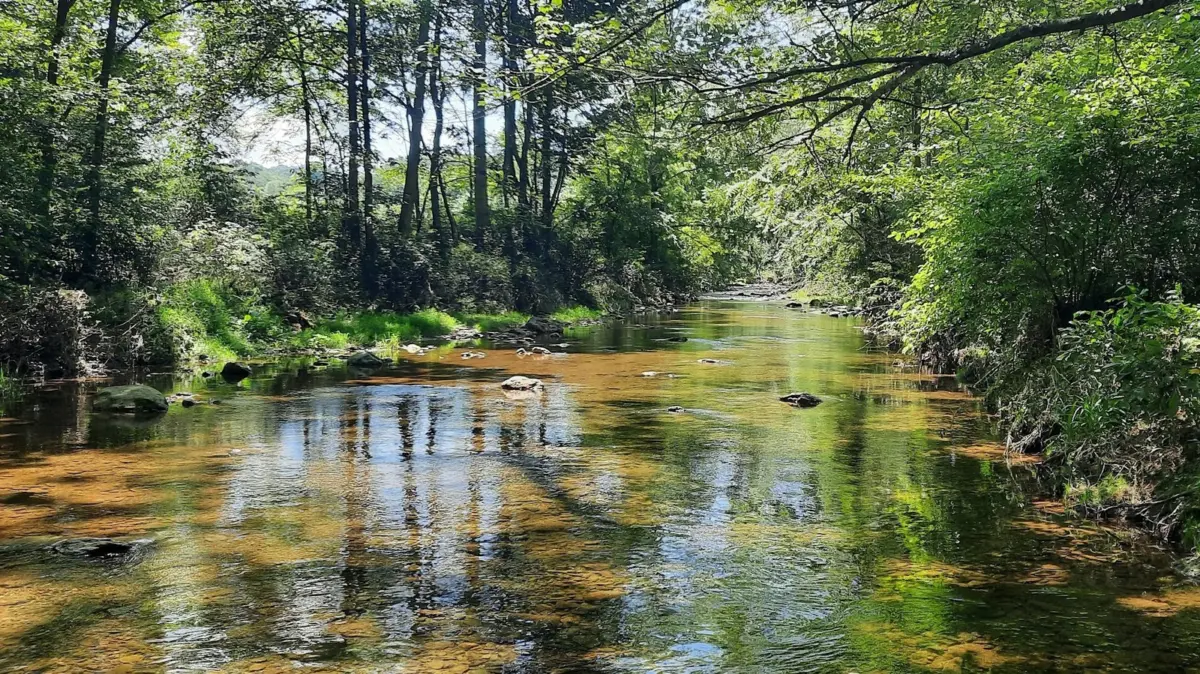
- Trail Conditions: The trail network is unpaved, consisting primarily of dirt paths and maintenance tracks that follow the contours of the creek. Total mileage is modest, suited for day-hikes rather than multi-day backcountry expeditions. A notable topographic feature highlighted by hikers is the necessity to navigate water crossings; Fishing Creek Road periodically intersects the meandering stream, requiring pedestrians to ford the water in certain stretches.
Ecological Inventory: Flora and Fauna
The preserve’s 170 acres function as a biological reservoir for native Appalachian species:
- Avian Life: The riparian zone acts as a migratory superhighway and nesting ground. Birdwatchers regularly spot great blue herons stalking prey along the stream banks. Notably, the audible calls of the Eastern Phoebe (Sayornis phoebe)—a classic flycatcher recognized by its sharp, repetitive "fee-bee" vocalization—permeate the woodland edges during spring and summer months.
- Mammalian Populations: The contiguous forest canopy and understory provide secure habitat for white-tailed deer (Odocoileus virginianus), red and grey foxes (Vulpes vulpes and Urocyon cinereoargenteus), raccoons, and various mustelids.
- Aquatic Biodiversity: The crown jewel of the preserve’s ecological metrics is its classification as a high-quality cold-water fishery. The thermal regulation provided by dense riparian shade and underground spring inputs ensures that water temperatures remain low enough to sustain sensitive aquatic organisms year-round.
Official Statements and Regulatory Frameworks
Managing a fragile riparian corridor shared by anglers, hikers, and local wildlife requires rigorous adherence to state and local regulations. The administrative oversight of Fishing Creek Nature Preserve involves a cooperative matrix between the Lancaster Conservancy and state agencies, chiefly the Pennsylvania Fish and Boat Commission (PFBC).
Conservancy Management Philosophy
In official literature published by the Lancaster Conservancy, the governing philosophy for Fishing Creek is explicitly defined: the property is "managed for its passive recreation."
Unlike high-impact municipal parks designed to handle massive crowds and organized sports leagues, the Conservancy’s mandate prioritizes ecological integrity. In public statements and trail guidelines, land managers emphasize that structural interventions are kept to an absolute minimum to preserve natural soil hydrology, prevent accelerated erosion on steep ravine slopes, and protect nesting wildlife from chronic human disturbance.
Pennsylvania Fish and Boat Commission Regulations
Because Fishing Creek boasts a prized cold-water fishery supporting both native and stocked trout populations, anglers utilizing the stream are subject to strict oversight by the PFBC.
According to official PFBC guidelines, the regulatory framework governing the stream includes:
- Licensing Mandates: Any individual aged 16 or older—including out-of-state tourists visiting from Delaware, Maryland, or beyond—must possess a valid Pennsylvania fishing license. To accommodate transient visitors, the PFBC offers short-term tourist permits spanning 1, 3, or 7 days, priced moderately between $30 and $40.
- Trout Permits: Anglers utilizing 3-day or 7-day tourist licenses must note that pursuing trout requires an additional, mandatory trout permit.
- Seasonal Parameters: Pennsylvania’s regular trout season generally opens in early April and extends through Labor Day, with specialized catch-and-release or extended-season regulations applying to designated sections of waterways.
- Free Fishing Initiatives: As part of statewide outreach efforts, the PFBC periodically designates specific "Fish-for-Free Days." During these designated windows, both residents and non-residents are legally permitted to fish across public waterways without purchasing a license, though all other creel limits and tackle regulations remain strictly enforced.
Official enforcement officers regularly patrol these rural access points to ensure compliance, safeguarding the fishery from over-exploitation and illegal harvesting practices.
Future Outlook: Challenges and Conservation Trajectories
As the pressures of suburban expansion creep outward from major metropolitan corridors like Philadelphia, Baltimore, and Wilmington, the long-term viability of small preserves like Fishing Creek faces compounding threats. Looking toward the future, land managers, conservation scientists, and regional planners must address several critical challenges to ensure the preserve endures for generations to come.
1. Climate Change and Watershed Resilience
Rising regional temperatures and increasingly erratic precipitation events pose an existential threat to cold-water fisheries. Because trout require consistently low water temperatures and high dissolved oxygen levels, any warming trend driven by climate change or upstream deforestation can decimate native populations.
- The Strategic Response: The Lancaster Conservancy and partner watershed associations are increasingly focusing on upstream riparian buffer restoration. Planting native trees, expanding forested corridors beyond the immediate 170-acre preserve boundary, and mitigating agricultural runoff are paramount to maintaining the cold-water integrity of Fishing Creek.
2. Infrastructure Pressures vs. Passive Preservation
A perennial tension exists between public access and habitat protection. As digital mapping tools and travel blogs bring increased visibility to hidden gems like Fishing Creek Nature Preserve, visitor volume inevitably rises.
- The Logistical Dilemma: The current lack of a formal parking lot often results in shoulder-parking along narrow rural roads, creating traffic hazards and potential friction with local agricultural landowners. Furthermore, unmanaged foot traffic along steep, erodible stream banks can accelerate soil loss and degrade riparian habitats.
- The Forward-Looking Solution: Future management strategies will likely require targeted infrastructural hardening—such as clearly demarcating small, sustainable parking areas, installing informational kiosks regarding Leave No Trace principles, and strategically re-routing erosion-prone trails—without sacrificing the tranquil, wild character that defines the preserve.
3. Regional Connectivity via the SRCL
Ultimately, the future of Fishing Creek does not lie in isolation, but in integration. By continuing to expand the Susquehanna Riverlands Conservation Landscape, regional planners aim to stitch together contiguous tracts of protected forests, agricultural easements, and historical sites.
For the modern traveler, this means that a trip to Fishing Creek Nature Preserve need not be a standalone excursion. Seamlessly paired with visits to neighboring conservation areas—such as the picturesque trails and birdlife found at Brandywine Creek State Park across the Delaware border, or localized preserves along the lower Susquehanna—Fishing Creek represents a vital stepping stone in a broader ecological network.
By balancing stringent regulatory compliance, respectful passive recreation, and aggressive landscape-scale conservation, Fishing Creek Nature Preserve will continue to offer a vital, untamed counterweight to Pennsylvania’s bustling urban history—proving that the true heart of the Keystone State is just as vibrant in its silent, forested ravines as it is in its historic city centers.