







Executive Overview
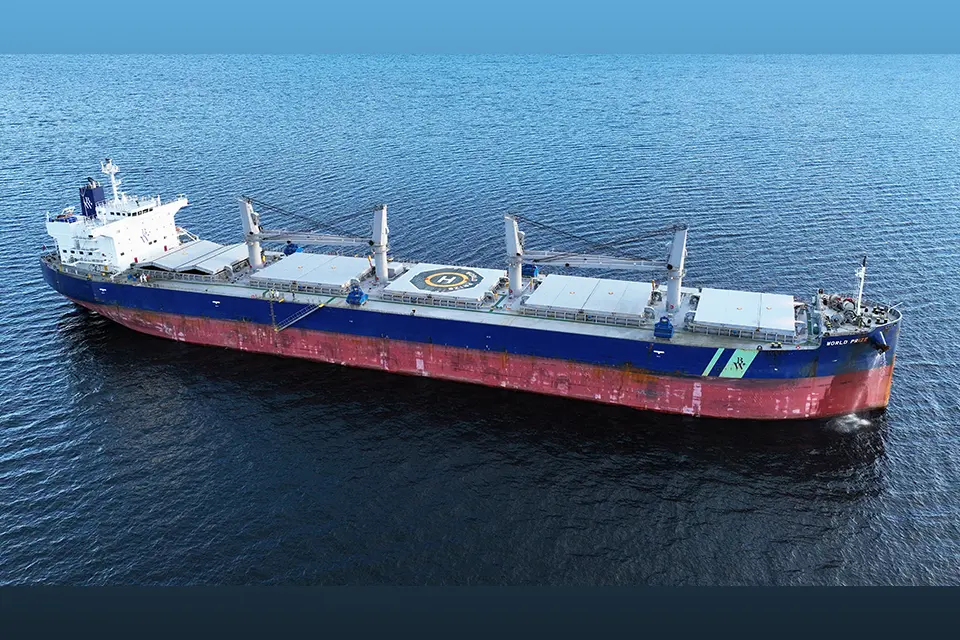
The United Kingdom’s Marine Accident Investigation Branch (MAIB) has officially published its comprehensive accident investigation report regarding the tragic man overboard incident that claimed the life of a crew member aboard the Isle of Man-registered bulk carrier World Prize. The fatal event occurred on 14 October 2025, plunging the maritime community into grief and prompting a rigorous, multi-jurisdictional review of safety protocols, operational procedures, and emergency response readiness on deep-sea commercial vessels.
The publication of the report marks a critical milestone in understanding the cascading failures and human factors that led to the loss of life at sea. Carried out by the MAIB on behalf of the Isle of Man Administration, the investigation was executed under the formal framework of the Memorandum of Understanding (MoU) established between the MAIB and the Red Ensign Group Category 1 registries—which include the Isle of Man, the Cayman Islands, Bermuda, and Gibraltar. This cooperative agreement ensures that independent, highly specialized maritime investigations are conducted for vessels operating under these prestigious flags, upholding rigorous international safety standards.
Maritime safety authorities, ship operators, and seafarer advocacy groups have eagerly awaited the findings of this report. The World Prize incident underscores the persistent and unforgiving hazards associated with working on the open ocean, particularly aboard large bulk carriers where immense physical forces, complex machinery, and grueling operational schedules intersect. By dissecting the sequence of events that transpired on 14 October 2025, the MAIB report aims not to apportion blame, but to illuminate systemic vulnerabilities, evaluate the efficacy of current onboard safety management systems, and issue actionable safety recommendations designed to prevent similar tragedies from recurring.
This article provides an in-depth analysis of the MAIB’s findings, exploring the detailed chronology of the incident, the regulatory frameworks governing such investigations, the broader context of maritime safety metrics, and the urgent imperative for cultural and technological evolution within the global shipping industry.
Detailed Chronology of the Event
While the full technical mechanics and minute-by-minute timeline are comprehensively detailed in the official MAIB report, the overarching sequence of events on 14 October 2025 highlights the rapid, unforgiving nature of man overboard emergencies at sea.
On the day of the incident, the World Prize was operating on the high seas, navigating routine commercial transit under typical maritime conditions for its voyage. Bulk carriers of this class are characterized by their vast cargo holds, high-sided freeboards, and exposure to environmental elements, making transit zones particularly hazardous when routine maintenance, deck operations, or navigation checks are underway.
As the vessel progressed on its passage, operational requirements necessitated crew activity on deck. At a critical juncture during these operations, a crew member found themselves in a position of vulnerability relative to the ship’s boundaries and the surrounding marine environment. Circumstances—which the MAIB report analyzes through the lens of human factors, environmental conditions, vessel motion, and procedural compliance—led to the crew member entering the water.

MAIB Annual Report 2025
The realization that a person had gone overboard initiated an immediate, high-stakes emergency response aboard the World Prize. In accordance with international maritime standards and shipboard safety management procedures, the bridge team was alerted, the alarm was sounded, and initial maneuvers to recover the casualty were commenced. However, the operational realities of executing a man overboard recovery from a large, heavily laden or ballasted bulk carrier moving at commercial speeds present formidable challenges. Factors such as the vessel’s turning circle, windage, sea state, visibility, and the time required to bring a massive commercial carrier to a stop or maneuver it back toward a casualty all heavily influence the outcome of the rescue attempt.
Despite the concerted efforts of the ship’s master and crew, the operation transitioned from a rescue mission to a recovery and search operation. Subsequent coordination with maritime rescue coordination centers and relevant authorities underscored the immense difficulties inherent in locating a single individual in the vast expanse of the ocean. The ultimate confirmation of the crew member’s fatality brought a profound sense of loss to the vessel’s complement, the ship management company, and the broader maritime network.
The MAIB’s subsequent deployment of investigators aimed to freeze the initial conditions, gather electronic voyage data recorder (VDR) extractions, review safety management documentation, interview surviving crew members, and reconstruct the physical dynamics of the incident. This meticulous reconstruction forms the bedrock of the published findings.
Supporting Context & Metrics: The Reality of Man Overboard Risks
To fully comprehend the significance of the World Prize report, it is essential to examine the broader statistical and operational landscape of maritime safety. Man overboard (MOB) incidents represent one of the most feared and lethal emergencies in the commercial shipping industry. Despite decades of technological advancement, regulatory tightening under the International Safety Management (ISM) Code, and improved personal protective equipment (PPE), falling overboard remains a leading cause of occupational fatalities at sea.
The Scale of the Hazard
Commercial bulk carriers like the World Prize are demanding workplaces. Operating 24 hours a day, crews frequently contend with sleep deprivation, adverse weather, heavy vessel rolling and pitching, and the physical strain of maintaining massive mechanical infrastructure. Working near open deck edges, handling mooring lines, conducting hull inspections, or performing routine maintenance expose seafarers to significant gravitational and kinetic hazards.
When a seafarer falls overboard, the odds are frequently stacked against a successful rescue:
- Time-to-Rescue: In cold water, hypothermia can set in within minutes, severely impairing a swimmer’s ability to stay afloat or grasp rescue equipment. Even in temperate waters, the physiological shock of sudden immersion can lead to cardiac arrest or involuntary inhalation of water.
- Sighting and Tracking: From the bridge of a modern bulk carrier, the eye height is often tens of meters above the waterline. Spotting a human head bobbing in white water or swells is exceptionally difficult, especially at night or in adverse weather conditions. If immediate visual contact is lost, the search area expands exponentially due to wind and current drift.
- Maneuverability: Stopping or turning a vessel displacing tens of thousands of deadweight tons requires significant distance and time. A standard Williamson turn or Scharnow turn executed by a large bulk carrier can take considerable time to complete, during which the vessel moves far away from the initial drop point.
The Regulatory Framework and the Red Ensign Group
The investigation into the World Prize was conducted under a specialized jurisdictional arrangement. The vessel is registered under the flag of the Isle of Man, a prestigious jurisdiction operating within the Red Ensign Group as a Category 1 British Red Ensign register. Category 1 registries are held to the highest international standards of maritime administration, matching the rigorous oversight of the UK Flag State itself.
To ensure absolute transparency, technical competence, and independence in maritime safety investigations, the UK MAIB and the Category 1 registries operate under a formal Memorandum of Understanding (MoU). This agreement dictates that when a serious marine casualty or incident occurs on a vessel flying a Category 1 flag, the MAIB may be invited—or mandated—to carry out the independent safety investigation on behalf of that administration.
This separation of regulatory administration from safety investigation is a cornerstone of modern maritime governance. By ensuring that investigators operate free from commercial or political pressures, the MAIB can issue unvarnished truths, identify systemic organizational or technical failures, and drive meaningful safety reforms across the global fleet.
Official Statements and Regulatory Response
The release of the accident report has prompted formal responses from safety bodies, maritime administrators, and industry stakeholders. While the statutory role of the MAIB is strictly non-attributional—focusing exclusively on learning lessons rather than determining civil or criminal liability—the conclusions drawn in the report carry substantial weight for shipping companies worldwide.
In an official statement accompanying the release, representatives from the MAIB emphasized the critical nature of adherence to safety management systems (SMS) and the continuous evaluation of personal risk assessments. The branch noted that maritime accidents rarely stem from a single catastrophic failure; rather, they are typically the culmination of a "Swiss cheese" model of multiple latent conditions and active failures aligning at a precise moment in time.
The Isle of Man Administration, as the flag state responsible for the World Prize, acknowledged receipt of the report and confirmed its commitment to reviewing the safety recommendations contained within. Flag states play a pivotal role in disseminating these findings to their wider fleets, ensuring that other shipowners and operators evaluate their own practices to eliminate parallel vulnerabilities.
Industry bodies, including ship management associations and seafarer unions, have echoed these sentiments, stressing that safety at sea cannot be treated as a mere tick-box exercise. The loss of a seafarer’s life serves as a stark reminder of the human cost borne by those who supply the global economy, transporting over 90% of the world’s trade across treacherous marine highways.
Future Outlook: Lessons Learned and Industry Implications
The ultimate value of the MAIB’s investigation into the World Prize incident lies in its forward-looking recommendations and the catalyst it provides for industry-wide introspection. As the maritime sector navigates an era of rapid technological change, decarbonization pressures, and persistent crew shortages, maintaining a robust safety culture is more critical than ever.
Key Areas for Industry Action
- Enhancement of Personal Fall Protection: The report reinforces the necessity of strict hierarchy of controls when working near unprotected edges or overside. Relying solely on procedural warnings is insufficient; physical barriers, engineered anchor points, and mandatory use of fall-arrest harnesses must be rigorously enforced and audited.
- Technological Advancements in MOB Recovery: The shipping industry must increasingly look beyond traditional lifebuoys and smoke floats. The adoption of modern Personal Locator Beacons (PLBs), Automatic Identification System (AIS) MOB devices integrated into work vests, and advanced electronic tracking systems can drastically reduce search times by transmitting precise GPS coordinates directly to the ship’s bridge the moment a worker enters the water.
- Realistic and Frequent Drills: Man overboard drills often become perroutine exercises conducted under idealized conditions. Operators must ensure that crews practice realistic scenarios—including unannounced drills, nighttime simulations, and exercises focusing on the rapid deployment of rescue boats and recovery cradles under adverse conditions.
- Human Factors and Fatigue Management: Operational pressures and tight turnaround times in port often bleed into sea passages, leading to fatigue. Investigating bodies consistently highlight fatigue as a degraded state that impairs situational awareness, reaction times, and risk perception. Managing workload and ensuring adequate rest is a fundamental safety imperative.
Conclusion
The publication of the accident report on the World Prize is a solemn moment for the maritime community. It honors the memory of the crew member lost on 14 October 2025 by transforming a tragedy into a vital educational tool. By confronting the uncomfortable truths of how and why the accident occurred, and by implementing the rigorous recommendations set forth by the MAIB and the Isle of Man Administration, the global shipping industry can take definitive steps toward ensuring that such preventable losses become a relic of the past.
For shipowners, masters, and seafarers alike, the report is a mandatory read—a sobering call to vigilance, and a reaffirmation that safety at sea must forever remain the absolute highest priority.