


Executive Overview
The American maritime sector stands at a critical historical juncture, caught between the urgent demands of global trade, aggressive decarbonization mandates, and an aging infrastructural footprint. At the American Association of Port Authorities (AAPA) annual convention in New Orleans, this tension took center stage. Drawing a record-breaking crowd of more than 900 participants representing over 90 ports, the event served as a high-stakes forum for port executives, federal officials, and maritime industry leaders.
The overriding mandate from Washington was clear, consistent, and urgent: U.S. maritime infrastructure projects must move faster.
As the federal government injects historic levels of capital into the maritime industrial base, bureaucratic inertia has emerged as the primary bottleneck. The convention highlighted a concerted, "whole-of-government" effort to strip away administrative redundancies, overhaul archaic regulatory frameworks, and fast-track critical projects. From the deployment of cutting-edge small modular nuclear reactors (SMRs) to power electrified terminals, to a sweeping reform of the nation’s dredging scheduling system, the message from federal agencies was unambiguous: the era of linear, slow-paced project delivery is over.
This investigative report dissects the key developments from the AAPA convention, mapping out the administrative, technological, and logistical shifts set to redefine the American waterfront over the coming decades.
Detailed Chronology: Inside the Three-Day AAPA Convention
The three-day summit in New Orleans functioned as a strategic workshop, bringing together key decision-makers from the Department of Transportation (DOT), the Department of Commerce, the Maritime Administration (MARAD), the Army Corps of Engineers, and the National Oceanic and Atmospheric Administration (NOAA).
┌────────────────────────────────────────────────────────┐
│             AAPA CONVENTION: KEY DAILY FOCUS           │
└───────────────────────────┬────────────────────────────┘
                            │
              ┌─────────────┴─────────────┐
              ▼                           ▼
       [ DAYS 1 & 2 ]                  [ DAY 3 ]
   Energy & Technology             Regulatory Reform
   - SMR Nuclear Studies           - National Dredging Framework
   - Terminal Electrification      - Concurrent Agency Reviews
   - Foreign Direct Investment     - WOTUS Mapping Tool (18 mo)
Days 1 & 2: Electrification, SMRs, and Next-Generation Energy
The convention opened with AAPA President and CEO Sang Yi highlighting the unprecedented turnout, framing it as a reflection of the renewed geopolitical and economic emphasis Washington is placing on U.S. shipbuilding and port resiliency.
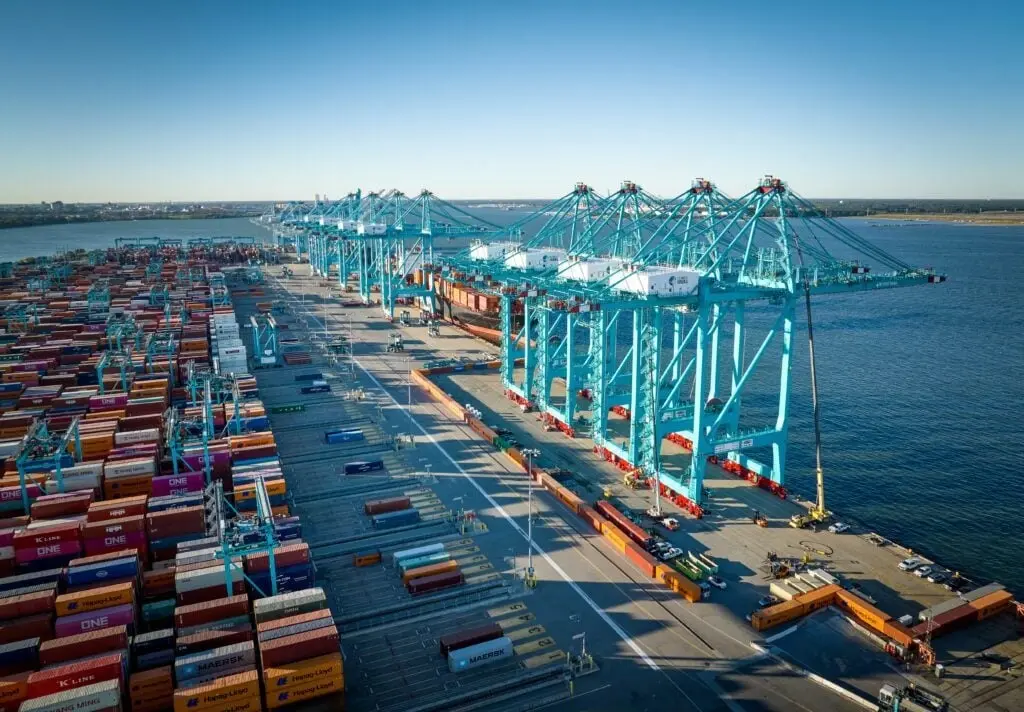
The early sessions quickly gravitated toward the monumental energy crisis facing modern ports. As terminal operators phase out diesel-powered cargo-handling equipment in favor of electric alternatives, the strain on municipal grids is reaching a breaking point.
To address this, a heavily attended session examined MARAD’s active push to explore small modular nuclear reactors (SMRs) as a viable power source for ports and future commercial vessels.
- The Port of Long Beach Initiative: Noel Hacegaba, CEO of the Port of Long Beach, detailed a landmark partnership with MARAD and Bluecore Energy. The partners are conducting feasibility studies on SMR technology to buffer a port whose electricity consumption is projected to nearly double by mid-century.
- The Port of Corpus Christi Initiative: Mirroring the West Coast effort, the Port of Corpus Christi is collaborating with MARAD and CORE POWER. This partnership is investigating the utility of floating nuclear power plants (barges equipped with SMRs) to provide localized, high-capacity, zero-emission baseload power, as well as marine propulsion applications.
Interspersed with energy discussions were panels on foreign direct investment. Andrew Farquharson, a senior official from the Commerce Department, outlined strategic capital flows from South Korea and Japan. This foreign capital is being targeted at U.S. maritime manufacturing and shipbuilding infrastructure, bolstered by federal research funding for advanced technologies like artificial intelligence and automated welding.
Day 3: Dismantling the Bureaucratic Logjam
The final day of the convention shifted from technology to regulatory reform. High-level federal officials addressed the administrative friction that historically delays dredging and channel-deepening projects for years, if not decades.
Lee Forsgren, Senior Official Performing the Duties of Assistant Secretary of the Army for Civil Works, delivered the convention’s most discussed remarks, focusing on the Army Corps of Engineers’ upcoming "national dredging framework." Forsgren targeted the sequential, multi-agency review process that stalls essential waterway maintenance.
"The days of linear evaluation are over," Forsgren declared, announcing a transition to concurrent evaluations. Under this new model, various federal and state agencies will review environmental and logistical permits simultaneously rather than consecutively, significantly compressed project timelines.
Supporting Context & Metrics: The Scale of the Maritime Challenge
To understand the urgency driving these federal initiatives, one must examine the operational and environmental metrics currently reshaping port management.
The Port Electrification Surge
The transition to zero-emission operations is not a distant goal; it is an active operational mandate. However, the energy requirements of a modern, electrified port are staggering.
PORT OF LONG BEACH: PROJECTED ELECTRICITY DEMAND
==================================================
Current Consumption:   ~79,000 homes equivalent
Projected (2050):     ~150,000 homes equivalent
Increase:             +89.8%
==================================================
This doubling of demand cannot easily be met by municipal grids, which are themselves facing stability challenges. SMRs represent a compact, high-density energy solution that can be deployed directly on-site, isolating port operations from municipal grid failures and ensuring uninterrupted supply-chain continuity.
The Dredging Efficiency Gap
Dredging is the lifeblood of maritime commerce; without continuous maintenance and deepening, ports lose the draft required to host modern, ultra-large container vessels. However, the U.S. dredging sector is frequently hampered by equipment availability and highly inefficient transit schedules.
Current Inefficient Dredge Transit Model:
[South Carolina] ──(Transit North)──> [Rhode Island] ──(Transit South)──> [Florida]
* Result: Millions of dollars wasted in fuel, transit time, and idle equipment.

Proposed Regional Dredging Framework:
[South Carolina] ──> [Florida] ──> [Rhode Island (Optimized Route)]
* Result: Maximized vessel utilization, reduced emissions, and faster project completion.
The Army Corps of Engineers’ planned "national dredging framework" aims to resolve these scheduling conflicts by treating the U.S. dredging fleet as a coordinated regional asset rather than a fragmented collection of localized projects.
Official Statements & Critical Analysis
The rhetoric at the AAPA convention signaled a cultural shift within federal regulatory agencies—moving away from a purely punitive or bureaucratic posture toward one of active facilitation.
"Build Infrastructure, Not Paperwork"
Lee Forsgren’s address highlighted the internal frustrations within the Army Corps of Engineers regarding regulatory gridlock.
"We want to build infrastructure, not paperwork. The days of linear evaluation are over."
— Lee Forsgren, Army Civil Works
This statement is a direct acknowledgment that the traditional regulatory path—where a project must pass through the Army Corps, then NOAA, then the EPA, and finally state-level departments sequentially—is incompatible with the rapid timelines required to compete with heavily subsidized foreign ports, particularly those in East Asia.
The "Whole of Government" Approach in Action
This commitment to regulatory speed was echoed by NOAA Principal Deputy Assistant Secretary for Oceans and Atmosphere Erik Noble, who emphasized a new level of inter-agency communication.
"We’re picking up the phone and calling each other."
— Erik Noble, NOAA
CASE STUDY: Emergency Dredging for NY Tall Ships Event
──────────────────────────────────────────────────────────────
Traditional Review Window:   Weeks to Months
Actual NOAA Review Time:     ~30 Hours
Outcome:                     Project completed within a narrow,
                             high-stakes operational window.
──────────────────────────────────────────────────────────────
Forsgren pointed to this rapid turnaround as the gold standard for future federal cooperation: "That’s the kind of cooperation we want. That’s how this is supposed to work."
The Imperative of Speed
Sydney Plante of MARAD’s strategic engagement team captured the competitive pressure felt across the federal apparatus during a session on infrastructure grants:
"We don’t want to miss our chance."
— Sydney Plante, MARAD Strategic Engagement
This urgency reflects a recognition that the massive funding tranches authorized under recent federal legislation, such as the Bipartisan Infrastructure Law, must be committed and executed before shifting political tides or economic downturns dilute their impact.
Future Outlook: The Port of 2050
The discussions and agreements forged at the AAPA convention in New Orleans lay the groundwork for a structural transformation of the U.S. maritime ecosystem over the next quarter-century.
Timeline of Scheduled Federal Deliverables:
┌────────────────────────────────────────────────────────┐
│  Now: SMR Feasibility Studies (Long Beach & Corpus)    │
├────────────────────────────────────────────────────────┤
│  ~18 Months: Initial WOTUS Mapping Tool Launch         │
├────────────────────────────────────────────────────────┤
│  2026-2030: Rollout of National Dredging Framework     │
├────────────────────────────────────────────────────────┤
│  2035-2050: Commercial Integration of Port-Side SMRs   │
└────────────────────────────────────────────────────────┘
1. The Nuclear-Powered Port
Within the next decade, the feasibility studies underway at Long Beach and Corpus Christi are expected to transition into pilot programs. If regulatory hurdles with the Nuclear Regulatory Commission (NRC) can be navigated, ports will evolve from mere transit gateways into self-sustaining energy hubs. These hubs will not only power their own cargo-handling equipment and shore-power systems but will also generate green hydrogen and ammonia to fuel the next generation of zero-emission cargo vessels.
2. Streamlined Waterway Jurisdictions
The upcoming release of the Army Corps’ mapping tool for Waters of the United States (WOTUS) in approximately 18 months will provide developers with an unprecedented level of regulatory clarity. By clearly defining federal jurisdictions through an accessible digital interface, the tool aims to eliminate the lengthy legal disputes and jurisdictional gray areas that have historically delayed waterfront construction projects.
3. A Highly Tech-Enabled Maritime Workforce
The integration of South Korean and Japanese capital, combined with federal research grants, will accelerate the automation of U.S. shipyards and terminal operations. To counter chronic labor shortages, the industry will increasingly rely on artificial intelligence to optimize logistics and automated welding technologies to speed up ship construction and repair.
Conclusion
The 2024 AAPA convention made one reality clear: the modernization of U.S. ports is no longer viewed merely as a local transport issue, but as a core pillar of national security and economic resilience. By tackling the twin challenges of energy capacity and regulatory delays head-on, federal agencies and port authorities are attempting to rewrite the playbook for American infrastructure. The success of this transition will depend entirely on whether the spirit of collaboration and urgency displayed in New Orleans can survive the complex realities of federal bureaucracy.