







Executive Overview
For over a decade, Dr. Britta Baechler has dedicated her professional life to understanding the invisible crisis choking our global waters: plastic pollution. As the Director of Ocean Plastics Research at the Ocean Conservancy, her days have typically been defined by the controlled environment of the laboratory—analyzing hundreds of samples, pouring over dense datasets, and mapping out the complex pathways that synthetic debris takes once it slips from human hands into the natural world.
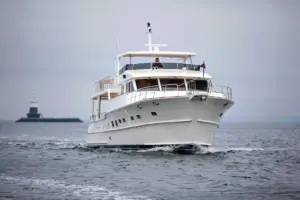
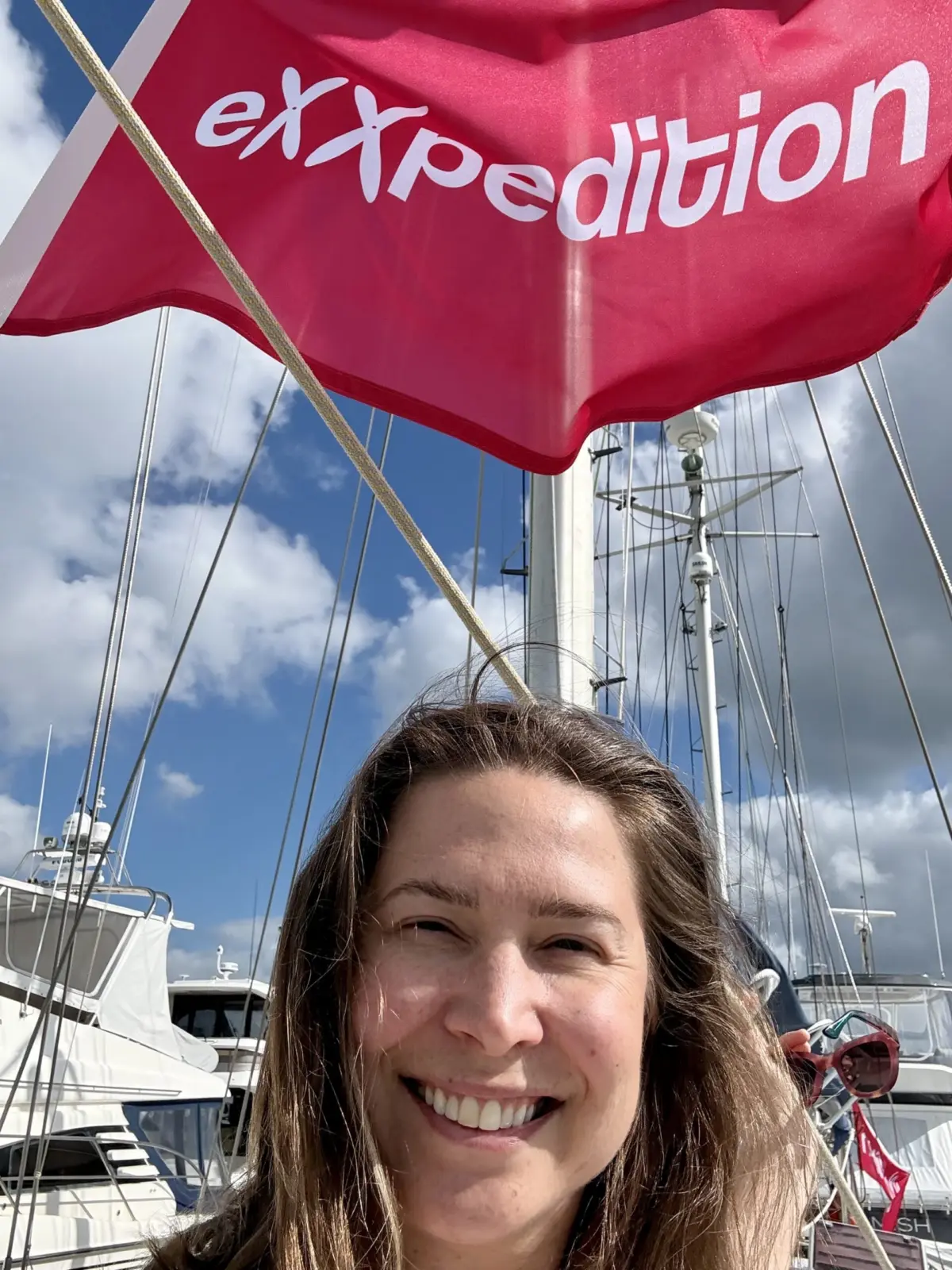
Yet, science in a sterile room can only reveal part of the story. Driven by a desire to witness the phenomenon at its source, Dr. Baechler recently traded her lab coat for a lifejacket, embarking on a high-stakes, 10-day research expedition across the South Pacific. Joining the inaugural leg of the all-female eXXpedition voyage from Auckland to the Bay of Islands, New Zealand, she stepped aboard the 70-foot research vessel Wind Shift to study microplastics where they drift, disperse, and accumulate.
Working alongside a diverse, multidisciplinary crew of 12 women—representing fields from structural engineering and circular economy strategy to sustainable fashion and robotics—Dr. Baechler’s mission was clear: collect vital surface-water data, survey urban streets, and audit remote coastlines to better understand the relentless flow of plastics from land to sea. What they found reinforces an uncomfortable truth: plastic pollution does not respect remoteness. Even in some of the most protected and pristine waters of the Southern Hemisphere, the invisible fingerprints of modern human consumption are deeply entrenched.
Detailed Chronology: Ten Days Aboard the Wind Shift
Setting Sail from Auckland
The journey began on April 27, 2026, as the Wind Shift departed the bustling harbor of Auckland, New Zealand. Before casting off into the open ocean, the crew engaged in ground-level reconnaissance. Utilizing measuring tapes and specialized field equipment, the researchers mapped and surveyed city streets to study how urban debris initiates its journey toward local waterways and, ultimately, the open sea.
Crossing the Hauraki Gulf to Aotea Great Barrier Island
As the vessel cut across the Hauraki Gulf toward Aotea Great Barrier Island—a remote and heavily protected stretch of New Zealand coastline—the team deployed manta tow nets. These long, cone-shaped mesh nets, dragged behind the vessel at slow speeds, skim the surface layer of the ocean to capture floating particles, plankton, and microplastics.
Upon reaching Aotea Great Barrier Island, the crew partnered with Sustainable Coastlines, a prominent local environmental NGO. Together, they navigated to an isolated stretch of beach to conduct a rigorous litter audit and cleanup. Despite the island’s geographical isolation and protected status, the findings were stark. The team cataloged an array of weathered and fragmented debris, including bottle caps, food packaging, single-use plastic pellets, and commercial fishing gear.
Navigating the Open Sea: Science Underway
The scientific operations aboard the Wind Shift were as rigorous as they were demanding. One of the primary daily duties involved analyzing sea-surface manta trawl samples directly on the rolling deck of the vessel. For Dr. Baechler, this meant peering through a microscope while manually sorting microplastics from krill-laden seawater samples—a task complicated significantly by the constant motion of the ocean.

Despite the physical toll of seasickness and challenging marine conditions, the all-female crew executed their protocols flawlessly. Every sample collected, every beach audited, and every microplastic fiber isolated added a crucial data point to a broader, global narrative concerning ocean health. The voyage concluded on May 6, 2026, in the Bay of Islands, leaving the researchers with invaluable samples and a renewed sense of urgency.
Supporting Context & Metrics: The Crisis of Microplastic Fibers
The eXXpedition voyage served as a floating case study for a wider, systemic environmental emergency. While large plastic items capture public attention through dramatic imagery of floating debris fields and entangled marine life, the most insidious threat to marine ecosystems is often invisible to the naked eye.
The Dominance of Microplastic Fibers
Among the myriad samples analyzed aboard the Wind Shift, one specific pollutant dominated the findings: microplastic fibers. Measuring no wider than a human hair, these microscopic threads are currently the most prevalent type of microplastic found in global aquatic environments.
- Sources of Microfibers: These tiny pollutants originate from a wide array of sources, including degraded cigarette butts, weathered marine ropes, wet wipes, and industrial textiles.
- The Laundry Connection: A primary driver of microplastic fiber pollution is domestic laundering. Shockingly, scientific studies indicate that a single standard load of synthetic laundry can shed up to 18 million microfibers.
- Long-Range Transport: The presence of these fibers in remote South Pacific waters—miles away from the nearest washing machine or urban center—demonstrates the sheer scale of atmospheric and oceanic transport mechanisms. Plastics travel vast distances, proving that no marine ecosystem on Earth remains truly pristine.
The Human Element of Pollution
The eXXpedition moniker highlights its unique all-female crew (utilizing the XX chromosome designation), bringing together exceptional expertise across diverse industries. The convergence of structural engineers, robotics experts, and circular economy strategists allowed the team to evaluate the plastic crisis not merely as an environmental disaster, but as a systemic human design failure.
The crisis of plastic pollution is fundamentally anthropogenic—generated by human behavior, modern manufacturing models, and inadequate waste infrastructure. Consequently, the solutions must be equally structural, requiring collaboration across disciplines, policy reforms, and technological interventions.
Official Statements & Perspectives
Reflecting on her transition from the controlled confines of her laboratory to the deck of a research vessel in the Southern Hemisphere, Dr. Baechler shared deep insights regarding the psychological and professional impact of the voyage:
"I have been studying plastic pollution for more than a decade. I’ve analyzed hundreds of samples in labs, pored over data and spent years thinking hard about where plastics go once they leave our hands and enter the environment… And here’s where it took me! I was thrilled to have the opportunity to join the first leg of eXXpedition’s voyage in the South Pacific this past spring, trading my lab coat for a lifejacket to study microplastics at sea."
Dr. Baechler emphasized that experiencing the pollution firsthand fundamentally shifted her perspective on the urgency of the work:
"In my lab research, I have found microplastic fibers time and time again, but there’s something even more sobering about hand-picking them out of a seawater sample collected from pristine-looking waters. It was a good reminder of why understanding where plastic comes from, how it moves and where it ends up is so critical to addressing the problem at its roots."
Commenting on the resilience of the all-female crew amidst physical challenges like seasickness and demanding research schedules, she added:
"The courage and dedication of the women I shared those 10 days with is something I won’t forget. Going to sea, doing the science and pushing through discomfort to collect data that matters was not easy. We were seasick some days and exhilarated others. Despite that fact, we showed up for it fully, every day."
Future Outlook: Turning Data into Systemic Change
While beach cleanups and coastal audits remain vital components of community engagement, Dr. Baechler and the Ocean Conservancy stress that physical cleanups alone cannot outpace the rate of global plastic production. Mitigation strategies must focus heavily on source reduction, policy intervention, and product redesign.
The Immediate Solution: Washing Machine Filters
When addressing the most prolific marine microplastic—microplastic fibers—solutions already exist that require neither complex technological invention nor decades of infrastructural overhaul.
- The Mechanism: Washing machine filters function identically to the lint traps found in household clothes dryers.
- The Impact: These tightly woven mesh filters capture synthetic fibers during the wash cycle, effectively preventing roughly 90% of microfibers from leaving residential homes and entering municipal wastewater systems.
- Policy Implication: Mandating these filters in new washing machines through legislative action represents an immediate, highly effective, and affordable step toward mitigating ocean-bound microfibers.
A Call to Action
The findings from the eXXpedition South Pacific voyage provide the empirical evidence required to lobby lawmakers for robust regulatory frameworks. As global initiatives like Plastic Free July bring heightened public awareness to single-use consumption, organizations like the Ocean Conservancy are urging citizens to demand systemic accountability.
By transforming every seawater sample, beach cleanup, and microscope observation into actionable data, scientists and advocates are building an unassailable foundation for policy changes. As Dr. Baechler aptly concluded:
"The plastic is out there, even in far-flung corners of the ocean. And the answer is not to be paralyzed by that fact, but to use it as fuel… Our ocean is remarkable, and our ocean is worth fighting for, including from 70 feet of sailing vessel in the South Pacific, staring down a microscope with a pair of tweezers and a queasy stomach."