




Executive Overview
As winter’s crisp chill settles over the Gulf of Maine, Casco Bay Lines (CBL) finds itself in a season of profound institutional transition. While February typically brings a slower, more contemplative pace to the historic ferry terminal—where island commuters sip hot coffee on uncrowded vessels and neighbors exchange quiet nods—beneath the surface, a major strategic evolution is underway. The year 2026 marks a pivotal turning point for the organization, characterized by the wholesale restructuring of its executive and operational leadership.
Following the historic retirement of Nick Mavodones, a legendary figure whose tenure spanned nearly half a century, Casco Bay Lines has officially ushered in a new generation of command. At the helm of this transformation is newly appointed General Manager Ben Dinsmore, a maritime veteran with deep coastal roots. Working alongside him are newly minted Operations Manager Mike Bryand and Assistant Operations Manager Pat Donovan. Together, this trio represents a strategic blending of time-tested institutional knowledge and modern maritime vision.
This comprehensive report examines the structural shifts at Casco Bay Lines, detailing the legacies of those who built the service, the rigorous selection process behind the new appointments, and the strategic vision guiding Maine’s quintessential island lifeline into the future.
Detailed Chronology of Leadership and Succession
The reshaping of Casco Bay Lines’ leadership hierarchy did not happen overnight; it is the culmination of decades of dedicated service, strategic planning, and a generational handoff of operational responsibilities.
The End of an Era: Honoring Nick Mavodones
To understand the magnitude of CBL’s current leadership team, one must first look at the towering legacy left behind by Nick Mavodones. Last fall, Casco Bay Lines commemorated Mavodones’ retirement after an astonishing 47 years of continuous service. His remarkable journey was prominently featured in a profile by News Center Maine’s 207 program, capturing the hearts of community members across the state.
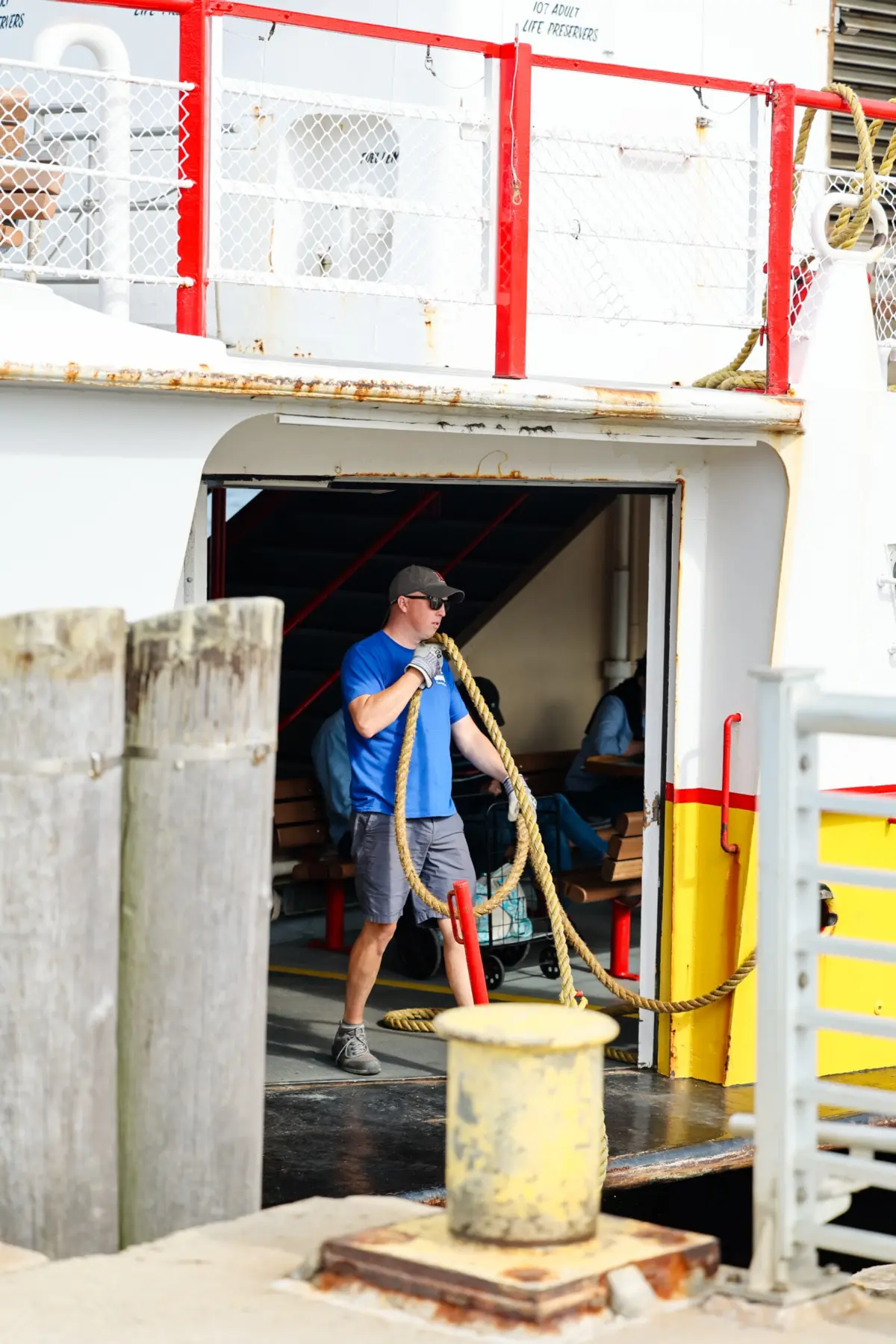
Mavodones’ career began in 1978 when he was hired as a teenage deckhand. He frequently recounted the sheer physical demands of the job during the late 1970s and 1980s—an era long before modern hydraulic lifts and modernized freight-handling systems transformed the docks.
"Freight would get rolled out on a cart close to the boat, and unless the tide was perfect, we lifted or threw it onto the boat," Mavodones recalled during his interview with 207. "We moved everything from 94-pound bags of cement to cases of milk to lumber and coal."
Demonstrating exceptional leadership and an innate grasp of maritime logistics, Mavodones thrived in the demanding environment. By the tender age of 21, he had earned his captain’s license. By the 1990s, he transitioned ashore to assume the role of Operations Manager. For decades, this linchpin position served as the beating heart of CBL, requiring oversight of everything from complex vessel maintenance schedules and personnel hiring to stringent Coast Guard compliance and everyday customer relations. When Mavodones finally stepped down, he left behind shoes that many deemed impossible to fill.
The Rise of Mike Bryand: From Deckhand to Operations Manager
The search for Mavodones’ successor demanded a candidate who understood not only the administrative intricacies of the office but also the salt-of-the-earth realities of Casco Bay. The organization found that exact blend in Mike Bryand.
Raised on Peaks Island, Bryand’s connection to the bay is visceral and lifelong. Before stepping into the Operations Manager role, Bryand spent an impressive 33 years working the decks and piloting vessels as a CBL captain and deckhand. Following this extensive frontline service, he spent three years serving directly under Mavodones as Assistant Operations Manager, absorbing the institutional nuances required to run the fleet. When the Operations Manager position was officially posted, Bryand’s candidacy stood out among a highly competitive roster of regional applicants.
"This is a new era, in the sense that we have new people in upper levels of management," Bryand reflects. "But this is very much the same Casco Bay Lines. We’ve grown; we’ve added bigger boats and a new terminal, but this is still a small community. With so many people working here for so long, we have a huge amount of institutional knowledge to build upon."
Pat Donovan Stepping Up: A New Chapter for Assistant Operations
With Bryand’s promotion, a public search was launched to fill the vacancy for Assistant Operations Manager. The role was secured by Pat Donovan, a seasoned mariner with 20 years of dedicated service at Casco Bay Lines, most recently serving as a captain.
For Donovan, transitioning from the wheelhouse to the management suite represents both a professional milestone and a personal lifestyle adjustment. As the father of young school-aged children, the unpredictable hours of a working ferry captain—marked by early morning departures and late-night runs—gave way to the structured demands of shoreside operations.
"It’s definitely a different life," Donovan says with a smile. "On the boats, there’s no typical nine-to-five. You’re either working late or getting up very early. This role brings more consistency—and a new kind of challenge."
Supporting Context & Metrics: The Anatomy of Casco Bay Operations
Operating a year-round marine transit system in Northern New England presents a unique matrix of logistical challenges, economic responsibilities, and public utility duties. Casco Bay Lines is not merely a tourist attraction for summer sightseers; it is the vital oxygen supply for the permanent residents of Peaks Island, Chebeague Island, Long Island, Cliff Island, and Great Diamond Island.
The Scope of CBL Operations
To appreciate the weight carried by Dinsmore, Bryand, and Donovan, it is critical to review the operational scope of Casco Bay Lines:
- Annual Passenger Volume: Transporting over one million passengers annually, varying dramatically between the quiet winter months and the bustling summer tourist season.
- Freight and Vehicular Transport: Moving millions of pounds of essential cargo—ranging from heavy construction materials and heating oil to groceries, mail, and medical supplies—to islands with no vehicular bridge connections to the mainland.
- Fleet and Infrastructure: Managing a specialized fleet of vessels capable of handling extreme New England weather, alongside maintaining state-of-the-art passenger terminals in Portland and across the islands.
- Regulatory Compliance: Navigating rigorous oversight from the United States Coast Guard (USCG), the Department of Transportation (DOT), and environmental protection agencies.
The operational team acts as the central nervous system coordinating these moving parts. From emergency medical evacuations during severe nor’easters to scheduled dry-dock maintenance for hull inspections, the margin for error is razor-thin. The collective tenure of the new leadership team—spanning over a century of cumulative maritime experience—provides an invaluable cushion against these operational shocks.
Official Statements and Leadership Profiles
At the apex of this leadership restructuring stands Ben Dinsmore, who officially assumed the role of General Manager and CEO last September. Dinsmore’s appointment signals a deliberate choice by the board to prioritize deep, localized maritime expertise.
Ben Dinsmore: Roots in the Working Waterfront
Growing up along the rugged coast of Maine as the son of a Maine State Ferry Service captain, Dinsmore’s blood runs salt-water. His professional resume reads like a masterclass in modern marine operations: he has captained large commercial vessels, spearheaded complex new vessel construction projects, and held senior executive positions across the marine sector. Furthermore, his entrepreneurial background includes previous ownership of R.E. Thomas Marine Hardware, a renowned Downeast engineering firm specializing in precision marine driveline components for commercial craft, including the legendary Maine lobster boat.
"Growing up on the coast of Maine, I developed a deep respect for the working waterfront and island communities," Dinsmore states, reflecting on his vision for the company. "I understand the seasonal rhythms of life on the islands and the unique challenges they bring. Casco Bay Lines is more than a ferry service; it’s a lifeline, a connector of communities, and a reflection of the people who call these islands home."
Continuity Meets Modernization
The leadership trio—Dinsmore, Bryand, and Donovan—embodies a powerful synthesis of skills. While Dinsmore brings executive-level engineering, construction, and strategic management experience, Bryand contributes deep institutional memory and hands-on operational oversight forged over three decades. Donovan rounds out the team with modern vessel-handling expertise and a frontline understanding of crew dynamics.
This leadership architecture ensures that while Casco Bay Lines looks toward technological upgrades, environmental sustainability initiatives, and infrastructure improvements, it will never lose touch with the distinct cultural fabric of the island communities it serves.
Future Outlook: Navigating Ahead in 2026 and Beyond
As Casco Bay Lines moves further into 2026, the newly structured leadership team faces a dynamic landscape of opportunities and challenges. The priorities for the upcoming years are clear, focusing on reliability, environmental stewardship, and community engagement.
1. Fleet Modernization and Environmental Sustainability
As environmental regulations tighten and maritime technology evolves, CBL is actively evaluating green-energy solutions and fleet efficiency. Dinsmore’s background in marine engineering and hardware manufacturing positions the organization perfectly to explore hybrid propulsion technologies, fuel-efficiency upgrades, and sustainable vessel design without compromising the rugged durability required for Maine winters.
2. Infrastructure Resilience
With changing weather patterns and sea-level rise affecting coastal infrastructure throughout Casco Bay, maintaining resilient docks, gangways, and terminal facilities is paramount. The new operations team is tasked with hardening infrastructure to ensure uninterrupted service regardless of storm severity.
3. Preserving Community Trust
Despite technological and physical upgrades, the core mission of Casco Bay Lines remains unchanged: serving the people who call the islands home. By promoting leaders like Bryand and Donovan—who grew up within the very communities they now serve—CBL guarantees that executive decisions will always be filtered through a lens of empathy, local understanding, and profound respect for island life.
Conclusion
The transition at Casco Bay Lines proves that an organization can successfully modernize while honoring its storied past. As winter gives way to spring, and the quiet ferries of February make way for the vibrant energy of the summer season, CBL stands on solid footing. With Ben Dinsmore, Mike Bryand, and Pat Donovan at the helm, the vessels of Casco Bay will continue to safely navigate the waters, serving as an unwavering bridge between Portland and the island communities for decades to come.
If you see Ben, Mike, or Pat around the Portland terminal or out on the bay, be sure to stop and say hello!