



Executive Overview
For decades, the architecture of the global travel and tourism industry has been anchored to a predictable rhythm: the shifting of meteorological seasons, the standardized cadence of scholastic holiday calendars, and the rearview mirror of historical demand patterns. Airlines, hotel conglomerates, cruise lines, and destination management organizations (DMOs) have long calibrated their yield management systems, capacity planning, and marketing spend around when the weather turns warm, when families break from school, and where travelers traditionally went during those windows.
Yet, running parallel to this traditional machinery is a massive, highly synchronized economic force operating on an entirely different temporal horizon: the live entertainment and sports ecosystem.
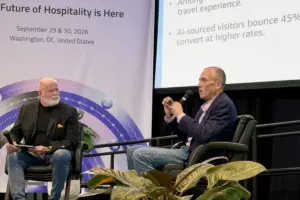
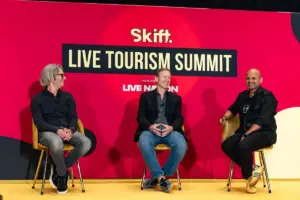
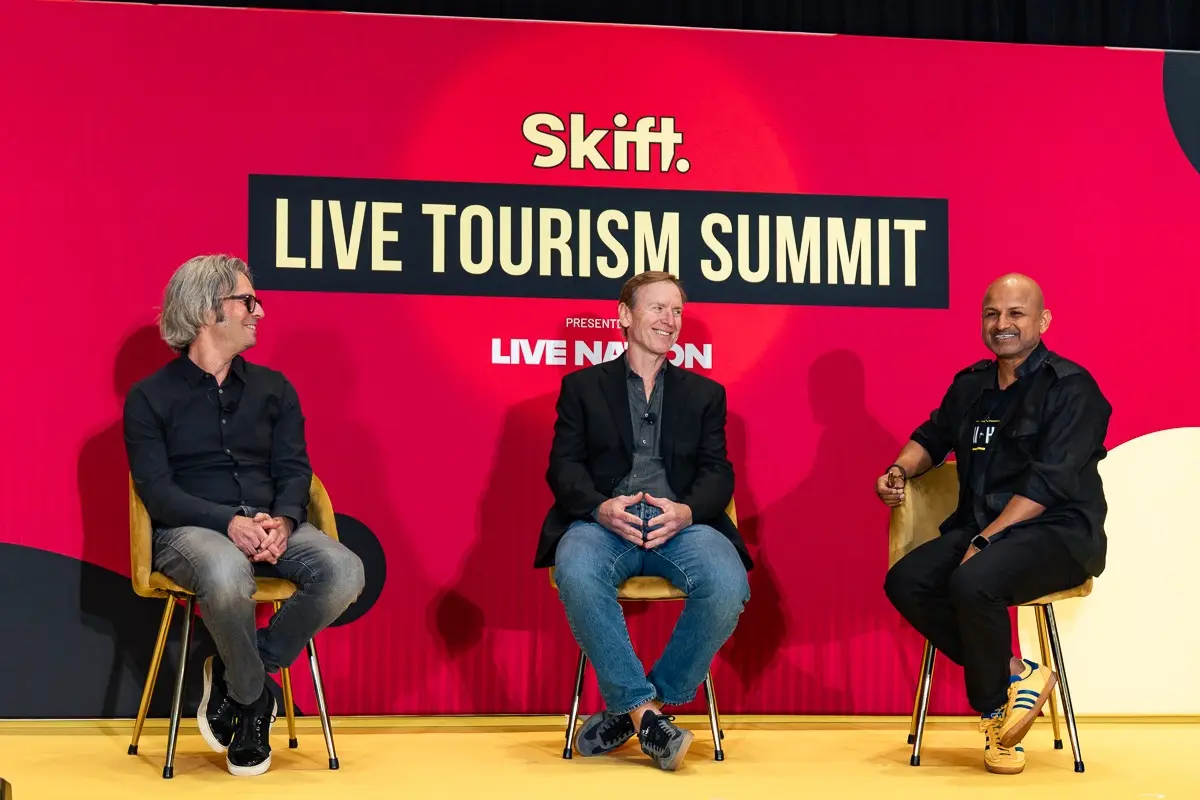
From multi-year stadium world tours and cyclical global athletic championships to boutique music festivals and high-profile cultural gatherings, the live events sector operates with a degree of structural foresight that the legacy travel industry has historically failed to capture. According to Skift founder and CEO Rafat Ali, speaking at the recent Live Tourism Summit, “So much of the live tourism demand is already baked in for months and years to come.”
While a legacy hotelier might wait for a 90-day booking window to materialize, major concert promoters, sports leagues, and festival organizers know precisely where tens of thousands of consumers will be converging on specific weekends in 2026, 2027, and beyond. This profound temporal mismatch—between the reactive posture of travel providers and the proactive, locked-in certainty of live event scheduling—represents one of the most significant structural inefficiencies, and untapped commercial opportunities, in the modern global economy.
This article explores the growing convergence between the live entertainment and travel sectors, examining how forward-thinking travel companies are learning to decode the live events calendar to outmaneuver traditional seasonality. By shifting from retrospective demand forecasting to proactive event-driven integration, the industry is entering a new era where a single tour announcement can rearrange flight routes, hotel pricing models, and regional infrastructure development years in advance.
Detailed Chronology: The Evolution of "Live Tourism"
To understand the current paradigm shift, one must examine how the relationship between travel and entertainment has evolved from an ad-hoc byproduct into an intentional economic powerhouse.
Phase 1: The Accidental Beneficiary (Pre-2010s)
Historically, the intersection of travel and live events was treated as an accidental windfall. When a major band announced a stadium tour or a city hosted a regional sporting championship, local hotels and airlines experienced sudden spikes in occupancy and demand. However, this was rarely viewed as a core strategic pillar. Hospitality executives viewed these surges as temporary anomalies—short-term velocity spikes that created operational headaches rather than strategic opportunities. Tour booking agents worked in a silo completely detached from destination marketing boards, and airlines adjusted pricing reactively based on real-time load factors rather than anticipated cultural calendars.

Phase 2: The Festivalization of Travel (2010–2019)
The past decade marked the democratization of experiential spending, driven largely by millennials and later Generation Z, who consistently prioritize experiential consumption—such as music festivals, culinary symposiums, and immersive sporting events—over material possessions. Destination-defining festivals like Coachella, Tomorrowland, and Glastonbury transformed from niche gatherings into global tourism magnets. During this era, travel brands began to realize that events could conquer the dreaded "shoulder season." Destinations that previously went dormant outside of summer or winter peaks suddenly achieved 100% occupancy rates during multi-day festival weekends. Simultaneously, specialized travel agencies and ticketing brokers emerged to package flights, accommodation, and festival passes together, proving that consumer demand for bundled event travel was vast and largely underserved.
Phase 3: The Post-Pandemic Cultural Rebound (2021–2023)
The COVID-19 pandemic temporarily devastated both the travel and live entertainment sectors, but it also fundamentally rewired consumer priorities. Upon reopening, pent-up demand manifested as an aggressive pursuit of live experiences—a phenomenon colloquially dubbed "revenge travel" that quickly morphed into structural lifestyle changes. The watershed moment arrived in 2023 with mega-tours like Taylor Swift’s The Eras Tour and Beyoncé’s Renaissance World Tour. These cultural juggernauts did not merely boost local economies; they moved macroeconomic needles. Central banks noted their impact on inflation, cities rebranded themselves around tour stops, and hospitality brands recorded historic revenue per available room (RevPAR) metrics in secondary and tertiary markets. Travel executives could no longer ignore the data: live entertainment was no longer a side attraction; it was the primary catalyst for modern human mobility.
Phase 4: The Institutionalization of Live Tourism (2024–Present)
Today, we are witnessing the institutionalization of what industry leaders term "Live Tourism." Travel companies are no longer waiting for tour dates to drop; they are actively seeking deep partnerships with promoters, sports franchises, and venue operators years in advance. At the recent Live Tourism Summit, industry stakeholders converged on a central mandate: the travel sector must transition from being a passive recipient of event-driven traffic to an active, co-invested partner in the live entertainment ecosystem. This involves deploying sophisticated predictive analytics, securing long-term hospitality allotments around recurring events, and redesigning infrastructure to accommodate the predictable yet volatile surges associated with global live phenomena.
Supporting Context & Metrics: The Scale of Event-Driven Mobility
The economic gravity pulling travelers toward live events is backed by compelling data. Understanding the magnitude of this phenomenon requires analyzing the intersection of consumer spending habits, macroeconomic impact, and institutional investment patterns.
The Shift to Experiential Spending
According to macroeconomic data from global financial institutions, consumer wallet share has shifted decisively away from retail goods toward experiential services. Within travel, this trend is even more pronounced. A recent global consumer sentiment survey revealed that over 65% of frequent travelers are willing to travel internationally specifically to attend a concert, sports tournament, or cultural festival. For younger demographics (Gen Z and Millennials), this figure exceeds 75%.
Macroeconomic Shockwaves: The Power of Mega-Events
The economic footprint of major live events is unprecedented in modern commerce:
- The Eras Effect: Economic analysts estimated that Taylor Swift’s North American leg alone generated over $5 billion in direct consumer spending, with ripple effects touching aviation, hospitality, food and beverage, and local retail. Cities that hosted the tour reported hotel occupancy rates surging past 95%, with average daily rates (ADRs) doubling or tripling compared to seasonal baselines.
- Global Sporting Infrastructure: Major upcoming events—such as the 2026 FIFA World Cup hosted across the United States, Canada, and Mexico, and the 2028 Olympic Games in Los Angeles—are projected to inject tens of billions of dollars into regional economies. Crucially, these events establish immutable tourism baselines years before the opening whistle blows.
- The Festival Economy: Boutique and destination music festivals are no longer localized weekend affairs; they are multi-million-dollar economic engines that incentivize international travel. A prominent European electronic music festival reported that over 70% of its attendees traveled from outside the host country, requiring specialized international flight connectivity and multi-week regional holiday extensions.
The Visibility Asymmetry
Despite these staggering figures, an operational asymmetry persists within the travel supply chain:
| Industry Sector | Typical Demand Visibility Window | Primary Planning Metric |
|---|---|---|
| Airlines | 30 to 90 days | Historical load factors, yield management algorithms |
| Hotels & Lodging | 30 to 60 days | Booking curves, seasonal pace reports |
| Live Entertainment & Sports | 12 to 36 months | Tour schedules, ticket pre-sales, league fixture releases |
This visibility gap is the core inefficiency of modern tourism. While tour promoters and sports leagues operate on multi-year strategic roadmaps, airlines and hotels often adjust capacity too late, leaving billions of dollars in potential yield on the table while simultaneously subjecting consumers to predatory dynamic pricing spikes driven by sudden inventory scarcity.
Official Statements & Industry Perspectives
The discourse at the Live Tourism Summit underscored a collective realization: the legacy travel playbook is obsolete in an era dominated by hyper-mobile event attendees. Industry leaders offered candid assessments of the challenges and opportunities ahead.
Addressing the structural disconnect between event planning and travel execution, Rafat Ali, Founder and CEO of Skift, highlighted the fundamental predictability of the live sector:
“From tour schedules to major sports tournaments, so much of the live tourism demand is already baked in for months and years to come. Companies producing concerts, sports, festivals, and other live events often see demand before the travel companies that ultimately provide the flights, rooms, transportation, and experiences around them.”
Ali’s observation points to a critical strategic imperative: travel companies must forge upstream partnerships with entertainment producers to capture demand signals years before they hit traditional booking channels.
Expanding on this theme, leading voices in hospitality and destination marketing emphasized that successful live tourism requires moving beyond mere tactical discounting and toward integrated ecosystem building.
- On Infrastructure Investment: A prominent hospitality executive noted during summit panels that hotel brands can no longer view properties in secondary markets as static investments. "If a city secures a multi-year residency or becomes a regular stop for major global tours, the entire local hospitality infrastructure—from room configurations to F&B offerings—must be co-developed with venue operators to handle extreme, episodic surges."
- On Destination Marketing: Representatives from forward-thinking DMOs stressed that destination branding is shifting away from static geographical beauty shots toward dynamic cultural calendars. "We no longer market our city based on weather alone," shared a European tourism board director. "We market our city as a stage. The weather brings people in July; the cultural programming brings them every single weekend of the year."
Future Outlook: The Next Frontier of Live Tourism
As the travel industry looks toward the remainder of the decade and beyond, the integration of live entertainment and travel will no longer be an experimental niche—it will be a core competency required for survival and profitability. Several key trends and structural transformations will define this future.
1. Upstream Data Sharing and Strategic Partnerships
The most immediate evolution will be the formalization of data-sharing partnerships between entertainment conglomerates and travel providers. Imagine a future where major ticketing agencies, tour promoters, and global airline alliances share predictive demand models the moment a stadium tour is signed. This will allow airlines to slot in seasonal charters or wide-body aircraft adjustments months before general ticket sales commence, preventing artificial price spikes and ensuring seamless consumer mobility.
2. The Rise of End-to-End Experiential Booking Platforms
Consumers increasingly reject fragmented travel planning. Booking a flight on one platform, a hotel on another, and securing a concert ticket through a third party via a stressful, high-queue lottery system is a friction-laden experience. The future belongs to integrated ecosystems where travel, accommodation, and guaranteed event access are bundled into unified, seamless itineraries. Fintech and travel tech startups are already building infrastructure to support "event-first" booking engines that prioritize the ticket before the room.
3. Decentralized Entertainment and Secondary Markets
While mega-cities like London, New York, and Los Angeles will always anchor global tourism, the soaring cost of primary market real estate and stadium licensing is pushing live events into secondary and tertiary markets. This decentralization is a massive win for regional travel economies. Cities that previously lacked international tourism profiles—such as mid-sized European cultural hubs or regional American university towns—are building state-of-the-art arenas to capture event-driven travel, permanently altering the geographical distribution of global tourism revenue.
4. Sustainability and Infrastructure Resilience
The surge in live tourism brings significant operational challenges, particularly regarding environmental sustainability and urban infrastructure strain. Tens of thousands of fans descending on a city for a single weekend creates massive carbon footprints through aviation and local transport, alongside immense strain on municipal resources. Future-focused tourism boards and event producers will be forced to co-invest in green transit infrastructure, sustainable venue operations, and circular economy models within hospitality to ensure that live tourism growth does not compromise the livability of the destination itself.
Conclusion
The traditional pillars of travel—weather, school holidays, and historical demand patterns—will always retain a baseline level of importance. However, they are no longer sufficient to drive growth, capture high-value consumer spend, or protect margins in a volatile economic climate.
Live entertainment operates on a different, superior temporal calendar. By recognizing that the demand for live sports, concerts, festivals, and cultural gatherings is "baked in" years in advance, the travel industry holds the blueprint for its own future. Those companies that successfully bridge the synchronicity deficit—investing around recurring live events, forging upstream partnerships, and realigning their operational frameworks with the cadence of the global stage—will define the next era of human mobility and economic prosperity in tourism.