









Executive Overview
In a historic pivot that promises to reshape the passenger experience for millions of travelers, Southwest Airlines has officially announced its entry into the fiercely competitive airport lounge sector. Long known for its egalitarian, open-seating model and a no-frills, low-fare operational philosophy, the Dallas-based carrier is launching an ambitious multi-airport lounge network designed to cater to an increasingly discerning leisure and business clientele.
The sweeping initiative, developed in a high-stakes partnership with financial titan JPMorgan Chase, marks a monumental evolution for the carrier. For decades, Southwest steadfastly resisted the industry trend toward proprietary airport lounges, viewing them as antithetical to its efficient point-to-point operational model. However, shifting consumer expectations, evolving loyalty program demands, and a massive expansion into high-yielding tropical and warm-weather leisure markets have forced a strategic recalculation.
Construction is officially underway on the first four installations, with inaugural guests expected to cross the threshold in late 2027. The initial rollout targets four critical hubs in the airline’s route map:
- Austin-Bergstrom International Airport (AUS)
- Baltimore/Washington International Thurgood Marshall Airport (BWI)
- Daniel K. Inouye International Airport in Honolulu (HNL)
- Nashville International Airport (BNA)
This foundational quartet is merely the vanguard. Southwest has confirmed plans to open at least seven additional flagship locations over the next several years, strategically targeting high-demand domestic and international markets. Crucially, the selection of these initial airports is far from random. It underscores a deliberate alignment with Southwest’s rapidly accelerating footprint across the Caribbean Basin, Mexico, and Central America.
For travelers eyeing sun-drenched escapes to Aruba, Jamaica, the U.S. Virgin Islands, and the Dominican Republic, the arrival of Southwest lounges transforms the pre-flight journey. What was once purely a budget-friendly domestic commute can now be paired with a premium ground experience, effectively bridging the gap between low-cost air travel and high-end vacation logistics.
Detailed Chronology and Strategic Rollout
The genesis of Southwest’s lounge network has been years in the making, reflecting complex negotiations, brand repositioning, and infrastructure development.
The Evolution Toward Lounges
For years, travel analysts and frequent flyers alike wondered if Southwest would ever capitulate to the lounge economy dominated by legacy carriers like Delta Air Lines, United Airlines, and American Airlines. While competitors used sprawling airport oases to lock in high-spending business travelers, Southwest focused relentlessly on rapid aircraft turns, high fleet utilization, and a uniform cabin experience.
However, the post-pandemic travel landscape accelerated shifts in consumer behavior. Passengers are increasingly willing to pay a premium for comfort, space, and stress-reduction amenities, even when booking leisure trips. Furthermore, the maturation of the airline’s Rapid Rewards loyalty program and its decades-long co-brand credit card partnership with Chase created an undeniable financial incentive to capture a greater share of customer wallet-share.
The 2027 Roadmap: The First Four Locations
The timeline for deployment is aggressive yet methodical. With construction breaking ground across the inaugural sites, Southwest has mapped out a phased debut culminating in late 2027:
- Baltimore/Washington (BWI): As one of the carrier’s historical powerhouses and its primary eastern gateway to the islands, BWI will serve as the testing ground for east coast high-volume lounge operations.
- Nashville (BNA): Reflecting Nashville’s meteoric rise as an aviation hub, BNA is being transformed into a primary southern and Caribbean nexus.
- Austin (AUS): Serving as Southwest’s key bridge to Texas commerce and emerging international leisure routes into Central America and the Caribbean Basin.
- Honolulu (HNL): Representing the anchor of Southwest’s immensely successful Hawaiian inter-island and mainland operations, validating the airline’s commitment to premium leisure destinations.
Following the 2027 debut of these four hubs, the subsequent deployment of at least seven additional lounges through the late 2020s and early 2030s will depend heavily on airport gate availability, infrastructure expansion, and regional route profitability.
Supporting Context & Metrics: The Caribbean Connection
While a lounge network inherently benefits all travelers passing through a hub, the operational geography of Southwest’s first four locations reveals a profound strategic alignment: the aggressive expansion of the airline’s warm-weather and Caribbean networks.
Over the past several years, Southwest has systematically dismantled the notion that it is exclusively a domestic U.S. carrier. The airline has poured capacity into international leisure markets, establishing itself as a dominant player on routes connecting the U.S. mainland to tropical paradises.
Baltimore/Washington (BWI): The Eastern Anchor
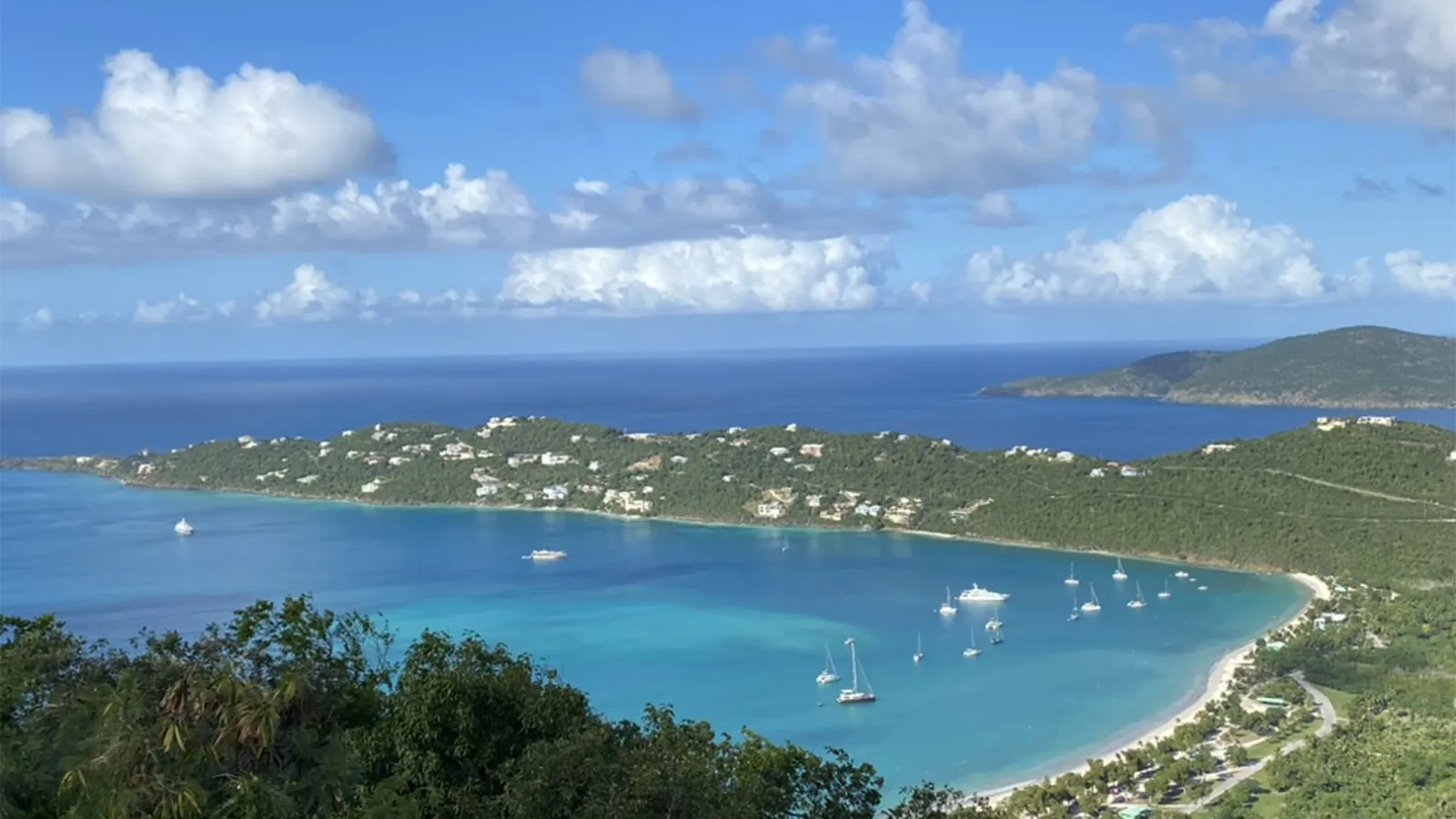
BWI is much more than a mid-Atlantic transit point; it is a vital engine for Southwest’s southern-bound network. The strategic importance of BWI was supercharged earlier this year when Southwest launched daily nonstop service from Baltimore to St. Thomas, marking a major milestone in the carrier’s penetration of the U.S. Virgin Islands market.
For passengers originating in the Northeast and Mid-Atlantic, BWI acts as a critical funnel. Travelers can now seamlessly connect through Baltimore from cities like Boston, New York, and Philadelphia en route to destinations across the Caribbean. The addition of a dedicated Southwest lounge at BWI fundamentally changes this journey. Passengers facing lengthy layovers or early morning departures can secure a quiet workspace, enjoy locally inspired dining, and transition from the bustling terminal directly to an island-bound boarding gate with unprecedented ease.
Nashville (BNA): The Unlikely Caribbean Capital
Of the initial four cities, Nashville boasts the most dynamic and surprising transformation. Southwest has methodically engineered BNA into a premier secondary Caribbean gateway, bypassing traditional megahubs to connect Tennessee and the broader Southeast directly to the tropics.
- Current and Expanding Routes: Nashville already enjoys nonstop service to San Juan, Puerto Rico, and Punta Cana in the Dominican Republic.
- The 2027 Surge: The network density increases dramatically with the rollout of brand-new nonstop services. Southwest has scheduled the launch of Nashville-Aruba and Nashville-St. Thomas nonstops, alongside the triumphant return of Nashville-Montego Bay, Jamaica flights.
This creates a remarkably robust multi-destination leisure map out of Tennessee. Travelers flying out of BNA can easily access Aruba, Jamaica, St. Thomas, Puerto Rico, and the Dominican Republic, alongside key Mexican and Central American vacation spots. Consequently, the forthcoming BNA lounge will not merely function as a domestic travel perk; for thousands of vacationers, it will serve as the sophisticated, stress-free departure point for their Caribbean getaways.
Austin (AUS): Bridging Texas to the Tropics
While Austin’s international network has historically leaned toward domestic and Mexican destinations, its horizons are widening rapidly. Southwest’s scheduled launch of nonstop service from Austin to San José, Costa Rica, underscores the Texas capital’s evolution into a key departure hub for the wider Caribbean Basin and Central America.
Central Texas travelers frequently navigate complex itineraries to reach the islands or Central American eco-resorts. Providing a premier lounge environment at AUS bridges a long-standing gap in Southwest’s service offering, delivering the elevated pre-flight comfort that corporate travelers and high-end vacationers expect when embarking on international itineraries.
Honolulu (HNL): Validating the Leisure Strategy
Honolulu may sit geographically outside the Caribbean basin, but its inclusion in the initial lounge rollout provides profound insight into Southwest’s overarching philosophy. The airline’s inter-island and mainland-to-Hawaii operations have proven to be a massive commercial success. By placing a flagship lounge in Honolulu, Southwest is validating a core thesis: premium ground amenities are just as viable—and necessary—in pure leisure markets as they are in traditional corporate financial centers like Chicago or New York.
Official Statements and Partnership Synergy
The operational success of this venture relies heavily on the marriage of Southwest’s legendary hospitality brand with the operational and financial might of JPMorgan Chase. The spaces are being meticulously engineered in direct partnership with Chase, blending elements of the celebrated Chase Sapphire Reserve Lounge network with Southwest’s distinct cultural DNA. These lounges will feature localized culinary programs, craft beverage menus, and modern architectural aesthetics inspired by the host cities.
Tony Roach, Southwest’s Executive Vice President and Chief Customer and Brand Officer, articulated the vision behind the initiative in an official corporate statement:
"Southwest Airlines has built one of the most trusted brands in travel by delivering authentic Hospitality that Customers value. Our lounges will be a natural extension of that experience, offering Customers a place to relax and experience the Southwest brand in a new way.
The introduction of a lounge network represents a strategic investment in Rapid Rewards and deepens our 30-year partnership with Chase."
This partnership is a masterstroke in ecosystem building. For thirty years, the Southwest Rapid Rewards credit card portfolio has been a cornerstone of Chase’s travel rewards dominance. By injecting proprietary lounges into the value proposition, Chase and Southwest can aggressively target affluent travelers who might otherwise gravitate toward Delta Sky Clubs or American Admirals Clubs. Access models are expected to heavily favor high-tier Rapid Rewards credit cardholders, elite status members, and day-pass purchasers, though exact access mechanics will be finalized closer to the 2027 opening dates.
Future Outlook: The Next Frontier for Southwest
As construction crews lay the foundations in Austin, Baltimore, Nashville, and Honolulu, aviation analysts are already looking ahead to the promised phase two of the rollout: the addition of at least seven more lounges over the coming years.
The strategic implications for Caribbean travelers are profound. As Southwest evaluates its next wave of lounge locations, airports heavily saturated with island-bound traffic—such as Orlando (MCO), Tampa (TPA), or Fort Lauderdale (FLL)—inevitably enter the speculative conversation. Should future lounges materialize at primary Florida or Caribbean-adjacent gateways, Southwest will effectively complete a vertically integrated premium vacation experience.
For nearly half a century, flying Southwest meant choosing between low fares and luxury amenities. The unveiling of this lounge network signals the end of that binary choice. By aligning its new high-end ground infrastructure with its explosive growth in tropical destinations like Aruba, Jamaica, and the U.S. Virgin Islands, Southwest Airlines is boldly charting a course into a more profitable, sophisticated, and premium future.