







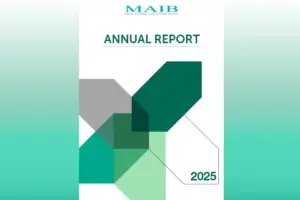
LONDON — The Marine Accident Investigation Branch (MAIB) has officially published its highly anticipated Annual Report for the year 2025. Released on September 30, 2026, the 53-page, 7.09 MB document serves as the definitive public record of marine casualties, safety investigations, and systemic risk assessments across commercial shipping, fishing vessels, and leisure craft operating within UK jurisdiction.
Against a backdrop of evolving maritime technologies, persistent commercial pressures, and increasingly unpredictable weather patterns driven by global climate shifts, the 2025 report offers an uncompromising look into the realities of life at sea. Centered around a comprehensive retrospective address by the Chief Inspector of Marine Accidents, the publication details not only the tragedies and near-misses of the past year, but also the vital safety recommendations designed to prevent recurrence.
This article provides an in-depth examination of the MAIB’s 2025 findings, structured through an executive overview, a detailed contextual chronology, supporting metrics, official insights, and a forward-looking analysis of the future of maritime safety governance.
Executive Overview: The State of Maritime Safety in 2025
The release of the MAIB Annual Report 2025 marks a crucial checkpoint for the maritime industry. As global supply chains continue to experience high-tempo operations and the commercial fleet adapts to decarbonization mandates, the margin for human and mechanical error remains critically narrow.
The MAIB, an independent branch of the Department for Transport (DfT), operates under a singular mandate: to investigate marine accidents to determine their causes, with the sole objective of improving safety at sea—not to apportion blame or liability. The 2025 report encapsulates this statutory mission, synthesizing data from dozens of preliminary assessments, full-scale safety investigations, and safety bulletin distributions.
Key Themes of the 2025 Reporting Cycle
- Human Factors and Fatigue: Once again, cognitive overload, inadequate manning levels, and chronic fatigue emerged as foundational precursors to groundings, collisions, and personnel overboard incidents.
- Fishing Industry Vulnerabilities: Despite decades of targeted safety campaigns, the commercial fishing sector remains disproportionately represented in fatalities and serious injuries, pointing toward deep-seated cultural and economic challenges.
- Technological Integration: The transition toward autonomous navigation systems, alternative fuels (such as LNG, methanol, and battery-electric propulsion), and complex bridge-team management interfaces introduced new vectors of risk that traditional safety management systems (SMS) are often slow to capture.
- Regulatory Enforcement and Compliance: A recurring motif in the Chief Inspector’s commentary is the gap between statutory safety guidelines on paper and their pragmatic execution aboard active vessels.
The full document—available via the UK government publishing portal—is essential reading for shipowners, operators, masters, naval architects, and maritime regulators worldwide. However, because the standard PDF format may present accessibility barriers for users employing assistive technologies, the MAIB has reiterated its commitment to providing alternative formats upon direct request via [email protected].
Detailed Chronology: Navigating the 2025 Incident Landscape
To understand the macro-trends highlighted in the MAIB Annual Report, it is necessary to examine how maritime incidents unfold across an operational calendar year. While individual safety investigations are published as standalone reports throughout the year, the annual compilation aggregates these events to reveal seasonal and operational patterns.

Q1 2025: Winter Weather Operations and Heavy Seas
The year began under the shadow of severe winter storms across the North Atlantic, the English Channel, and the North Sea.
- Cargo Shifts and Securing Failures: January and February saw a spike in cargo-shift incidents aboard container vessels and general cargo ships encountering extreme meteorological phenomena. Investigations during this period frequently highlighted discrepancies between weather-routing predictions and actual sea states, alongside failures in lashing gear maintenance.
- Tug and Tow Operations: High winds and heavy swells strained harbor and coastal towing operations, leading to several near-misses and grounding events during restricted maneuvering operations in confined waters.
Q2 2025: The Spring Fishing Resurgence and Commercial Ramps
As sea conditions moderated in the spring, commercial fishing fleets increased their operational tempo, coinciding with the opening of seasonal fisheries.
- Stability and Deck Safety: The MAIB’s early-year casework underscored persistent issues regarding vessel stability, particularly among older, modified wooden and steel fishing vessels. Unauthorized modifications—such as the installation of heavier winches or storage equipment—frequently compromised residual stability margins.
- Man Overboard (MOB) Casualties: Spring operations recorded multiple tragic fatalities involving fishermen working alone on deck without personal flotation devices (PFDs) or harness tethers.
Q3 2025: Peak Leisure Traffic and Commercial Congestion
Summer brought an unprecedented convergence of commercial shipping, passenger ferries, and recreational craft (sailboats, motor yachts, and personal watercraft) in coastal waters.
- Recreational and Commercial Collisions: July and August accounted for a disproportionate number of close-quarters situations in congested traffic separation schemes (TSS). The MAIB noted that recreational skippers frequently misjudged the stopping distances and maneuvering limitations of large commercial tonnage.
- Engine Room Fires: Elevated ambient temperatures and high operational demands contributed to a series of fuel-line failures and secondary ignition events aboard leisure and small commercial passenger vessels.
Q4 2025: Autumnal Gales, Pilotage, and Port Operations
As the year drew to a close, deteriorating visibility and early winter gales tested the resilience of port infrastructure and pilotage services.
- Pilotage and Bridge Resource Management (BRM): Several investigations initiated in the final quarter of 2025 focused on communication breakdowns between marine pilots and shipmasters during restricted visibility arrivals. These cases emphasized the critical role of robust Bridge Resource Management protocols.
- Equipment Obsolescence: Late-year machinery failures highlighted risks associated with deferred maintenance schedules driven by economic pressures within shipping companies.
Supporting Context and Metrics: Analyzing the Data
While narrative reports of specific accidents capture public attention, it is the statistical aggregation of data that allows safety managers to identify systemic vulnerabilities. The MAIB Annual Report 2025 provides an exhaustive breakdown of reporting metrics, notification trends, and investigation lifecycles.
Incident Notification Volume
Under the Merchant Shipping (Accident Reporting and Investigation) Regulations 2012, vessel operators are legally mandated to report accidents and serious injuries to the MAIB. In 2025, the branch processed thousands of notifications, ranging from minor equipment failures to catastrophic hull losses.
| Incident Category | Primary Contributing Factors | Sector Most Affected |
|---|---|---|
| Groundings | Fatigue, ECDIS over-reliance, poor passage planning | Coastal cargo, Inland waterways |
| Collisions & Allisions | Lookout failures, poor VHF communication, rule-of-the-road violations | Mixed commercial and leisure |
| Machinery Failures | Lube oil degradation, unmaintained fuel lines, filtration blocks | Tugs, small commercial vessels |
| Personnel Accidents | Slip/trip hazards, unsecured heavy gear, lack of PPE | Commercial fishing |
| Flooding & Hull Breaches | Corrosion, unseated valves, structural fatigue | Aging coastal fleet |
The Human Element: Quantifying Fatigue and Training Deficits
A recurring analytical focus within the MAIB metrics is the quantification of human error. The 2025 data reinforces the consensus that direct human error is rarely isolated; rather, it is the downstream consequence of organizational deficiencies, inadequate manning, and shore-side commercial pressure.
- Hours of Rest Violations: Despite strict enforcement of the Maritime Labour Convention (MLC) and STCW standards, independent investigations frequently uncovered systemic falsification or circumvention of hours-of-rest records.
- Familiarization Gaps: Newly assigned crew members often lacked adequate ship-specific familiarization, leading to critical errors during emergency response drills or unexpected machinery faults.
Official Insights: The Chief Inspector’s Perspective
The centerpiece of the MAIB Annual Report is the formal statement delivered by the Chief Inspector of Marine Accidents. Setting the tone for the entire document, the Chief Inspector reflects on the cultural inertia that continues to plague certain sectors of the maritime industry.
Key Takeaways from the Chief Inspector’s Address
- Safety Culture vs. Tick-Box Compliance: The report laments the proliferation of "paper safety"—where safety management systems (SMS) exist to satisfy flag state auditors and insurance underwriters rather than to genuinely guide operational decision-making aboard ship.
- Accountability at the Executive Level: The Chief Inspector stresses that safety is not solely the responsibility of the master and crew at the sharp end of operations. Shore-based directors, designated persons ashore (DPAs), and corporate boards must be held accountable for providing the financial and structural resources necessary for safe operations.
- The Imperative of Open Reporting: A recurring plea is made for an open, blameless reporting culture. When mariners fear retribution from management for reporting near-misses or minor structural defects, critical safety data is suppressed, ultimately paving the way for preventable catastrophes.
Future Outlook: The Horizon of Maritime Safety Governance
As the MAIB looks beyond 2025 into the latter half of the decade, the maritime regulatory landscape is undergoing its most radical transformation since the transition from sail to steam. The 2025 report serves as a foundational baseline for addressing future challenges.
1. Decarbonization and Alternative Fuels
The global push to achieve net-zero carbon emissions has accelerated the adoption of alternative marine fuels, including liquefied natural gas (LNG), green methanol, ammonia, and hydrogen fuel cells. Each of these substances introduces unique toxicological, cryogenic, and explosive hazards. The MAIB is actively positioning its investigative framework to handle casualties involving high-voltage electrical systems, cryogenic containment breaches, and toxic chemical releases.
2. Autonomous and Remote-Controlled Shipping
As maritime autonomy moves from experimental trials to commercial viability, traditional concepts of "master," "crew," and "bridge watchkeeping" are being redefined. The 2025 report implicitly signals that future investigations will increasingly scrutinize software architecture, cyber-security vulnerabilities, shore-based control center ergonomics, and legal liability chains when unmanned or semi-autonomous vessels experience navigational incidents.
3. Regulatory Harmonization and Proactive Risk Mitigation
Looking forward, the MAIB advocates for a shift from reactive investigation to proactive risk modeling. By leveraging machine learning tools to analyze global accident databases, maritime authorities hope to predict failure modes before they result in structural loss or environmental disaster. However, the Chief Inspector’s report reminds all stakeholders that technology and regulation are ultimately secondary to human vigilance, training, and professional integrity.
Conclusion
The MAIB Annual Report 2025 is far more than a bureaucratic statistical summary; it is a sobering reminder of the unforgiving nature of the marine environment and the high stakes of global commerce. By laying bare the systemic failures, mechanical breakdowns, and human tragedies of the past year, the MAIB provides the maritime community with the vital insights needed to chart a safer course.
Marine operators, regulators, and industry professionals are strongly encouraged to review the full 53-page report. For access to the official publication, visit the publishing portal. Those requiring accessible document formats can contact the MAIB directly at [email protected] with specific format and assistive technology requirements.