








Executive Overview: A Landmark Alliance in Polar Marine Engineering
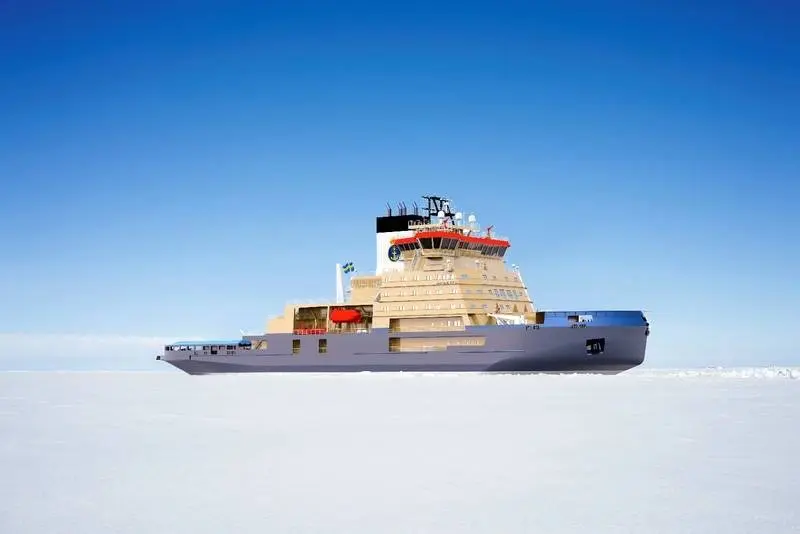
In a move that signals a major technological shift in Baltic maritime logistics, Finnish marine propulsion specialist Steerprop has been awarded a contract to supply the complete main propulsion package for the Swedish Maritime Administration’s (SMA) next-generation icebreaker. The vessel, designed to operate in some of the most demanding winter environments in the world, will be constructed by HD Hyundai Heavy Industries (HHI) at its world-renowned shipyard in Ulsan, South Korea.
This contract represents a series of historic firsts: it is Steerprop’s inaugural project with both the SMA and HD Hyundai Heavy Industries. Under the terms of the agreement, Steerprop will deliver a highly advanced, custom-engineered propulsion configuration consisting of two stern-mounted Steerprop Contra-Rotating Propeller (CRP) azimuth propulsors and a single bow-mounted pulling azimuth propulsor.
At 7,100 kW each, the two stern-mounted Steerprop SP 260 CRP ARC LM units represent the most powerful contra-rotating propeller systems ever engineered by the Finnish manufacturer. When paired with the 7,000 kW SP 130 PULL ARC LM bow unit, the vessel’s total propulsion power will reach an extraordinary 21,200 kW (21.2 MW). This massive power installation is designed to meet the rigorous standards of Polar Class 4 (PC4), enabling the 126-meter vessel to carve wider, cleaner channels through heavy ice sheets, thereby ensuring the uninterrupted flow of commercial shipping in the Baltic Sea. The propulsion machinery is scheduled for delivery to the South Korean shipyard in the second quarter of 2028.
Detailed Chronology: From Strategic Fleet Renewal to the 2028 Delivery Horizon
[2020-2023: Design & Collaboration] ➔ [Early 2024: Shipyard Selection] ➔ [Late 2024: Propulsion Contract] ➔ [2025-2027: Engineering & Production] ➔ [Q2 2028: Equipment Delivery] ➔ [Late 2028-2029: Launch & Trials]The Genesis: Sweden’s Aging Icebreaker Fleet
The road to this contract began with the Swedish Maritime Administration’s long-term strategic assessment of its icebreaking capabilities. Sweden’s export-reliant economy depends heavily on winter navigation; key industries such as forestry, steel, and paper require open, ice-free sea lanes in the Gulf of Bothnia and the Baltic Sea year-round. However, SMA’s primary icebreaking workhorses—the Atle-class icebreakers (Atle, Frej, and Ymer)—were built in the mid-1970s. Despite meticulous maintenance and mid-life upgrades, these vessels are approaching the end of their operational lifetimes.
In collaboration with Finnish design partners, the SMA initiated a design program for a new class of icebreakers. The primary mandate was clear: the new vessels had to be larger, significantly more fuel-efficient, capable of navigating thicker ice, and, crucially, able to escort modern, wide-beam merchant ships that have outgrown the channels cleared by older-generation icebreakers.
The Tendering Process and Strategic Selections
The procurement process for the new icebreaker was global in scope, reflecting the highly specialized nature of polar shipbuilding.
- Shipyard Selection: HD Hyundai Heavy Industries, recognized globally for its advanced engineering capabilities and scale, was selected to build the 126-meter vessel at its Ulsan yard.
- Propulsion Tendering: The selection of the propulsion system was the most critical phase of the design validation. Icebreakers do not rely on brute force alone; their performance is heavily dictated by hydrodynamic efficiency, torque characteristics at low speeds, and the physical interaction between the propulsors and ice blocks.
- The Selection of Steerprop: Following rigorous simulations and model testing, Steerprop’s proposed push-pull CRP configuration emerged as the superior solution. The contract was formally finalized, marking a milestone entry for Steerprop into HHI’s supplier network and SMA’s fleet list.
Implementation and Delivery Milestones (2025–2028)
With the contract signed, the project enters a multi-year engineering and production phase:
- 2025–2026 (Detailed Engineering & Simulation): Steerprop’s engineering team in Rauma, Finland, will finalize the structural and mechanical designs of the SP 260 and SP 130 units. This phase includes extensive finite element analysis (FEA) to ensure the units can withstand the extreme shock loads associated with PC4 ice operations.
- 2026–2027 (Manufacturing & Casting): Forging of the heavy-duty shafts, casting of the high-strength NiAlBz (Nickel-Aluminum-Bronze) propeller blades, and assembly of the massive gearboxes will take place.
- Q2 2028 (Delivery & Logistics): The completed propulsion package will be transported from Finland to Ulsan, South Korea, for installation into the vessel’s hull.
- 2028–2029 (Commissioning & Sea Trials): Following hull integration, the vessel will undergo extensive harbor trials, followed by open-water and ice trials in late 2028 or early 2029, prior to entering active service.
Supporting Context & Technical Metrics: Demystifying the Propulsion Powerhouse
To appreciate the scale and technological sophistication of this project, it is necessary to examine the specific engineering mechanics behind Steerprop’s propulsion design.
| Technical Parameter | Stern Propulsion Units (x2) | Bow Propulsion Unit (x1) |
|---|---|---|
| Model Designation | Steerprop SP 260 CRP ARC LM | Steerprop SP 130 PULL ARC LM |
| Power Output (per unit) | 7,100 kW (7.1 MW) | 7,000 kW (7.0 MW) |
| Configuration | Contra-Rotating Propellers (Azimuth) | Pulling Propeller (Azimuth) |
| Total Combined Power | 14,200 kW (14.2 MW) | 7,000 kW (7.0 MW) |
| Ice Class Rating | Polar Class 4 (PC4) | Polar Class 4 (PC4) |
| Primary Function | High-thrust transit, steering, channel widening | Ice flushing, pulling thrust, rapid maneuvering |
The Mechanics of Contra-Rotating Propellers (CRP)
Traditional azimuth thrusters utilize a single propeller. While effective, a single propeller generates a significant amount of rotational energy in its wake, which is essentially wasted.
Steerprop’s Contra-Rotating Propeller (CRP) technology solves this inefficiency by placing two coaxial propellers on the same shaft line, rotating in opposite directions.
- The Forward Propeller accelerates the water flow and generates primary thrust.
- The Aft Propeller rotates in the opposite direction, capturing the swirling rotational energy of the forward propeller’s wake and converting it into axial thrust.
This design yields an efficiency increase of up to 15% to 20% compared to conventional single-propeller systems. In an icebreaker application, this efficiency translates directly to lower fuel consumption, reduced greenhouse gas emissions, and increased bollard pull per kilowatt of engine power.
[Water Flow In] ➔ (Forward Propeller: Rotates Clockwise) ➔ [Swirling Wake] ➔ (Aft Propeller: Rotates Counter-Clockwise) ➔ [High-Velocity, Linear Jet Out]The Push-Pull Configuration: Revolutionizing Ice Management
The arrangement of two 7.1 MW CRP units at the stern and one 7.0 MW pulling unit at the bow creates a dynamic "push-pull" system.

When navigating through thick ice sheets, the bow-mounted pulling unit performs a dual role. First, it pulls the vessel forward into the ice. Second, the water flow generated by the bow propeller washes along the hull, lubricating the contact zone between the ice and the steel hull, which significantly reduces friction.
At the stern, the twin SP 260 CRP units concentrate their thrust into a powerful, high-velocity, narrow water flow. This localized hydrodynamic force behaves like a hydraulic wedge, forcing fractured ice blocks outward and away from the vessel’s path. The result is a clean, wide channel that minimizes the risk of escorted merchant ships getting stuck in the ice debris behind the icebreaker.
Polar Class 4 (PC4) and the Harsh Baltic Environment
The vessel is designed to meet the International Association of Classification Societies (IACS) Polar Class 4 (PC4) requirements. This designation means the vessel is capable of year-round operation in thick first-year ice, which may include old ice inclusions.
Polar Class Scale (IACS):
PC1 (Year-round, all polar waters) ➔ PC4 (Year-round, thick first-year ice) ➔ PC7 (Summer/Autumn, thin first-year ice)
To meet PC4 requirements, Steerprop’s units are built with extreme structural safety margins. The gears, shafts, and bearings are designed to withstand sudden, massive torque spikes that occur when a propeller blade strikes a solid block of multi-year ice—an occurrence known as an "ice impact event."
Stakeholder Perspectives & Strategic Alignment
Steerprop: Pushing the Boundaries of Engineering
For Steerprop, based in Rauma, Finland, this contract is a validation of decades of research into heavy ice-class propulsion. The company has long been a proponent of mechanical azimuth thrusters for Arctic and sub-Arctic applications, arguing that mechanical drive lines offer superior reliability and torque transfer in ice compared to podded electric drives.
The manufacturing of the SP 260 CRP units represents a significant scale-up of Steerprop’s production capabilities. Developing a 7.1 MW CRP unit requires not only larger castings and forgings but also advanced precision machining to ensure the tight tolerances of the concentric shafts are maintained under extreme thermal and mechanical stress.
SMA and HD Hyundai: A Convergence of Operational Excellence
For the Swedish Maritime Administration, the selection of Steerprop and HD Hyundai Heavy Industries is a strategic decision aimed at future-proofing Sweden’s maritime infrastructure. The SMA’s operational requirements are highly specific; the Baltic Sea presents unique challenges, including brackish water that freezes into incredibly hard, dense ice sheets, and shallow coastal passages that require precise maneuverability.
By partnering with HHI, the world’s largest shipbuilder, SMA ensures that the hull construction and systems integration will be executed to the highest standards. The collaboration between a South Korean shipbuilding powerhouse and a specialized Finnish propulsion designer represents a highly efficient division of labor, combining massive industrial capacity with deep, localized cold-weather engineering expertise.
Future Outlook: Decarbonization, Geopolitics, and the Next Era of Arctic Shipping
Mitigating the Carbon Footprint of Icebreaking
The maritime industry is under intense pressure to decarbonize, driven by the International Maritime Organization’s (IMO) revised greenhouse gas reduction strategy. Icebreakers are historically carbon-intensive vessels because they require immense power to force their way through ice.
The integration of Steerprop’s highly efficient CRP technology is a critical step toward reducing the carbon footprint of these essential vessels. By maximizing hydrodynamic efficiency, the new SMA icebreaker will consume significantly less fuel per operating hour than its predecessors. Furthermore, the high efficiency of the propulsion system makes the eventual transition to alternative fuels—such as e-methanol, green ammonia, or hybrid battery configurations—more economically and technically viable, as the total energy storage volume required on board is reduced.
Geopolitical Resilience in the Baltic Sea
The geopolitical landscape of the Baltic Sea region has undergone a dramatic transformation in recent years, particularly with the accession of Finland and Sweden to NATO. The Baltic Sea is now a critical strategic corridor for the alliance, making the maintenance of secure, open sea lanes a matter of national and regional security.
[Open Sea Lanes] ➔ [Secured Supply Chains (Steel, Energy, Forestry)] ➔ [Economic Stability & National Security]Ensuring that commercial and military vessels can move freely through the Gulf of Bothnia during severe winters is no longer just an economic concern—it is a geopolitical necessity. The deployment of this state-of-the-art PC4 icebreaker, powered by Steerprop’s record-breaking propulsion system, will provide Sweden and its regional allies with an unprecedented level of operational resilience, securing maritime supply chains against both natural and geopolitical disruptions for decades to come.