The global commercial transport sector stands at a critical crossroads. While passenger electric vehicles (EVs) have captured public imagination and achieved massive market penetration in key regions, the electrification of heavy-duty commercial trucks remains an uphill battle—literally and figuratively. Hauling fully loaded semi-trailers across grueling topographies, such as climbing the Eisenhower Tunnel in the Rocky Mountains, exposes the fundamental limitations of contemporary battery-electric vehicle (BEV) architectures.
Despite aerodynamic cabs and massive battery packs, modern heavy electric trucks often suffer from insufficient real-world range, long recharging times, and a severely lagging public charging infrastructure for commercial vehicles. For fleet operators, whose profit margins depend on predictable uptime and economic viability, these bottlenecks present a formidable barrier to full fleet electrification.
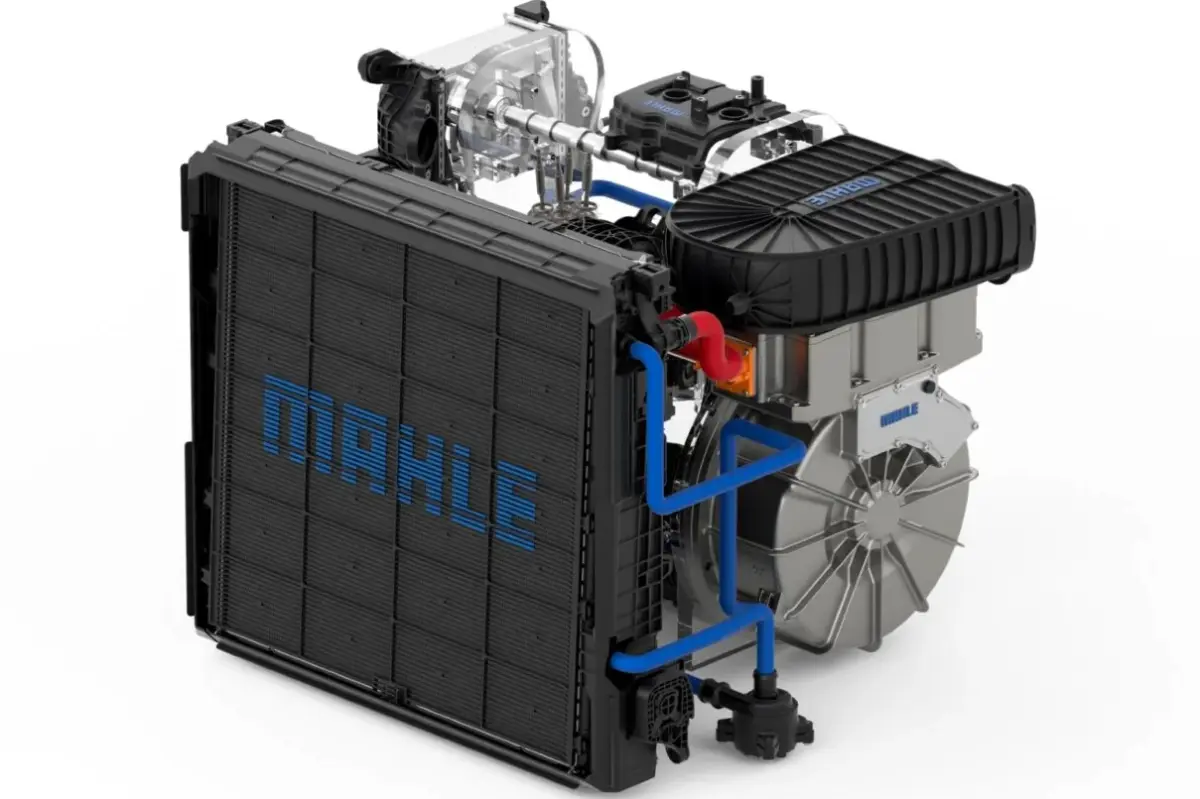
Enter automotive tier-one supplier Mahle. Set to debut at the upcoming IAA Transportation trade show in Hannover, Germany, the company is introducing a two-pronged technological assault on the heavy-duty transport bottleneck: a specialized, highly integrated internal-combustion-driven range extender system, and a groundbreaking Magnet-Free Contactless Transmitter (MCT) drive motor. Together, these innovations aim to decouple the mass adoption of electric heavy trucks from the slow, uneven rollout of public megawatt-scale charging infrastructure, providing a pragmatic bridge toward a net-zero commercial logistics future.
Detailed Chronology: The Evolution of Range-Extended Electrification
The concept of utilizing an internal combustion engine (ICE) or alternative generator to augment an electric powertrain is far from new. It represents a continuous engineering journey that dates back to the dawn of commercialized electrification. Examining this trajectory highlights why heavy-duty transit requires specialized, industrial-grade solutions rather than passenger-car hand-me-downs.
Early Passenger Car Experiments
The pursuit of range-extended electric mobility gained prominent commercial traction with vehicles like the original BMW i3 REx. Equipped with a small, scooter-derived two-cylinder engine designed purely to maintain battery state-of-charge, the i3 REx offered a safety net for early EV adopters. However, its performance often fell short of consumer expectations, particularly in North American regulatory environments where compliance mandates strictly limited how and when the range extender could engage.
A more successful execution of the philosophy arrived with the Chevrolet Volt. Functioning as a plug-in hybrid electric vehicle (PHEV), the Volt utilized an internal combustion engine that seamlessly engaged after exhausting its roughly 55 miles of all-electric range. The design was so effective for daily commuters that many owners reported purchasing as little as ten gallons of gasoline annually.
The Heavy-Duty Truck Frontier
Transitioning this concept to heavy commercial trucks required entirely different engineering scales. Ian Wright, a co-founder of Tesla who departed the company during its early formative years, recognized this gap early on. He founded Wrightspeed, a startup dedicated to electrifying heavy-duty trucks and municipal buses using an ultra-efficient gas turbine powering a range-extending generator. Although Wrightspeed’s engineering was brilliant and ahead of its time, the capital-intensive nature of scaling heavy-duty hardware startups prevented the company from achieving widespread commercial dominance.
More recently, the concept has captured the attention of joint ventures like Horse Powertrain—a partnership between Renault and Geely. Horse Powertrain unveiled the C15, an ultra-compact gasoline engine, generator, and inverter unit designed specifically to be retrofitted into existing battery-electric vehicle platforms with minimal structural modifications. This allows original equipment manufacturers (OEMs) to pivot existing BEV designs into range-extended electric vehicles (REEVs) to satisfy regional demands.
Now, Mahle is taking the concept into the heavy commercial arena with an industrial-grade "emergency power unit" tailored specifically for long-haul and regional distribution semi-trucks. Rather than viewing the internal combustion engine as a permanent fossil-fuel dependency, Mahle’s approach positions it as a strategic bridge technology capable of running on renewable fuels like HVO100 bio-diesel, thereby slashing carbon footprints while retaining diesel-like operational flexibility.
Supporting Context & Metrics: Inside Mahle’s Range Extender and MCT Motor
Mahle’s suite of heavy-duty innovations addresses the core pain points of logistics operators: excessive vehicle weight, prohibitive battery costs, infrastructural unreliability, and rare-earth material dependency.
The Mahle Range Extender System: Architecture and Specifications
At the heart of Mahle’s range extender system is a high-voltage generator driven by a compact, high-efficiency internal combustion engine. The system is engineered to provide a continuous output of 110 kilowatts, with a peak output scaling up to 130 kW.
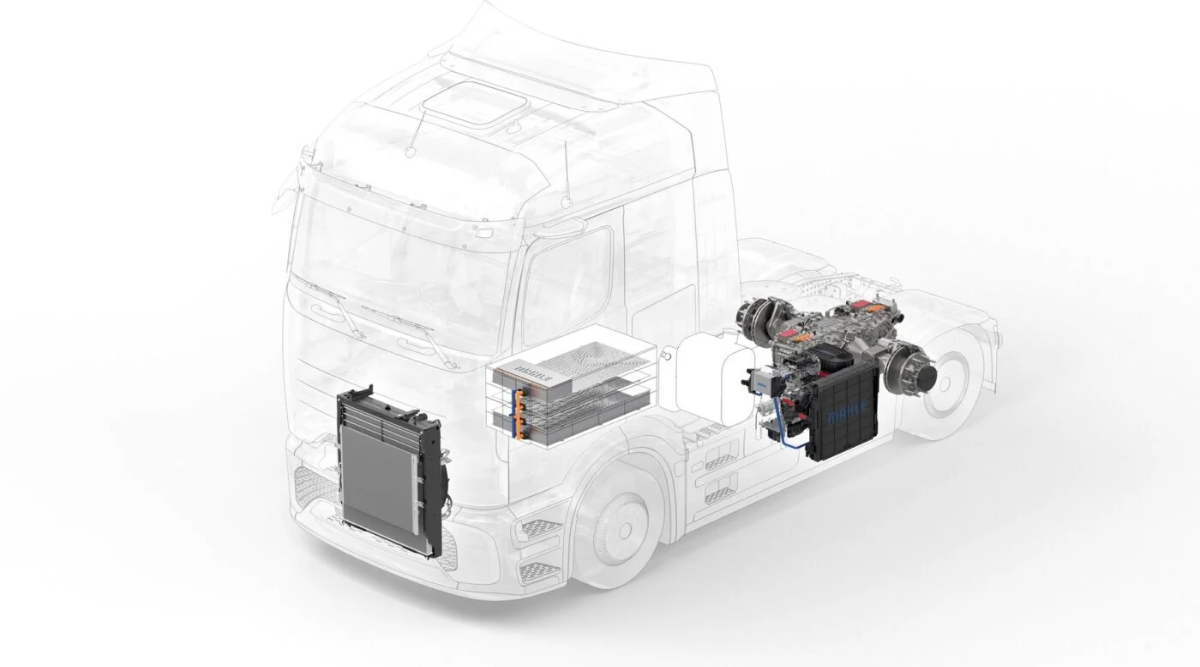
By designing the system to fit precisely into the physical space normally reserved for heavy truck battery packs, Mahle has ensured seamless integration into existing BEV architectures. The mathematics of this swap are compelling:
Battery Capacity Reduction: The range extender replaces approximately one-third of a standard long-haul truck’s total battery capacity, allowing OEMs to equip trucks with smaller, significantly less expensive battery packs.
Weight Savings: Eliminating a portion of the heavy lithium-ion cells reduces the load on the rear axle by approximately 400 kilograms (880 lbs), while lowering the total vehicle weight by roughly 600 kilograms (1,322 lbs).
Extended Range Envelope: A heavy truck equipped with the Mahle system achieves a total operating range exceeding 800 kilometers (approx. 500 miles). The battery supplies the first 400 km, while the range extender steps in to cover the remaining 400 km.
Thermal Management: A robust thermal management architecture featuring 48 kW of high-temperature cooling capacity and 15 kW of low-temperature cooling capacity ensures stable, uninterrupted operation under heavy-duty loads.
Carbon Mitigation and Renewable Fuel Compatibility
Under standard operating conditions running on conventional liquid fuels, a truck utilizing Mahle’s range extender emits roughly 80 percent less carbon dioxide than a traditional, legacy diesel-powered semi. However, when paired with renewable drop-in fuels such as HVO100 (Hydrotreated Vegetable Oil) bio-diesel, the operational carbon emissions drop effectively to zero, offering a near-term compliance pathway for fleets facing stringent European and global decarbonization mandates.
The Magnet-Free Contactless Transmitter (MCT) Motor
In tandem with the range extender, Mahle is addressing another critical chokepoint in the electric transition: raw material supply chains. Traditional high-performance electric motors rely heavily on permanent magnets containing rare-earth elements like neodymium and dysprosium, which are subject to geopolitical supply vulnerabilities, volatile pricing, and significant environmental mining footprints.
Mahle’s new Contactless Transmitter (MCT) motor eliminates permanent magnets entirely. Key performance metrics of the MCT motor include:
Material Savings: Eliminates up to 3 kilograms of rare-earth magnets per vehicle.
Weight and Efficiency: Approximately 10 percent lighter and more efficient across a broader operating map than comparable permanently excited synchronous motors.
Power and Torque: Delivers a peak output of 370 kW and in excess of 900 Nm of torque at 3,900 rpm.
Simulation Efficiency: Achieves roughly 95 percent motor efficiency under the VECTO cycle—the European Union’s official simulation methodology for determining heavy-duty vehicle fuel and energy efficiency.
Official Statements and Industry Perspectives
The commercial vehicle landscape is characterized by razor-thin margins. Fleet operators cannot afford experimental technologies that introduce downtime or compromise payload capacity. Mahle’s executive leadership emphasizes that economic viability must go hand-in-hand with sustainability.
Arnd Franz, CEO of Mahle, underscored this philosophy ahead of the IAA Transportation trade show:
"Time and energy are limited, valuable resources, especially in road transport business. Only operators who work economically can survive. With electrification products, MAHLE can help make heavy trucks more efficient and flexible at the same time as reducing operating expenses. This is what we will be demonstrating to our customers, international vehicle manufacturers, and fleet operators at this year’s IAA Transportation."
Addressing the severe infrastructural bottlenecks that plague long-haul corridors, Dr. Marco Warth, Vice President for Research and Advanced Engineering at Mahle, elaborated on the tactical role of the range extender:
"Our range extender is a smart ’emergency power unit’ that is activated at precisely the right moment and significantly increases the range available… Our range extender is the key to disconnecting the market ramp-up of battery electric trucks from the inadequate pace of infrastructure development."
Warth further highlighted the real-world operational resilience the system offers:
"If the charging station is busy, or alternative routes are called for as a result of weather conditions or congestion, and infrastructure reaches its limits, other fleets can be stranded. An e-truck with range extender just carries on. Operational availability is maintained, even under peak conditions."
Future Outlook: Navigating the Road to Commercial Decarbonization
The rollout of Mahle’s range extender and magnet-free MCT motor highlights a pragmatic evolution in the clean-tech sector. While purists argue that true zero-emission logistics can only be achieved via 100% battery-electric or hydrogen fuel-cell solutions, the reality on the ground is starkly different. Megawatt-scale charging corridors for Class 8 trucks are rolling out far slower than projected, and the grid capacity required to simultaneously fast-charge fleets of heavy semi-trucks poses an unprecedented engineering challenge for utility providers.
Technologies like Mahle’s range extender act as an indispensable bridge. They protect fleet operators from infrastructural dead-ends, driver delays due to congested chargers, and severe weather-related energy penalties, all while shrinking upfront vehicle costs and slashing lifecycle carbon emissions by up to 80% (or 100% when utilizing advanced biofuels). Furthermore, the elimination of rare-earth metals through innovations like the MCT motor insulates manufacturers from geopolitical trade turbulence and mineral supply crunches.
As the industry converges on Hannover for the IAA Transportation exhibition, these developments serve as a reminder that the ultimate transition to sustainable transport will not happen overnight. The best technologies of the next two decades will likely be transitional masterpieces—ingenious engineering hybrids that solve today’s crisis while keeping the ultimate destination of zero-emission mobility firmly in sight.