


Executive Overview
As the winter chill settles over the jagged coastline of Maine, Casco Bay Lines (CBL) enters a period of quiet contemplation and rigorous behind-the-scenes preparation. While February often blankets the local ferry terminals in a serene, unhurried calm—where island commuters nurse hot coffees on less-crowded decks and neighbors exchange familiar nods—beneath the surface, a major organizational evolution is taking shape.
In 2026, Casco Bay Lines is officially turning the page to an exciting new chapter in its storied history. Following the retirement of legendary maritime stalwarts, the organization has carefully curated a modernized leadership team that seamlessly bridges decades of deep-rooted institutional knowledge with fresh, forward-thinking operational strategies.
At the helm of this transition is newly appointed General Manager Ben Dinsmore, whose lifelong ties to the Maine coast and impressive commercial maritime background position him to guide the lifeline service into the future. Complementing Dinsmore’s leadership are the well-earned promotions of veteran mariners Mike Bryand to Operations Manager and Pat Donovan to Assistant Operations Manager. Together, this trio represents a potent blend of homegrown expertise, technical acumen, and an unwavering commitment to the island communities that depend on CBL’s vessels every single day.
Detailed Chronology: Honoring the Past While Building the Future
To truly understand the weight and significance of the 2026 leadership changes at Casco Bay Lines, one must first look back at the monumental legacy left by those who built the foundation of the company.
The End of an Era: Celebrating Nick Mavodones
Last fall, Casco Bay Lines commemorated the retirement of a true Maine maritime icon: Nick Mavodones. After an astonishing 47 years of continuous service to the organization, Mavodones stepped down from his role as Operations Manager, closing a career chapter that had become synonymous with reliability, grit, and community dedication in Casco Bay.
Mavodones’s extraordinary journey was famously captured in a video profile on News Center Maine’s 207 program. When Mavodones first walked onto the docks in 1978 as a teenager, he stepped into a vastly different maritime landscape. Reflecting on his early days as a deckhand, Mavodones recalled that the job demanded immense physical endurance compared to modern operations.
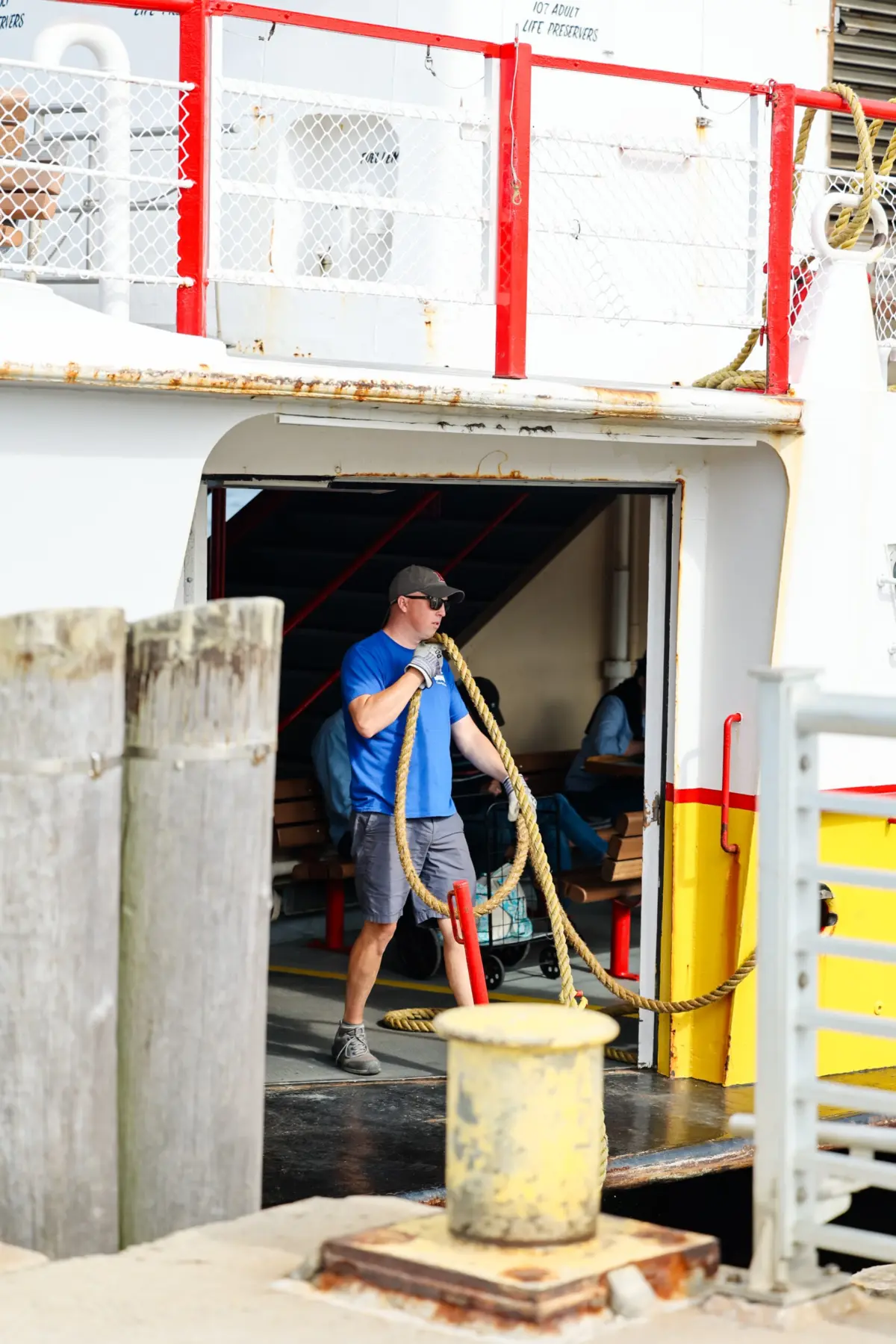
"Freight would get rolled out on a cart close to the boat, and unless the tide was perfect, we lifted or threw it onto the boat," Mavodones explained to 207. "We moved everything from 94-pound bags of cement to cases of milk to lumber and coal."
Through hard work and innate leadership capabilities, Mavodones thrived in the demanding environment. By the time he was just 21 years old, he had earned his captain’s license. By the 1990s, he stepped into the critical role of Operations Manager. For decades, this position sat at the absolute center of CBL’s daily heartbeat, overseeing everything from complex vessel maintenance schedules and regulatory compliance with the United States Coast Guard to high-stakes personnel management, hiring, and day-to-day customer relations.
The Rise of Mike Bryand
As Mavodones’s retirement drew near, Casco Bay Lines launched a rigorous, competitive public search to fill the vacancy left by a man who had defined the role for a generation. Ultimately, the organization looked inward to a candidate whose roots in the community ran just as deep as his maritime credentials.
Raised on Peaks Island, Mike Bryand was intimately familiar with the pulse of Casco Bay. Prior to stepping up as Operations Manager, Bryand served for three years as Assistant Operations Manager under Nick Mavodones. That supervisory stint was built upon a remarkable foundation: 33 years of hands-on experience working his way up through the ranks as a CBL captain and deckhand. When weighed against a competitive roster of external and internal applicants, Bryand’s institutional history and field-tested leadership made him the definitive choice.
"This is a new era, in the sense that we have new people in upper levels of management," Bryand reflected following his promotion. "But this is very much the same Casco Bay Lines. We’ve grown; we’ve added bigger boats and a new terminal, but this is still a small community. With so many people working here for so long, we have a huge amount of institutional knowledge to build upon."
Pat Donovan Steps Into Operations
With Bryand’s elevation to Operations Manager, the position of Assistant Operations Manager became vacant, triggering another exhaustive public search. The role was ultimately secured by another home-grown mariner: Pat Donovan.
Donovan brings two decades of institutional experience to his new management post, having spent the vast majority of that tenure serving as a Casco Bay Lines captain. As a father with young children now entering school age, Donovan noted that the transition to a shore-side administrative and operational leadership role represented a welcome change in lifestyle—and an invigorating professional challenge.
"It’s definitely a different life," Donovan said with a smile, contrasting his decades on the water with his new responsibilities. "On the boats, there’s no typical nine-to-five. You’re either working late or getting up very early. This role brings more consistency—and a new kind of challenge."
Supporting Context & Metrics: The Anatomy of Casco Bay Operations
Managing a ferry network like Casco Bay Lines is vastly more complex than steering a vessel from point A to point B. It requires an intricate choreography of logistics, engineering, regulatory navigation, and deep human empathy. To appreciate the scale of the operation that Dinsmore, Bryand, and Donovan now direct, it is vital to examine the metrics and environment that define CBL’s daily mandate.
The Lifeline of the Casco Bay Islands
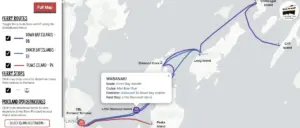
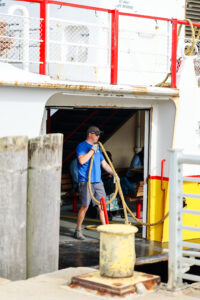
Casco Bay Lines is not merely a regional transit system; it is the fundamental economic, social, and medical artery for the islands of Casco Bay, including Peaks Island, Great Diamond Island, Little Diamond Island, Long Island, Chebeague Island, and Cliff Island. Year-round residents rely on these ferries for everything that mainlanders take for granted:
- Commuter Traffic: Transporting professionals, students, and tradespeople to and from Portland daily.
- Freight and Cargo Logistics: Moving heavy construction equipment, heating fuel, groceries, mail, and retail goods to sustain island life through harsh New England winters.
- Emergency Services: Coordinating medical evacuations and collaborating closely with municipal safety agencies during adverse weather events.
Leadership Demands in a Modern Maritime Environment
The modern Operations Manager and Assistant Operations Manager positions manage an ecosystem that has evolved dramatically since Nick Mavodones started in the late 1970s. While freight is no longer hurled manually onto vessels under suboptimal tidal conditions—thanks to modern vessel ramps, modernized infrastructure, and upgraded fleet designs—the regulatory and mechanical burdens have multiplied exponentially.
Key areas overseen by the CBL operations team include:
- Vessel Maintenance & Engineering: Ensuring a diverse fleet complies with strict United States Coast Guard (USCG) standards, requiring continuous dry-docking coordination, preventive maintenance, and rapid mechanical troubleshooting.
- Personnel & Crew Scheduling: Managing licensed captains, deckhands, terminal staff, and customer service representatives to maintain 365-day operational continuity.
- Safety & Compliance: Enforcing maritime safety protocols, navigating severe nor’easters, heavy fog, and winter ice, and serving as the primary liaison to federal regulatory bodies.
- Customer Relations: Balancing the competing priorities of year-round island residents, seasonal homeowners, commercial operators, and hundreds of thousands of annual tourists.
Official Statements: Enter General Manager Ben Dinsmore
At the apex of this newly structured team stands General Manager Ben Dinsmore, who officially assumed his leadership role at Casco Bay Lines last September. Dinsmore’s appointment represents a masterclass in aligning executive leadership with regional authenticity.
Raised along the jagged coast of Maine and born into a maritime family—his father served as a captain for the Maine State Ferry Service—Dinsmore’s veins run with saltwater. His professional trajectory spans decades of high-level maritime management, including commanding large commercial vessels, overseeing the complex engineering and construction of new watercraft, and holding senior executive positions within marine operations.
Furthermore, Dinsmore brings crucial entrepreneurial and manufacturing expertise to the table. He previously owned R.E. Thomas Marine Hardware, a renowned Downeast Maine engineering firm specializing in the design and production of precision marine driveline components utilized by a wide array of vessels, most notably the iconic Maine lobster boat.
In official statements regarding his vision for Casco Bay Lines, Dinsmore emphasized his profound respect for the regional culture and the irreplaceable role the ferry service plays:
"Growing up on the coast of Maine, I developed a deep respect for the working waterfront and island communities," Dinsmore stated. "I understand the seasonal rhythms of life on the islands and the unique challenges they bring. Casco Bay Lines is more than a ferry service; it’s a lifeline, a connector of communities, and a reflection of the people who call these islands home."
By pairing Dinsmore’s executive pedigree and manufacturing background with Bryand’s 36-year operational tenure and Donovan’s 20-year navigation experience, Casco Bay Lines has insulated its future against the volatility of shifting corporate trends, anchoring its leadership firmly in local competence.
Future Outlook: Navigating Ahead in 2026 and Beyond
As Casco Bay Lines moves further into 2026, the newly minted leadership triumvirate faces a landscape ripe with both enduring traditions and emerging opportunities.
While the immediate focus remains on maintaining the flawless day-to-day reliability that island residents depend on during the final stretches of winter, long-term strategic initiatives are already underway. Under Dinsmore, Bryand, and Donovan, the organization is poised to tackle modern challenges such as environmental sustainability, infrastructure modernization, and workforce development.
The maritime industry nationwide faces a well-documented talent shortage, making recruitment and retention a top priority for forward-thinking operators. However, Casco Bay Lines holds a distinct advantage: a workplace culture defined by fierce loyalty, low turnover among core staff, and clear upward mobility pathways—exemplified directly by the career paths of Bryand and Donovan, who rose from deckhand and captain respectively into executive management.
For the passengers standing on the ferry decks or grabbing a quick wave at the Portland terminal, the faces at the top may be new, but the core ethos remains unshakeable. The transition represents neither a radical departure nor a stagnant holding pattern; rather, it is a seamless generational handoff.
As the winter frost gives way to spring breezes across Casco Bay, the vessels will continue to run on schedule, guided by leaders who didn’t just read about the working waterfront in a manual—they lived it, breathed it, and navigated it for decades. If you happen to spot Ben Dinsmore, Mike Bryand, or Pat Donovan making their rounds around the terminal this season, the team at Casco Bay Lines encourages you to extend a warm welcome and say hello.