









Executive Overview
For travelers seeking a dynamic fusion of historic urban exploration and quintessential Caribbean beach relaxation, the Renaissance Wind Creek Curaçao Resort has long stood out as one of the most distinct hospitality properties in the Dutch Caribbean. Situated squarely in the vibrant cultural heart of Willemstad, this landmark property offers an uncommon juxtaposition: a full-service resort experience complete with a high-stakes casino, sprawling pools, and a signature elevated infinity beach, all seamlessly integrated into a UNESCO World Heritage-listed capital.
Recent rate tracking conducted via Google Hotels reveals that nightly prices for the property are starting at a compelling $237 per night. This introductory rate opens the door to the resort’s interior king rooms—complete with flexible booking terms featuring free cancellation through mid-November—while well-appointed alternatives such as two-queen interior spaces ($246 per night) and resort-view king rooms ($268 per night) remain readily accessible.
This pricing structure positions the Renaissance Wind Creek Curaçao Resort as an exceptional value proposition. The timing is particularly notable given the broader macroeconomic and tourism trends sweeping across the southern Caribbean. Curaçao is currently riding an unprecedented wave of popularity, coming off a record-shattering first half of 2026 that saw stayover visitor arrivals surpass 437,000 between January and June. In a market experiencing surging demand, tightening inventory, and upward pressure on accommodation costs, finding a centrally located, full-amenity resort at a sub-$250 baseline is increasingly rare.

This in-depth report explores the architectural and geographical advantages of the Renaissance Wind Creek Curaçao Resort, analyzes its unique selling propositions—including its famous saltwater infinity lagoon—and contextualizes these offerings within Curaçao’s broader tourism renaissance. Furthermore, we provide a strategic breakdown of room pricing tiers, evaluate the property’s rare urban-resort duality, and forecast how this destination will continue to shape the regional hospitality landscape in the years ahead.
Detailed Chronology: The Evolution of Willemstad’s Premier Urban Resort
To fully understand the current market position of the Renaissance Wind Creek Curaçao Resort, one must examine its deep roots within the historical fabric of Willemstad’s Otrobanda district.
The Transformation of Rif Fort
For centuries, the strategic geography of Curaçao dictated its colonial architecture and defensive fortifications. Built in the early 19th century—specifically between 1828 and 1829—the Rif Fort was designed to protect the entrance to the St. Anna Bay and defend the western flank of Willemstad against foreign invaders. Constructed with massive coral stone walls, the fort stood as a silent sentinel for generations, watching over the ebb and flow of Caribbean maritime trade.
By the late 20th century, however, the fort and its surrounding waterfront parcels required revitalization to prevent urban decay. The turning point arrived with the conceptualization and eventual construction of the resort complex, which successfully anchored modern hospitality directly into historical infrastructure. The historic Rif Fort was meticulously restored and repurposed into an open-air commercial hub, featuring high-end boutiques, local artisan shops, open-air bars, and world-class dining options.

The integration of the Renaissance property into this historic footprint redefined urban tourism in Curaçao. Rather than isolating guests in a self-contained enclave far from local culture—a common critique of traditional all-inclusive Caribbean resorts—the developers engineered a symbiotic relationship between the hotel and the city. Guests stepped out of the lobby directly into centuries of Dutch-Caribbean heritage.
Modernization and the Wind Creek Integration
Over the decades, the property has undergone strategic capital improvements to meet the evolving demands of international travelers. A significant milestone in its modern operational chronology was the integration of the Wind Creek brand, bringing world-class gaming and entertainment standards to the on-site casino. This partnership elevated the resort’s profile from a standard business-and-leisure hotel into a fully realized entertainment destination.
Recent months have seen the property adapt to post-pandemic travel trends, characterized by a shift toward experiential tourism, digital nomadism, and extended-stay vacations. As Curaçao achieved historic tourism milestones through 2024, 2025, and into the record-breaking first half of 2026, the Renaissance Wind Creek Curaçao Resort has continuously refined its service delivery. By maintaining competitive pricing models despite surging regional demand, the property has successfully captured both first-time leisure travelers and loyal Marriott Bonvoy members seeking high-value redemptions and cash stays.
Supporting Context & Metrics: The Curaçao Tourism Boom and Rate Analysis
The current starting rate of $237 per night at the Renaissance Wind Creek Curaçao Resort must be analyzed against the broader economic canvas of the island’s tourism sector.
Record-Breaking Visitor Arrivals
Curaçao has quietly emerged as one of the fastest-growing destinations in the wider Caribbean basin. According to official tourism board metrics, the island recorded more than 437,000 stayover visitors during the first six months of 2026 alone. This figure represents a continuation of consecutive record-breaking quarters, fueled by aggressive airlift expansion from major North American and European hubs, targeted digital marketing campaigns, and a rapidly expanding luxury and boutique hotel inventory.
This influx of global travelers has naturally exerted upward pressure on average daily rates (ADR) and occupancy levels across the island’s resort corridors. Beachfront properties in remote areas like Banda Abao and luxury boutique hotels in Pietermaai have seen notable rate hikes. Consequently, the Renaissance’s ability to offer baseline rooms starting at $237—with upgraded resort-view king rooms available for just $268—represents a notable market anomaly. It offers discerning travelers a strategic loophole to experience top-tier amenities without paying the exorbitant premiums typically associated with peak-season Caribbean travel.
Comprehensive Rate Breakdown and Booking Strategy
A granular review of current Google Hotels rate data highlights several distinct booking tiers at the property:
- Interior King Room ($237/night): Designed for solo travelers or couples who prioritize destination exploration over in-room square footage. These rooms offer contemporary, sleek furnishings and modern technological amenities. Crucially, this tier currently features flexible cancellation policies through November 14, mitigating travel planning risks.
- Two-Queen Interior Room ($246/night): An ideal configuration for small families or traveling companions sharing accommodations. Offering identical baseline modern comforts to the king configuration, the minor $9 nightly premium provides essential sleeping capacity flexibility.
- Resort-View King Room ($268/night): For an incremental investment of just $31 over the base rate, guests unlock views overlooking the vibrant resort grounds, pool decks, or architectural features. Industry analysts strongly recommend this tier, as the modest price upgrade significantly enhances the psychological feel and aesthetic value of the stay.
When juxtaposed against the rising costs of competing Caribbean destinations, these rates underscore why travel economists and consumer advocacy publications consistently highlight the Renaissance as a premier value play.
Architectural Ingenuity: The Elevated Infinity Beach and Urban Connectivity
What truly sets the Renaissance Wind Creek Curaçao Resort apart from its regional competitors is its architectural audacity and spatial design.
The Engineering Marvel of the Saltwater Infinity Lagoon
In a traditional Caribbean resort layout, guests expect to walk out of their rooms onto a natural white-sand beach sloping gently into the turquoise ocean. However, because the Renaissance is situated directly in the urban core of Willemstad—bounded by historic fortifications, commercial maritime channels, and active city streets—a natural beachfront was spatially impossible.
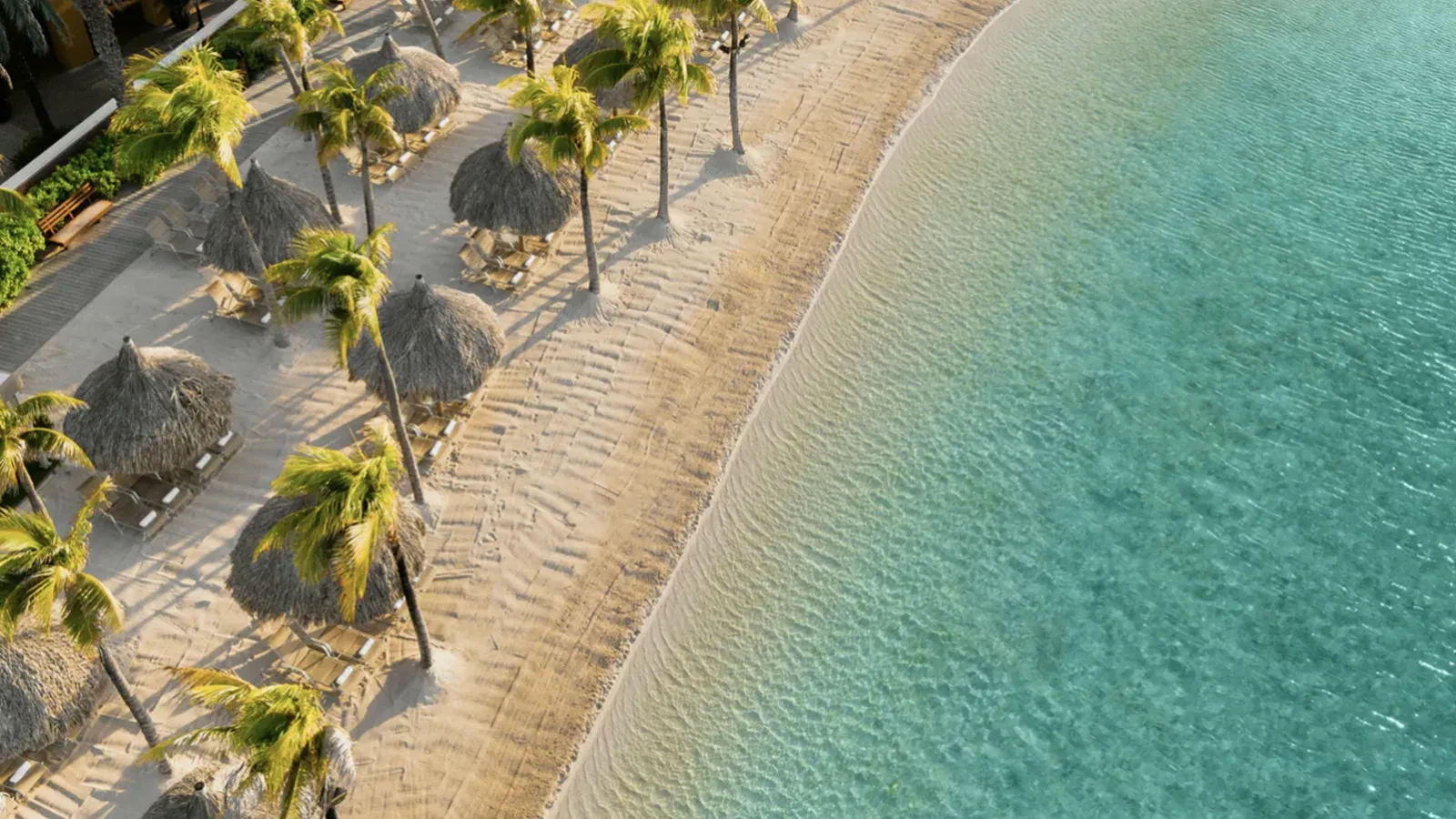
The resort’s designers solved this challenge with a stroke of engineering genius: an elevated, man-made beach club featuring a white-sand shoreline and a stunning saltwater infinity lagoon suspended directly above the churning waters of the Caribbean Sea.
This signature feature delivers the psychological and sensory benefits of a secluded, tropical beach retreat while maintaining an urban rooftop-style vantage point. Guests lounge under palapas on powdery white sand, sipping rum punches while ocean liners, luxury yachts, and local fishing boats glide past the harbor entrance just feet below. It is a completely unique hospitality concept within the Dutch Caribbean, effectively bridging the gap between urban sophistication and seaside relaxation.
Seamless Urban Integration: Otrobanda to Punda
Beyond the lagoon, the property’s geographic positioning offers an unmatched logistical advantage for cultural explorers. The resort sits squarely in Otrobanda—Willemstad’s vibrant, historic western district—directly connected to the Rif Fort shopping and dining complex.
Guests can step out of the air-conditioned tranquility of the hotel lobby and instantly immerse themselves in a labyrinth of pastel-colored colonial buildings adorned with striking modern street art. A brief, picturesque stroll leads directly to the iconic Queen Emma Bridge—the famous wooden pontoon bridge that swings open to allow maritime traffic to pass between St. Anna Bay and the Caribbean Sea.
Crossing the bridge deposits visitors straight into Punda, Willemstad’s eastern commercial and historical anchor. Here, travelers can explore the floating market, tour the historic Mikvé Israel-Emanuel Synagogue (the oldest continuously operating synagogue in the Western Hemisphere), and dine at world-class restaurants serving authentic Curaçaoan fusion cuisine.
This high degree of walkability is a rarity in the Caribbean. While most resort guests are confined to shuttle buses or rental cars to experience local culture, Renaissance visitors live it organically, stepping seamlessly from their resort sanctuary into the pulsating daily life of a UNESCO World Heritage city.
Official Statements and Industry Perspective
Hospitality analysts and tourism stakeholders have increasingly pointed to properties like the Renaissance Wind Creek Curaçao Resort as archetypes for the future of Caribbean urban tourism.
Industry observers note that modern travelers—particularly Millennials and Generation Z—are increasingly rejecting insular, all-inclusive bubbles in favor of authentic, immersive, and culturally grounded travel experiences. The ability to engage in daytime historical sightseeing, afternoon lounging at an elevated infinity beach, evening gaming at a full-service casino, and late-night culinary exploration within a historic city center fulfills every requirement of the modern experiential traveler.
Furthermore, management at major hospitality groups operating in the region emphasize the importance of maintaining competitive rate parity even amidst structural tourism growth. By keeping baseline rates anchored in the mid-$200 range through promotional channels and digital rate parity checks, properties can maintain high occupancy baselines, drive food-and-beverage ancillary spending on-site, and capture high-value loyalty program conversions.
Future Outlook: Curaçao’s Trajectory and the Resort’s Market Standing
Looking toward the remainder of 2026 and into 2027, all economic indicators suggest that Curaçao’s tourism sector will continue its robust expansion. With ongoing investments in airport infrastructure, expanded flight routes from major North American carriers, and continuous urban renewal projects throughout Willemstad, the island is cementing its status as a premier tier-one destination in the southern Caribbean.
For the Renaissance Wind Creek Curaçao Resort, this future landscape presents both immense opportunities and operational challenges. As destination awareness peaks, maintaining the delicate balance between high-end resort amenities and accessible pricing will be paramount.
However, given its structural advantages—chiefly its irreplaceable real estate footprint within Otrobanda, its iconic saltwater infinity lagoon, and its diversified revenue streams encompassing gaming, dining, and hospitality—the property is exceptionally well-positioned to weather market fluctuations.
For the discerning traveler watching travel expenditures closely while refusing to compromise on the quality of their vacation, the current rate environment at the Renaissance represents an unmissable window of opportunity. Whether securing a baseline interior room at $237 per night or upgrading to a resort-view king for $268, visitors are securing front-row seats to one of the most compelling urban-island revivals in the modern travel landscape.