







Executive Overview
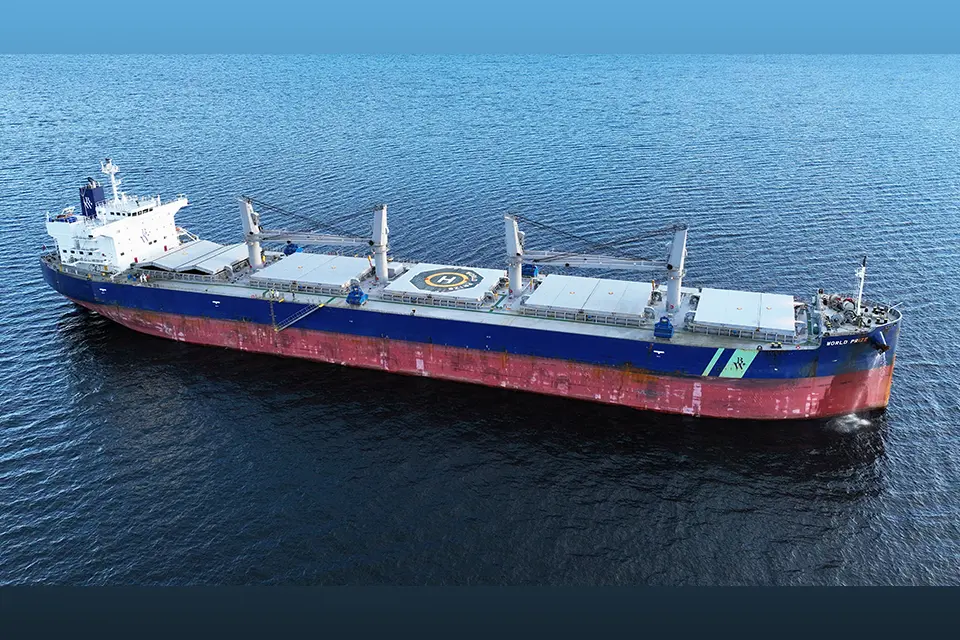
The United Kingdom’s Marine Accident Investigation Branch (MAIB) has officially published its comprehensive accident investigation report regarding a fatal man overboard incident that claimed the life of a crew member aboard the Isle of Man-registered bulk carrier World Prize. The tragedy, which occurred on October 14, 2025, has reignited critical industry-wide conversations surrounding maritime safety protocols, emergency response readiness, working at height, deck-level risk assessments, and the systemic vulnerabilities that continue to jeopardize the lives of seafarers across the globe.
The publication of the report serves as a stark reminder of the unforgiving nature of the maritime environment. Operating massive commercial vessels like the World Prize requires rigid adherence to safety management systems (SMS), unwavering situational awareness, and foolproof engineering and procedural safeguards. When these layers of protection fail, the consequences are invariably catastrophic. The MAIB’s exhaustive inquiry cuts through the operational complexities of the incident to lay bare the chain of events, human factors, and institutional oversights that culminated in a preventable loss of life.
Conducted on behalf of the Isle of Man Administration, this investigation underscores the vital collaborative framework operating between the United Kingdom and the Red Ensign Group Category 1 registries. Under the terms of the formal Memorandum of Understanding (MoU) established between the MAIB and registries including the Isle of Man, the Cayman Islands, Bermuda, and Gibraltar, the MAIB possesses the statutory authority and technical expertise to lead complex marine safety investigations for member territories. This cooperative mechanism ensures that maritime casualties are subjected to rigorous, independent scrutiny regardless of the flag state, thereby driving global standards of safety up across international shipping lanes.

As maritime stakeholders, vessel operators, flag administrations, and regulatory bodies dissect the findings of the World Prize report, the primary focus must inevitably shift toward transformation. The recommendations detailed within the MAIB’s official documentation are not merely bureaucratic suggestions; they are vital lessons forged through tragedy. Implementing these measures is an ethical and professional imperative for an industry striving to achieve a zero-harm culture. This article provides an in-depth examination of the MAIB report, exploring the chronology of the disaster, the broader regulatory context, the official reactions from maritime authorities, and the trajectory of future maritime safety reforms.
Detailed Chronology: The Final Hours Aboard the World Prize
To understand the systemic failures that contributed to the fatality on October 14, 2025, it is necessary to reconstruct the operational timeline leading up to the fatal incident aboard the bulk carrier World Prize. While the full technical granularity is accessible via the MAIB Investigation Report on the World Prize, available case files and preliminary investigative summaries outline a harrowing sequence of events that unfolded under deceptively routine conditions.
Pre-Incident Operations and Routine Deck Work
On the day of the incident, the World Prize was underway, navigating open waters under standard operational parameters. Like many modern bulk carriers, the vessel’s crew was engaged in regular maintenance tasks designed to preserve the structural integrity of the ship and ensure readiness for port operations. Weather and sea states at the time were documented, yet even seemingly manageable environmental conditions can present extreme hazards when combined with high-risk deck operations.
Crew members were tasked with routine maintenance in an exposed area of the ship. In the maritime sector, work on open decks—particularly near the ship’s sides, handling heavy gear, or operating in proximity to un-barricaded openings—demands meticulous pre-job safety briefings, known widely as Tool Box Talks (TBTs). Investigators scrutinized the quality of the risk assessments conducted prior to this specific operation. Crucially, the MAIB report examines whether the perceived routine nature of the task led to operational complacency, a notorious psychological trap in high-consequence industries where familiarity breeds vulnerability.
The Critical Breach: The Man Overboard Event
The exact moment the crew member entered the water remains a focal point of the investigation. Whether precipitated by an unexpected shift in vessel motion, a failure of temporary safety barriers, a slip on an unprotected surface, or a miscommunication during a coordinated lift, the transition from working on deck to finding oneself plunged into the open sea occurred with terrifying speed.
In a man overboard (MOB) scenario, seconds dictate survival probabilities. The environmental parameters—including vessel speed, water temperature, sea state, and ambient visibility—instantly stacked the odds against the victim. Compounding the physical danger is the psychological shock experienced by the ship’s crew, who must instantly pivot from routine maintenance tasks into a high-stakes, emergency search and rescue (SAR) posture.
Immediate Emergency Response and Recovery Operations
Upon the realization that a crew member was overboard, the chain of emergency protocols should have engaged instantaneously. This involves sounding the general alarm, deploying immediate life-saving appliances (such as lifebuoys with self-igniting lights and smoke signals), shouting directional fixes to the bridge, and executing a standardized Williamson Turn or Scharnow Turn to bring the massive bulk carrier back toward the search area.
The MAIB report evaluates the performance of the bridge team and the deck crew during the critical recovery phase. Key questions addressed in the investigation include:
- How rapidly was the man overboard alarm raised and acknowledged?
- Did the vessel execute the designated recovery maneuvers effectively without losing visual contact with the casualty?
- What were the operational readiness and response times of the ship’s rescue boat and launching crew?
Deploying a rescue boat from a commercial bulk carrier in open water is an inherently treacherous undertaking. The interaction between the ship’s rolling hull, residual forward momentum, and windage creates hazardous lee conditions. The investigation sheds light on the mechanical, procedural, and human performance bottlenecks encountered during the recovery attempt, offering crucial insights into why immediate rescue efforts face profound difficulties on large commercial tonnage.
Supporting Context & Metrics: The Anatomy of Maritime Risk
To fully contextualize the findings of the World Prize investigation, one must examine the broader statistical landscape of maritime safety, specifically focusing on man overboard incidents, the unique operational hazards of bulk carriers, and the regulatory architecture governing Red Ensign Group registries.
The Persistence of Man Overboard Casualties
Despite decades of technological advancements in navigation, radar, personal protective equipment (PPE), and automated identification systems (AIS), man overboard incidents remain one of the most lethal categories of maritime accidents. According to historical data compiled by international maritime safety agencies and flag administrations, MOB events carry an alarmingly high mortality rate.
| Incident Category | Primary Contributing Factors | Average Survival Window | Key Mitigation Strategy |
|---|---|---|---|
| Working Aloft / Over Side | Failure of harnesses, lack of secondary tie-offs, complacency | Immediate to 5 Minutes (Trauma/Shock) | Strict Permit to Work systems, mandatory fall arrest checks |
| Routine Deck Operations | Heavy seas, wet decks, inadequate non-slip surfaces | 5 to 15 Minutes (Cold Water Immersion) | Enhanced handrail inspections, weather routing protocols |
| Emergency Response | Delayed alarms, lost visual contact, slow boat deployment | 15+ Minutes (Hypothermia / Exhaustion) | Continuous MOB drull training, modernized recovery davits |
The statistics highlight a sobering reality: once a seafarer enters the water from a moving vessel, the physical barriers to survival are immense. Cold water shock can induce involuntary gasping and hyperventilation within seconds, leading rapidly to drowning long before clinical hypothermia sets in. Consequently, the maritime industry’s safety philosophy has aggressively shifted from rescue to prevention.
Bulk Carriers and Operational Vulnerabilities
Bulk carriers like the World Prize possess unique design and operational characteristics that influence safety outcomes. Characterized by large, unobstructed cargo holds and expansive open decks exposed to the elements, these vessels traverse vast oceanic distances under punishing meteorological conditions.
Crew sizes on modern bulk carriers have steadily decreased due to automation and economic pressures, placing an elevated workload burden on the remaining seafarers. Fatigued crews operating under tight commercial turnaround schedules are statistically more susceptible to procedural shortcuts and cognitive oversights. The MAIB report contextualizes the human elements aboard the World Prize, examining whether fatigue, manning levels, or pressure to maintain operational momentum played an indirect role in degrading safety compliance.
The Regulatory Framework: MAIB and the Red Ensign Group
The investigation into the World Prize was not conducted in a vacuum; it operates under a sophisticated transnational legal and operational framework. The Isle of Man is a Category 1 member of the Red Ensign Group, which comprises the United Kingdom, the Crown Dependencies (Isle of Man, Guernsey, Jersey), and the UK Overseas Territories (such as the Cayman Islands, Bermuda, and Gibraltar).
Category 1 registries are empowered to register large commercial vessels and passenger ships of any size and gross tonnage, provided they comply with the stringent UK standards of maritime safety and pollution prevention. To ensure objective, uncompromised investigations into major marine casualties occurring on vessels flying these flags, formal Memorandums of Understanding are enacted.
The MoU between the MAIB and the Red Ensign Group Category 1 registries guarantees that the UK’s elite independent accident investigation branch can step in to lead investigations. By insulating the investigative process from potential commercial or political conflicts of interest within the flag administration, this arrangement ensures that safety lessons are uncovered impartially and disseminated globally to protect the international seafaring community.
Official Statements and Institutional Responses
The release of the MAIB accident investigation report into the World Prize incident has prompted measured, solemn responses from maritime authorities, industry associations, and safety advocates. While reports of this nature inevitably bring grief to the families and colleagues of the deceased seafarer, they also serve as catalysts for systemic accountability.
In an official statement accompanying the publication, the MAIB emphasized that the primary objective of marine accident investigation is not to apportion blame or liability, but rather to determine the circumstances and causes of the accident with the sole aim of preventing future tragedies.
"Our investigation into the fatal man overboard from the bulk carrier World Prize has concluded with the publication of today’s report," noted a spokesperson for the MAIB. "Every loss of life at sea is a profound tragedy that reverberates across the global maritime community. Our detailed findings outline critical operational vulnerabilities and human factors that must be urgently addressed by vessel operators, ship managers, and flag administrations alike. We urge all maritime stakeholders to review the recommendations contained within the report and audit their current safety management systems to ensure absolute compliance and operational vigilance."
Concurrently, representatives from the Isle of Man Administration expressed their profound condolences to the family, friends, and crewmates of the deceased seafarer. In a joint acknowledgment of the MAIB’s findings, the administration committed to reviewing the report’s recommendations in meticulous detail. The flag state indicated that it would work closely with ship management companies operating under its registry to enforce corrective actions, verify the efficacy of onboard safety drills, and ensure that all vessels maintain uncompromising standards of compliance with international maritime conventions, including the International Safety Management (ISM) Code and the Standards of Training, Certification and Watchkeeping (STCW) framework.
Maritime labor organizations and international seafarer welfare charities have also weighed in on the report’s release. Representatives highlighted the ongoing challenges faced by frontline crews, reiterating that systemic pressures—such as lean manning models, excessive administrative burdens, and turnaround times driven by charterers—directly undermine safety cultures. These groups have called for heightened union representation during onboard safety audits and greater empowerment for seafarers to exercise their right to stop work whenever an unsafe condition is identified.
Future Outlook: Translating Lessons into Lasting Maritime Reform
The publication of the World Prize accident investigation report must mark a definitive turning point rather than a passive archival exercise. For the lessons of October 14, 2025, to translate into tangible, life-saving reforms across the global fleet, shipowners, operators, regulatory bodies, and training institutions must adopt a proactive, multi-tiered approach to maritime safety.
1. Re-Engineering Onboard Safety Management Systems (SMS)
Shipping companies operating bulk carriers and other commercial tonnage must rigorously audit their existing Safety Management Systems. Specifically, companies must evaluate:
- Permit to Work Protocols: Ensuring that working-at-height and over-side operations are subjected to dynamic, context-specific risk assessments that account for vessel motion, sea state, and crew fatigue levels.
- Secondary Protection Mandates: Enforcing the mandatory utilization of fall restraint harnesses, secure lifelines, and certified anchorage points for any deck work conducted in proximity to vessel extremities or open rails.
- Safety Culture Empowerment: Cultivating an open, non-punitive reporting environment where junior officers and ratings feel fully empowered to halt operations immediately if safety margins appear compromised.
2. Elevating Training and Emergency Drill Realism
Too often, emergency drills—including man overboard procedures—are treated as routine paper exercises designed merely to satisfy port state control requirements. The operational realities highlighted in the World Prize investigation demonstrate that emergency response requires muscle memory, split-second decision-making, and flawless technical execution.
- Realistic MOB Simulations: Shipping companies must integrate unannounced man overboard drills into their operational schedules, testing the bridge team’s ability to execute rapid recovery maneuvers under varied environmental conditions.
- Rescue Boat Competency: Ensuring that designated rescue boat crews receive advanced, practical training in launching and recovering small craft in high-wind and heavy-sea scenarios, moving beyond basic theoretical instruction.
3. Technological Innovations in Man Overboard Detection and Prevention
While human procedures remain the first line of defense, emerging technologies offer vital safety nets when human barriers fail. The maritime industry must accelerate the adoption of advanced electronic safety gear:
- Personal AIS and DSC Transponders: Equipping every crew member working on deck with integrated personal automatic identification system (AIS) and digital selective calling (DSC) beacons that automatically trigger bridge alarms and broadcast exact GPS coordinates if submerged.
- Vessel-Based Tracking Systems: Implementing automated infrared and radar-based man overboard detection systems capable of tracking individuals who fall overboard and instantly alerting the bridge without relying on immediate human visual spotting.
Conclusion
The fatal man overboard incident aboard the bulk carrier World Prize stands as a grim reminder of the risks inherent in commercial shipping. The exhaustive investigation conducted by the MAIB provides the maritime community with a clear, uncompromising roadmap of what went wrong and how similar disasters can be prevented. By honoring the memory of the fallen seafarer through rigorous accountability, technological modernization, and an unyielding commitment to a safety-first culture, the international maritime industry can move closer to the ultimate goal: ensuring that every seafarer returns home safely from the sea.
For complete, unabridged technical data, diagrams, and specific safety recommendations resulting from this inquiry, stakeholders and interested parties can access the official documentation directly via the MAIB World Prize Investigation Report.