








Executive Overview
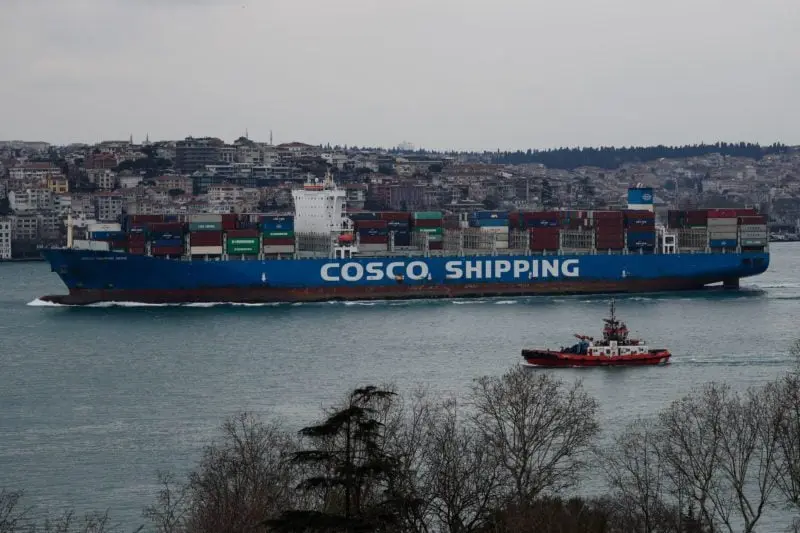
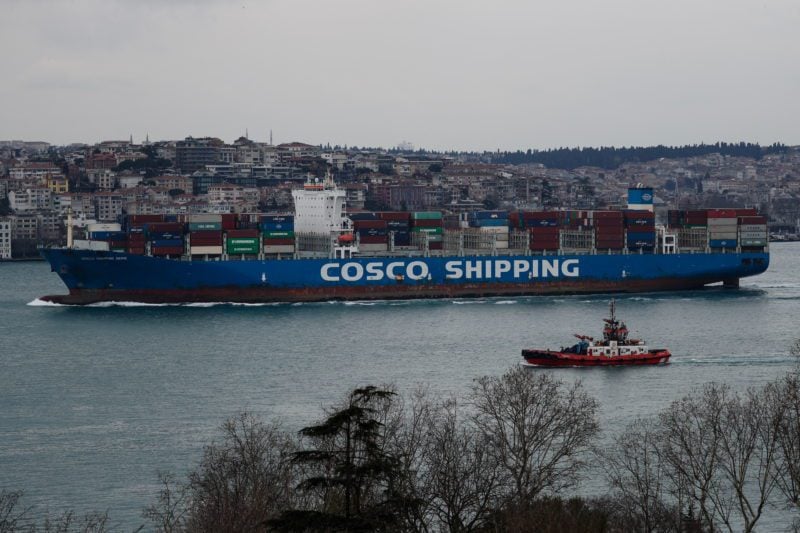
In an era where global supply chains are increasingly viewed through the lens of national security, the boundary between commercial maritime logistics and state-sponsored espionage has become highly contested. This tension reached a critical point following a formal denial by China Ocean Shipping Company (COSCO), the world’s largest state-owned shipping conglomerate. The company rejected allegations that its merchant vessels are equipped with concealed technology designed to harvest signals intelligence (SIGINT) for the Chinese military and intelligence services.
The denial followed reports citing senior United States administration officials who alleged that COSCO has engaged in a decades-long clandestine partnership with Beijing. According to these officials, COSCO’s vast commercial fleet acts as a floating intelligence-gathering network, intercepting sensitive military and government communications near the coastlines of strategic target nations, including the United States, European allies, and Indo-Pacific partners.
COSCO has dismissed these claims as "totally unfounded" and "false," asserting that all shipboard communication and navigation technologies are used strictly for legitimate commercial and navigational safety purposes. However, the allegations have intensified scrutiny over China’s "Civil-Military Fusion" (CMF) strategy. This policy legally obligates commercial entities to assist the state’s defense apparatus, raising concerns about the security of global maritime trade routes, port infrastructures, and naval communications.
As both Washington and Beijing prepare for a high-stakes diplomatic summit between U.S. President Donald Trump and Chinese President Xi Jinping, these allegations introduce a volatile new element to an already strained bilateral relationship. The dispute underscores a growing geopolitical reality: the high seas are no longer just corridors of trade, but active arenas for electronic warfare and surveillance.
Detailed Chronology
The escalation of public allegations against COSCO represents the culmination of years of quiet monitoring by Western intelligence agencies. Below is a chronology of how these espionage allegations emerged, the subsequent denials, and the diplomatic maneuvers surrounding the controversy.
[Early 2000s–Present]
Western intelligence agencies monitor the integration of advanced electronic arrays on Chinese state-owned merchant vessels.
       │
       ▼
[August: Intelligence Leak]
Two senior Trump administration officials brief journalists, alleging COSCO operates a decades-long SIGINT partnership with Beijing.
       │
       ▼
[September 3: Media Reports Published]
Global news outlets publish details of the alleged espionage equipment installed on COSCO vessels operating near allied coastlines.
       │
       ▼
[September 4: COSCO Official Rebuttal]
COSCO issues a formal statement denying all spying allegations, calling them "totally unfounded."
       │
       ▼
[September 24 (Anticipated)]
U.S. President Donald Trump and Chinese President Xi Jinping scheduled to meet in Washington to address security, trade, and maritime disputes.
The Intelligence Briefings
In early September, two senior administration officials spoke on the condition of anonymity to disclose classified intelligence assessments. They alleged that COSCO’s relationship with the People’s Liberation Army (PLA) and state security ministries extends far beyond standard corporate patriotism. According to these officials, the U.S. intelligence community has tracked the installation of non-standard, passive radio-frequency collection equipment, hidden satellite transceivers, and specialized signal processing hardware on select COSCO container ships, bulk carriers, and tankers over several decades.
These vessels, operating under the guise of routine commercial voyages, allegedly transit near sensitive naval installations—such as Norfolk Naval Station in Virginia, San Diego Naval Base in California, and allied ports in the North Sea and the South China Sea. While in proximity, the concealed equipment is designed to capture high-frequency military communications, radar signatures, and electronic emissions.
The Corporate and Diplomatic Rebuttal
On September 4, COSCO Shipping issued a strongly worded response from its headquarters in Beijing. The state-owned enterprise insisted that its global operations are entirely market-oriented and compliant with international maritime laws. The company emphasized that its onboard hardware is standard, certified commercial equipment intended solely for safe navigation, ship-to-shore logistics, and emergency response.
Simultaneously, the Chinese Embassy in Washington defended the country’s corporate sector. Embassy officials asserted that Beijing respects international law and would never mandate domestic companies or citizens to engage in illicit overseas intelligence collection. Despite these assurances, the timing of the disclosures—occurring just weeks before a planned bilateral summit—suggests a calculated effort by Washington to establish leverage ahead of high-level negotiations.
Supporting Context & Metrics
To understand the scale of the threat described by U.S. officials, one must analyze the sheer volume of COSCO’s global operations and the strategic integration of China’s maritime assets.
COSCO’s Global Footprint
COSCO Shipping Group is a pillar of China’s maritime influence. The scale of its fleet and global port network provides an unmatched platform for potential dual-use activities.
| Metric | Details / Figures | Strategic Significance |
|---|---|---|
| Total Fleet Size | Over 1,300 vessels (including container ships, tankers, and bulkers) | Constant, ubiquitous presence in nearly every major international waterway. |
| Global Shipping Capacity | Exceeds 100 million Deadweight Tonnage (DWT) | Positioned as the world’s largest integrated shipping enterprise. |
| Port Terminal Portfolio | Holdings in over 30 global ports (including Piraeus, Rotterdam, Seattle, and Hamburg) | Direct physical access to critical infrastructure and logistics data systems of foreign nations. |
| Annual Container Throughput | Over 120 million TEUs (Twenty-Foot Equivalent Units) | High-volume traffic allows individual vessels to blend into routine commercial flows. |
The Mechanics of Maritime Signals Intelligence (SIGINT)
Western defense analysts have long warned that merchant ships are ideal platforms for passive signals intelligence. Unlike dedicated spy ships (such as the PLA Navy’s Type 815 spy ships), which draw immediate naval scrutiny, a commercial container vessel can linger near sensitive coastlines or choke points without raising immediate alarms.
[Target Military Installation] ──(Emits Radar/Radio Signals)──> [Concealed Passive Antenna on COSCO Vessel]
                                                                                │
                                                                                ▼
[Onboard Encryption & Storage] ──(Compressed Satellite Uplink)──> [Chinese Military Intelligence / PLAN]
Concealed antennas can be integrated into standard navigation masts or hidden within fiberglass radomes that mimic commercial satellite communication domes. These systems operate passively, meaning they do not emit signals that would betray their presence. Instead, they absorb:
- Tactical VHF/UHF Radio Communications: Intercepting unencrypted or weakly encrypted communications between naval vessels and shore installations.
- Radar Emissions: Mapping the frequencies and operational patterns of coastal air-defense and naval search radars.
- AIS and Telemetry Data: Tracking the movements and operational readiness of Western naval strike groups during exercises.
China’s Civil-Military Fusion (CMF) Legal Framework
The skepticism of Western regulators toward COSCO’s commercial independence is rooted in Chinese national security legislation. Under President Xi Jinping, the concept of Civil-Military Fusion has been codified into state law, effectively erasing the distinction between commercial enterprise and military utility.
- Article 7 of the National Intelligence Law (2017): Explicitly mandates that "any organization or citizen shall support, assist, and cooperate with state intelligence work in accordance with the law."
- The National Defense Transportation Law (2015): Requires Chinese transport enterprises—including shipping lines, port operators, and aviation companies—to ensure that their infrastructure, vehicles, and personnel can be readily repurposed for military logistics, transport, and strategic support during times of peace and conflict.
These laws mean that even if COSCO’s corporate leadership operates with commercial intent, they lack the legal authority to refuse directives from state security ministries to install or host intelligence-gathering equipment.
Official Statements
The escalating dispute has produced sharply contrasting narratives from Washington, Beijing, and COSCO’s corporate headquarters.
The Accusation: United States Administration Officials
Speaking on the condition of anonymity, senior Trump administration officials framed the COSCO network as a structural national security threat rather than an isolated corporate infraction:
"For decades, Beijing has leveraged its state-owned commercial fleets as a force multiplier for its intelligence services. COSCO is not just a shipping line; it operates as an auxiliary arm of the Chinese state’s intelligence apparatus. By embedding signals collection capabilities within commercial vessels, Beijing has turned standard merchant corridors into passive listening posts that target the sovereign communications of the United States and our global allies."
The Defense: COSCO Shipping Group
In its official statement, COSCO emphasized its commitment to international maritime standards and commercial transparency:
"COSCO SHIPPING has always adhered to market-oriented operations and compliance practices across all our global businesses. All communication, navigation, safety, and operational equipment installed on our vessels is used solely for legitimate commercial purposes, including navigation safety, ship-to-shore communications, and emergency response. None of the equipment on board our vessels is used for intercepting military communications or gathering intelligence. The allegations are totally unfounded."
The Diplomatic Shield: Chinese Embassy in Washington
The Chinese government backed COSCO, warning against the politicization of international trade and maritime logistics:
"The Chinese government always requires Chinese companies operating overseas to strictly abide by local laws and regulations. We have never, and will never, ask any company or individual to collect or provide data, information, or intelligence located abroad against local laws. These accusations are a groundless attempt to smear Chinese companies and disrupt normal international economic and trade cooperation."
Future Outlook
The dispute over COSCO’s alleged intelligence activities is poised to reshape international maritime security, shipping regulations, and broader geopolitical relations.
The September 24 Summit: High Stakes in Washington
The timing of these intelligence disclosures guarantees that maritime security and state-sponsored espionage will be central to the upcoming meeting between President Donald Trump and President Xi Jinping. While trade tariffs, currency valuations, and intellectual property rights have dominated previous agendas, the militarization of global supply chains has introduced a more urgent security dynamic.
U.S. negotiators are expected to use the intelligence findings as leverage to demand greater transparency from Chinese state-owned enterprises operating in American waters. Beijing, conversely, is likely to view the allegations as a protectionist effort to restrict Chinese shipping firms from key Western markets.
                 ┌──────────────────────────────────────────┐
                 │        TRUMP - XI SUMMIT AGENDA          │
                 └────────────────────┬─────────────────────┘
                                      │
         ┌────────────────────────────┼────────────────────────────┐
         ▼                            ▼                            ▼
┌─────────────────┐          ┌─────────────────┐          ┌─────────────────┐
│ Maritime Security│          │   Trade Tariffs │          │  Supply Chains  │
│  & SIGINT Leaks │          │  & Market Access│          │  & Port Audits  │
└─────────────────┘          └─────────────────┘          └─────────────────┘
Potential Regulatory and Operational Consequences
Regardless of the diplomatic outcome of the summit, the allegations are likely to trigger several regulatory actions by Western nations:
- Enhanced Vessel Inspections: The U.S. Coast Guard, in coordination with allied navies and port authorities in Europe and Asia, may implement rigorous physical and electronic audits of Chinese-flagged and Chinese-owned vessels entering sensitive waters.
- Restrictions on Port Access: Regulatory bodies may restrict COSCO vessels from docking at ports located near sensitive naval shipyards or strategic communication facilities.
- Infrastructural Decoupling: Western governments are likely to accelerate efforts to block Chinese state-owned firms from acquiring stakes in domestic port infrastructure. Programs like the European Union’s port security initiatives and the U.S. Committee on Foreign Investment in the United States (CFIUS) will likely adopt stricter standards for maritime investments.
- Hardware and Software Auditing: International maritime regulators may face pressure to establish standardized, certified hardware audits for satellite communication and navigation suites on all merchant vessels to detect unauthorized, passive SIGINT arrays.
As the maritime sector transitions toward automated navigation, digital logistics platforms, and increased connectivity, the risk of cyber and electronic espionage will continue to grow. The controversy surrounding COSCO highlights that the vessels carrying the lifeblood of the global economy are increasingly on the front lines of a silent, electronic cold war.