





As the autumn nights grow longer across North America, a silent, large-scale crisis unfolds under the cover of darkness. Nearly half a billion birds—including vulnerable species such as blackpoll warblers, chimney swifts, and scissor-tailed flycatchers—have begun their monumental seasonal trek southward. Traversing the continent from northern breeding grounds to warmer winter habitats in Central and South America, these avian navigators rely on ancestral routes forged over millennia. However, the modern human landscape has introduced a lethal gauntlet that threatens to decimate their populations.
Artificial illumination, designed to banish the dark and provide human comfort, creates a disorienting trap for nocturnal migrants. Drawn toward glowing urban skylines and suburban windows, millions of birds become disoriented, crashing into reflective glass and illuminated architecture. According to wildlife experts and ornithological trackers, at least one billion birds perish annually in the United States alone from building collisions.
While coastal communities have long practiced light-dimming protocols to protect endangered sea turtles during nesting season, the imperative to shield migratory birds from artificial light at night (ALAN) has gained urgent momentum. From grassroots wildlife rehabilitation centers in bustling metropolises to municipal "Lights Out" campaigns in major hubs like Chicago and Minneapolis, conservationists are pushing for a collective shift in human behavior. Mitigating this crisis does not exclusively require top-down legislative mandates; it demands everyday mindfulness from homeowners and commercial property managers alike. By lowering blinds, turning off decorative exterior lighting, and embracing dark-sky principles, humanity can dramatically reduce avian mortality during this critical autumn passage.
Detailed Chronology of the Autumn Migration and Hazard Peak
Understanding the mechanics of the fall bird migration requires examining a precise temporal timeline that spans from late summer through mid-November. The journey is a high-stakes endurance test influenced by celestial cues, weather patterns, and human-made environmental hazards.
Late Summer to Early September: The Surge Begins
The migration cycle typically kicks off in earnest late in the summer, swelling rapidly by early September. Catherine Quayle, communications director for the Wild Bird Fund—a prominent nonprofit wildlife rehabilitation organization—notes that the autumn migration generally features a significantly higher volume of birds than the spring journey. This demographic surge is a direct result of the summer breeding season, which produces a new generation of inexperienced juveniles joining their parents on the arduous southward flight.
During these early weeks, wildlife intake centers experience a harrowing spike in trauma cases. For instance, in the first week of September alone, the Wild Bird Fund admitted 453 birds, a staggering 124 of which were victims of window collisions. Young, naive birds are particularly susceptible to architectural hazards, unable to distinguish between genuine foliage and the hyper-realistic reflections of trees cast upon glass panes.
Mid-September to October: The Peak Transit Window
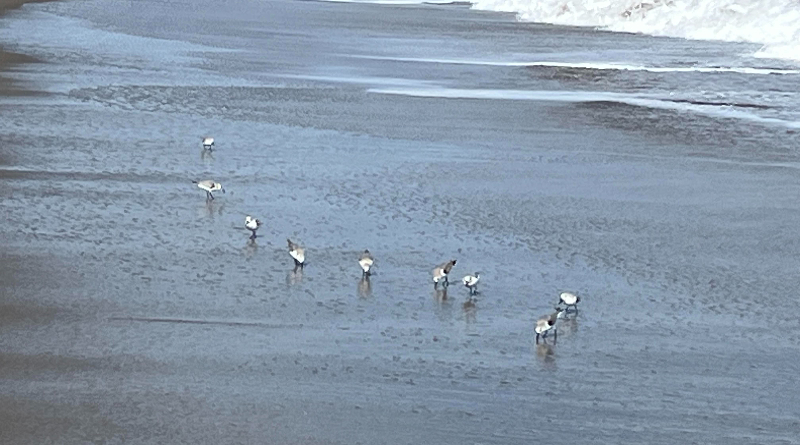
As September transitions into October, the migration hits its zenith. Millions of nocturnal migrants—such as warblers, thrushes, and sparrows—take to the skies after dusk, navigating by the stars and the Earth’s magnetic field.

This period frequently intersects with volatile autumn weather systems, including cold fronts, storms, and heavy cloud cover. When bad weather rolls in, it forces migrating flocks to fly at lower altitudes. Disoriented by low-hanging clouds and blinded or disoriented by intense artificial light radiating from metropolitan towers and suburban homes, birds are drawn like moths to a flame into the heart of urban canyons. Once trapped within these glowing halos, they circle exhaustively, expending vital energy reserves until they collide with skyscrapers, office complexes, and residential windows.
November: The Tail End of the Passage
By early to mid-November, the bulk of the migratory wave reaches its southern destinations, bringing the perilous autumn passage to a close. However, the residual impact of this window lingers long after the skies clear. The cumulative mortality rates recorded during these critical months underscore a systemic ecological crisis. Urban centers like New York City, where upwards of 250,000 birds perish annually from building strikes, bear witness to the devastating toll that light pollution takes on biodiversity year after year.
Supporting Context & Metrics: The Scale of Light Pollution and Avian Impact
The intersection of artificial lighting and bird migration represents a catastrophic ecological mismatch. To grasp the severity of the issue, researchers rely on real-time tracking tools, historical data, and wildlife intake metrics.
The Numbers Behind the Crisis
- The Half-Billion Flight: Ornithologists estimate that nearly 500 million birds cross the skies of the United States during the peak weeks of the autumn migration.
- The Billion-Death Toll: According to Adriaan Dokter, a research associate leading Cornell University’s BirdCast project—an advanced online resource that tracks bird movements in real time—at least one billion birds die each year in the U.S. from impacts with skyscrapers, residential homes, and other lighted structures.
- Urban Hotspots: In New York City alone, an estimated quarter of a million birds lose their lives annually due to architectural collisions. Local rescue groups like the Wild Bird Fund process hundreds of traumatized patients in mere days, with window strikes accounting for a massive share of trauma cases.
The Science of Disorientation
Why are birds so catastrophically drawn to lights? Most songbirds migrate at night to avoid daytime predators and take advantage of cooler, calmer atmospheric conditions. They rely heavily on the night sky—specifically stellar patterns—to maintain their compass headings.
Artificial light at night (ALAN) disrupts this ancient navigation system. Bright floodlights, decorative architectural uplighting, and glowing office windows disorient the birds, pulling them off course and trapping them in urban light domes. Once inside these illuminated zones, the glare blinds them to physical obstacles, turning transparent and reflective glass surfaces into invisible death traps.
Official Statements and Expert Perspectives
Experts across ornithology, wildlife rehabilitation, and ecological research emphasize that mitigating this crisis requires immediate, concerted action from both civic leaders and private citizens.
Adriaan Dokter of Cornell University’s BirdCast highlighted the pervasive nature of the threat in recent discussions with media analysts, noting that the sheer volume of lit infrastructure creates an omnipresent hazard for animals navigating by night. The combination of dense urban centers and unchecked illumination acts as an ecological sink, draining regional bird populations year after year.

Catherine Quayle of the Wild Bird Fund underscored the vulnerability of the demographic makeup during the fall flight. "The fall migration contains more birds because the summer’s breeding season has concluded," Quayle explained, pointing out that this influx of juvenile flyers drastically amplifies the number of casualties seen on city streets and suburban lawns.
The Audubon Society and other leading conservation organizations have issued clear, actionable guidelines for property managers and municipal officials. Recommendations include:
- Turning off or dimming non-essential exterior lighting between the peak migration hours of dusk and dawn.
- Switching off decorative architectural floodlights and high-intensity signage.
- Installing automatic motion sensors for necessary security lighting so that illumination is only triggered by actual human presence rather than running continuously throughout the night.
- Implementing community-wide or commercial "Lights Out" policies during peak migratory windows in spring and autumn.
Future Outlook: A New Mindset for Coexistence
Addressing the annual massacre of migrating birds requires moving past passive awareness and adopting a proactive, conscious mindset regarding our relationship with the natural environment. While municipal regulations—such as those enacted in progressive cities like Minneapolis and Chicago—pave the way by mandating light-dimming protocols for large commercial towers, individual action remains an indispensable pillar of conservation.
The parallels between protecting migrating birds and safeguarding vulnerable marine life are striking. Along the Atlantic coastline, coastal residents are accustomed to lowering blinds and shutting off beachfront lighting to prevent artificial illumination from disorienting nesting sea turtles. Property owners who live by the ocean routinely pull down their shades at sunset as a matter of civic and ecological duty.
Extending this exact habit inland and upward—applying it to window glass and interior residential lighting—can save countless avian lives. While it may require a minor behavioral adjustment, such as closing living room blinds at night or turning off unnecessary indoor lamps that beam brightly through expansive glass facades, the ecological payoff is immeasurable.
Conscientious homeowners and business leaders possess the power to transform the built environment from a nocturnal hazard into a safe passage. By embracing dark-sky principles, investing in smart lighting controls, and recognizing that our evening habits ripple outward into the broader ecosystem, humanity can ensure that the autumn skies remain a highway of life rather than a corridor of extinction. As the migration window closes each November, the ultimate goal is a future where the modern world learns to dim its lights, allowing nature to complete its ancient, vital journey in safety.