








Executive Overview
SOHAR Port and Freezone, Oman’s premier integrated maritime and industrial hub, has announced an unprecedented financial and operational performance for the first half of 2026. Cementing its status as a critical nexus for international trade, the complex handled a staggering 52 million metric tonnes of total cargo throughput between January and June 2026. This performance represents an extraordinary 52 per cent year-on-year increase compared to the corresponding period in 2025.
The extraordinary growth achieved by SOHAR is not an isolated spike, but rather the cumulative result of a meticulously executed long-term strategy. By harmonizing maritime operations, logistics networks, and heavy industrial ecosystems into a singular, highly efficient framework, SOHAR has successfully navigated complex regional and global supply chain vulnerabilities. The port’s agile response to shifting international trade dynamics has allowed it to capitalize on emerging cargo flows, attracting major international shipping lines, logistics operators, and heavy industries.
Underpinning this physical throughput is a massive wave of capital expenditure. Ongoing and newly initiated infrastructure projects across the port and freezone currently represent a combined investment value of OMR 2.62 billion ($6.81 billion). These strategic injections of capital are systematically expanding SOHAR’s industrial capacity, upgrading its technological capabilities, and fortifying its long-term competitive advantage. As global supply chains continue to undergo structural transformation, SOHAR Port and Freezone stands out as a beacon of operational resilience, actively advancing Oman’s broader national agenda of economic diversification and industrialization as outlined in Oman Vision 2040.
Detailed Chronology and Operational Breakdown
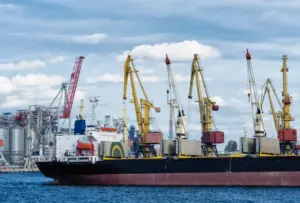
A granular examination of SOHAR’s performance across its diversified cargo portfolio during the first half of 2026 reveals sweeping gains across almost every major operational sector. The port’s ability to handle diverse commodities—ranging from liquid bulk and standard containers to specialized project cargo—demonstrates the versatility of its world-class infrastructure.
Maritime Services and Ship-to-Ship Operations
SOHAR’s maritime services division proved to be a major growth engine during H1 2026. Ship-to-ship (STS) cargo handling reached an impressive 24.38 million metric tonnes. This exceptional volume underscores the port’s strategic geographic positioning along key East-West trade routes, making it a preferred location for marine logistics, transshipment efficiency, and regional bunkering and servicing operations. The robust demand for SOHAR’s maritime services highlights the trust global shipowners and operators place in the port’s safety standards, operational speed, and technical capabilities.
Container Throughput and Breakbulk Expansion
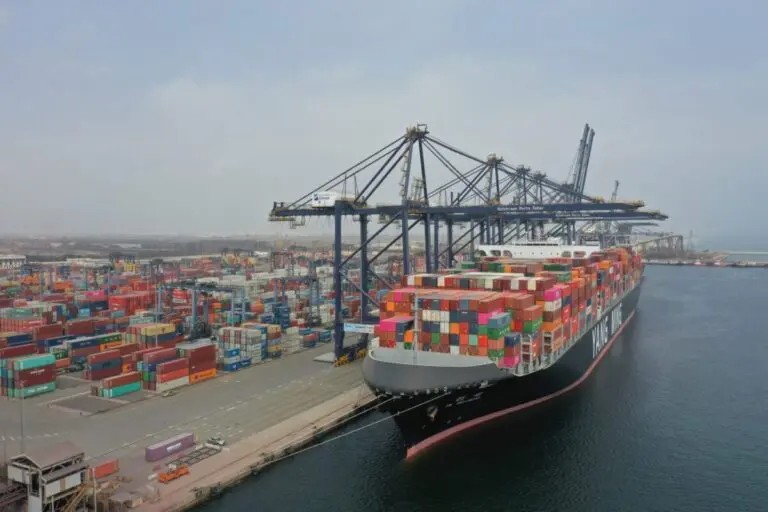
Containerized freight experienced a massive surge, with container throughput rising by 40 per cent to reach 545,000 TEUs (Twenty-Foot Equivalent Units). This stellar growth was primarily propelled by a substantial uptick in transshipment activity, as major shipping lines increasingly utilize SOHAR as a central distribution hub for the upper Gulf, East Africa, and the Indian subcontinent.
Concurrently, the breakbulk sector witnessed exponential growth, with volumes nearly doubling to hit 1.24 million metric tonnes. This phenomenal increase reflects the handling of heavy machinery, construction materials, and specialized project equipment destined for major infrastructure and industrial developments across Oman and the wider Gulf Cooperation Council (GCC) region.
Dry Bulk Resilience and Vessel Traffic
While dry bulk volumes experienced a slight moderation during the reporting period—largely due to global market fluctuations in specific commodity cycles—the port’s overall operational tempo remained exceptionally high. SOHAR successfully handled 1,555 vessel calls during the first six months of the year. This high frequency of vessel arrivals is a testament to the port’s unyielding operational resilience, efficient turnaround times, and its indispensable role as a trusted strategic gateway for global commerce.
Freezone Momentum and Industrial Leasing
Parallel to the port’s maritime success, the SOHAR Freezone maintained robust investment momentum throughout H1 2026, further cementing its reputation as a magnet for high-value industrial capital.
During the period, five new investment contracts with a combined value of OMR 226.47 million ($589 million) were officially signed. These agreements are set to introduce new manufacturing, processing, and assembly operations into the freezone ecosystem. Furthermore, leased warehouse space expanded to approximately 37,000 square metres, representing a 19 per cent year-on-year increase. This continuous demand for ready-built industrial and logistics facilities demonstrates that small-to-medium enterprises (SMEs) and multinational corporations alike are aggressively securing operational footprints within SOHAR to service regional markets.
Supporting Context and Metrics
To fully appreciate the magnitude of SOHAR’s H1 2026 performance, one must examine the macroeconomic environment and the strategic pillars supporting the port’s rapid expansion.
Key Performance Metrics at a Glance (H1 2026)
- Total Cargo Throughput: 52 million metric tonnes (Up 52% YoY)
- Ship-to-Ship Cargo Handling: 24.38 million metric tonnes
- Container Throughput: 545,000 TEUs (Up 40% YoY)
- Breakbulk Cargo Volume: 1.24 million metric tonnes (Nearly doubled YoY)
- Vessel Calls: 1,555 vessels handled
- Total Active Infrastructure & Expansion Investments: OMR 2.62 billion ($6.81 billion)
- New Freezone Investment Contracts Signed: 5 contracts valued at OMR 226.47 million ($589 million)
- Leased Freezone Warehouse Space: ~37,000 square metres (Up 19% YoY)
The Integrated Ecosystem Advantage
SOHAR’s unique value proposition lies in its fully integrated port-and-freezone model. By physically connecting deep-water maritime terminals directly to expansive industrial and logistics freezone plots, businesses operating within SOHAR enjoy seamless supply chain integration. Raw materials can be offloaded from mega-vessels, transported directly across the dock into manufacturing plants within the freezone, processed, and re-exported as finished goods with minimal transit friction and administrative overhead.
This integrated approach significantly reduces logistics costs and carbon footprints for tenants. Moreover, recent technological integrations—such as the launch of the "Makan" platform designed to revolutionize industrial planning and spatial management—demonstrate SOHAR’s commitment to staying at the forefront of the global "Smart Ports" revolution. By leveraging digitalization, automated data analytics, and streamlined e-services, SOHAR continues to optimize turnaround times and enhance transparency for all stakeholders.
Official Statements
The leadership of SOHAR Port and Freezone attributes these historic achievements to a steadfast commitment to excellence, strategic foresight, and collaborative partnerships across the public and private sectors.
Emile Hoogsteden, CEO of SOHAR Port, shared his insights on the record-breaking performance:
"The first half of 2026 demonstrates the adaptability of SOHAR’s integrated port and freezone model and the strength of our long-term strategy. As global trade continues to evolve amidst geopolitical and economic shifts, we remain resolutely committed to investing in world-class infrastructure, strengthening maritime connectivity, and enhancing operational excellence. Our objective is clear: to ensure SOHAR continues to create long-term, sustainable value for our customers, our strategic partners, and the wider Omani economy. These strategic investments ensure SOHAR remains impeccably positioned for future growth while aggressively reinforcing Oman’s preeminent position as a leading global logistics and industrial powerhouse."
Echoing this sentiment, Dr. Raid Al Rubaiey, CEO of SOHAR Freezone and Deputy CEO of SOHAR Port, emphasized the qualitative impact of the freezone’s expansion:
"SOHAR continues to solidify its position as the preferred destination for high-value industrial investment in the region. However, our ambition extends far beyond simply attracting capital; our core mission is about creating lasting, structural economic value through high-quality industrial development.
We remain laser-focused on attracting industries that intelligently build upon Oman’s rich industrial base, deepen local and regional value chains, and actively contribute to sustainable economic growth. By continuously enhancing our investment environment, streamlining regulatory processes, and offering unparalleled logistical advantages, we are reinforcing SOHAR’s role as a vital catalyst for industrial development and economic diversification, fully aligned with the national objectives of Oman Vision 2040."
Future Outlook
As SOHAR Port and Freezone looks toward the second half of 2026 and beyond, the horizon is characterized by calculated ambition and continuous innovation. The OMR 2.62 billion ($6.81 billion) pipeline of active and expanding projects ensures that the physical and digital infrastructure of the hub will continue to scale ahead of demand.
Key areas of focus for the remainder of the decade include the acceleration of green energy initiatives, the integration of advanced artificial intelligence into port operations, and the expansion of downstream petrochemical, metallurgical, and light manufacturing industries within the freezone. With global energy transitions gathering pace, SOHAR is actively positioning itself as a future hub for green hydrogen logistics, carbon capture initiatives, and sustainable marine bunkering—ensuring that the port not only meets current commercial demands but also pioneers the sustainable supply chains of tomorrow.
By maintaining its relentless pursuit of operational efficiency, fostering an investor-friendly ecosystem, and expanding its global maritime network, SOHAR Port and Freezone is well on its way to redefining what an integrated industrial hub can achieve in the 21st century.