





Executive Overview
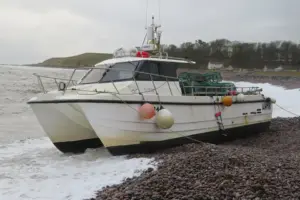
The inherent dangers of commercial fishing have once again been thrust into the grim spotlight following the release of a critical safety flyer and comprehensive investigation report by maritime authorities. The publication centers on the tragic and entirely preventable death of a crew member aboard the crab potting vessel Amadeus (TH7), who lost their life after falling overboard in the treacherous waters of the German Bight, North Sea, on December 13, 2023.
This latest safety bulletin serves as an urgent wake-up call for the global and regional commercial fishing sectors, placing specific, unflinching emphasis on the lethal hazards associated with pot hauling operations, the critical failure of effective fall prevention measures, and the insidious, often overlooked danger of cumulative crew fatigue.
Maritime investigators have made it abundantly clear that safety protocols aboard commercial fishing vessels are not mere bureaucratic suggestions; they are vital, life-saving barriers standing between a routine day at sea and a watery tragedy. The incident involving the Amadeus highlights a systemic vulnerability within the small-to-medium-scale fishing fleet—one where grueling work hours, demanding physical labor, and insufficient environmental safeguards routinely intersect with fatal consequences.
By dissecting the precise sequence of events that led to the December 2023 fatality, maritime safety agencies aim to compel vessel owners, skippers, and deckhands to re-evaluate their operational habits. The core message of the newly released safety documentation is unequivocal: current risk management practices regarding pot hauling and man-overboard (MOB) prevention require an immediate and radical overhaul.
Detailed Chronology: The Final Voyage of the Amadeus
To fully grasp the mechanics of the tragedy that befell the Amadeus, investigators meticulously reconstructed the vessel’s final operational hours leading up to the fatal incident on December 13, 2023. While the full investigation report provides an exhaustive timeline, the core sequence paints a picture of a routine commercial operation undone by environmental strain, physical exhaustion, and the sudden, unforgiving nature of mechanical pot hauling.
Departure and Routine Operations in the North Sea
The Amadeus, a dedicated crab potting vessel registered under the identifier TH7, had put to sea to service its string of shellfish traps deployed across the rich, albeit volatile, fishing grounds of the German Bight. Operating within the North Sea during the deep winter month of December inherently demands heightened vigilance. The crew was engaged in standard crab-potting activities—a physically punishing regimen characterized by continuous heavy lifting, repetitive winch operations, and constant exposure to shifting deck conditions and icy saltwater spray.
The Escalation of Fatigue and Operational Pressures
In the days and hours preceding the accident, the crew of the Amadeus had been subjected to punishing work cycles. Commercial fishing is notorious for demanding long, irregular hours driven by seasonal quotas, weather windows, and market demands. Investigators noted that fatigue was a silent, corrosive factor on board. Cumulative sleep deprivation degrades cognitive function, slows reaction times, and dulls situational awareness—three critical deficits when working in close proximity to high-tension pot hauling machinery and open deck edges.
The Incident in the German Bight
On December 13, 2023, while actively engaged in hauling gear, the fatal chain of events unfolded. Operating a pot hauler requires immense physical coordination. As heavy strings of gear are brought to the surface, crew members must guide, clear, and stack the heavy wooden or steel-and-mesh pots while the vessel rolls with the ocean swell.
Under circumstances where fatigue likely compromised reaction times and safety margins were severely eroded, the crew member became entangled or was struck by the moving gear during a hauling sequence. The combination of dynamic vessel movement, high-tension lines, and inadequate physical barriers or fall-restraint systems resulted in the crew member being pulled or knocked over the open side of the vessel and into the frigid, turbulent waters of the North Sea.
The Immediate Aftermath and Recovery Efforts
The sudden loss of a crew member overboard triggered an immediate emergency response aboard the Amadeus. However, the realities of maritime rescues in open, cold-water environments proved daunting. Despite efforts to locate and recover the individual, the incident culminated in a confirmed fatality. The subsequent rescue and recovery operations transitioned quickly into a formal maritime casualty investigation, spearheaded by safety investigators tasked with determining not just what happened, but why the safety nets designed to protect the worker failed so catastrophically.
Supporting Context & Metrics: The Perils of Pot Hauling and Crew Fatigue
The tragedy aboard the Amadeus is far from an isolated incident. Across maritime jurisdictions worldwide, commercial fishing consistently ranks as one of the most hazardous civilian occupations. Understanding the broader context of these statistics is essential for appreciating the gravity of the recent safety flyer.
The Lethality of Pot Hauling Operations
Pot hauling—whether targeting crab, lobster, or whelks—presents a unique matrix of mechanical and environmental hazards. Unlike trawling or gillnetting, potting operations require deckhands to work repeatedly at the very edge of the vessel, often leaning over bulwarks to guide heavy, water-laden gear aboard.
Key risk factors inherent to pot hauling include:
- High-Tension Lines: Winches and haulers operate under immense mechanical strain. A jammed pot or a sudden snag can cause lines to snap back violently or pull a careless worker into the machinery.
- Entanglement Hazards: Loose clothing, gloves, or limbs can easily be caught in rapidly revolving pot hauler gypsies, dragging crew members toward the machinery before they can shout for help.
- Slippery Decks: The combination of bait residue, mud, seawater, and freezing temperatures transforms working decks into hazardous skating rinks, drastically increasing the probability of a slip-and-fall accident.
The Insidious Nature of Fatigue in the Fishing Industry
Human error is rarely a standalone cause of an accident; rather, it is almost always the final symptom of a deeper systemic failure. In commercial fishing, fatigue is perhaps the most pervasive systemic hazard.
Unlike shore-based industries governed by strict Working Time Directives, fishermen frequently endure broken sleep patterns, enduring stretches of 18-to-24-hour work shifts during peak seasons. The physiological impacts of chronic fatigue mirror those of alcohol intoxication:
- Impaired Vigilance: The ability to monitor dynamic environmental hazards diminishes rapidly.
- Delayed Motor Responses: When a pot line slips or a vessel takes an unexpected lurch, fractions of a second matter. A fatigued worker reacts too slowly to grab a handhold or avoid a swinging trap.
- Impaired Decision-Making: Exhausted skippers and crew are more likely to bypass standard safety procedures—such as donning personal flotation devices (PFDs) or rigging temporary safety nets—simply to save time and energy.
Fall Prevention Deficiencies
The Amadeus incident shines a harsh light on the adequacy of fall prevention infrastructure across smaller commercial fishing vessels. While large merchant ships are bound by stringent structural safety mandates (such as high guardrails, toe boards, and mandatory safety harnesses), smaller fishing vessels often operate with low bulwarks to facilitate the hauling of gear over the side.
When bulwarks are low to accommodate fishing gear, the risk of a fall overboard skyrockets. Traditional reliance on seamanship and "keeping your wits about you" has proven entirely inadequate against the physical realities of a rogue wave, a sudden mechanical snag, or a moment of fatigue-induced stumbling. Effective fall prevention requires engineering controls—such as safety gates, taut jacklines, dedicated harness attachment points, and physical barriers that do not impede fishing efficiency while absolute protection is maintained.
Official Statements and Regulatory Analysis
The publication of the investigation report and the accompanying safety flyer by maritime accident investigation branches underscores the official determination to drive cultural and structural change within the fishing fleet.
Maritime safety authorities have emphasized that the lessons learned from the Amadeus disaster must be digested by every level of the industry—from regulatory bodies and vessel owners down to the individual deckhands working the rail.
Key Takeaways from the Official Safety Flyer
The newly released document highlights several mandatory areas of reflection and action for commercial fishermen:
- Mandatory Risk Assessments for Deck Operations: Vessel operators must conduct thorough, dynamic risk assessments specifically tailored to pot hauling. Every phase of gear retrieval, from breaking the pot out of the seabed to stacking it on deck, must be scrutinized for potential entanglement and fall hazards.
- Redefining Fall Protection Standards: The safety flyer challenges the historical reluctance of fishermen to wear harnesses or utilize deck-edge barriers. Authorities stress that the design of working decks must incorporate practical, ergonomic fall prevention systems that protect workers without creating secondary entrapment hazards.
- Institutionalizing Fatigue Management: Skippers and vessel owners are urged to move away from culture-of-endurance mentalities. Recognizing and managing fatigue must become a core component of vessel management. This includes scheduling mandatory rest periods, rotating arduous tasks among crew members, and empowering any crew member to halt operations if they feel dangerously exhausted.
- The Indispensability of Personal Flotation Devices (PFDs): While preventing a fall overboard is the primary defense, surviving the fall is the second line of defense. The incident reinforces the life-saving imperative of wearing modern, low-profile PFDs fitted with integrated personal locator beacons (PLBs) at all times while working on deck.
Industry Accountability
Regulatory bodies have reiterated that safety is a shared responsibility. While deckhands must adhere to safety protocols and wear protective gear, vessel owners and skippers bear the ultimate legal and moral responsibility for ensuring that ships are adequately manned, equipment is properly maintained, and operational tempos do not outpace human endurance. Ignoring these tenets in the pursuit of catch quotas is viewed by investigators as an unacceptable gamble with human life.
Future Outlook: Charting a Safer Course for Commercial Fisheries
The tragic loss of life aboard the Amadeus must not fade into the archives of maritime history as merely another statistical entry in dangerous trade statistics. Instead, it must serve as a catalyst for genuine, lasting transformation within the commercial fishing sector.
Technological Innovations on the Horizon
The future of commercial fishing safety lies in the convergence of smart engineering and human-centric design. Emerging technologies are beginning to offer viable solutions to the age-old problem of man-overboard incidents:
- Automatic Engine Shut-Offs & MOB Alarms: Advanced wearable transponders can instantly cut vessel engines and trigger alarms the moment a crew member enters the water, drastically reducing recovery time.
- Ergonomic Deck Redesign: Naval architects are increasingly collaborating with fishermen to design modular, retractable safety barriers that can be deployed during high-risk hauling phases and retracted only when necessary, bridging the gap between operational efficiency and fall protection.
- Automated Hauling Systems: Further automation of pot handling—minimizing the direct physical contact workers must have with high-tension lines and heavy traps—promises to remove human bodies from the zone of maximum danger.
Cultural Evolution: From Compliance to Safety Culture
Beyond hardware and technology, the ultimate safeguard remains the industry’s culture. Shifting the mindset of a traditionally conservative and fiercely independent workforce is a formidable challenge, but it is entirely necessary.
Safety training programs must evolve from check-the-box regulatory exercises into immersive, practical workshops that address the psychological and physical realities of life at sea. Skippers must foster an onboard environment where safety concerns can be voiced without fear of ridicule or economic penalty. When a crew member expresses that they are too fatigued to continue safely, that voice must be respected as a vital operational safeguard rather than dismissed as weakness.
Conclusion
The safety flyer and investigation report concerning the crab potting vessel Amadeus stand as solemn reminders of the ocean’s unforgiving nature and the heavy human toll exacted by commercial fishing. By honoring the memory of the crew member lost in the German Bight on December 13, 2023, through rigorous adherence to improved pot hauling safety, uncompromising fall prevention measures, and proactive fatigue management, the maritime community can take definitive strides toward ensuring that every fisherman returns safely to port.