








Executive Overview
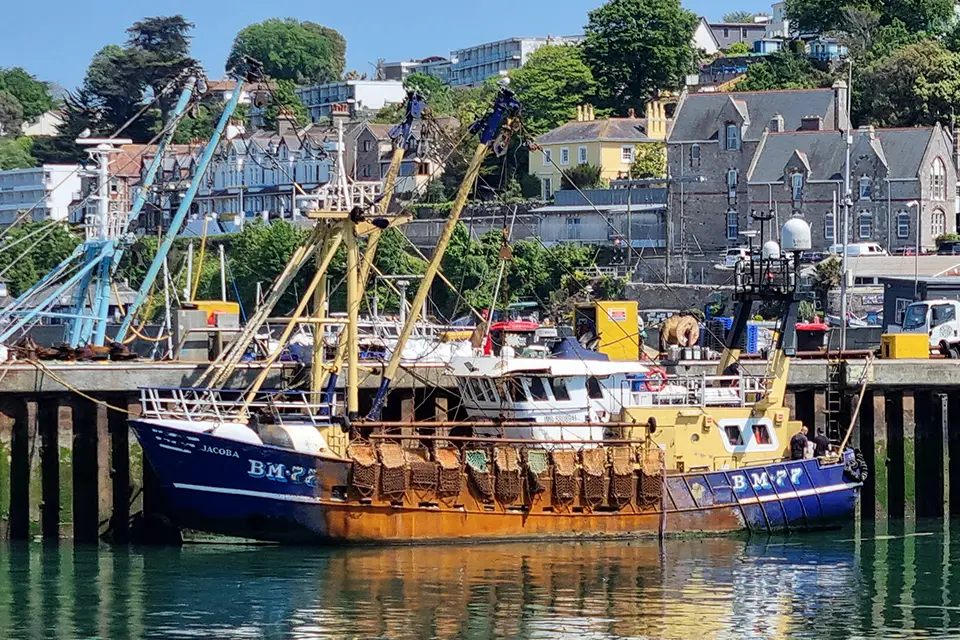
The inherent perils of commercial commercial fishing have once again been thrust into the regulatory spotlight following the publication of a definitive accident investigation report. Marine safety authorities have released their comprehensive findings regarding a severe occupational injury sustained by a crew member aboard the UK-registered scallop dredger Jacoba (BM77). The incident, which unfolded on 10 May 2025, occurred in the treacherous, high-traffic waters approximately 29 nautical miles south-south-east of Beachy Head off the southern coast of England.
While commercial fishing has historically maintained its status as one of the most hazardous civilian occupations globally, the Jacoba incident highlights persistent, systemic vulnerabilities in onboard safety cultures, spatial hazard awareness, and emergency preparedness. The newly released investigation report does not merely document the sequence of mechanical and human failures that led to the crew member’s devastating injuries; it serves as a stark warning to the wider commercial fishing sector regarding the human cost of operational complacency.
In tandem with the main investigative document, regulatory bodies have issued a targeted safety flyer directed specifically at vessel owners, skippers, and deckhands across the domestic and international fishing fleets. This auxiliary publication underscores an urgent industry-wide imperative: comprehensive vessel familiarisation and rigorous hazard identification cannot be treated as optional administrative formalities. They are fundamental, life-saving prerequisites for anyone stepping onto the deck of a working commercial fishing vessel.
This article provides an in-depth examination of the Jacoba incident, dissecting the chronological progression of the event, contextualising the accident within broader maritime safety metrics, evaluating official regulatory responses, and outlining the necessary steps the fishing industry must take to secure a safer future for its workforce.
Detailed Chronology of the Incident
The Operational Setting
On the morning of 10 May 2025, the scallop dredger Jacoba (BM77) was operating in open waters south-south-east of Beachy Head. The English Channel and its adjacent approaches represent some of the busiest and most challenging maritime environments in the world. Weather conditions, tidal streams, and shifting seabed contours demand continuous vigilance from commercial fishing crews. Dredging for scallops is an inherently strenuous and mechanical enterprise, characterised by the deployment and retrieval of heavy steel dredges across rough seabeds, requiring the coordinated movement of winches, heavy chains, and hydraulic tipping bars.
On this particular voyage, the Jacoba was engaged in routine commercial operations. The vessel’s complement was occupied with the physically demanding cycle of shooting, towing, and hauling the dredges. Modern scallop dredgers are essentially floating industrial platforms, operating massive mechanical loads in confined, slippery, and frequently unstable workspaces. Against this backdrop of relentless physical labour, the chain of events that culminated in a life-altering injury began to unfold.
The Critical Failure
While specific details regarding the exact mechanical interaction and moment of impact are exhaustively catalogued in the formal marine accident investigation report, the core narrative reflects a familiar, tragic archetype in maritime accidents: a breakdown in situational awareness combined with the sudden release or movement of heavy deck equipment.

The injured crew member—whose identity and exact tenure aboard the Jacoba have been withheld for privacy—was engaged in deck operations when the accident occurred. Scallop dredging equipment operates under immense physical tension. The combination of heavy steel frames, hydraulic winches, and shifting catches creates an environment where a fraction-of-a-second miscalculation or an unexpected mechanical shift can result in catastrophic trauma.
On 10 May, that margin for error evaporated. The crew member sustained severe injuries during the handling and management of the vessel’s gear. The immediate aftermath required rapid intervention from fellow crew members, who faced the dual challenge of administering emergency first aid while maintaining control of the vessel in an open sea environment.
Emergency Response and Evacuation
Once the severity of the crew member’s condition was recognized, the skipper of the Jacoba initiated emergency protocols. Coordinating maritime medical emergencies requires seamless communication between the vessel at sea, coastal radio stations, and aeronautical or marine rescue coordination centres.
In this instance, maritime rescue authorities were alerted, setting into motion an emergency medical evacuation (MEDEVAC). The operation tested the vessel’s emergency communication systems and the crew’s ability to transition from high-tempo commercial fishing to crisis management. While the injured crew member was successfully transferred for urgent advanced medical care, the physical and psychological trauma inflicted by the incident rippled immediately through the ship’s complement and resonated across the broader maritime community.
Supporting Context & Metrics: The Perils of Commercial Fishing
Quantifying the Hazard
To fully comprehend the gravity of the Jacoba accident, one must examine the broader statistical landscape of commercial fishing safety. Year after year, empirical data compiled by maritime safety agencies and international labour organizations confirms that commercial fishing remains exceptionally hazardous.
Fatalities and serious injuries in the fishing sector consistently outpace those in almost every other industrial category. While land-based manufacturing and construction sectors have seen dramatic, sustained declines in workplace injuries due to stringent regulatory oversight and mandatory engineering controls, the commercial fishing industry has proven more resistant to rapid safety modernization. This resistance stems from a complex matrix of factors: the unpredictable nature of the marine environment, the economic pressures of volatile seafood markets, the traditionalist culture of many fishing communities, and the physical constraints of operating on aging vessel infrastructure.
The Mechanics of Dredging Injuries
Scallop dredging, specifically, presents a unique profile of occupational risk. Unlike net-based fisheries where hazards are often related to entanglements in winches or lines, dredging involves massive, rigid steel structures.
- Crush Hazards: The primary danger stems from the immense weight of the dredges, tipping bars, and heavy towing chains. When these components swing, slip, or fail unexpectedly, crew members working on deck can easily be pinned or crushed.
- Winch and Wire Failures: High-tension warps and winches store immense kinetic energy. A parting wire or a sudden slip under load can turn ordinary deck equipment into lethal projectiles.
- Slip, Trip, and Fall Dynamics: Wet, moving, and fish-slimed decks compound every other physical hazard. A loss of footing near active heavy machinery frequently transforms a minor operational slip into a catastrophic injury event.
The Human Element and Familiarisation
Beyond mechanical failures, marine accident investigations consistently point to human factors as primary contributors to workplace trauma. Fatigue, inadequate communication, language barriers within multicultural crews, and—crucially—insufficient vessel familiarisation create a fertile ground for accidents.
When a crew member is new to a vessel, or when existing crew members are thrust into unfamiliar operational roles without adequate induction, the risk profile skyrockets. Knowing the layout of the deck is not enough; workers must be thoroughly versed in the specific emergency stop locations, blind spots of hydraulic machinery, pinch points of specific gear configurations, and the implicit rhythms of the particular vessel’s operation. This exact vulnerability is what prompted the regulatory authorities investigating the Jacoba incident to issue an urgent companion safety flyer focusing explicitly on crew familiarisation.
Official Statements and Regulatory Intervention
The Investigative Findings
The publication of the accident investigation report represents the culmination of months of rigorous inquiry, forensic engineering analysis, witness interviews, and regulatory review. Maritime investigators meticulously reconstructed the movements, decisions, and mechanical states leading up to the 10 May incident aboard the Jacoba.
While the full report contains detailed technical analyses, its primary value lies in its actionable recommendations. Investigators looked beyond the immediate physical cause of the injury to examine the underlying systemic deficiencies. Did the vessel’s safety management system adequately address deck safety during high-load operations? Was the injured crew member given sufficient training and induction regarding the specific hazards of the Jacoba’s deck layout? Were risk assessments properly conducted, understood, and implemented by the skipper and crew?
The Safety Flyer: A Direct Appeal to the Industry
Recognizing that formal investigation reports, while thorough, can sometimes remain buried in regulatory archives, safety authorities have taken the proactive step of releasing a dedicated safety flyer. Titled "Are your crew familiarised with the vessel and its hazards?", this document distills the critical lessons of the Jacoba incident into an accessible, high-impact format designed to be read directly by skippers, vessel owners, and deckhands.
The flyer emphasizes several non-negotiable principles of safe vessel operation:
- Mandatory Induction Protocols: Every new crew member, regardless of their prior maritime experience, must undergo a structured, comprehensive safety induction before commencing work on deck. This must cover emergency procedures, alarm signals, life-saving appliance locations, and the specific operational hazards of the vessel.
- Hazard Communication: Skippers and vessel owners must ensure that all crew members are fully cognizant of the mechanical risks unique to their assigned duties, particularly concerning heavy lifting gear, winches, and dredging equipment.
- Ongoing Safety Culture: Safety is not a one-time box-ticking exercise conducted upon arrival in port; it must be an ongoing dialogue reinforced through regular safety briefings, drills, and active hazard reporting.
Contact and Media Information
For journalists, maritime stakeholders, and industry participants seeking further information regarding the Jacoba investigation report or wishing to discuss the broader implications of the findings, official media channels have been maintained:
- Office Hours Media Enquiries: 01932 440015 (Available during standard operational hours for press commentary and official statements).
- Out-of-Hours Media Enquiries: 0300 7777878 (Maintained for urgent, breaking maritime safety inquiries).
The full, unabridged accident investigation report, complete with diagrams, witness accounts, and formal safety recommendations, remains publicly accessible via the official government web portal.
Future Outlook: Charting a Safer Course for Commercial Fishing
The Imperative for Cultural Transformation
As the commercial fishing industry navigates the challenges of the 21st century—balancing economic viability, environmental sustainability, and crew welfare—incidents like the severe injury aboard the Jacoba serve as a sobering reminder of how far the sector still has to go in achieving zero-harm workplaces.
Technological advancements alone will not solve the crisis of maritime injuries. While modern engineering, automated hauling systems, and safer deck designs undoubtedly reduce risk, they can easily be undermined by a deficient safety culture. True progress requires a fundamental shift in mindset across the fleet, where skippers and vessel owners view safety not as a regulatory burden imposed by distant bureaucrats, but as the absolute cornerstone of sustainable, professional enterprise.
Regulatory Enforcement and Industry Accountability
In the wake of the Jacoba report, maritime safety regulators are expected to maintain heightened scrutiny over safety management systems within the domestic fishing fleet. Port State Control inspections and domestic safety audits will likely place increased emphasis on verified crew familiarisation records, safety inductions, and the maintenance of deck machinery.
Vessel owners must recognize that failing to implement robust safety inductions and hazard communication protocols is not only morally indefensible given the human toll, but increasingly legally untenable. Courts and maritime authorities are showing diminishing tolerance for negligence disguised as the "traditional hazards of the job."
A Commitment to the Workforce
Ultimately, the story of the scallop dredger Jacoba on 10 May 2025 is a human story. It involves a worker who went to sea to earn a living and sustained life-altering injuries—injuries that, according to the principles outlined by accident investigators, might well have been prevented through rigorous hazard awareness and structured familiarisation.
If the commercial fishing industry is to retain its workforce, attract a new generation of mariners, and shed its unenviable safety statistics, the lessons of the Jacoba report must be absorbed, disseminated, and acted upon without delay. Every skipper who reviews the new safety flyer, every vessel owner who updates their onboarding protocols, and every deckhand who speaks up about an unrecognized hazard contributes to a vital, collective effort: ensuring that those who harvest the bounty of the sea return safely to their families at the end of every voyage.