



Executive Overview
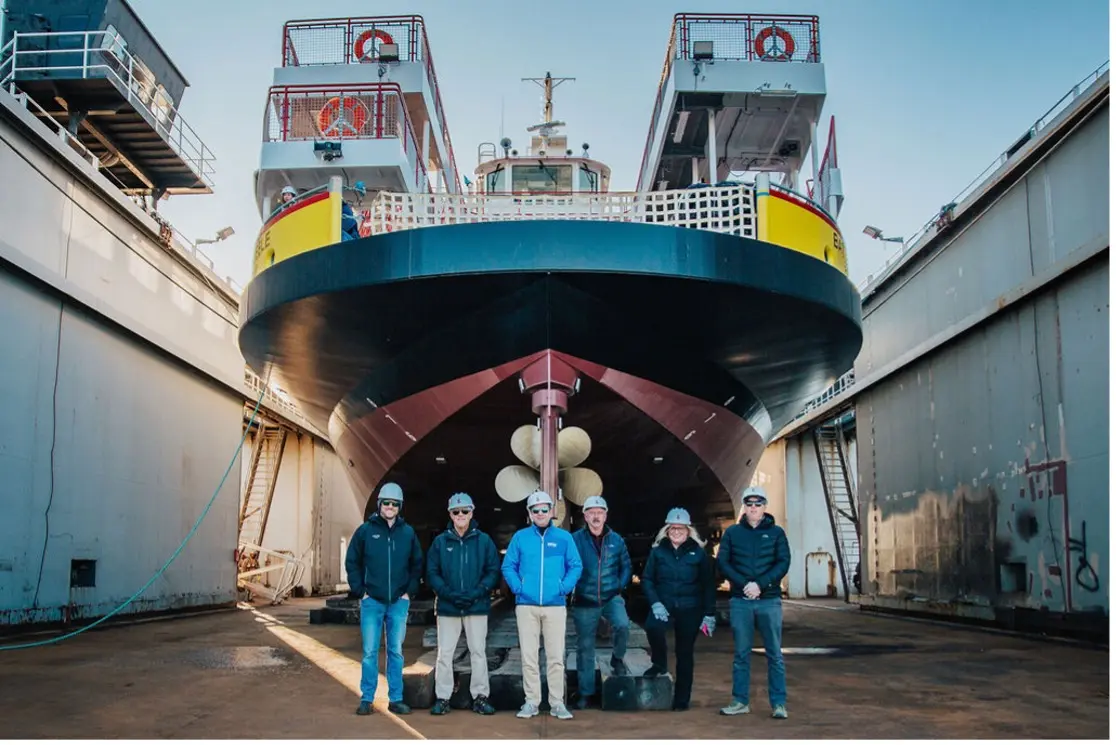
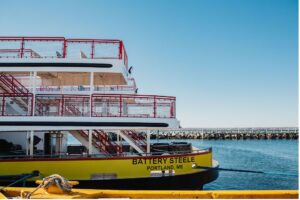
The maritime landscape of Casco Bay is on the brink of a historic transformation. Battery Steele, Casco Bay Lines’ highly anticipated, next-generation hybrid-electric ferry, has officially entered the Atlantic Ocean, making its way up the New England coastline toward its permanent home in Portland, Maine. Representing a monumental leap forward in sustainable public transportation, this 164-foot steel vessel is not merely a replacement for aging infrastructure; it is a profound statement of intent regarding the future of eco-friendly marine transit in the United States.
Equipped with a cutting-edge diesel-electric hybrid propulsion system—distinguished as one of the very first of its kind for a public passenger ferry in the nation—the Battery Steele bridges the gap between rugged utility and environmental stewardship. Upon arriving in Portland later this summer, the vessel will undergo rigorous final commissioning, regulatory inspections, and comprehensive crew training. It is scheduled to officially enter passenger and vehicle service this fall, initially plying the vital commuter and tourist route between downtown Portland and Peaks Island before eventually succeeding the venerable Machigonne II.
For the island community, commuters, and environmental advocates alike, the arrival of the Battery Steele marks the culmination of years of meticulous planning, strategic fleet evaluation, and innovative engineering. By marrying cutting-edge emissions-reduction technology with a deeply rooted local namesake that honors Peaks Island’s historic military heritage, Casco Bay Lines has charted a course that respects regional history while aggressively pursuing a zero-carbon horizon.
Detailed Chronology: From Blueprint to the Open Atlantic
The journey of the Battery Steele spans years of collaborative design, regulatory hurdles, shipyard craftsmanship, and milestone celebrations. Understanding the timeline of this flagship project highlights the immense coordination required to bring a first-of-its-kind vessel to the waters of Maine.
Phase I: Concept, Design, and Fleet Evaluation
The genesis of the Battery Steele dates back to comprehensive fleet evaluation studies conducted by Casco Bay Lines. Recognizing the aging nature of their current vessels and the imperative to reduce municipal carbon footprints, leadership initiated a project to design a ferry capable of meeting the rigorous demands of year-round Maine weather while drastically curbing environmental impacts.
To bring this vision to life, Casco Bay Lines partnered with the renowned naval architecture firm Elliott Bay Design Group. Tasked with balancing passenger capacity, vehicular utility, fuel efficiency, and cutting-edge hybrid technology, the designers formulated specifications for a 164-foot steel-hulled workhorse. The design prioritized not just structural integrity for icy Maine winters, but a vastly improved passenger experience characterized by quieter sailings, reduced vibrations, and expansive viewing areas.
Phase II: Construction and the North Kingstown Launch
With blueprints finalized, the contract for construction was awarded to Senesco Marine, a premier shipyard located in North Kingstown, Rhode Island. Known for superior craftsmanship and heavy-gauge marine manufacturing, Senesco Marine spent months fabricating the complex infrastructure required to house both traditional diesel components and an advanced battery-bank architecture.
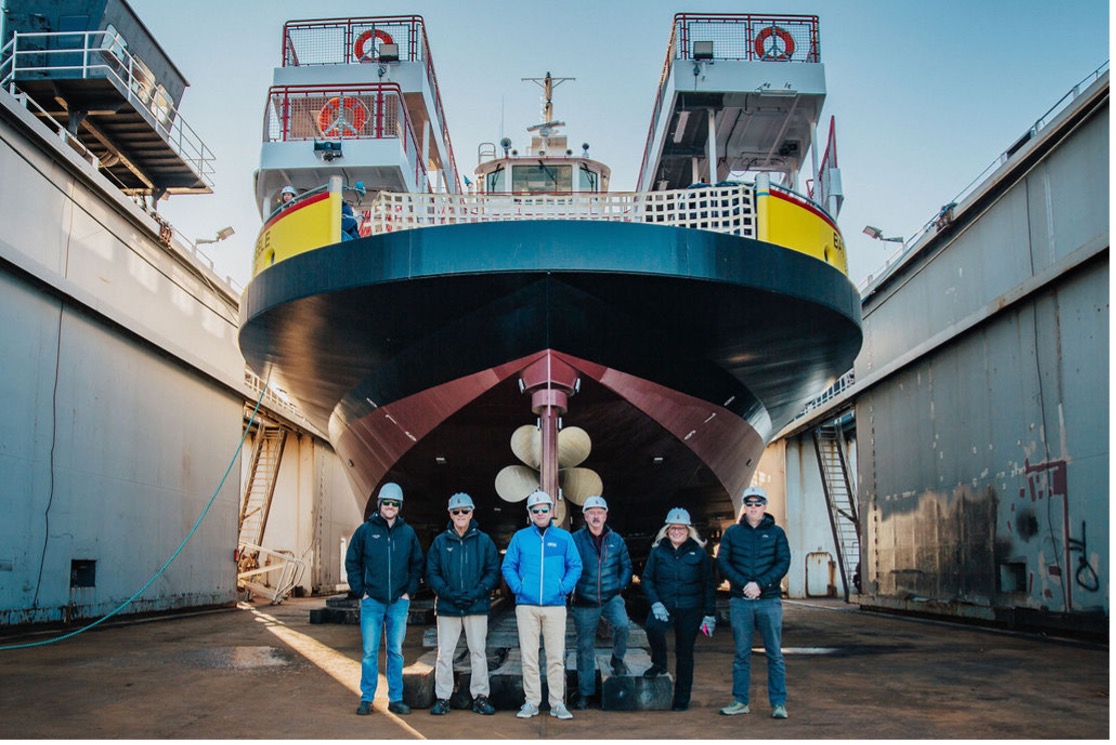
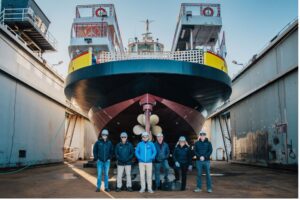
The milestone moment arrived in early April, when members of the Casco Bay Lines executive and operations teams traveled to Rhode Island for the official vessel launch. In keeping with maritime tradition, the ceremony featured the ceremonial smashing of a champagne bottle against the hull of the Battery Steele, celebrating the culmination of thousands of hours of skilled labor by welders, electricians, and naval engineers.
Phase III: Transit and Delivery
Following its successful spring launch and preliminary harbor testing in Rhode Island, the Battery Steele cleared its final shipyard milestones in late spring. The vessel has now officially entered the Atlantic Ocean, embarking on its delivery voyage up the Eastern Seaboard. Navigating the coastal waters of New England, the transit marks the physical transition of the ferry from a shipyard project into an active component of Maine’s regional transit network.
Phase IV: Commissioning and Fall Rollout
Upon docking in Portland later this summer, the Battery Steele will transition into its final operational phase. This period will involve dockside testing of the shoreside charging infrastructure, compass calibrations, US Coast Guard safety inspections, and intensive hands-on training for Casco Bay Lines captains and deckhands. If all milestones are met without delay, the vessel will welcome its first paying passengers and vehicles this autumn, seamlessly integrating into the bustling Peaks Island run.
Supporting Context & Metrics: Engineering a Greener Fleet
The integration of the Battery Steele into the Casco Bay Lines fleet is far more than a simple vessel upgrade; it represents a technical masterclass in modern marine engineering. To appreciate the magnitude of the project, one must examine the specific metrics and technological innovations driving the ship.
The Diesel-Electric Hybrid Architecture
Traditional ferries rely entirely on direct mechanical diesel propulsion systems, which run continuously, burning fossil fuels even when idling at docks or maneuvering at low speeds in harbor zones. In contrast, the Battery Steele utilizes a sophisticated diesel-electric hybrid setup.
The vessel’s primary energy source will be an advanced high-capacity battery bank housed onboard. This battery system allows the ferry to operate entirely on zero-emission electric power during critical phases of its voyage—most notably when pulling away from slips, maneuvering within the confines of Portland Harbor and Peaks Island, and docking.
To ensure year-round reliability and account for extreme weather or peak-demand scenarios, the vessel also features efficient backup generators. Furthermore, shoreside charging infrastructure established at the Portland terminal will rapidly replenish the onboard battery banks between runs, minimizing grid strain and maximizing electric-only transit time.
Environmental Impact: Cutting 800 Metric Tons of CO2
The ecological ramifications of transitioning from a conventional mechanical diesel system to a hybrid-electric platform are profound. Casco Bay Lines projections indicate that the Battery Steele will prevent up to 800 metric tons of carbon dioxide ($CO_2$) emissions annually.
To put this figure into perspective, removing 800 metric tons of carbon dioxide from the atmosphere each year is equivalent to:
- Removing roughly 175 gasoline-powered passenger vehicles permanently from the road.
- The carbon sequestration accomplished by nearly 1,000 acres of mature U.S. forests in a single year.
- Powering nearly 100 American homes with electricity for twelve full months.
Beyond greenhouse gas reductions, the hybrid system drastically cuts local air pollutants, including particulate matter, nitrogen oxides ($NO_x$), and sulfur oxides ($SO_x$), directly improving air quality for island residents, commuters, and tourists.
Acoustic and Sensory Improvements
The shift from roaring mechanical diesel engines to quiet electric propulsion delivers an immediate sensory dividend: noise pollution reduction. Ferries powered by conventional engines generate a constant, low-frequency rumble and vibration that permeates passenger cabins and outdoor decks.
By operating on battery power during critical harbor maneuvers and cruising segments, the Battery Steele offers a remarkably quiet, smooth ride. Passengers will be able to converse easily on open-air decks, enjoy the natural sounds of Casco Bay, and experience a level of tranquility previously unattainable on high-capacity public ferries of this scale.
Honoring History: The Legacy of Battery Steele
True to Casco Bay tradition, the vessel’s name is steeped in local history. Named after Battery Steele, the iconic former military fortification located on Peaks Island, the ferry bridges the gap between mid-century defense infrastructure and 21st-century environmental consciousness.
Constructed during World War II, Battery Steele was one of the largest and most heavily armed gun batteries in the United States, designed to protect Portland Harbor from potential naval attacks. Though the massive concrete casemates never fired in combat, the installation became an indelible part of Peaks Island’s identity.
In the 1990s and subsequent decades, community-led preservation efforts successfully transformed the abandoned military site from a restricted zone into a beloved public park and sanctuary for exploration, historical reflection, and community gatherings. By naming their flagship green vessel after this historic landmark, Casco Bay Lines honors a site that embodies community resilience, local pride, and adaptive reuse—themes that mirror the ferry’s own role in transitioning the bay toward a sustainable future.
Official Statements and Industry Significance
The arrival of the Battery Steele has captured the attention of maritime authorities, environmental regulators, and public transit advocates across the United States. As one of the earliest adopters of this specific caliber of green technology in the U.S. passenger ferry sector, Casco Bay Lines is establishing a new benchmark for municipal water transit.
Industry analysts note that public transit agencies nationwide are under increasing pressure to decarbonize their fleets. However, marine transit presents unique engineering challenges that ground-based electric buses do not face—primarily the sheer energy density required to move heavy steel hulls through tidal currents, wind, and changing weather conditions.
By successfully partnering with Elliott Bay Design Group and Senesco Marine to solve these maritime engineering puzzles, Casco Bay Lines has proven that zero-emission or low-emission hybrid technology is commercially viable for heavy-duty, high-frequency commuter routes.
Community leaders on Peaks Island have likewise expressed overwhelming support for the project. For residents who rely on the ferry service multiple times a day for commuting, schooling, medical appointments, and commerce, the promise of a cleaner, quieter, and more reliable vessel is a welcome milestone. Island advocates have praised Casco Bay Lines for engaging the public throughout the fleet evaluation process, ensuring that the new vessel meets the practical needs of everyday riders while championing regional environmental goals.
Furthermore, maritime unions and operations staff have highlighted the rigorous training programs being implemented ahead of the fall launch. Transitioning to a diesel-electric hybrid platform requires deckhands and marine engineers to master new skill sets involving high-voltage electrical systems, battery management software, and automated power-load distribution. Staff members have embraced this educational curve, viewing the Battery Steele as a professional growth opportunity and a point of pride for the entire Casco Bay workforce.
Future Outlook: A Sustainable Horizon for Casco Bay
As the Battery Steele sails up the New England coastline toward Portland, its impending arrival signals much more than the addition of a single hull to a regional roster. It represents the opening salvo in a broader, long-term strategic evolution for Casco Bay Lines and the communities it serves.
The data gathered, operational efficiencies realized, and lessons learned from the commissioning and daily operation of the Battery Steele will serve as an invaluable blueprint for future fleet evaluations. As battery energy storage densities continue to improve, charging times decrease, and alternative marine fuels mature, the groundwork laid by this pioneering hybrid vessel will pave the way for subsequent generations of green ferries.
For the daily commuter stepping onto the deck of the Battery Steele this fall, the experience will feel both familiar and revolutionary. They will board a vessel designed with the historic pride of Peaks Island stitched into its very name, yet propelled by the quiet force of 21st-century innovation. They will sail across waters protected from hundreds of tons of annual carbon emissions, wrapped in the quiet hum of electric propulsion rather than the roar of conventional diesel exhausts.
The Battery Steele is proof that maritime tradition and radical environmental progress do not have to be at odds. As it takes its place in Portland Harbor this summer, it carries with it not just passengers and vehicles, but the floating promise of a cleaner, quieter, and more sustainable Casco Bay for generations to come.