International travel is often heralded as a journey of self-discovery, cultural immersion, and culinary adventure. Yet, for many travelers—particularly Americans stepping off a flight into the vibrant rhythm of Latin America—the path to cultural appreciation is fraught with invisible tripwires. While global gourmands readily recognize that slurping ramen in Tokyo signifies chef appreciation, or that slicing spaghetti in Italy is an immediate cultural faux pas, the unwritten rules of Brazilian dining often remain a mystery.
As Brazil prepares to step into the global spotlight as Travel + Leisure’s 2026 Destination of the Year, millions of international visitors are packing their bags for Rio de Janeiro, São Paulo, and beyond. From the world-famous churrascarias (Brazilian steakhouses) to laid-back neighborhood bistros, Brazil offers a culinary landscape rich in tradition, flavor, and community. However, unsuspecting tourists frequently commit a series of cultural missteps within the first ten minutes of sitting down.
Rooted in a blend of European heritage, tropical climate realities, and deeply ingrained social philosophies, Brazilian dining etiquette prioritizes hygiene, communal respect, and a slower, more deliberate pace of life. This investigative report breaks down the six primary rules that American tourists habitually break, exploring the cultural mechanisms behind them and offering a definitive guide to dining like a true Carioca.
Detailed Chronology: The First Ten Minutes at a Brazilian Table
The moment a diner steps across the threshold of a Brazilian restaurant, a strict chronological sequence of cultural expectations begins. Understanding how these moments unfold can mean the difference between blending in seamlessly and standing out as a bewildered outsider.
The chronological sequence begins well before the meal starts: at the door. In the United States, punctuality is equated with professionalism and respect. Arriving ten minutes early for a reservation is standard practice, signaling eagerness and consideration for the host or establishment.
In Brazil, however, this habit will immediately expose you as a tourist. Brazilian social culture operates on a remarkably relaxed timeline. Arriving early leaves restaurant staff scrambling or throws off the host’s schedule. Conversely, arriving within ten minutes of the agreed-upon time is considered shockingly punctual—so much so that Brazilians use the pejorative phrase "com pontualidade britânica" ("with British punctuality") to describe rigid, clock-watching behavior.
Minute 2–5: Utensil Placement and Posture
Once seated, the mechanical act of eating begins, and this is where American dining habits clash head-on with Brazilian norms.
The "Switcheroo": American etiquette traditionally dictates holding the fork in the left hand and the knife in the right to cut food, then laying down the knife, switching the fork to the right hand, and lifting the morsel to the mouth. To Brazilians, this choreography appears fussy and inefficient.
The European Grip: Brazil follows a European-style grip where the fork remains permanently in the left hand and the knife in the right.
Posture and Hands: While American etiquette often requires resting the non-eating hand demurely in one’s lap, Brazilian table manners dictate that both hands must remain visible at all times, with wrists resting gently on the edge of the table. Hiding one’s hands is viewed with suspicion, though placing elbows directly on the table—a relic of unstable medieval furniture designs that could tip under pressure—remains strictly taboo.
Minute 5–8: Engaging the Rodízio and Server Boundaries
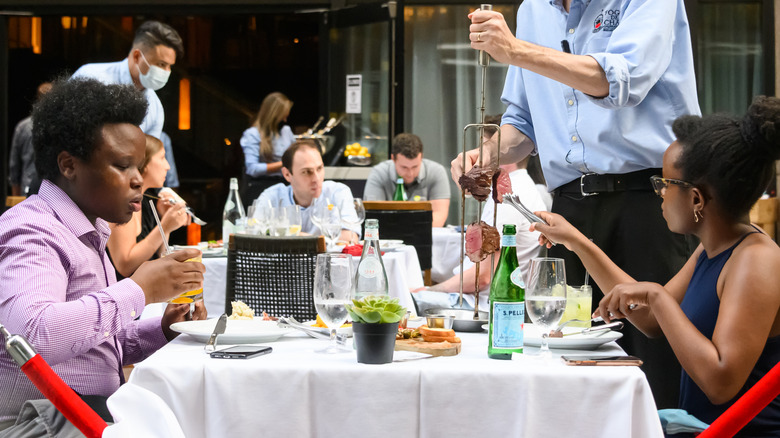
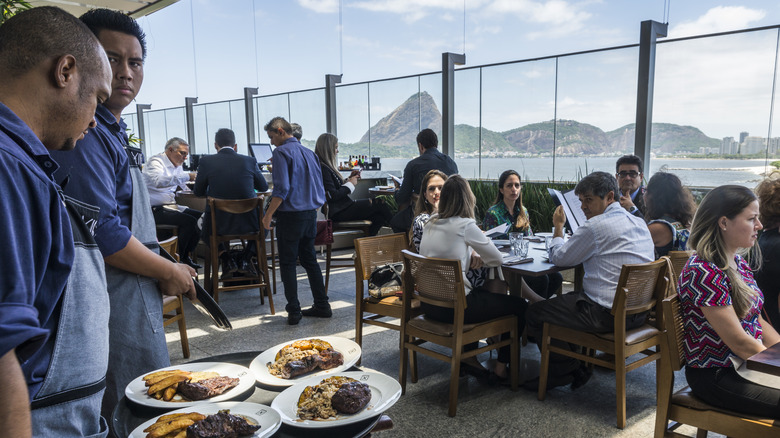
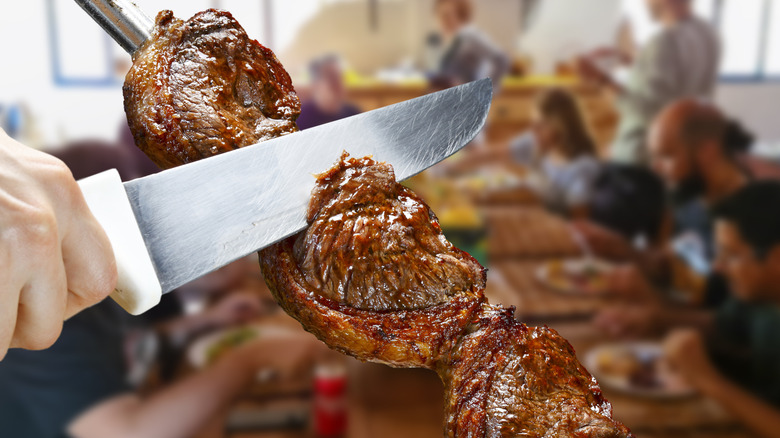
Within the first half-code of the meal, particularly at a churrascaria, guests encounter the legendary rodízio system of roaming meat service. Here, tourists frequently make two critical errors simultaneously: they attempt to use their fingers or personal cutlery to grab meat from the carving skewered by a gaucho, and they try to order drinks from these specialized meat-carvers.
Gauchos are masters of the grill, not general servers. Treating them as multi-tasking waiters disrupts the efficient flow of the dining room. Furthermore, picking up shared food with personal utensils violates strict hygiene codes born of Brazil’s tropical climate, where food-borne illnesses can proliferate rapidly.
Minute 8–10: Pacing, Plates, and Payment
As the ten-minute mark approaches, the overarching philosophy of the Brazilian meal solidifies: acceleration is the enemy of enjoyment. Tourists accustomed to fast-paced American dining—where the check often arrives before the final bite is swallowed—will find that a standard lunch in Brazil easily stretches across two hours. Rushing out the door, leaving food uneaten on the plate (signaling wastefulness), or aggressively fighting over the bill when dining as someone’s guest disrupts the delicate social harmony that defines Brazilian hospitality.
Supporting Context & Metrics: The Cultural Blueprint
To truly understand why these rules exist, one must examine the socio-climatic and historical framework of Brazil.
Climate and Hygiene
Brazil’s tropical and subtropical climates present unique culinary challenges. Historically, before widespread refrigeration, food preservation in high heat and humidity required rigorous sanitary habits. This background explains several modern dining taboos:
The Hand-Food Taboo: Eating burgers, pizza, or finger foods with bare hands is heavily discouraged in many formal or semi-formal settings. Restaurants frequently provide waxed paper sheets or specialized tongs to ensure skin never directly touches food destined for the mouth.
The Toothpick Protocol: While using a toothpick is common after a heavy meal, exposing one’s teeth or mouth while doing so is considered deeply unrefined. Etiquette demands covering the mouth with one hand while discreetly managing dental hygiene.
The Economics and Psychology of the Churrascaria
The churrascaria is not merely a restaurant; it is a cultural institution rooted in the gaucho traditions of southern Brazil’s Rio Grande do Sul. The rodízio system relies on a binary signaling mechanism: the dual-sided disk (often green on one side, red on the other).
Card State
Action Expected
Cultural Significance
Green Side Up
Server approaches with fresh cuts of meat.
Indicates readiness to participate in the communal culinary flow.
Red Side Up
Service pauses; server bypasses the table.
Signals a temporary break, allowing the diner to converse and digest.
Statistics from tourism boards indicate that over 65% of first-time American visitors to Brazilian steakhouses accidentally leave the green side facing up continuously, leading to overwhelmed plates, food waste, and a warped dining experience. In Brazilian culture, wasting food (desperdício) is viewed as a sign of poor upbringing and lack of respect for the labor involved in agriculture and cooking.
Official Statements & Expert Perspectives
Cultural anthropologists and hospitality experts emphasize that mastering these nuances is not about rigid conformity, but about showing respect to local hosts.
"When travelers visit Brazil, they are stepping into a culture that values human connection and the shared experience above efficiency," notes Dr. Elena Vasconcelos, a Latin American cultural studies scholar at the University of São Paulo. "The dining table is an extension of the Brazilian living room. When an American tourist rushes through a meal, grips their utensils like a tool rather than an extension of their hand, or treats hospitality as a transactional service, they miss the soul of the experience."
Miss Manners and international etiquette syndicates frequently echo these sentiments, pointing out that global travel requires shifting from ethnocentric comfort zones to localized awareness.
"It is never about policing the traveler," explains Rio-based hospitality consultant Marco Antonio Silva. "It is about protecting the sanctity of the meal. In Brazil, eating is an act of communion. When you respect the pace, the hygiene protocols, and the roles of the staff, you are telling your hosts that you respect their home."
Future Outlook: Preparing for Brazil 2026
As Brazil takes center stage as the global tourism capital for 2026, the influx of international visitors will test the adaptability of local hospitality infrastructures. Tourism authorities in Rio de Janeiro and São Paulo are already rolling out cultural awareness campaigns aimed at bridging the gap between fast-paced Western tourists and the relaxed, relationship-driven rhythm of Brazilian dining.
For travelers, the prescription is clear: slow down. Ditch the hurried pace of urban American dining culture. Embrace the two-hour lunch, master the European fork-and-knife grip, respect the boundary between your gaucho meat-carver and your beverage server, and always keep both hands visible above the table. By observing these unwritten laws within the first ten minutes of your meal, you will transform yourself from an obvious tourist into an honored guest, unlocking a richer, more authentic taste of the vibrant South American paradise.