Few names evoke the raw, gunpowder-scented mythology of the American frontier quite like Tombstone, Arizona. Founded in the crucible of the late-19th-century silver boom, this storied high-desert settlement is globally synonymous with the legendary 1881 gunfight at the O.K. Corral—a 30-second clash between lawmen and outlaws that has been mythologized across generations of literature, television, and cinema. Yet, as modern tourism continues to commercialize historical preservation, Tombstone finds itself caught in an ongoing ideological tug-of-war among travel writers, cultural critics, and passionate travelers.
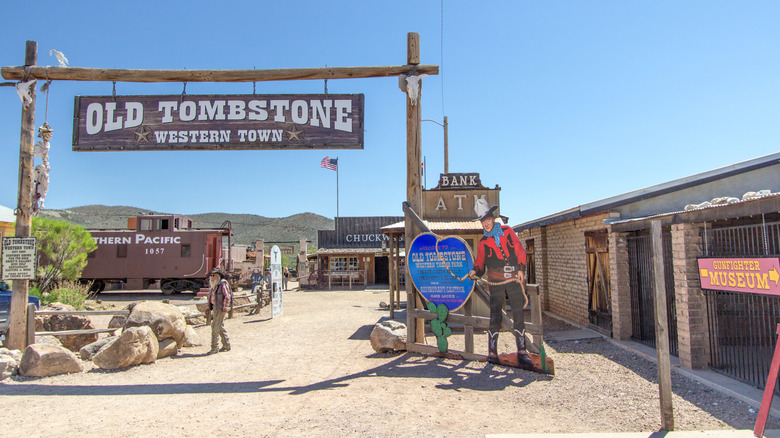
Recently, travel publications such as Far & Wide sparked a fiery debate by singling out the historic town as "Arizona’s Most Boring Tourist Trap." Critics argue that the destination has devolved into a glorified, over-commercialized theme park—complete with unauthentic replica buildings, redundant souvenir shops, and nickel-and-dime ticketing structures that treat history as a sideshow. Conversely, millions of visitors view the town through an entirely different lens. Pulling in over 300,000 annual visitors to a community of just 1,400 residents, Tombstone maintains remarkably high aggregate ratings on major consumer platforms like Google Maps and TripAdvisor. Its iconic attractions, such as the historic Bird Cage Theatre and live gunfight reenactments, routinely score upwards of 4.5 stars.
This comprehensive investigative feature unpacks the dichotomous reality of Tombstone, Arizona. By juxtaposing the complaints of disillusioned travelers against the enthusiastic endorsements of Western heritage aficionados, we examine whether the town is a vacuous tourist trap or an enduring, living monument to the American Wild West.
Detailed Chronology: From Boomtown to Silver Screen Immortality
To understand the modern friction surrounding Tombstone, one must first trace its rapid rise, catastrophic falls, and eventual resurrection as a pop-culture mecca.
[1877] Town Founded by Ed Schieffelin ➔ [1881] The O.K. Corral Gunfight ➔ [coffins & fires] 1880s Decline ➔ [1993] Hollywood Blockbuster Release ➔ [Present] Commercialized Frontier Hub
The Silver Rush and the Birth of a Legend (1877–1880)
The story of Tombstone began in 1877 when prospector Ed Schieffelin ventured into the hazardous Apache-dominated Arizona Territory in search of precious metals. Warned by scouts that he would find "nothing but your tombstone" out in the desert, Schieffelin proved them wrong by discovering a massive silver strike. He named his initial claim "Tombstone." Within a remarkably short period, the tent settlement exploded into a sprawling metropolis. By the early 1880s, Tombstone was the most productive silver mining district in the American Southwest, boasting an estimated population of 20,000 residents, roughly 100 saloons, a stock exchange, an opera house, and all the lawlessness characteristic of a frontier boomtown.
The Gunfight at the O.K. Corral (1881)
On October 26, 1881, the town cemented its place in history. A simmering, long-standing feud between the local law enforcement faction—led by Town Marshal Virgil Earp, alongside his brothers Wyatt and Morgan, and temporary deputy Doc Holliday—and a loosely organized band of outlaws known as the "Cowboys" (including Ike and Billy Clanton, and Tom and Frank McLaury) boiled over.
The resulting shootout near the O.K. Corral lasted roughly thirty seconds, leaving three cowboys dead and three lawmen wounded. Though the event was a localized tragedy at the time, subsequent decades transformed the shootout into the defining archetype of frontier justice.
Fires, Floods, and Hollywood Rebirth (Late 19th Century to 1993)
Tombstone’s meteoric rise was matched by its dramatic decline. Devastating fires swept through the business district in 1882 and 1884, and more critically, underground water mines flooded the silver shafts, rendering extraction economically unviable. By the turn of the 20th century, Tombstone was nearly a ghost town, losing its status as the county seat to neighboring Bisbee in 1929.
However, the town’s ghost-town trajectory was permanently altered by Hollywood. Through classic westerns starring actors like Burt Lancaster and Kirk Douglas (Gunfight at the O.K. Corral, 1957), and later cemented by George P. Cosmatos’s blockbuster Tombstone (1993) starring Kurt Russell and Val Kilmer, the town experienced a massive tourism renaissance. Travelers from across the globe began arriving in the desert to walk the very dirt streets where the Earps once patrolled.
Supporting Context & Metrics: The Numbers Behind the Debate
Evaluating whether Tombstone is an overhyped tourist trap requires analyzing quantitative data, visitor metrics, and consumer sentiment across major travel evaluation platforms.
Metric / Indicator
Statistical Data / Context
Consumer Sentiment & Evaluation
Annual Visitation
~300,000+ visitors per year
Demonstrates robust, steady global interest despite its remote geographic location.
Local Population
~1,400 permanent residents
Creates a massive visitor-to-resident ratio, amplifying the "tourist bubble" effect.
Google / TripAdvisor Ratings
Top 10 attractions average $ge$ 4.2 stars
Indicates high baseline satisfaction among general sightseers and families.
Bird Cage Theatre Rating
4.7 stars (Google Maps)
Widely praised for maintaining authentic mid-19th-century artifacts and historical integrity.
O.K. Corral Attraction
4.6 stars (Google Maps)
Remains a high-yield draw, though frequently critiqued for its historical site discrepancies.
Ticketing Structure
Independent fees ($5–$15 per site)
Often criticized as a nickel-and-dime system by budget-conscious travelers.
The Anatomy of the Criticisms
Critics who label Tombstone a "tourist trap" generally anchor their arguments on three primary pillars:
Architectural Inauthenticity: As travel reviewers on platforms like TripAdvisor frequently point out, the town’s famous main drag, Allen Street, is an engineered illusion. While the city famously tore up modern asphalt decades ago to restore a dirt-road aesthetic, many of the structures lining the street are not original 1880s constructions; they were rebuilt following the devastating historic fires or constructed within the last 40 years to cater to commercial demands. Furthermore, historians note that the actual 1881 shootout at the O.K. Corral technically occurred in a vacant lot adjacent to the actual corral property, muddying the historical accuracy for purists.
Commercial Over-Saturation: Publications like Only In Your State argue that the destination has leaned too heavily into kitsch. Visitors are routinely greeted by an endless row of gift shops all selling identical plastic sheriff badges, faux-cowboy leather goods, and mass-produced souvenirs.
The "Disneyland" Effect: Many detractors argue that the presence of costumed historical interpreters, scripted gunfight shows with comedic dialogue, and pervasive modern amenities strip the town of its authentic historical gravitas, leaving behind what some reviewers call a "strange, theme-park atmosphere."
The Defense: Why Visitors Keep Coming Back
Conversely, defenders and enthusiasts point out that dismissing Tombstone entirely overlooks its genuine historical assets.
Working Historic Town: As the Tombstone Chamber of Commerce frequently stresses, Tombstone is not a gated theme park; it is a functioning municipality with working citizens, real property owners, and open civic infrastructure. There are no turnstiles regulating entry to the town limits.
Economic Decentralization: The common complaint regarding separate admission fees ($5 to $15 per museum or show) is a byproduct of independent entrepreneurship. Unlike a corporate-owned theme park, individual historical sites—such as the historic courthouse, the Bird Cage Theatre, and the Mine Tour—are operated by separate owners who must independently fund structural preservation and historical maintenance.
The "Cowboy Core" Appeal: For families, international tourists, and fans of Americana, the theatrical nature of Tombstone is precisely its charm. The live stunt shows, historical reenactments, and preserved Victorian-era saloons offer an immersive portal into the mythos of the Old West that cannot be replicated purely through textbook reading.
Official Statements and Local Perspectives
The tension between historical preservation and modern commercial survival is a challenge faced by heritage tourism sites worldwide. Local stakeholders in Cochise County, Arizona, have long addressed these critiques directly.
"There is no turnstile to get into Tombstone. People come here expecting a sterile museum, but they find a living, breathing town that has survived fires, floods, and economic collapse. The businesses here are independently owned, and every dollar spent goes directly back into preserving our 19th-century architecture and keeping our history alive for the next generation."
— The Tombstone Chamber of Commerce(Official Visitor Guidelines & FAQ)
Local historians and business owners argue that without the commercial engine driven by tourism, the fragile Victorian-era architecture of Allen Street would have succumbed to structural decay decades ago. The influx of 300,000 annual visitors provides the essential tax base and private capital needed to maintain structures that would otherwise be lost to the harsh elements of the high Sonoran Desert.
Future Outlook: The Evolution of Frontier Heritage Tourism
As travel trends shift toward experiential and immersive vacations, Tombstone stands at a critical crossroads. The destination faces a clear dual mandate for the coming decades:
Elevating Historical Rigor: To combat lingering critiques of being an over-commercialized "trap," local preservation societies are increasingly investing in deeper historical education. Guided walking tours are placing a heavier emphasis on the complex socio-economic realities of 1880s mining life, going beyond the Hollywood mythology of Wyatt Earp and Doc Holliday to tell the diverse stories of the miners, immigrants, and Indigenous communities who shaped the region.
Balancing Kitsch and Authenticity: Tourism boards are working to diversify the visitor experience. While the comedic gunfight reenactments and souvenir shops will remain staple attractions for families and casual sightseers, expanding quiet-hours historic walking tours, ghost history programs, and museum partnerships will help satisfy purists seeking unvarnished historical context.
Final Verdict: Trap or Treasure?
Is Tombstone, Arizona, truly the "most boring tourist trap" in the state? The consensus answer from millions of travelers suggests an emphatic no.
While visitors seeking a strictly academic, museum-quality historical archive may find Allen Street’s commercial hustle overwhelming—and should perhaps consider exploring nearby Bisbee for its quieter, artsy high-desert charm—Tombstone remains America’s undisputed capital of "Cowboy Core." If you approach the destination with an appreciation for its theatricality, accept its independent commercial quirks, and look past the plastic sheriff badges to find the authentic 19th-century structures still standing against the desert sun, Tombstone remains an unforgettable, quintessential stop on any journey through the American Wild West.