










Executive Overview
In a watershed development for the Asia-Pacific aviation sector, South Korea’s low-cost carrier (LCC) market is on the brink of a radical structural transformation. Jin Air, Air Busan, and Air Seoul—three prominent budget airlines operating within the domestic and regional spheres—have officially executed a tripartite merger agreement.
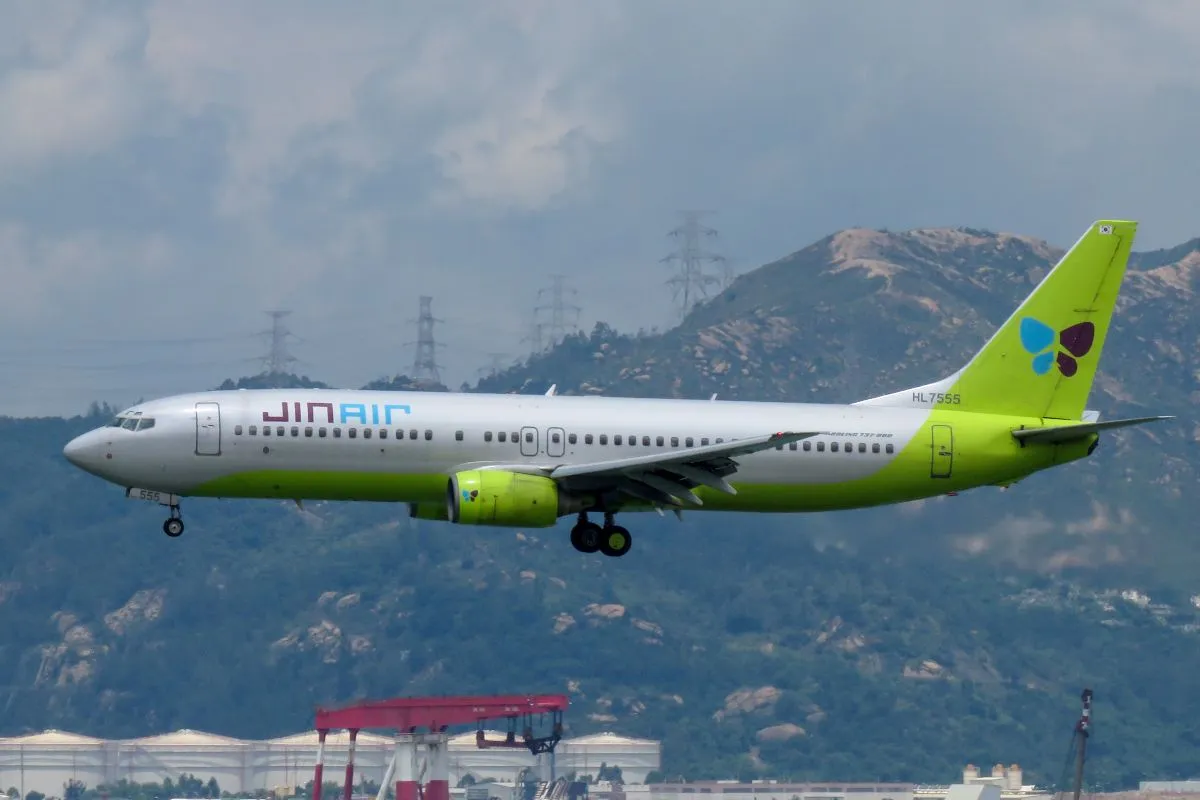
Under the terms of the historic pact, the three carriers will consolidate into a single, unified corporate entity that will retain the Jin Air moniker. Upon the finalization of the transaction, the newly enlarged Jin Air will instantly claim the crown of South Korea’s largest low-cost carrier, commanding an imposing fleet of 58 aircraft. This gargantuan scale will not only alter the domestic competitive balance but will also establish a dominant regional player capable of exerting formidable pricing and capacity pressures across short- and medium-haul international corridors.
The transaction, which cleared critical corporate hurdles when the respective boards of directors formally approved the deal and executed the merger agreement, targets an operational launch date of March 17, 2027. However, this timeline remains contingent upon the receipt of final clearances from corporate shareholders and rigorous regulatory oversight bodies.
This sweeping consolidation is the ultimate domino to fall in a structural realignment of the South Korean aviation market. It directly stems from the monumental, highly scrutinized acquisition of Asiana Airlines by Hanjin Group’s flagship carrier, Korean Air—a transformative consolidation process that has fundamentally reshaped the nation’s commercial aviation matrix over the past several years. As the dust settles on South Korea’s airspace, the birth of this mega-LCC signals a new era of ultra-competitiveness, operational efficiency, and network rationalization.
Detailed Chronology: From Parent-Company Consolidation to LCC Unification
To fully comprehend the gravity of the March 2027 launch date, one must trace the intricate timeline of corporate maneuvers and regulatory approvals that paved the way for this historic amalgamation. The integration of Jin Air, Air Busan, and Air Seoul is not an isolated business transaction; rather, it is the downstream consequence of the largest merger and acquisition (M&A) process in the history of South Korean commercial aviation.
The Catalyst: The Korean Air and Asiana Airlines Mega-Deal
The narrative began in earnest when Hanjin Group—the parent conglomerate of Korean Air—moved to acquire its historic domestic rival, Asiana Airlines. The proposed acquisition, first announced during the depths of the COVID-19 pandemic in late 2020, required a marathon of international regulatory clearances. Antitrust authorities across the globe, from the United States and the European Union to Japan and China, scrutinized the deal for potential monopolistic practices.
Following years of protracted negotiations, structural remedies, and concessions—including the divestment of certain cargo operations and slot relief on key European and Asian routes—the transaction cleared its final major hurdles. In December 2024, Korean Air officially assumed majority control of Asiana Airlines, transforming the national aviation landscape into a de facto dual-giant market dominated by a single full-service network carrier alongside a restructured competitive field.

The Ripple Effect on Budget Subsidiaries
As part of the structural restructuring mandated by the consolidation of the two full-service carriers, their respective low-cost subsidiaries could not remain untouched. Korean Air owned Jin Air, while Asiana Airlines held controlling stakes in both Air Busan and Air Seoul.
With Korean Air absorbing Asiana, maintaining three separate, competing low-cost subsidiaries under a unified ultimate parent company made little economic or strategic sense. Operating three distinct LCC brands with overlapping routes, redundant administrative overheads, and fragmented maintenance programs would have created severe internal inefficiencies. Consequently, corporate architects within Hanjin Group drafted a blueprint to merge the trio into a single, streamlined budget powerhouse.
The Agreement and the Road to March 2027
The momentum toward consolidation culminated on a pivotal Friday, when the boards of directors of Jin Air, Air Busan, and Air Seoul convened to review and approve the comprehensive merger terms. Following unanimous board-level approval, executives formally signed the binding merger agreement, setting off a multi-year transition period.
The corporate timeline moving forward is tightly choreographed:
- December 17, 2025: The formal legal merger of the parent holding companies is scheduled to take structural effect, cementing the administrative unification of the broader corporate groups.
- Throughout 2025–2026: A complex operational integration phase will unfold, harmonizing disparate reservation systems, aligning flight crew training protocols, standardizing ground handling procedures, and negotiating labor agreements across the three corporate cultures.
- March 17, 2027: The target date for the newly unified Jin Air to officially take to the skies under a single operating certificate and brand identity.
Supporting Context & Metrics: Anatomy of a 58-Aircraft Giant
The arithmetic of the new Jin Air reveals a formidable aviation enterprise designed to maximize economies of scale, drive down unit costs, and optimize fleet utilization. By fusing three distinct carriers—each with its own historical roots, operating bases, and customer value propositions—the resulting airline will possess structural advantages that few regional competitors can match.
Fleet Composition and Scale
Upon the completion of the merger, the consolidated Jin Air will boast a formidable active fleet of 58 aircraft. This scale dwarfs most independent low-cost operators in Northeast Asia and places the carrier on a footing comparable to major regional low-cost titans in Southeast Asia.
| Airline Entity | Approximate Fleet Size (Pre-Merger) | Primary Hubs / Bases | Core Market Focus |
|---|---|---|---|
| Jin Air | ~26 – 28 aircraft (Boeing 737 / 777) | Incheon International (ICN), Gimpo (GMP) | Domestic trunk routes, Regional East Asia, Guam/Saipan |
| Air Busan | ~21 – 23 aircraft (Airbus A320 / A321) | Gimhae International (PUS), Daegu (TAE) | Southeast regional hub, Japan, China, Southeast Asia |
| Air Seoul | ~6 – 7 aircraft (Airbus A321) | Incheon International (ICN) | Low-cost leisure routes to Japan, Southeast Asia |
| Unified Jin Air | 58 Aircraft | ICN, GMP, PUS, and regional bases | Pan-Asian Low-Cost Dominance |
Fleet Harmonization Challenges
While a 58-plane fleet offers undeniable economies of scale, it also presents significant operational hurdles. Historically, Jin Air has operated as an all-Boeing operator, flying a mix of Boeing 737NG aircraft alongside widebody Boeing 777-200ERs for high-density regional and trunk routes. Conversely, both Air Busan and Air Seoul have operated as all-Airbus carriers, relying heavily on the Airbus A320 family.
The resulting mega-Jin Air will inherit a mixed fleet comprising both Boeing and Airbus aircraft. Managing a mixed fleet introduces complex maintenance requirements, specialized pilot training pipelines, and fragmented spare-parts inventories—all of which can erode cost efficiencies if not managed meticulously. Analysts will be watching closely to see whether the unified airline moves toward eventual fleet commonality or maintains dual-manufacturer operations to leverage existing asset bases.
Network Rationalization and Hub Strategy
The merger brings together three distinct network architectures:
- Jin Air has traditionally served as the primary leisure and low-cost arm of Korean Air, operating extensive services out of Seoul’s dual airports (Incheon and Gimpo) to domestic destinations like Jeju, as well as regional hot spots in Japan, China, Southeast Asia, and Oceania.
- Air Busan has long functioned as the premier regional LCC based in the southeastern port city of Busan (Gimhae International Airport), acting as a vital international gateway for travelers outside the Seoul metropolitan area, bypassing congestion at Incheon.
- Air Seoul was established as a pure-play leisure carrier operating out of Incheon, targeting price-sensitive travelers heading to secondary and tertiary cities in Japan and Southeast Asia.
The integration of these networks will allow the new Jin Air to offer unprecedented connectivity. Passengers from the southeastern provinces (via Busan) will gain seamless access to expanded international networks, while Seoul-based travelers will benefit from optimized flight frequencies and enhanced schedule reliability.
Official Statements and Industry Reaction
The announcement of the merger has sent ripples through the regional aviation community, drawing commentary from industry executives, labor representatives, and aviation analysts. While corporate leadership has championed the deal as a necessary step toward long-term resilience and enhanced consumer choice, stakeholder groups have voiced nuanced perspectives regarding the transition.
Corporate Optimism and Strategic Vision
Speaking on condition of anonymity pending formal regulatory disclosures, senior executives close to the Hanjin Group integration team emphasized that the merger is designed to eliminate internal redundancies and fortify the carrier against macroeconomic headwinds, fuel price volatility, and intensifying foreign competition.
"The amalgamation of Jin Air, Air Busan, and Air Seoul represents a logical and imperative evolution for our aviation portfolio," noted a senior planning executive familiar with the merger architecture. "By concentrating our low-cost capabilities under a single, highly efficient brand, we unlock massive synergies in procurement, maintenance, network planning, and digital infrastructure. This is not merely about combining fleets; it is about building a world-class low-cost carrier capable of competing on a global scale."
Labor and Regional Considerations
Despite corporate enthusiasm, the merger has faced acute scrutiny from regional stakeholders—particularly in Busan. For years, local business leaders, civic groups, and municipal politicians have expressed deep concerns that absorbing Air Busan into a Seoul-centric entity (Jin Air) could diminish Busan’s status as a premier aviation hub and lead to the gradual relocation of high-value administrative and operational jobs to the capital region.
In response to these anxieties, leadership from both Korean Air and the regional carriers have engaged in continuous stakeholder dialogues. Assurances have been offered that Gimhae International Airport will retain a robust operational presence and that regional connectivity originating from Busan will be preserved, if not expanded, to satisfy local economic imperatives.
Labor unions representing employees across the three airlines have similarly focused on job security, wage harmonization, and seniority integration. Merging three distinct corporate cultures and seniority lists is notoriously complex. Union representatives have signaled their intent to monitor the operational integration closely, ensuring that workforce rights are protected throughout the multi-year transition leading up to the March 2027 launch.
Future Outlook: The New Competitive Landscape of South Korean Aviation
As the South Korean aviation market prepares for the official debut of the mega-Jin Air in March 2027, the industry is entering a definitive new epoch. The traditional duopoly of Korean Air and Asiana Airlines has given way to a consolidated giant leading the full-service sector, while the low-cost landscape has been radically streamlined into a dominant domestic leader alongside a few agile independent competitors (such as T’way Air and Jeju Air).
The Domestic and Regional Dogfight
The formation of a 58-aircraft Jin Air raises the competitive stakes for every player in the Northeast Asian low-cost arena. With unmatched scale, the unified carrier will possess aggressive pricing power on high-density trunk routes—most notably the fiercely contested Seoul (Gimpo) to Jeju island corridor, historically one of the busiest passenger air routes on Earth.
Furthermore, on short-haul international routes connecting South Korea to Japan, China, Taiwan, and Southeast Asia, the new Jin Air will enjoy superior scheduling flexibility. By deploying capacity dynamically across its combined Incheon, Gimpo, and Busan hubs, the airline can saturate high-demand leisure corridors while defending its market share against deep-pocketed foreign budget carriers.
Regulatory Oversight and Consumer Impact
Regulatory bodies, including the Korea Fair Trade Commission (KFTC) and the Ministry of Land, Infrastructure and Transport (MOLIT), will maintain strict vigilance throughout the transition period. Regulators are expected to impose behavioral remedies—such as slot caps on certain routes or fare-monitoring mechanisms—to ensure that the consolidation does not result in anti-competitive pricing behavior or diminished service quality for consumers.
For the traveling public, the transition promises a mixed bag of potential outcomes. On one hand, passengers can anticipate a more cohesive loyalty program, streamlined booking interfaces, and an expansive network spanning domestic and international leisure destinations. On the other hand, consumer advocacy groups will remain vigilant to ensure that reduced competition on specific regional routes does not translate into inflated airfares.
Conclusion
The agreement to merge Jin Air, Air Busan, and Air Seoul marks the end of an era of fragmented low-cost operations in South Korea and the dawn of a streamlined, highly concentrated aviation ecosystem. As the corporate machinery grinds toward the target operational date of March 17, 2027, all eyes will be on Hanjin Group and the executive leadership of the merging carriers to execute a seamless operational integration. If successful, the resulting 58-aircraft powerhouse will not only redefine the boundaries of South Korean low-cost aviation but will also cast a long, formidable shadow across the skies of Northeast Asia for decades to come.