Every year, millions of recreational boaters and commercial mariners take to the inland waterways, territorial seas, and the high seas. While the vast majority of voyages conclude uneventfully, the dynamic and unforgiving nature of the marine environment means that emergencies can develop rapidly. Engine failures, sudden squalls, hull breaches, onboard fires, and medical crises can transform a peaceful day on the water into a life-or-threatening situation in a matter of moments. When these crises occur, one of the most critical links in the survival chain is the ability to signal for help effectively.
Visual distress signals (VDS) serve as the ultimate lifeline for mariners in peril, designed to alert nearby vessels, aviation assets, and rescue authorities to a life-threatening situation and pinpoint the exact location of those in need. However, possessing safety equipment is only half the battle; mariners must understand the stringent regulatory frameworks governing VDS, the distinct differences between daytime and nighttime requirements, the safe handling of pyrotechnics, and the integration of modern electronic alternatives and emergency beacons.
This comprehensive guide, informed by decades of on-water rescue expertise and updated federal maritime standards, explores the intricacies of marine visual distress signals. Designed for both novice skippers and seasoned captains, this article provides an authoritative breakdown of regulatory compliance, equipment categorization, operational best practices, and strategic deployment to ensure that when the worst happens, you are thoroughly prepared to signal for rescue and survive.
Detailed Chronology: The Evolution and Regulatory Framework of Marine Safety
The requirement to carry visual distress signals is not merely a bureaucratic hurdle; it is the culmination of more than a century of maritime tragedy, technological innovation, and regulatory refinement. Understanding how modern VDS standards came to be requires a look at how maritime safety oversight has evolved alongside the rapid growth of recreational boating.
Early Maritime Traditions and the Birth of Universal Signals
In the early days of steamships and wooden schooners, distress communication relied on crude methods: firing a continuous series of blank cannon shots, waving flags upside down, or burning tar barrels on deck. By the late 19th century, the international maritime community recognized the urgent need for standardization. The first formalized rules for preventing collisions at sea began incorporating universally recognized signals, paving the way for the red pyrotechnic flare—which mimics the chemical composition of fireworks to produce an unmistakable, highly luminous hue associated with danger across cultures.
The Codification of Federal Requirements (Mid-to-Late 20th Century)
As recreational boating exploded in popularity following World War II, waterways became congested, and search and rescue (SAR) agencies faced an unprecedented number of missing or disabled vessels. In response, maritime authorities around the globe—and specifically the United States Coast Guard (USCG) under federal law—began establishing mandatory equipment carriage requirements.
During the 1970s and 1980s, the regulatory framework matured into the modern system codified in the Code of Federal Regulations (CFR). These rules established clear distinctions based on vessel length, operating areas (such as coastal waters versus protected inland rivers), and the time of day. The advent of SOLAS (Safety of Life at Sea) standards further ensured that commercial-grade pyrotechnics met rigorous international benchmarks for performance, burn time, and luminosity.
The Digital Revolution and Modern Standards (21st Century)
Entering the 21st century, the marine safety landscape experienced a paradigm shift with the introduction of electronic visual distress signal devices (eVDSDs) and sophisticated satellite-based emergency beacons (EPIRBs and PLBs). Recognizing the environmental and safety hazards associated with pyrotechnic expiration dates and accidental flare discharges, regulatory bodies began approving LED-based electronic signals that could meet nighttime requirements without the risks of open flames or hot slag. Today, modern regulations continue to evolve, balancing legacy pyrotechnic reliability with sustainable, reusable electronic alternatives, ensuring that mariners have access to the most effective life-saving tools available.
Supporting Context & Metrics: Understanding VDS Requirements and Equipment
Navigating the web of federal and state laws regarding visual distress signals requires a granular understanding of where, when, and how rules apply. The legal mandates governing VDS are deeply intertwined with vessel specifications, geographical boundaries, and environmental conditions.
+---------------------------------------------------------------------------------+
|                    VISUAL DISTRESS SIGNAL CARRIAGE MATRIX                       |
+--------------------------+-----------------------+------------------------------+
| Vessel Characteristic    | Day Requirement       | Night Requirement            |
+--------------------------+-----------------------+------------------------------+
| Under 16 Feet (Open)     | Only when operating   | Only when operating          |
|                          | at night              | at night                     |
+--------------------------+-----------------------+------------------------------+
| Over 16 Feet             | Mandatory (Approved   | Mandatory (Approved          |
|                          | day signal or 3-in-1) | night signal or 3-in-1)      |
+--------------------------+-----------------------+------------------------------+
| Ocean / Great Lakes      | 3 Day/Night Pyros     | 3 Day/Night Pyros            |
|                          | OR 1 Day + 1 Night    | OR 1 Day + 1 Night           |
+--------------------------+-----------------------+------------------------------+
When Are Visual Distress Signals Legally Required?
Federal regulations mandate that vessels operating on the high seas, the Great Lakes, territorial seas, and certain connected waters directly communicating with them must carry Coast Guard-approved visual distress signals.
Vessel Size Exceptions: Generally, boats under 16 feet in length, manually propelled craft (canoes, kayaks, and rowboats), and open sailboats under 26 feet with no auxiliary engine are exempt from carrying daytime signals. However, all vessels operating between sunset and sunrise must carry approved nighttime distress signals when operating on applicable waters.
State vs. Federal Jurisdictions: While federal rules set the baseline, individual states often enforce supplementary boating safety laws. Certain inland lakes and rivers that fall outside federal jurisdiction may still have specific state-level safety equipment mandates. Mariners are legally obligated to verify both federal Coast Guard guidance and local state statutes before casting off.
Daytime vs. Nighttime Operational Realities
One of the most common operational errors mariners make is failing to distinguish between signals designed for daylight visibility versus those engineered for darkness.
Daytime Signals: Must be easily distinguishable against a sunlit horizon and bright background. Examples include orange smoke signals, orange distress flags with black squares and circles, and daytime pyrotechnic displays. A simple white flashlight or a daylight flag alone will fail to meet nighttime requirements.
Nighttime Signals: Must be visible after dark. This category includes red handheld flares, aerial meteor flares, and USCG-approved electronic flashing lights.
Combination Devices: Many pyrotechnic devices—such as certain combination red aerial flares—are certified for both day and night use. For vessels operating across dusk and dawn boundaries, carrying a combination of certified day/night pyrotechnics or a compliant electronic light paired with an orange daytime flag is mandatory.
Categorizing the Arsenal: Pyrotechnic and Electronic Devices
1. Pyrotechnic Marine Flares
Pyrotechnic signals remain the gold standard for urgency, commanding immediate attention due to their intense luminosity, smoke output, and trajectory. However, they carry inherent risks:
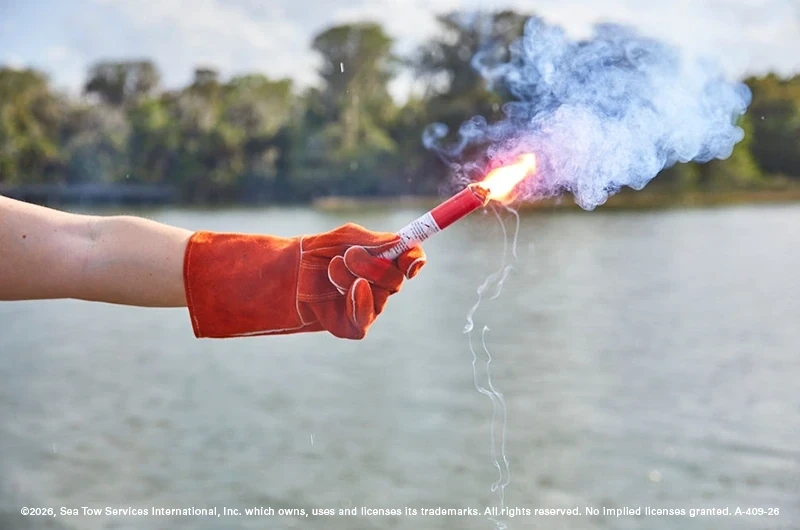
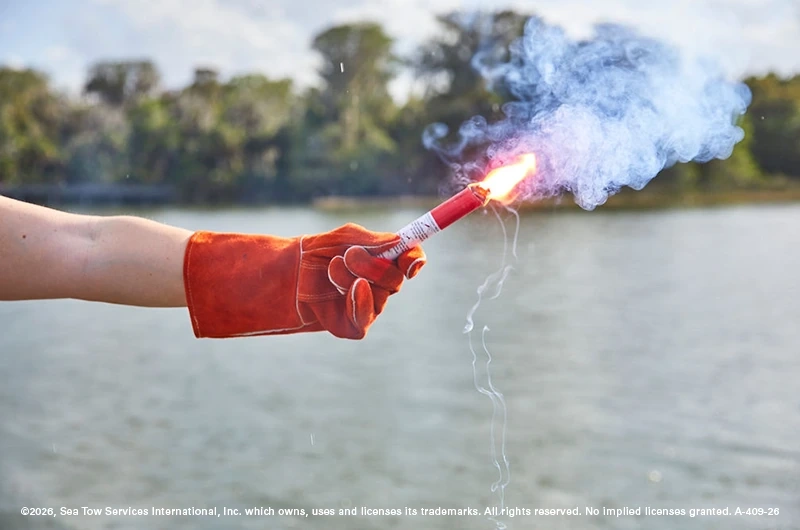
Handheld Red Flares: Produce an ultra-bright red flame meant for nighttime signaling. They must be held downwind and outboard over the gunwale to prevent burning slag and chemical residue from damaging the vessel, rigging, or injuring passengers.
Aerial Flares and Meteor Signals: Launched into the air to achieve high altitude visibility, alerting rescuers across a vast geographic radius. They require strict adherence to manufacturer instructions and must be aimed safely away from people, sails, structures, and low-flying aircraft.
Orange Smoke Signals: Exclusively for daytime use, these canisters billow thick orange smoke, helping aircraft and nearby vessels pinpoint position and determine wind direction during search operations.
Crucial Safety Warning: Never discharge a pyrotechnic flare for practice or recreation unless conducted in a controlled, authorized training exercise sanctioned by local maritime authorities. False distress signals trigger expensive, hazardous emergency responses, risk severe burns or structural fires, and carry heavy legal penalties.
2. Electronic Visual Distress Signal Devices (eVDSDs)
Modern LED-based electronic distress signals offer a sustainable, reusable alternative to pyrotechnics.
Performance & Compliance: An approved eVDSD produces a repeating rescue light pattern (typically an S-O-S distress sequence in Morse code) without open flames, dangerous hot slag, or expiration dates.
Regulatory Caveat: To satisfy nighttime carriage requirements, the electronic device must explicitly carry a USCG-approval label stating it meets 46 CFR 161.013 standards. An ordinary handheld flashlight, headlamp, or smartphone screen does not qualify. Furthermore, most electronic devices must be paired with an approved orange daytime flag to fulfill total 24-hour carriage rules.
Maintenance: Unlike sealed pyrotechnics, electronic devices demand active upkeep. Mariners must regularly inspect housing seals, switches, and lenses, and ensure fresh, uncorroborated batteries are installed or rechargeable units are fully powered according to manufacturer guidelines.
3. Orange Distress Flags and Improvised Aids
Orange Flags: Constructed from durable fabric featuring a black square and ball symbol, these flags are reusable daytime markers. They can be hoisted on a mast, boathook, or paddle to maximize height and line-of-sight visibility.
Mirrors, Flashlights, and Signaling Tools: Signal mirrors can direct concentrated sunlight directly toward the windshield of a passing aircraft or the bridge of a vessel. While exceptionally effective in clear weather, these serve as supplemental tools and generally do not replace mandatory certified equipment.
4. EPIRBs, PLBs, and Rescue Beacons
It is a widespread misconception that Emergency Position-Indicating Radiobeacons (EPIRBs) and Personal Locator Beacons (PLBs) are visual distress signals.
The Distinction: Rescue beacons are electronic transmitting devices that communicate via satellite networks directly to the Cospas-Sarsat search and rescue grid.
Synergy: Beacons do not produce light or smoke for visual confirmation. Instead, they provide high-precision coordinate data to initiate and direct a rapid SAR response, while visual signals (like flares and electronic lights) allow arriving rescuers to pinpoint your exact micro-location in the final stages of the search.
Official Statements and Industry Expert Insights
Maritime safety organizations, law enforcement agencies, and rescue professionals continuously emphasize that equipment ownership must be paired with operational readiness.
Commander Marcus Vance of the United States Coast Guard Boating Safety Division noted in a recent maritime safety symposium:
"Carrying safety gear to check a legal box is a dangerous gamble. When a vessel is taking on water in thirty-knot winds and pitch-black seas, panic sets in. Every passenger on board should not only know where the visual distress signals are stowed but must understand how to deploy them instantly without hesitation. Preparedness is the ultimate divider between a close call and a fatality."
Echoing this sentiment, Sarah Jenkins, Director of Operations at Sea Tow Services International, highlighted the importance of communication discipline:
"We frequently respond to non-emergency requests where boaters have panicked and fired expensive, dangerous pyrotechnic flares for a routine engine breakdown or a simple out-of-gas situation. Flares scream ‘life-in-danger.’ They demand an immediate, multi-agency emergency response that pulls resources away from actual life-or-death scenarios. Boaters must utilize VHF radios, mobile apps, and commercial assistance networks for non-emergency mechanical breakdowns, reserving visual flares strictly for grave and imminent peril."
Future Outlook: The Next Generation of Marine Safety
As marine technology advances, the future of visual distress signals and on-water safety is rapidly shifting toward integration, automation, and sustainability.
1. Smart Integration and IoT on the Water
The next decade will see deeper integration between emergency signalling and onboard marine electronics (MFD chartplotters, VHF radios with integrated DSC, and smart-device apps). Future electronic distress signals will likely feature automated distress-alert broadcasting simultaneous with visual strobe activation, transmitting GPS coordinates directly to nearby vessels via VHF Digital Selective Calling (DSC).
2. Eco-Friendly and Biodegradable Pyrotechnics
Environmental concerns regarding traditional pyrotechnic chemical residues and non-biodegradable plastic casings are driving manufacturers to engineer eco-friendly flares. Innovations in biodegradable shell casings and non-toxic chemical formulations will reduce marine pollution while maintaining the high-intensity illumination required for survival situations.
3. Advanced Laser and Infrared Signaling
While traditional visible-light flares dominate current regulations, military and aviation rescue technologies are trickling down to the civilian recreational market. High-powered laser pointers optimized for daytime and nighttime signaling, alongside infrared (IR) strobes visible exclusively to night-vision equipped rescue aircraft, represent the cutting edge of personal marine survival gear.
Conclusion: Actionable Takeaways for Mariners
Ensuring your vessel is properly equipped with visual distress signals requires a proactive, methodical approach. To safeguard your passengers and comply with maritime law, adhere to the following best practices before every voyage:
Audit Your Inventory: Check expiration dates on all pyrotechnic flares. Remember that expired flares lose chemical stability and typically do not satisfy legal carriage requirements (though they may be retained separately in a labeled container as unapproved backups if permitted locally).
Match Equipment to Route: Ensure your onboard suite covers both daytime and nighttime requirements based on your specific vessel size, operating hours, and local waterways.
Ensure Accessibility: Never bury distress signals at the bottom of a damp locker or under heavy gear. Store them in waterproof, clearly marked containers located within arm’s reach of the helm.
Educate Your Crew: Conduct regular safety briefings. Ensure every regular passenger knows the exact storage location of the flare kit, electronic signals, and life jackets, and understands the basics of safe deployment.
Reserve Flares for True Emergencies: Use marine flares exclusively when life, limb, or the vessel is in immediate jeopardy. For routine tows, mechanical failures, or non-urgent assistance, rely on marine VHF radio channels (such as Channel 16 for hailing, followed by working channels), commercial towing memberships, or cellular applications.
By combining meticulous equipment maintenance, regulatory compliance, and sound judgment, mariners can navigate with confidence, ensuring that when assistance is required, the signal rings loud, clear, and safe.