




Executive Overview
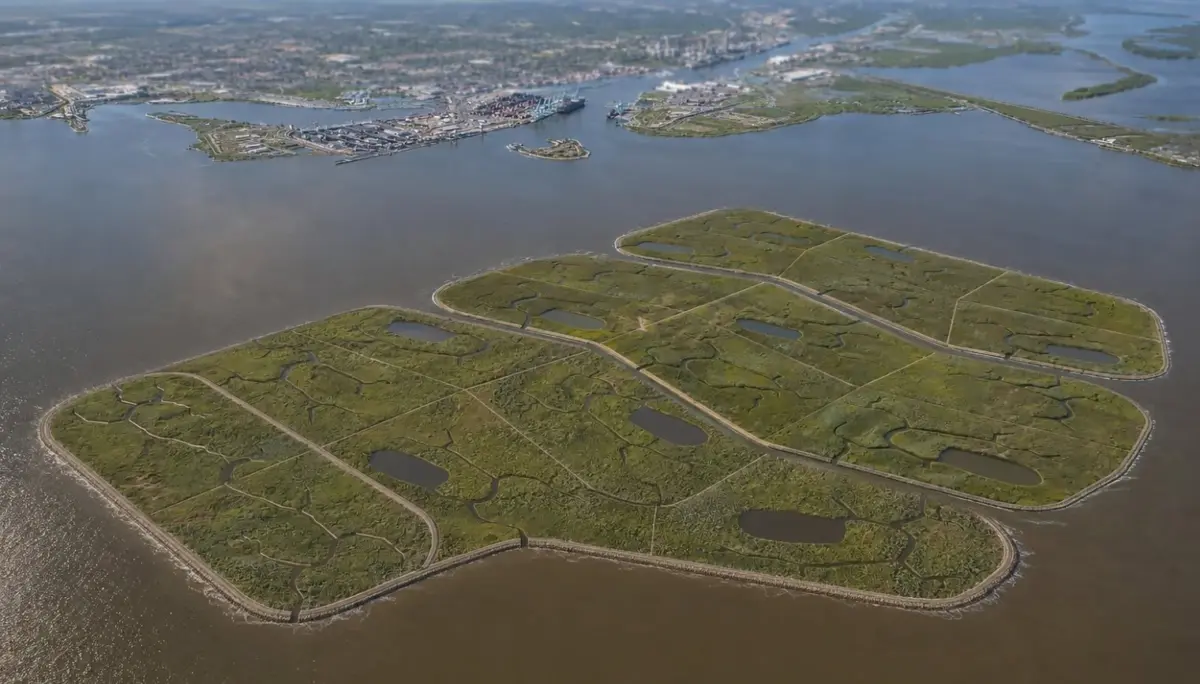
In a landmark investment toward the long-term ecological and economic vitality of Alabama’s coastline, Governor Kay Ivey has announced a comprehensive funding package exceeding $52 million destined for 21 vital coastal projects. Among the headline beneficiaries of this expansive initiative is the Alabama Port Authority, which has been awarded a critical $5 million injection via the Gulf of Mexico Energy Security Act of 2006 (GoMESA). This dedicated capital will directly support the Upper Mobile Bay Wetlands Creation Project, an ambitious environmental engineering endeavor designed to harmonize industrial maritime operations with robust coastal restoration.
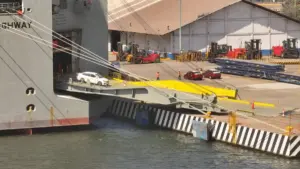
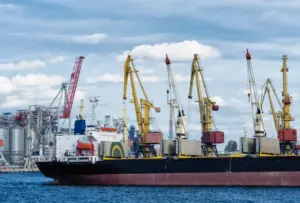
The infusion of GoMESA funding arrives at a pivotal juncture for the Port of Mobile, an economic engine for the region that handles millions of tons of cargo annually. Routine berth and channel maintenance dredging are absolute prerequisites for the port’s continued viability and competitiveness in global trade. Historically, the management of dredged sediment presented both logistical hurdles and environmental concerns. However, the Upper Mobile Bay Wetlands Creation Project represents a paradigm shift: turning industrial maintenance byproducts into valuable ecological assets.
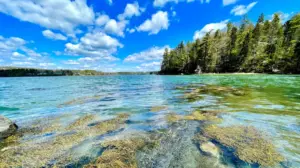
By strategically repurposing nutrient-rich dredge material, the initiative will construct and sustain vital coastal wetlands. These newly engineered habitats will serve multifaceted roles—acting as natural shock absorbers against tropical storm surges, improving overall water quality within the bay, and resurrecting critical breeding and feeding grounds for local marine life and migratory birds. Administered locally through the Alabama Department of Conservation and Natural Resources (ADCNR) with final approval from the Governor’s Office, this allocation underscores a coordinated state strategy to fortify Alabama’s marine borders against rising sea levels, erosion, and ecological degradation.
Detailed Chronology: The Evolution of GoMESA and the Path to Mobile Bay’s Restoration
To fully grasp the significance of the $5 million allocation for the Upper Mobile Bay Wetlands Creation Project, one must trace the historical framework that makes these funds possible, alongside the step-by-step evolution of the wetland restoration initiative itself.
The Genesis of GoMESA
Enacted by the United States Congress in December 2006, the Gulf of Mexico Energy Security Act was designed to establish revenue-sharing mechanisms between the federal government and the four primary Gulf-producing states: Alabama, Mississippi, Louisiana, and Texas. Under GoMESA provisions, these states and their eligible coastal political subdivisions receive a 37.5 percent share of qualified revenues generated from Outer Continental Shelf (OCS) oil and gas leases issued after the legislation’s baseline date.
Over nearly two decades, GoMESA has functioned as a lifeline for coastal states, providing a steady, reliable stream of non-general-fund capital earmarked specifically for:
- Coastal protection and restoration, including wetland and barrier island preservation.
- Mitigation of damage to fish, wildlife, and natural resources.
- Implementation of integrated coastal management plans.
- Local infrastructure projects directly impacted by outer continental shelf energy activities.
The Roadmap of the Upper Mobile Bay Wetlands Creation Project
The journey toward realizing the Upper Mobile Bay Wetlands Creation Project has been years in the making, defined by strategic planning, cross-agency collaboration, and phased capital acquisition.
- Conception and Feasibility Studies (Late 2010s): Recognizing the rising volume of maritime traffic and the corresponding necessity for increased berth depths, port engineers and environmental scientists began evaluating sustainable disposal methodologies. Open-water disposal was increasingly viewed as suboptimal, prompting the conceptualization of beneficial use placement within Upper Mobile Bay.
- Initial RESTORE Council Support: The project gained substantial early momentum through allocations from the RESTORE Council (Gulf Coast Ecosystem Restoration Council), which provided the initial funding required to engineer and construct the project’s foundational 100 acres. These initial phases served as a testing ground for sediment placement techniques and hydrological modeling.
- Integration with Broader State Funding (August 2026): Governor Ivey’s announcement of $52 million across 21 coastal projects formally integrated the latest $5 million GoMESA tranche into the project’s financial architecture. This new capital builds directly upon the RESTORE Council’s prior contributions, ensuring that the engineering teams can seamlessly transition from the initial 100-acre footprint into broader, scaled construction phases.
- Current Implementation Phase: With the $5 million now secured and administered through the ADCNR, project managers are scaling up equipment deployment, coordinating dredging schedules with the U.S. Army Corps of Engineers and private contractors, and ramping up biological monitoring to track the rapid colonization of newly formed marshlands.
Supporting Context & Metrics: Dredging, Beneficial Use, and Environmental Metrics
The intersection of maritime commerce and ecological engineering is nowhere more apparent than in Mobile Bay. Understanding the mechanics of the Upper Mobile Bay Wetlands Creation Project requires a deep dive into the operational metrics of the port and the science of beneficial use dredging.
The Economic and Operational Engine: Port of Mobile
The Port of Mobile is a cornerstone of Alabama’s economy, supporting tens of thousands of direct and indirect jobs and generating billions of dollars in economic output. To maintain its status as a premier global gateway, the port must accommodate increasingly large container vessels, bulk carriers, and general cargo ships.
However, natural siltation—driven by the convergence of the Mobile and Tensaw rivers emptying into Mobile Bay—means that berths and navigation channels continuously accumulate sediment. Maintaining navigable depths requires routine maintenance dredging. Historically, millions of cubic yards of sediment were dredged annually from the harbor floors.
Transforming Waste into Habitat: The Science of Beneficial Use
"Beneficial use" refers to the practice of taking material dredged from navigation channels and putting it to productive ecological or engineering use rather than treating it as waste to be discarded in offshore or upland disposal sites.
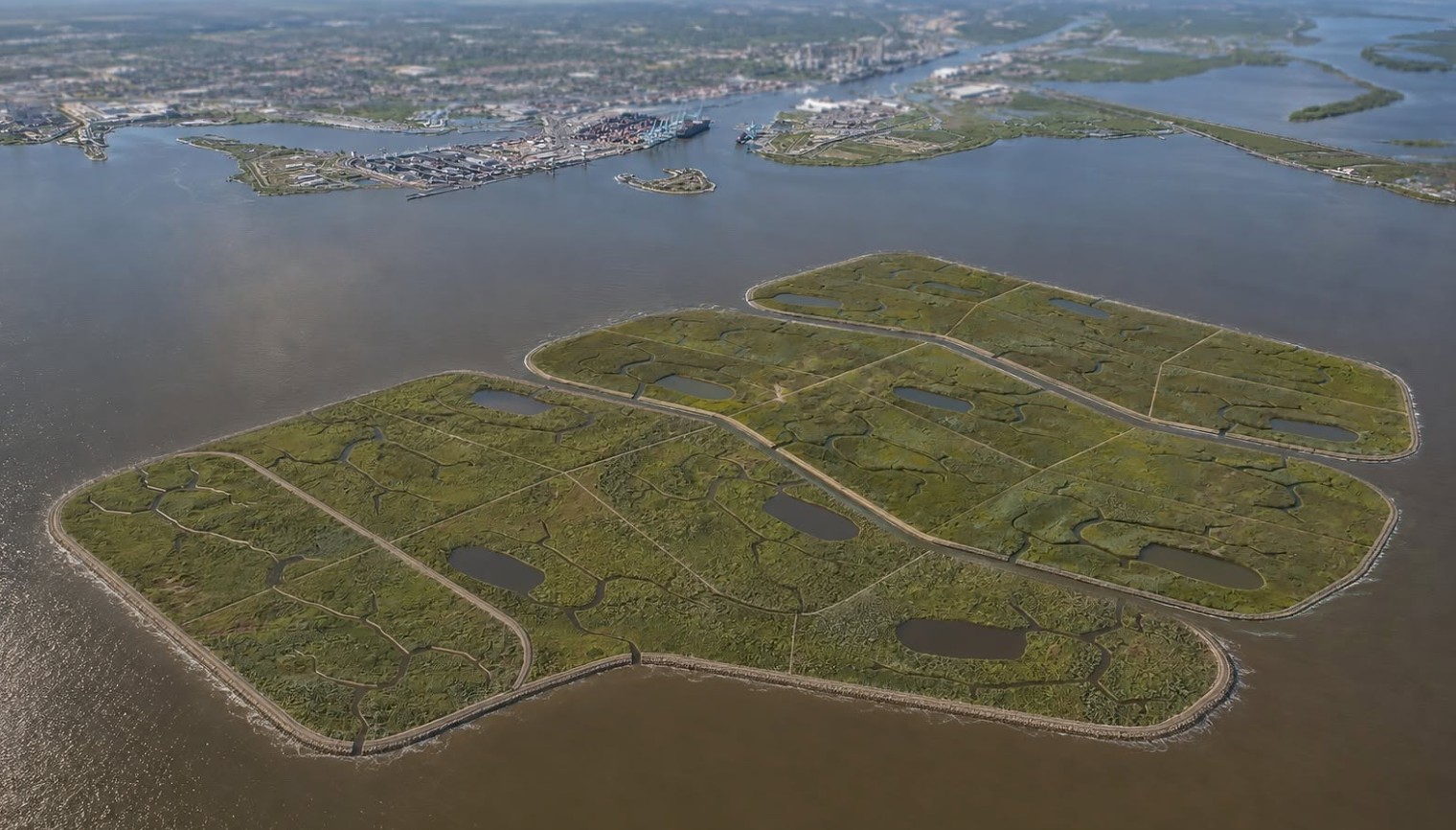
- Sediment Composition: The sediment dredged from the upper reaches of Mobile Bay is rich in organic matter, clays, and silts, making it an ideal substrate for marsh vegetation such as Smooth Cordgrass (Spartina alterniflora) and Black Needlerush (Juncus roemerianus).
- Elevation Control: Through precise bathymetric surveying and hydraulic pipeline dredging, project engineers pump the slurry into containment dikes or strategic low-energy shallow water zones. By carefully controlling the final elevation of the sediment, engineers create optimal intertidal zones where wetland plants can rapidly take root.
- Habitat Creation: The creation of these wetland matrices instantly transforms barren or deepwater areas into dynamic nurseries for commercially and recreationally vital marine species, including brown shrimp, blue crabs, red drum, and spotted seatrout.
Quantifying Environmental Resilience
The ecological metrics associated with the Upper Mobile Bay Wetlands Creation Project highlight its long-term value:
- Wave Attenuation: Healthy coastal marshes can reduce wave energy by up to 50 percent over a short distance, significantly protecting adjacent shorelines from erosion during severe weather events.
- Water Filtration: Wetland vegetation and associated microbial communities act as natural biofilters, absorbing excess nutrients (such as nitrogen and phosphorus) and trapping suspended solids, thereby improving overall water clarity and dissolved oxygen levels in the bay.
- Carbon Sequestration: Often referred to as "blue carbon," coastal wetlands bury carbon at rates up to ten times higher than tropical rainforests per unit area, contributing meaningfully to regional carbon mitigation goals.
Official Statements and Stakeholder Perspectives
The announcement of the $52 million coastal funding package—and the specific $5 million allocation for the Upper Mobile Bay Wetlands Creation Project—elicited strong endorsements from state leaders, environmental stewards, and maritime authorities.
Governor Kay Ivey’s Vision for Coastal Alabama
In her comprehensive funding announcement, Governor Ivey emphasized the irreplaceable value of Alabama’s coastline and the state’s proactive stance on stewardship.
"Coastal Alabama is not only a natural treasure that defines our state’s identity and heritage, but it is also a vital economic powerhouse," Governor Ivey stated. "By strategically investing our GoMESA revenues into high-impact initiatives like the Upper Mobile Bay Wetlands Creation Project, we are ensuring that economic growth and environmental preservation go hand-in-hand. We are building a more resilient coast for our children and grandchildren."
The Alabama Port Authority’s Operational Perspective
The Alabama Port Authority, tasked with managing the state’s deep-water shipping lanes, highlighted the symbiotic relationship between commercial dredging and ecological restoration. In an official release, the Authority noted:
"Berth dredging is essential to continued operations at the Port of Mobile, and this project will allow us to put that dredged material to beneficial use — creating new critical habitat for wildlife, improving water quality and making Mobile Bay more resilient."
ADCNR’s Administrative Role
Administered via the Alabama Department of Conservation and Natural Resources (ADCNR) under the guidance of the Governor’s Office, the distribution of GoMESA funds represents a masterclass in inter-agency cooperation. Conservation officials have repeatedly emphasized that scientific rigor guides every dollar spent. Biologists and coastal engineers from ADCNR work hand-in-hand with federal partners, port authorities, and academic researchers to ensure that every acre of wetland created meets stringent ecological standards, maximizing biodiversity gains and long-term structural stability against storms and rising sea levels.
Future Outlook: Sustaining Momentum in Coastal Engineering
As the Upper Mobile Bay Wetlands Creation Project advances beyond its initial 100-acre milestone—bolstered by the recent $5 million GoMESA injection—the long-term outlook for Mobile Bay’s ecosystem and maritime economy is remarkably optimistic.
Scaling Up Restoration Efforts
The success of the initial phases has laid a proven blueprint for future expansion. With continuous revenue streams guaranteed through ongoing GoMESA distributions and complementary federal funding mechanisms like the RESTORE Act, state officials are already eyeing subsequent phases of wetland construction across additional sectors of Mobile Bay. This scalable approach ensures that as long as the Port of Mobile requires maintenance dredging to remain competitive, the resulting sediment will be systematically funneled into ecological uplift rather than environmental degradation.
Integration with Comprehensive Coastal Master Plans
Furthermore, the Upper Mobile Bay project is not operating in a vacuum. It is part of a broader, highly coordinated coastal master planning effort in Alabama that encompasses shoreline stabilization, oyster reef restoration, living shorelines, and hydrologic restoration. By linking these disparate projects into a unified defensive and ecological network, Alabama is positioning itself as a national leader in adaptive coastal management.
Economic and Ecological Coexistence
Ultimately, the narrative surrounding the Upper Mobile Bay Wetlands Creation Project serves as a powerful counter-narrative to the false dichotomy often drawn between industrial progress and environmental protection. By proving that the operational necessity of keeping shipping lanes deep can directly fuel the creation of rich, resilient coastal wetlands, the State of Alabama, the Alabama Port Authority, and state conservation agencies have established a sustainable model for the future. As construction progresses and the newly formed marshes flourish, Mobile Bay will stand not only as a bustling commercial gateway to the world, but as a thriving, self-sustaining sanctuary for the natural ecosystems that make the Gulf Coast unique.