









Executive Overview
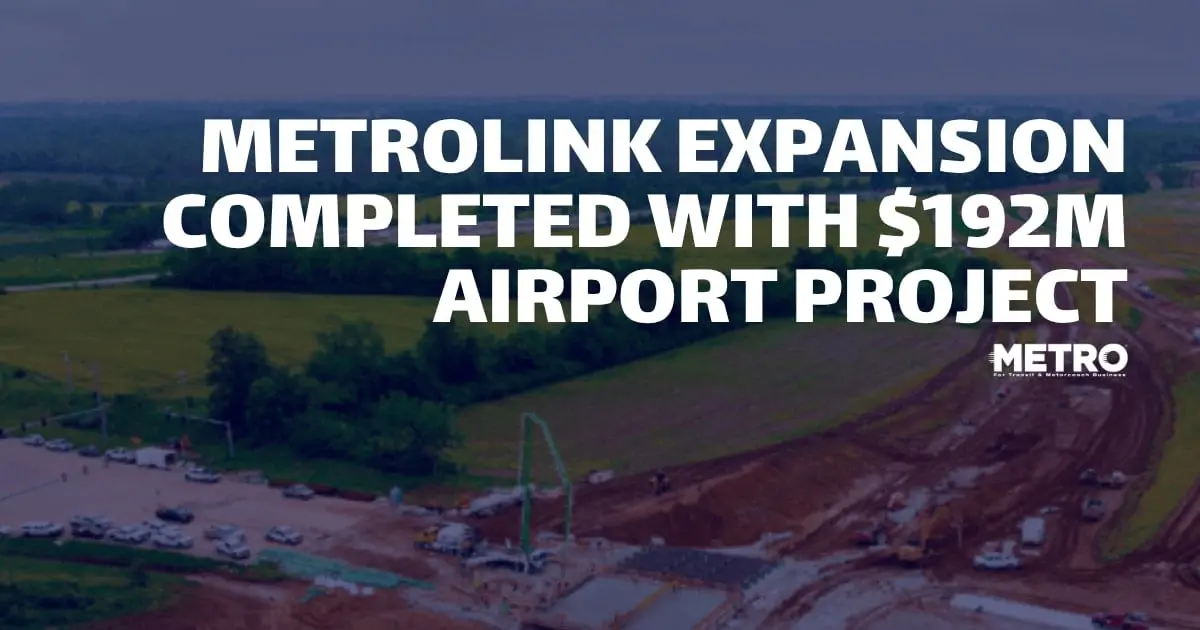
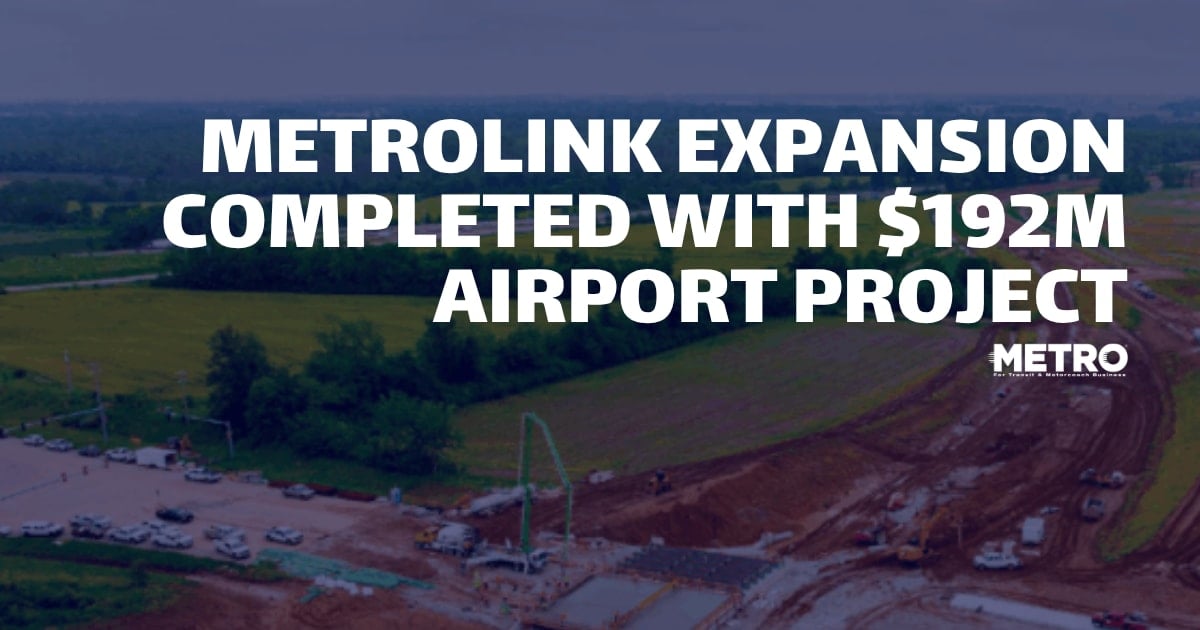
In a milestone achievement for regional infrastructure and bi-state mobility, St. Louis-based Metro Transit, alongside Illinois Governor JB Pritzker, St. Clair County leaders, transportation officials, project partners, and community stakeholders, recently celebrated the official completion of construction on the MetroLink Extension to MidAmerica St. Louis Airport.
This $192 million multi-modal investment is designed to fundamentally strengthen regional connectivity, radically expand transportation options, and catalyze long-term economic growth throughout St. Clair County and the wider bi-state St. Louis metropolitan area.
The culmination of this massive undertaking was marked by a high-profile celebration where over 100 dignitaries, workers, and transit advocates gathered to hear formal remarks from state and local leaders. The event featured an official ribbon-cutting ceremony at the brand-new MidAmerica St. Louis Airport MetroLink Station, followed by an inaugural passenger ride along the newly constructed rail line.
With construction officially wrapped up, the project has entered an intensive phase of testing and systems integration. Regular passenger revenue service is anticipated to commence in the coming months, turning a decades-long vision into tangible reality.
Notably, this ambitious infrastructure undertaking was delivered entirely on time and achieved a rare financial feat for a project of this scale: it was fully funded through state and local partnerships without incurring any federal debt, placing zero additional financial burden or long-term tax liabilities on local residents.
Detailed Chronology and Project Scope
The MetroLink Extension is not merely a rail project; it is a comprehensive, three-part multi-modal initiative engineered to seamlessly link two major St. Louis-area airports while weaving together robust roadway networks and regional bike trail connections.
For years, planners recognized a critical gap in the region’s transportation grid: while St. Louis Lambert International Airport enjoyed direct light rail connectivity, MidAmerica St. Louis Airport—a vital and growing civilian facility operating in tandem with Scott Air Force Base—remained largely isolated from the region’s high-capacity transit backbone. The completion of this extension closes that gap, creating a continuous, 43-mile light rail transit system that directly bridges the two aviation hubs.
The Three Pillars of the Expansion
- The Light Rail Extension: The centerpiece of the project is the newly minted 39th station in the MetroLink system. Situated at MidAmerica St. Louis Airport, this station provides passengers with a direct, single-seat or seamless transfer rail link straight through to St. Louis Lambert International Airport.
- Roadway Enhancements: To ensure the surrounding infrastructure could handle increased traffic and improve logistical access, the project incorporated significant roadway upgrades. This includes a brand-new, 2.4-mile access roadway stretching from Rieder Road to Airport Boulevard. This new corridor ties directly into Interstate 64, establishing an entirely fresh, highly efficient entryway into the airport. Additionally, a crucial 1/3-mile extension of Rieder Road was constructed from Wherry Road directly to Scott Air Force Base’s Cardinal Creek Gate, offering military personnel and civilian defense workers a much more direct, secure route.
- Active Transportation & Trail Integration: Reflecting modern urban planning principles that prioritize non-motorized mobility, the project laid the groundwork for active transit. A task order has already been approved by the St. Clair County Transit District (SCCTD) to extend the popular MetroBikeLink Trail its final 0.7 miles directly to the MidAmerica St. Louis Airport MetroLink Station. Construction on this final trail segment is expected to reach completion within the year, offering cyclists a continuous, protected path stretching deep into St. Clair County.
Navigating Engineering and Environmental Hurdles
Delivering a modern rail and roadway project across complex terrain requires meticulous planning and rigorous environmental stewardship. Beyond the heavy civil engineering feats required to lay track, grade roadbeds, and pour concrete, project leadership executed extensive coordination with Native American tribes. Comprehensive archaeological surveys and mitigation efforts were undertaken throughout the alignment phase to identify, catalog, and preserve culturally and historically significant resources, ensuring that the march of modern progress respected the deep historical roots of the St. Clair County landscape.
Supporting Context and Financial Metrics
The financial framework underpinning the MetroLink Extension stands as a masterclass in fiscal discipline and strategic inter-governmental partnership. Totaling $192 million, the funding architecture was divided between two primary regional and state entities:
- $127 million secured through the State of Illinois via the comprehensive Rebuild Illinois Capital Program.
- $65 million contributed directly by the St. Clair County Transit District (SCCTD).
In an era where massive public works projects routinely suffer from ballooning budgets, federal grant delays, and crushing debt service obligations, the MetroLink extension sets a benchmark for efficiency. By relying exclusively on pre-committed state capital funds and local district revenues, the project avoided the labyrinthine bureaucracy of federal funding approvals and emerged completely free of federal debt or added taxpayer burdens.
Economic Impact and Local Reinvestment
While the transportation benefits of a 43-mile interconnected rail network are immediately obvious, the economic shockwaves generated by the investment are equally profound. SCCTD already accounts for an annual economic impact of approximately $129.5 million within St. Clair County, and the new airport extension is designed to aggressively compound these figures.
A vast majority of the project’s construction and engineering contracts were awarded to local firms, directly reinvesting millions of dollars back into the regional economy. The labor force comprised union workers, regional contractors, and Disadvantaged Business Enterprises (DBEs), ensuring that the capital injection supported working families across the bi-state area.
Furthermore, the project creates substantial infill development potential. By unlocking undeveloped land parcels along the alignment, the corridor is primed for commercial, industrial, and residential real estate investment. These future developments will feed directly into the transit network, creating a sustainable, transit-oriented development (TOD) model that benefits municipalities throughout the county.
Official Statements and Stakeholder Perspectives
The successful ribbon-cutting ceremony brought together a coalition of leaders who emphasized the transformative nature of the project for downstate Illinois and the broader St. Louis metropolitan community.
Mark Kern, St. Clair County Chairman, delivered a powerful assessment of the project’s broad societal reach during the opening ceremony:
"This project is much more than a transit expansion. It is an investment in our communities, workforce, and future. By connecting MidAmerica St. Louis Airport, Scott Air Force Base, employers, and neighborhoods to the region’s transit network, we are creating new opportunities for residents while positioning St. Clair County for continued economic growth."
Ken Sharkey, Managing Director of the St. Clair County Transit District, highlighted the sheer dedication required to push a project of this magnitude across the finish line without financial overruns or logistical failures:
"This project demonstrates what can happen when a bold vision is backed by strong partnerships and a commitment to follow through. A tremendous amount of planning, coordination, and hard work went into making this extension a reality."
Governor JB Pritzker and other state and local leaders echoed these sentiments, pointing to the Rebuild Illinois program as proof that strategic, state-backed investments can successfully revitalize downstate transportation infrastructure, creating high-paying jobs while fortifying critical national security and economic assets.
Public Art and Local Identity
Infrastructure does not have to be purely utilitarian; it can also reflect and enrich the cultural fabric of a community. At the entrance of the newly minted MidAmerica St. Louis Airport MetroLink Station, visitors are greeted by a striking, large-scale public art installation entitled "Taking Flight."
Created by renowned Massachusetts-based artist Dale Rogers, the sculpture depicts five dynamic, 12-foot gulls in mid-flight. The artwork serves as both a welcoming landmark for weary travelers and a thematic nod to aviation, movement, and the soaring ambitions of the regional transit initiative.
Future Outlook: The Next Era of Bi-State Mobility
As the newly laid tracks undergo rigorous safety trials, signal testing, and operational simulations, anticipation is building for the official launch of revenue service. In the coming months, the public will finally step aboard trains at the 39th station, experiencing firsthand the seamless transition between suburban St. Clair County and downtown St. Louis.
The operationalization of this route opens up unprecedented possibilities for travelers flying out of MidAmerica St. Louis Airport, who can now bypass highway congestion and parking fees by utilizing the light rail network. Similarly, civilian employees, defense contractors, and active-duty military personnel stationed at Scott Air Force Base—one of the region’s largest and most vital economic and employment engines—now enjoy a modernized, resilient transit and roadway network that drastically cuts down daily commutes.
Looking slightly further down the horizon, the impending completion of the final 0.7-mile segment of the MetroBikeLink Trail will cement the project’s status as a true multi-modal triumph. By weaving together commercial aviation, heavy military logistics, light rail transit, highway commuting, and pedestrian-bicycle greenways, St. Clair County and Metro Transit have established a forward-thinking blueprint for modern regional mobility.
As testing concludes and the first paying passengers board the trains, the MetroLink Extension to MidAmerica St. Louis Airport will stand ready to propel the bi-state region into a more connected, economically vibrant, and accessible future.